
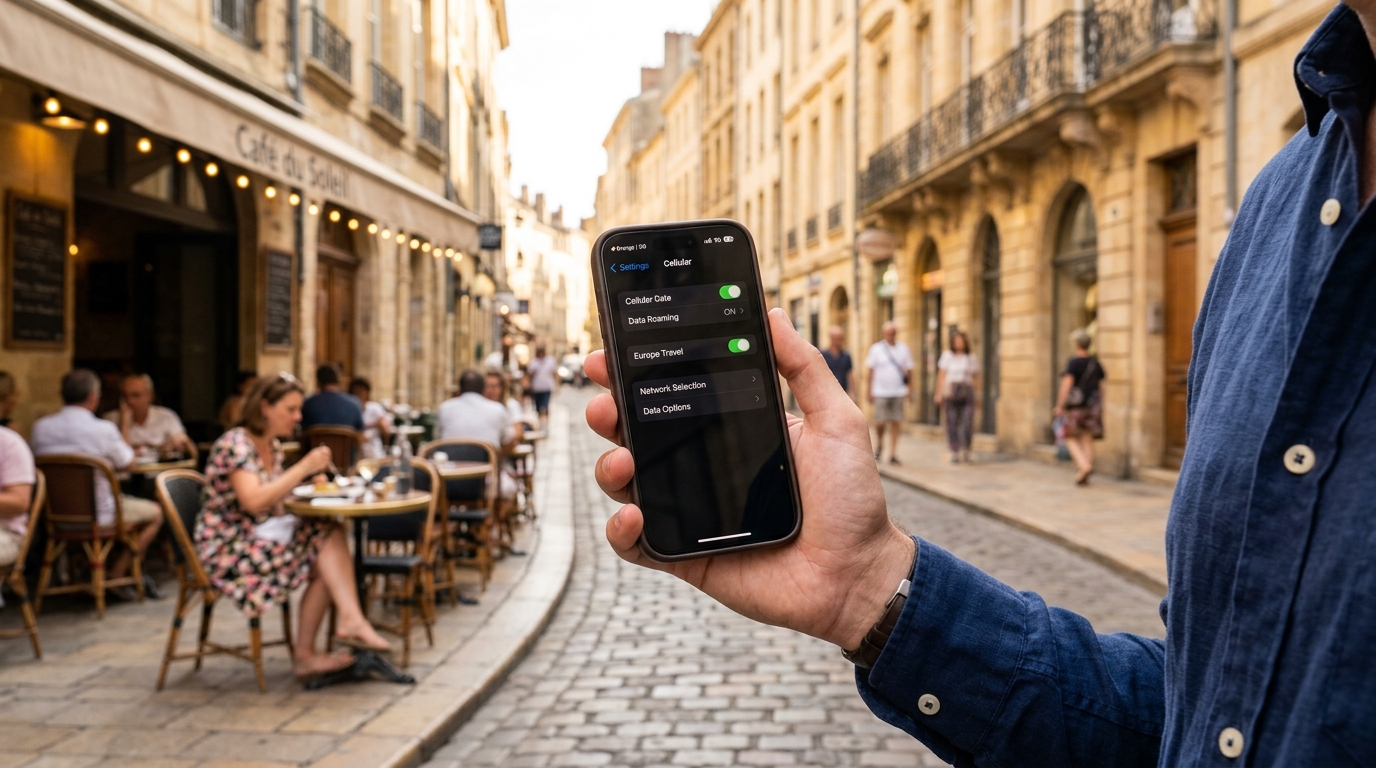

Finding the best eSIM for Europe can mean the difference between seamlessly navigating a foreign transit system and standing confused on a street corner desperately hunting for unsecured Wi-Fi. Over the past three years of testing digital SIMs across more than 20 european countries, I have watched this technology evolve from a clunky gimmick into an absolute travel necessity. You no longer need to waste your first vacation hour queuing at an airport kiosk to buy an overpriced physical SIM card, or worse, pay your home provider’s extortionate international roaming fees.
But the market is incredibly crowded. Providers now flood your social media feeds claiming to offer the fastest speeds and the most reliable coverage. Some sell “unlimited” plans that aggressively throttle your speed after a few gigabytes, while others lock you into regional borders that drop your connection the second your train crosses from Germany into Austria.
This guide breaks down exactly what you need to know, driven by real-world testing, honest cost comparisons, and the mistakes I have personally made along the way.
Quick Summary
Top Overall Choice: Ubigi consistently delivers the most reliable 5G connections and flexible data packages for cross-border European travel.
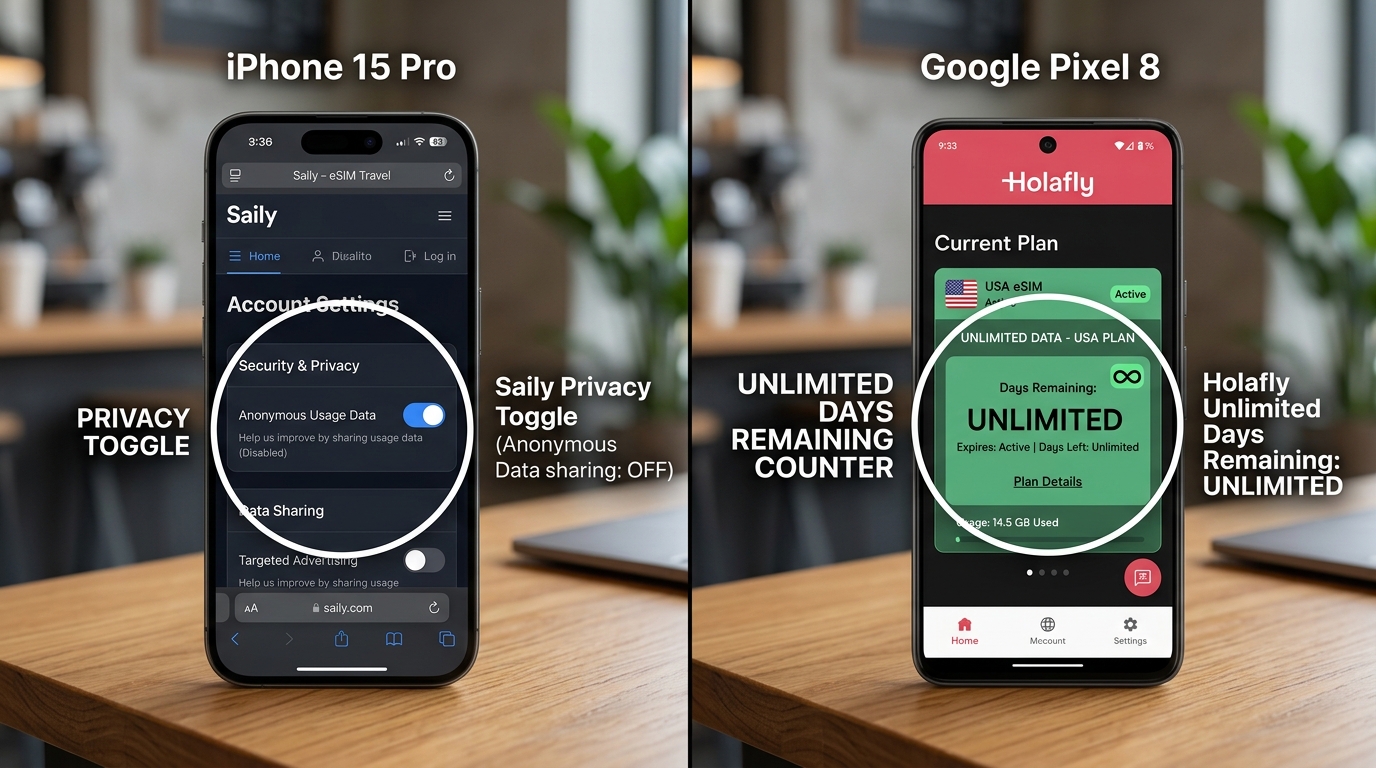
Best for Privacy & Security: Saily, developed by NordVPN, includes a built-in ad-blocker that actively saves your data allowance while masking your location.
Best for Heavy Data Users: Holafly provides genuine unlimited data in Europe, though you sacrifice the ability to tether your connection to a laptop.
Best for Voice & SMS: ETravelSim gives you a real UK phone number, allowing for traditional calls and SMS (crucial for two-factor authentication) alongside massive data allowances.
Crucial Rule: Always buy and install your profile over strong home Wi-Fi before you board your flight, but do not fully activate the line until you land.
The Direct Answer: What Should You Buy Right Now?
If your flight leaves tomorrow and you just want the straightforward answer: Download the Ubigi app and purchase their “Europe Extended” regional plan. For around $26, you get a solid week of unlimited data that spans 37 European countries, including notoriously tricky non-EU zones like the United Kingdom. It connects primarily to top-tier local 5G networks, ensuring your maps and translation apps load instantly.
However, if you are a remote worker who needs to stream video calls from cafes, or if you simply cannot stand the anxiety of monitoring a data cap, choose Holafly. Their unlimited European plan costs $75 for 30 days. Just keep in mind that Holafly restricts hotspotting to a mere 500MB per day—you cannot share that unlimited connection with your iPad or your travel partner.
My Early Disasters with European Connectivity
I want to tell you about a specific afternoon in Rome a few years ago. I had opted for my home carrier’s international day pass, assuming $10 a day was worth the convenience of keeping my AT&T line active. Within three hours of navigating from the airport and uploading a few videos, I received an automated text saying I had hit my daily high-speed limit. My data was aggressively throttled to 2G speeds—a connection so agonizingly slow that Google Maps completely timed out while trying to load the walking directions back to my rental apartment.
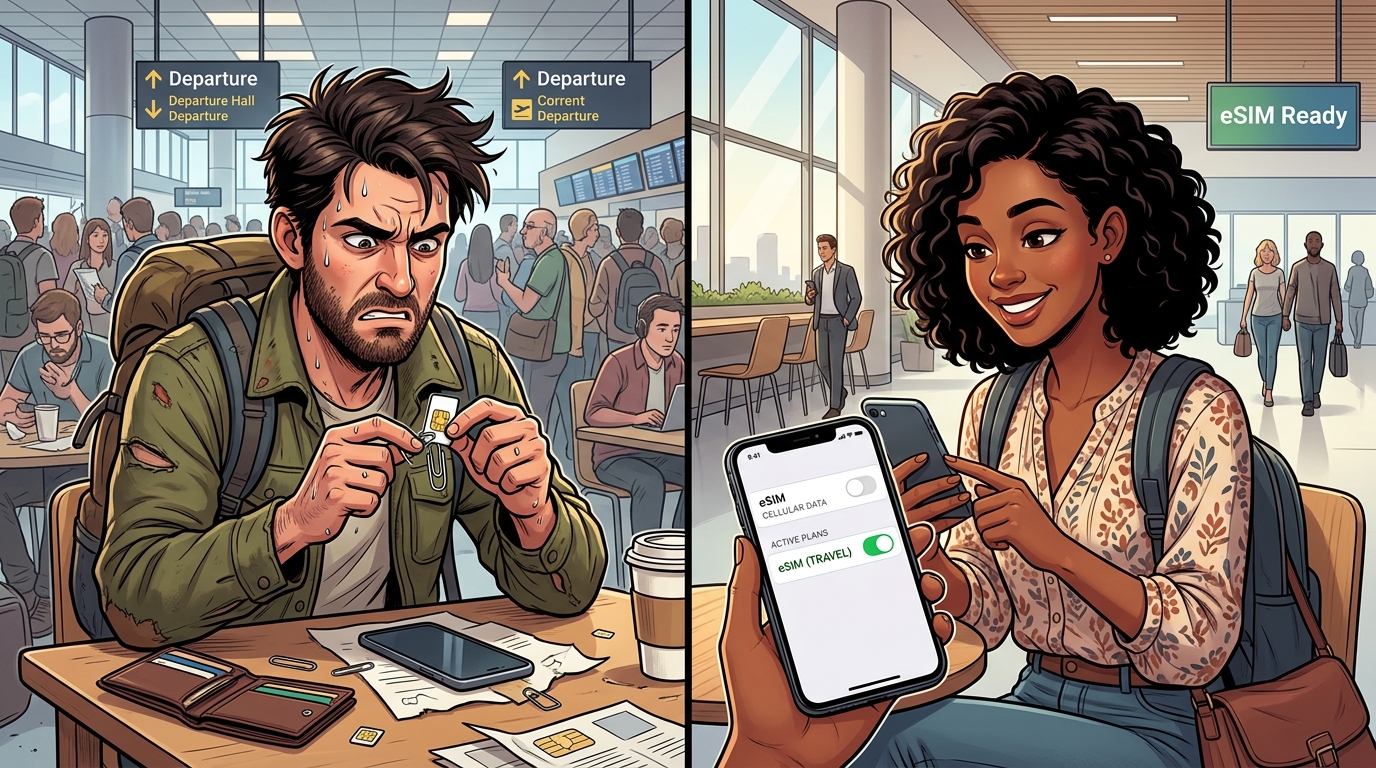
Determined to fix this, I bought a physical SIM from a local telecom store the next day. I handed over my passport, paid EUR35, and swapped the tiny plastic chip using a paperclip I begged off the hotel receptionist. But because I was constantly moving between countries on that trip, the Italian SIM stopped working the moment my train crossed the border into Switzerland, forcing me to start the whole frustrating process over again in Zurich.
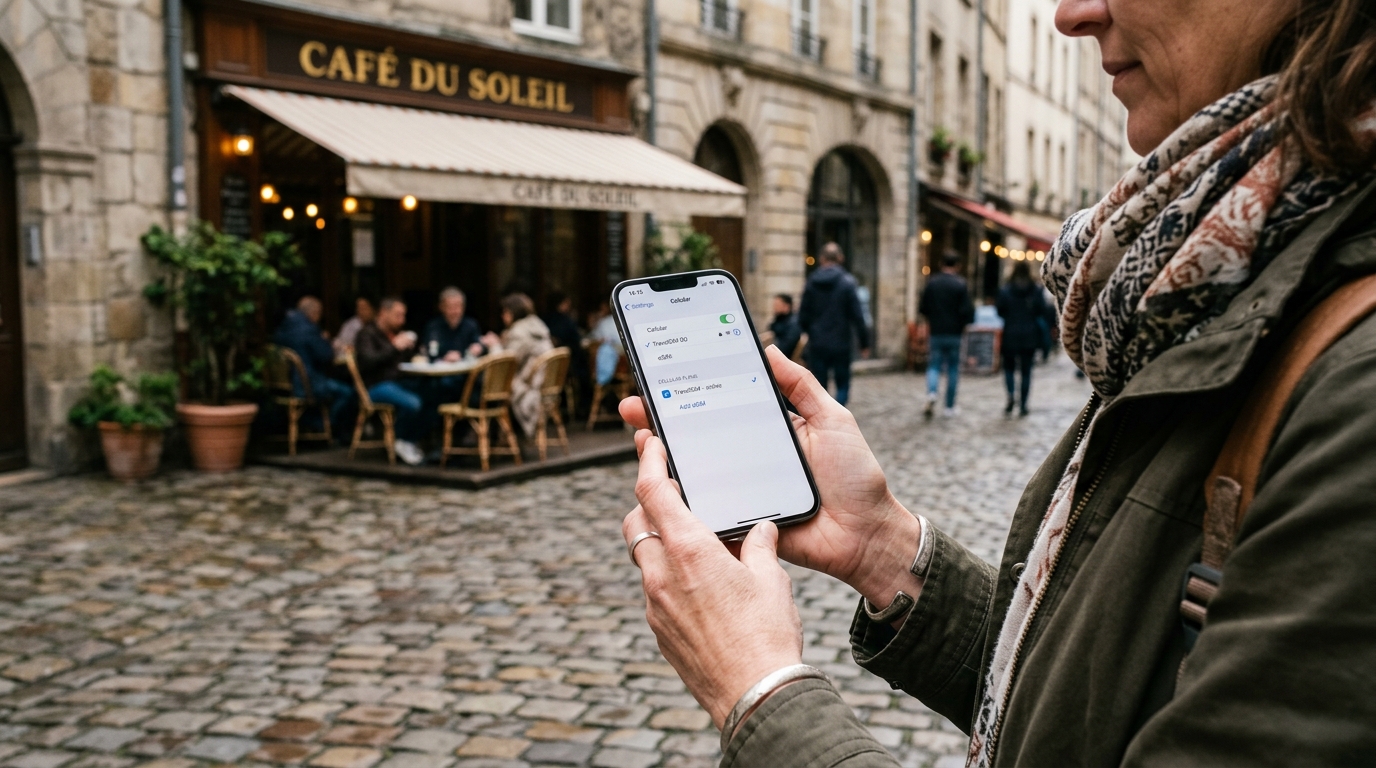
That was the exact trip that convinced me to switch entirely to digital profiles. It feels like magic: you buy a data package on an app while sitting on your couch in Chicago, scan a QR code, and the moment your plane touches down in Paris, your phone instantly connects to the local 5G network.
Why Domestic Roaming Plans Are a Financial Trap
Before we dive into the top providers, we need to address the elephant in the room: your domestic cell phone plan. Relying on free hotel Wi-Fi is unrealistic—modern European travel strictly requires mobile data for digital transit tickets, QR restaurant menus, rideshare apps, and mobile payments.
Using your domestic mobile provider’s international plan is almost always a terrible financial decision.
AT&T: Charges $10 per day for an International Day Pass. If you opt for their monthly “Passport” plans, you will pay $70 for a measly 2GB or $140 for 6GB, with massive overage fees of $30 per GB if you accidentally leave a podcast downloading in the background.
Verizon: Also charges $10 per day but frequently throttles speeds to 3G after just 2GB of daily use.
T-Mobile: Often touts “free” international data on their premium plans, but the default speeds are severely throttled to 128 kbps or 256 kbps. You can send a plain text message, but loading a restaurant review on TripAdvisor will take three minutes.
Conversely, a dedicated European digital SIM averages between $2 to $4 per day for high-speed 5G data. The math simply does not support using your home carrier.
The 5 Best eSIM Providers for Europe Compared
Let us look closely at the specific options available to you. I have tested these major players extensively across Western and Central Europe, evaluating them on 5G availability, unlimited data options, value for money, and app usability.
1. Ubigi (The Top Overall Performer)
Ubigi consistently takes the top spot due to its affordability, reliability, and expansive network agreements. It is highly recommended for users who want seamless, high-speed browsing without breaking the bank.
The Good:
Local IP Routing: Ubigi offers a highly unique technical feature where you can choose a localized IP address for a native browsing experience with zero added latency, or a home-country IP to access domestic streaming services that might otherwise block you.
Unrestricted Tethering: Unlike many competitors, Ubigi allows limitless data sharing and hotspotting on their capped plans.
Reliability: During my testing across France and Germany, Ubigi held a stable 5G connection even on high-speed rail lines where other providers dropped to 3G.
The Bad:
Does not include SMS or traditional voice calling capabilities.
The app interface is functional but feels slightly dated compared to slicker startups.
2. Saily (The Privacy & Security Champion)
Developed by the cybersecurity experts behind NordVPN, Saily is the premier choice for digital nomads and travelers heavily focused on protecting their data on unsecured foreign networks.
The Good:
Built-In Ad Blocker: This is a massive advantage. Saily’s integrated ad-blocker stops video ads and pop-ups from loading, which actively preserves your purchased data allowance.
Generous Validity: Their unlimited plans offer a 30-day activation window, giving you plenty of flexibility if your travel dates shift.
Security: Automatically masks your virtual location, acting as a lightweight VPN.
The Bad:
Coverage Gaps: Saily completely lacks coverage in the Balkan region. If you are traveling to Croatia, Serbia, or Montenegro, this profile will not work.
Slightly more expensive than budget competitors like Nomad.
3. Holafly (The Heavy Data Lifter)
Holafly attacks the market from a different angle: they only sell unlimited data packages. They are geared exclusively toward heavy data consumers, gamers, and those making frequent video calls.
The Good:
True Peace of Mind: You never have to check a data counter or worry about topping up.
Customizable Durations: You can buy exactly 12 days or 21 days, avoiding paying for time you will not use. They also offer a flexible $65/month subscription model for long-term travelers.
Network Prioritization: Holafly heavily favors 5G connections, only reverting to 4G LTE when 5G is physically unavailable.
The Bad:
Strict Hotspot Limits: They cap data tethering at just 500MB per day to prevent abuse. If you plan to work from your laptop using your phone’s connection, Holafly is the wrong choice.
No traditional SMS or voice calling included.
4. Airalo (The Coverage King)
Airalo is essentially the pioneer of the travel market, and their massive network agreements reflect that maturity. Their European regional plan, “Eurolink,” covers 42 out of 44 European countries.
The Good:
Massive Reach: This is the absolute best option for multi-nation backpackers. It covers almost every obscure border crossing on the continent.
Group Tethering: Unrestricted tethering makes it ideal for families sharing a single data connection.
User Interface: The app is incredibly intuitive, tracking your usage down to the megabyte and allowing for instant top-ups.
The Bad:
Data Caps: While they offer excellent capped plans, their “unlimited” packages strictly max out at 10 days of validity.
Customer service relies heavily on an in-app chatbot that can be slow during peak summer travel seasons.
5. ETravelSim (The Voice & SMS Solution)
ETravelSim stands out in a crowded market by offering something incredibly rare: actual voice minutes and a dedicated phone number.
The Good:
Real UK Phone Number: This is a logistical lifesaver. Having a traditional phone number is highly beneficial for contacting local restaurants for reservations or calling emergency services.
Two-Factor Authentication: Crucially, it allows you to receive SMS texts for bank logins or credit card verifications while abroad.
Pricing: Extremely budget-friendly, offering 10GB for just $21.
The Bad:
You must remember to manually switch your primary domestic number back on in your settings after your trip concludes.
Data speeds can occasionally throttle during peak network congestion hours in major cities.
Cost and Value Breakdown: Doing the Math
To make an informed decision, you need to look at raw numbers. Here is how the costs break down for a typical European vacation. Do not just look at the total price—look at the features provided.
| Provider | Plan Type | Data Allowance | Validity | Approximate Price | Key Feature |
|---|---|---|---|---|---|
| Nomad | Regional | 1 GB | 7 Days | $5.50 | Best for light weekend trips |
| ETravelSim | Regional | 10 GB | 30 Days | $21.00 | Includes UK Phone Number |
| Ubigi | Regional | Unlimited | 7 Days | $26.00 | Local IP Routing |
| Saily | Regional | 10 GB | 30 Days | $36.00 | Built-in Ad Blocker & VPN |
| Holafly | Regional | Unlimited | 30 Days | $74.90 | Monthly subscription option |
Note: Prices fluctuate based on seasonal promotions and minor currency exchanges. These exact numbers reflect standard 2026 pricing without promotional codes applied.
How Much Data Do You Actually Need?
If you opt for a capped plan instead of an unlimited one, you need to understand your own digital habits. Modern smartphones are incredibly data-hungry in the background.
Light Users (1–3GB per week): Ideal if you only use your phone for basic navigation (Google Maps), text-based messaging (WhatsApp), and checking email at the hotel.
Average Travelers (5–10GB per week): Sufficient for regular social media photo sharing, web research, booking train tickets, and occasional Spotify streaming.
Heavy Users (15GB+ per week or Unlimited): Necessary if you frequently stream video, upload high-resolution content to TikTok/Instagram, work remotely, or rely heavily on FaceTime.
During a typical day of heavy tourism—navigating transit, sending dozens of photos to a family group chat, and researching dinner spots—expect to burn through about 500MB to 800MB.
Understanding European Roaming Laws (The EU Exception)
To really master your connectivity, it helps to understand how roaming actually works on the continent. The European Union passed a “Roam Like at Home” law several years ago. This law mandates that any cellular provider based in the EU must allow its users to use their data in any other EU country without extra fees.
This is exactly why regional profiles work so well. Providers broker a massive wholesale deal with a network like Vodafone Spain. Because of EU laws, that Spanish data profile can legally piggyback onto Deutsche Telekom in Germany or TIM in Italy at no extra cost to the provider.
However, you must be careful with non-EU countries. Switzerland and the United Kingdom are notorious blind spots. Because they are outside the EU regulatory zone, telecom providers have to negotiate separate contracts for them. Before you purchase a “European Regional” plan, read the fine print to confirm that both Switzerland and the UK are explicitly listed in the covered countries. Providers like Ubigi and Airalo include them, but cheaper, lesser-known apps often exclude them entirely to save money.
Who Should Get a European eSIM (And Who Should Not)
This technology is brilliant, but it is not a blanket solution for absolutely every traveler.
This is ideal for:
Multi-Country Hoppers: If your itinerary involves a train from London to Paris, and a flight to Rome, a regional plan prevents you from buying three separate local physical SIMs.
Security-Conscious Solo Travelers: Being instantly connected the moment you land provides massive security. You can immediately call an Uber or check train schedules without navigating sketchy airport Wi-Fi login screens.
Dual-SIM Users: Digital profiles allow you to keep your primary physical home SIM active for incoming emergency texts (like bank 2FA codes) while routing all heavy internet traffic through the cheap European data plan.
You might want to skip this if:
Your Phone is Carrier Locked: This is a major hurdle for Americans. If you are currently paying off your iPhone 15 through an AT&T or Verizon installment plan, they have likely locked the device’s software. A locked phone physically cannot accept a third-party profile. You must call your carrier to request an unlock before attempting this.
You Have an Older Device: While the iPhone XR and newer fully support this tech, older devices like the iPhone 8 or Samsung Galaxy S10 do not have the internal hardware. You will need a traditional physical SIM.
You Are Relocating for 3+ Months: If you are doing a long-term study abroad or moving for a job, do not use travel data plans. It is significantly cheaper to walk into a local Vodafone or Orange store, sign a month-to-month local contract, and pay standard domestic rates.
Common Mistakes to Avoid
Even with the best technology, human error can derail your trip. Here are two massive mistakes I see travelers make constantly.
Mistake 1: Deleting the Profile in a Panic
When I was in Lisbon last year, my phone temporarily lost signal while deep inside a thick concrete museum. When I walked back outside, the connection did not immediately restore. Impatient, I went into my iPhone settings, tapped my digital profile, and hit “Delete,” thinking I could just reinstall the QR code to reboot it.
Never do this.
An installation QR code is exactly like a physical scratch-off lottery ticket—it can only be used once. The moment I deleted that profile, I destroyed the plan I had just paid for. I had to sit on a park bench, find a nearby café’s unsecured Wi-Fi, and buy a completely new package. If your data stops working, toggle Airplane Mode on and off, or restart your phone. Do not delete the profile until you are back on an airplane heading home.
Mistake 2: Activating at the Wrong Time
Many travelers buy their package three weeks before their trip and activate it immediately in their living room to “make sure it works.”
Most providers start the validity clock the moment the profile officially connects to a supported network. If you buy a 7-day plan on Monday but do not fly out until Friday, your plan will expire halfway through your vacation.
You should absolutely purchase the plan and install the profile while you have strong home Wi-Fi, but leave the specific cellular line toggled OFF in your phone’s settings until you land in Europe.
Step-by-Step Installation Guide
If you have never done this before, the process can feel slightly intimidating, but it genuinely takes less than three minutes.
- Check Compatibility: Go to your phone settings. On an iPhone, navigate to General > About, and scroll down to “Carrier Lock.” It must say “No SIM restrictions.”
- Purchase the Plan: Buy your chosen plan via the provider’s website or app a day or two before your flight.
- Scan the Code: You will receive a QR code via email. Go to your phone’s settings, tap “Cellular” or “Mobile Data,” tap “Add eSIM,” and point your camera at the QR code.
- Label It: Name the new line something obvious, like “Europe Travel,” so you do not confuse it with your primary home line.
- Toggle Roaming: Go into your primary home line settings and explicitly turn OFF “Data Roaming.” Then, set your new Europe line as the default for “Cellular Data.”
Frequently Asked Questions
Can I still use iMessage and WhatsApp with a travel eSIM?
Yes, absolutely. Both iMessage and WhatsApp are tied to your Apple ID and your original phone number, respectively. They simply need an active internet connection to function. When you install a travel data profile, your messaging apps will continue to work exactly as they do at home, completely unaware that the internet is coming from a different local provider.
Will I get charged roaming fees by my home carrier?
Not if you configure your phone correctly before leaving. The safest method is to go into your settings and turn off “Data Roaming” on your primary home line. Leave the home line active only for incoming calls and SMS (which are usually free to receive), but designate your new travel profile as the primary source for “Cellular Data.” This ensures your domestic carrier won’t charge you $10 a day for background internet usage.
Can I share my internet with my travel partner?
It depends entirely on the provider you choose. Ubigi and Airalo allow full mobile hotspot tethering, meaning you can turn your phone into a Wi-Fi router for your partner or your laptop. Holafly, because they offer unlimited data, strictly caps hotspot capabilities at 500MB per day to prevent network abuse. If sharing data is critical for your trip, avoid the unlimited plans.
What if my data runs out mid-trip?
If you purchase a capped plan and burn through your data faster than expected, you do not need to buy a brand new profile. Simply open the provider’s app (which is usually whitelisted to work even when your data is zeroed out) and purchase a “top-up” package. The new data will instantly apply to your existing profile.
Your Next Steps
Navigating connectivity abroad no longer requires stress, expensive carrier fees, or linguistic acrobatics at a local cellular kiosk. By planning ahead and understanding the limitations of your hardware, you can secure high-speed internet across dozens of borders for less than the cost of a single dinner.
If you are preparing for a trip soon, your clear next step is to physically check your phone’s carrier lock status right now. Once you confirm your phone is unlocked, evaluate your itinerary. If you are hitting multiple countries and want reliable 5G, download the Ubigi app. If you plan to stream heavy video and don’t need to hotspot, go with Holafly. Secure your digital profile a few days before departure, install it over your home Wi-Fi, and enjoy the peace of mind that comes with stepping off the plane already connected.