
staying in gangnam: A Local’s Essential Guide
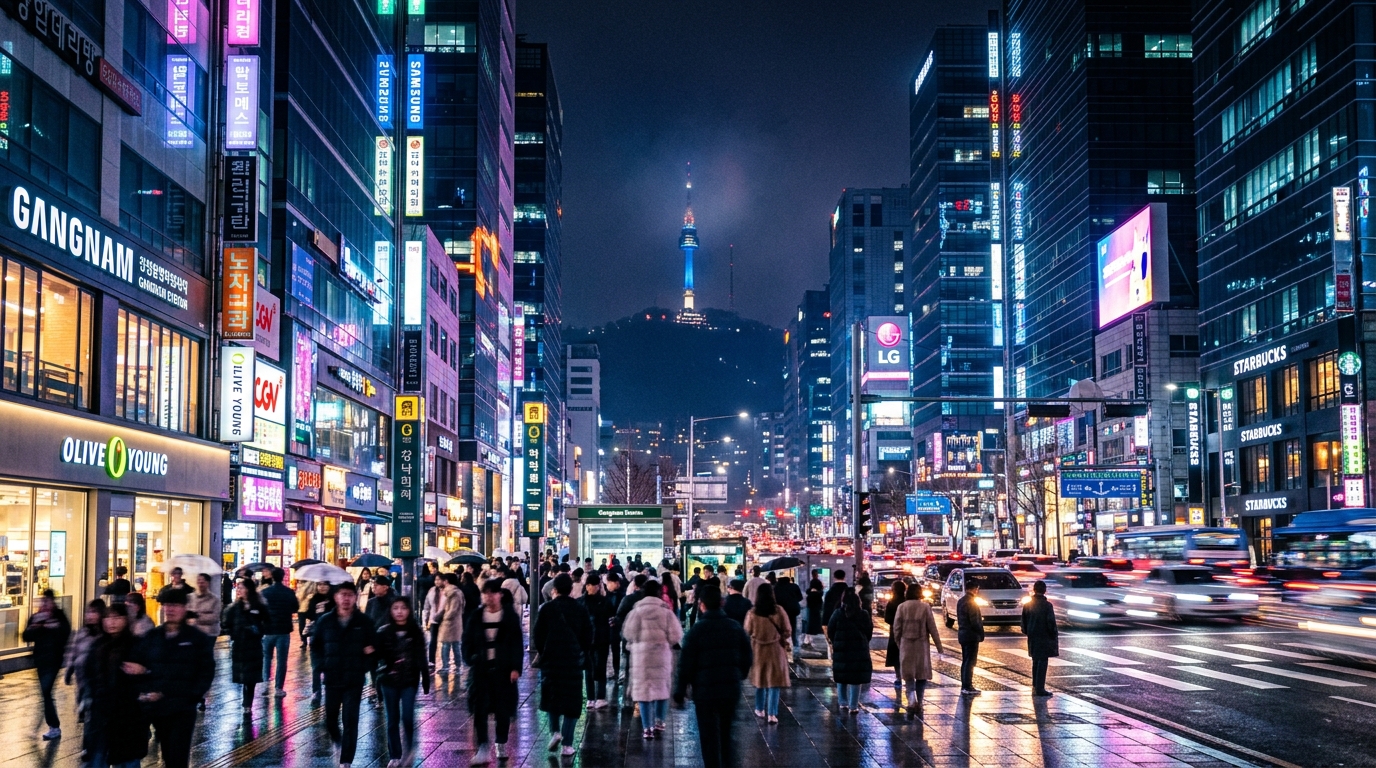
Staying in Gangnam represents a bold leap into the hyper-modern heart of Seoul, a district that moves at a pace unlike anywhere else in the capital. When I first moved to South Korea, the sheer scale of the skyscrapers and the intensity of the neon lights felt like stepping onto a movie set, and I spent my first two days completely lost in the subterranean labyrinths of the subway system. Gangnam is not merely a single destination; it is a collection of distinct, specialized hubs that demand a clear strategy if you want to avoid the logistical traps that catch most first-time visitors. If you want to experience the true, high-octane pulse of Seoul’s most affluent district, you must move beyond the basic hotel listings and understand the geography of the area before you even board your flight.
Quick Summary
Primary Strategy: Choose your neighborhood based on your goal: nightlife (Sinnonhyeon), fashion (Sinsa-dong), or professional travel (Samseong-dong).
Booking Logic: Always secure your accommodation 3–4 months out to avoid peak-season price spikes, which can jump by 50%.
Essential Navigation: Do not attempt to use Google Maps; install Naver Map or KakaoMap immediately to navigate the complex alleyway systems.
Transit Hack: Utilize the Airport Limousine Bus for direct hotel access, which spares you the nightmare of hauling luggage through steep subway stairs.
Dining Tip: Bypass the hotel food courts and look for the outdoor aluminum-grate BBQ stalls to find where the local salarymen actually eat.
The Direct Answer: Where Should You Stay?
If you want the most balanced experience for a first-time visitor, staying in Gangnam near Sinnonhyeon Station is your best move. It acts as the geographic and social pivot point of the district. You are within walking distance of the intense nightlife of Gangnam Station, the chic boutique shopping of Sinsa-dong, and the rapid transit access provided by Line 9 and Line 2. You won’t be as trapped in a business-only bubble as you would in Samseong-dong, and you won’t be as far removed from the action as you would staying in the quieter outskirts. For the average traveler who wants a bit of everything—great food, high-end retail, and reliable transport—this area is the perfect home base.
Understanding the Four Pillars of Gangnam
Gangnam is defined by its four distinct neighborhoods, and choosing the right one will dictate your daily rhythm. My personal preference is often determined by the goal of the trip—if I’m there to eat and drink with friends, I head to the northern end; if I’m there for a corporate event or trade show, I stay near the COEX center.
Sinnonhyeon: The All-Rounder
This is the high-energy heart of the area. When I stay here, I know I’m sacrificing silence for convenience. The area thrives because it bridges the gap between commercial luxury and late-night revelry. Hotels like the Novotel Ambassador provide a level of comfort that acts as a fortress against the noise outside. If you book here, request a room on a high floor; the city never truly stops, and the sound of K-Pop leaking from karaoke bars below can be persistent until 4 AM.
Gangnam Station: The Modern Epicenter
This is for the traveler who wants to be in the eye of the storm. It’s where you’ll find the massive underground malls and the highest density of neon lights. The energy here is infectious, but it can feel incredibly sterile and corporate during the weekday mornings. If you choose this location, you are opting for absolute transport convenience above all else. Use the Shilla Stay Seocho if you want a reliable, no-nonsense base of operations that allows you to zip between districts without fuss.
Sinsa-dong: The Aesthetic Hub
Walking down Garosu-gil feels entirely different from the rest of the district. The trees provide shade, the cafes are independently owned, and the pace is noticeably slower. I love this area because it’s where I go when I want to people-watch. It is the center of Korea’s influencer culture, and the hotels here, like the Aiden by Best Western, reflect that focus on design over pure square footage. If you value boutique shopping and coffee culture over raw intensity, this is your zone.
Samseong-dong: The Business Professional
If your trip involves attending a conference or you simply hate the chaos of downtown, stay here. It’s dominated by the COEX mall and heavy-duty business towers. It is remarkably quiet on the weekends, which can be a double-edged sword. You get more space for your money at hotels like the Park Hyatt, but you have to take the subway to reach the more authentic, grit-filled dining experiences found in other parts of the city. I found that staying here feels more like a standard international business trip than a deep dive into Korean culture.
The Real Cost of Luxury: A Budget Breakdown
Many travelers assume that staying in Gangnam will immediately destroy their travel budget. This is a misconception. While luxury properties easily exceed $500 per night, there is a middle market that offers incredible value if you book early.
| Tier | Price Range (Avg) | Best For | Typical Amenities |
|---|---|---|---|
| Budget | $80 – $150 | Solo travelers/Students | Capsule pods, laundry access |
| Mid-Range | $160 – $300 | Couples/Business | Gym, free breakfast, sauna |
| Luxury | $350 – $1,000+ | Luxury/Group travel | Rooftop pools, full spas, suites |
My strategy for keeping costs down is to prioritize hotels that offer in-room laundry and kitchenette access, such as the Gangnam Artnouveau City. Even if you don’t cook, having a washing machine allows you to pack 40% less clothing, which saves you on checked bag fees and makes navigating the airport transit much easier. I once had to carry a 20kg suitcase through the transfer station at Sports Complex, and that was the last time I ever traveled with more than a carry-on.
Common Mistakes to Avoid
1. The Google Maps Trap
This is the most common mistake I see tourists make. Google Maps in South Korea does not provide accurate walking or driving directions because of government security restrictions regarding map data. I once spent 45 minutes walking in a circle because Google Maps insisted a street existed where there was only a concrete wall. You must download Naver Map or KakaoMap. These apps are the only ones that recognize the complex alleyway systems and subway exits accurately.
2. Ignoring the Subway Exit Numbers
In cities like London or New York, the exit you choose might be a minor convenience. In Seoul, and specifically in Gangnam, choosing the wrong exit can leave you 15 minutes away from your destination on the wrong side of an eight-lane highway. Always look for the exit number provided by your hotel in their confirmation email. If they say “Exit 12,” do not settle for “Exit 10” just because it’s closer; you will likely find yourself trapped by traffic or barriers, and the walk back is rarely fun in the humid summer months.
Culinary Strategy: Eating Outside the Tourist Bubble
When I first arrived in Gangnam, I spent way too much time in the food courts of the COEX mall. While efficient, you are paying a premium for convenience and missing the true character of the district. For an authentic experience, look for the ‘Pojangmacha’ or small, tented stalls near the secondary transit hubs.
I recommend looking for Ggupdang near Sinsa station. The process of curing pork for 15 days is not just a gimmick; it completely changes the texture of the meat, creating a richness you don’t find in chain restaurants. You won’t find this level of technical detail in the generic restaurants that line the main thoroughfares. Also, remember the Korean practice of Yi Yeol Chi Yeol—fighting heat with heat. Don’t be afraid to order a boiling bowl of samgyetang (ginseng chicken soup) in the middle of a humid July afternoon. It is the secret to surviving the Gangnam summer. If you see a queue of locals, that is almost always a sign that the food is worth the wait.
Who Should (And Who Should Not) Stay Here
This is ideal for you if:
You are a city lover: You want the highest density of tech, fashion, and food in the country.
You are a K-Drama enthusiast: You want to see the real-life locations that serve as the backdrops for many of Korea’s most famous shows.
You are a business traveler: The infrastructure for meetings, printing, and high-speed transit is unparalleled here.
You might want to skip this if:
You want a traditional hanok experience: If you want to sleep on heated floors in a 300-year-old house, head to Bukchon or Insadong. Gangnam is for the glass-and-steel future, not the wooden past.
You are on a very strict shoestring budget: While affordable options exist, your money will go 30% further in districts like Hongdae or near the university campuses. Gangnam charges a premium for its modern accessibility.
The Design Perspective: Architecture and Atmosphere
One cannot discuss staying in Gangnam without acknowledging the architecture. Unlike the historical North of Seoul, which preserves the Joseon Dynasty’s aesthetics, Gangnam is a laboratory of modern urbanism. The contrast is palpable. If you stay in the luxury towers like the Josun Palace, you are surrounded by over 400 pieces of curated art and marble interiors. However, I often find that the most interesting design is found on the ground level. The industrial-to-modern conversions in nearby Seongsu-dong (a short subway ride away) contrast sharply with the sterile corporate towers of Teheran-ro.
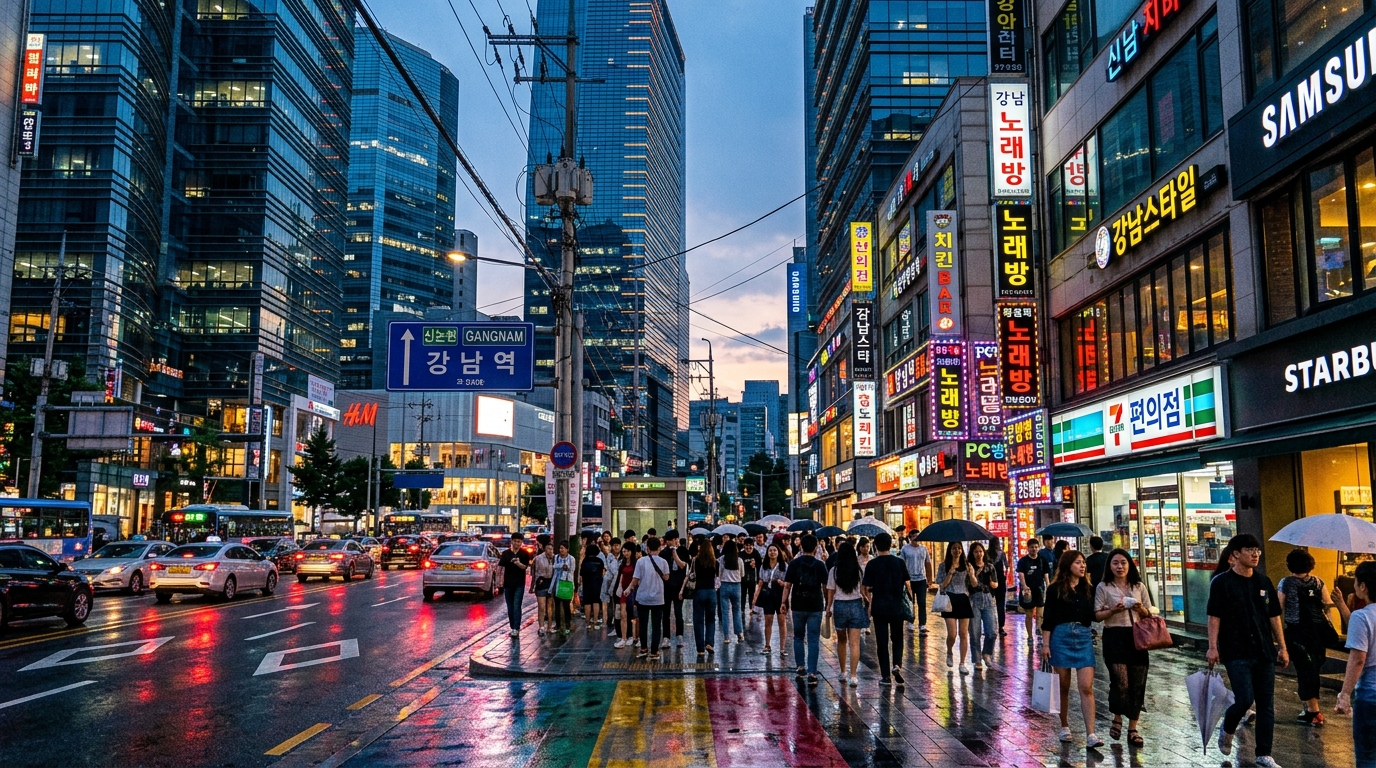
If you have a keen eye for design, look for accommodations that emphasize minimalist aesthetics. Many of the newer boutique hotels focus on modular furniture and smart-home features, which reflect the tech-forward mindset of the local population. When you book, look for photos of the room’s fixtures; if it looks like a standard beige hotel, you’re missing out on the design-led culture that defines modern Korea. Always prioritize rooms with large windows; the panoramic view of the Seoul skyline, especially with the N Seoul Tower glowing in the distance, is worth the extra nightly fee.
Connectivity and Local Logistics
Once you arrive, your digital survival kit is as important as your physical passport. I strongly advise all visitors to get an eSIM before they land. Relying on airport Wi-Fi is fine for a few minutes, but navigating the subway transfer at Gangnam Station requires constant updates from Naver Map.
I recommend Airalo for a quick setup. Once you have data, get a T-Money card. You can buy these at any convenience store like 7-Eleven or GS25. Do not lose this card. It is your lifeline for every bus, subway, and even small taxi fares. It removes the friction of buying individual paper tickets, which are essentially non-existent for the local transit system anyway. If you ever find yourself at a taxi stand, just tap your card on the reader as you exit; it is a seamless experience that puts many other major cities to shame.
Frequently Asked Questions
Is Gangnam safe to walk around at night?
Yes, Gangnam is remarkably safe, even in the very early hours of the morning. There is a high density of security, lighting, and general foot traffic. However, keep in mind that the areas surrounding heavy nightlife spots like the clubs near Gangnam Station can get rowdy. Use common sense, and you won’t face any issues. I’ve walked back to my hotel at 3 AM numerous times without ever feeling threatened; the presence of CCTV is omnipresent in this country.
How do I get from the airport to my hotel?
I strongly recommend the Airport Limousine Bus over the AREX train if you are staying in the heart of Gangnam. While the train is faster to get into the city, you will likely have to transfer to a local subway, which can involve stairs and crowds. The bus drops you directly in front of major hotels, and the extra cost is well worth the convenience of not dragging luggage through a subway station. You can buy tickets at the kiosk just outside the airport arrivals gate.
Is it necessary to learn Korean to stay in Gangnam?
Not at all. In the major tourist and business districts of Gangnam, you will find a high level of English proficiency among hotel staff and shop employees. However, learning five basic phrases—’Hello,’ ‘Thank you,’ ‘Where is,’ ‘How much,’ and ‘I’m sorry’—will dramatically change how locals treat you. Being able to order in Korean, even if you do it poorly, usually results in much better service at restaurants. The effort is appreciated and often leads to a warmer interaction than just pointing at a menu.
Final Decision Framework
To summarize your plan, start by identifying your primary motivation for the visit. If you want a base that feels like the center of the world, stay in Sinnonhyeon. If you want a quieter, design-forward experience, Sinsa-dong is superior. Regardless of your choice, the golden rule of Seoul travel remains constant: book early and download your local maps before you step off the plane. Gangnam is a district that rewards the prepared. If you land with a plan and a working map app, you’ll find that the district’s reputation for being ‘cold and corporate’ is entirely misplaced. It is, in reality, a fascinating, efficient, and deeply human place once you know how to unlock it.