
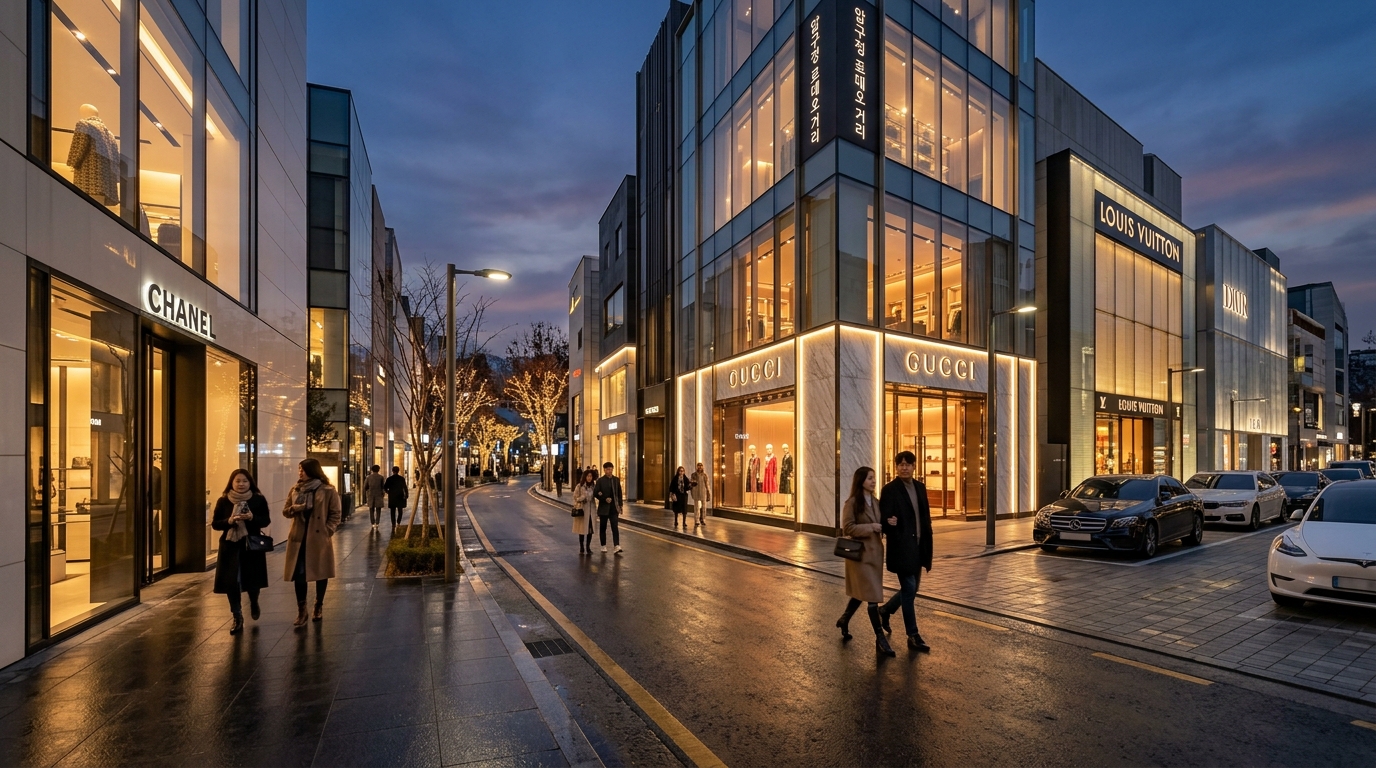

The apgujeong Rodeo district serves as a premier case study in how a fading commercial center can reinvent itself through surgical precision, structural cooperation, and a refusal to rely on generic, high-turnover retail models. If you are asking whether this neighborhood still holds promise for those looking to place capital or launch a flagship venture, the answer is a decisive yes, provided you understand that the entry requirements have shifted from low-barrier experimentation to high-prestige, long-term commitment. I remember walking through these streets during the mid-2010s when the energy felt like a flicker in the wind, with shuttered windows and an atmosphere of institutional fatigue. Today, the area is a masterclass in urban resilience, proving that when the right mix of luxury, experience, and collective landlord strategy aligns, a neighborhood can shed its past and become an immovable object of Seoul’s real estate market.
Quick Summary
Strategic Revival: Apgujeong Rodeo successfully reversed its decline through proactive landlord cooperation, including long-term rent freezes and tenant-friendly policies.
Investment Prime: Real estate values have surged, with select commercial assets appreciating by over 200% in under five years as the brand identity strengthened.
Resilient Foot Traffic: The area maintains a vacancy rate of approximately 2.79%, significantly lower than the broader Seoul average which often fluctuates above 8%.
Curated Retail: The shift away from generic global franchises to experiential, mid-sized, and luxury-tier brands has created a distinct, upscale, and highly aesthetic atmosphere.
Categorized Nodes: The district is defined by distinct nodes, including the high-energy L-shaped street, the upscale Dosan Park hub, and the quiet office-gallery alleys.
The Direct Answer: Is It Too Late?
If you are searching for a straightforward answer regarding whether the Apgujeong Rodeo district is still a viable investment or business location, the short version is this: the era of the low-cost, speculative startup space in this neighborhood is officially over. You are no longer looking at a playground for budget-conscious pioneers; you are looking at a matured, high-prestige zone where the barrier to entry is substantial. If you are a business owner operating on thin margins and requiring rapid, mass-market turnover, you will likely find the current rent structures prohibitive. However, if you are an investor looking for a defensive, high-prestige asset with a remarkably low risk of vacancy, this area remains a gold-standard location in South Korea. The days of ‘cheap’ are gone, replaced by the reality of ‘stable and premium.’
The Anatomy of a Commercial Comeback
To understand the Apgujeong Rodeo district, you have to look past the glitz and examine the mechanics of its recovery. The revival wasn’t a stroke of luck; it was a structural adjustment performed by stakeholders who recognized that the ‘gentrification death spiral’ was rapidly turning their assets into ghosts. In the 2010s, the area hit a wall, famously signaled by the closure of the first McDonald’s in the country—an event that served as a grim indicator that the neighborhood had lost its cultural relevance.
I’ve watched as this crisis was averted by a coalition of building owners who realized that short-term rent hikes were a fast track to total neighborhood vacancy. Instead, they implemented 5-to-10-year rent freezes and actively recruited brands like Gentle Monster—entities that bring an experiential, ‘Instagrammable’ quality to their physical presence. By shifting the neighborhood’s DNA from a high-rotation, mass-market mall to a gallery-like retail experience, they created a destination-driven economy. Today, visitors travel from across the city to visit anchor spots like the London Bagel Museum or Wiggle Wiggle. This isn’t just retail; it’s destination marketing, and it has successfully decoupled the district’s survival from the standard ebb and flow of transient consumer trends.
Zoning for Success: Understanding the Four Nodes
Not every square meter in this neighborhood functions the same way. When I spend time analyzing the micro-economies of Apgujeong, I find that the character of the street shifts almost block by block. To make sense of the economics here, you must categorize your investment or business strategy into these four distinct zones.
The ‘L-Shaped’ Main Street
This is the high-energy, pulsing heart of the district. If you want to see where the money moves on a Friday night, this is your vantage point. It is dense, loud, and home to the highest concentration of high-rotation restaurants and bars. Since the pandemic, values here have seen a meteoric rise. While some skeptics might label high-density areas as risky due to their volatility, this part of the district has proven that it can weather significant economic shocks. The rent here is a premium paid for visibility and the prestige of occupying space on the primary artery of the neighborhood.
The Office and Gallery District
Just a few turns off the main strip, the intensity drops, and the atmosphere becomes almost meditative. This is where you find the private beauty clinics, quiet galleries, and boutique professional offices. In my estimation, this is the most underrated zone for long-term holders. The property values here are less tied to the frantic foot traffic of the main strip and more tethered to long-term brand prestige and exclusivity. High-net-worth individuals and celebrities often gravitate toward these alleys for the privacy, and the buildings here are frequently designed to be discreet, sophisticated, and enduring.
Dosan Park (‘Korea’s Omotesando’)
This is the undisputed crown jewel. If you want to understand the ‘Omotesando effect’—the phenomenon of transforming a quiet, affluent area into a global hub for high-fashion architecture—you need only walk around Dosan Park. You aren’t just buying retail space here; you are buying into a status symbol. Buildings in this zone often look less like commercial shops and more like art museums, with meticulously curated exteriors that match the caliber of tenants like Supreme, Palace, or high-end designers like Woo Young-mi. This is where architecture becomes an asset class in its own right.
The Rodeo Station Perimeter
This area focuses heavily on the dining and service sectors. It functions as the gateway to the neighborhood. The sheer proximity to the subway station provides a natural, unwavering advantage, ensuring that even on sluggish, rainy Tuesdays, there is a steady stream of traffic entering the district. The economics here are slightly more varied than the Dosan Park node, but the constant influx of commuters makes it a reliable anchor for service-oriented businesses that rely on consistent, daily frequency.
Real Estate Investment: The ‘Experience’ Multiplier
In my view, the single biggest error investors make in this market is the fixation on square footage as the primary metric. In Apgujeong, if you are not looking at the ‘experience multiplier,’ you are missing the forest for the trees. Look at the assets that have gained the most value—often jumping from 8 billion won to 25 billion won in a matter of a few years. What they have in common is a high degree of ‘Instagrammability’ and brand magnetism.
I’ve spoken with local brokers who rarely discuss price per ping without immediately pivoting to the ‘brand potential’ of the building. Does the architecture allow for a storefront that people actually want to photograph? Is there an inherent design element that invites customers to stand in line? If a building generates social media buzz, it effectively acts as a permanent, free billboard for the tenant, which in turn justifies significantly higher and more stable rents over the long term. This is why the Adidas building’s massive appreciation wasn’t just a symptom of general inflation—it was a recognition that the location had been elevated to a global cultural marker.
Who Should Invest in Apgujeong Rodeo (And Who Should Not)
This is ideal for:
Institutional/Long-Term Investors: If you are seeking an asset that maintains a high ‘floor’ price and a low vacancy rate, this is arguably one of the safest high-end bets in Seoul. You are playing a multi-decade game of appreciation.
Luxury/Experiential Brand Owners: If your brand requires a physical presence that functions as a marketing channel rather than a high-volume sales floor, this is your home. The prestige here acts as a filter, attracting the exact demographic that luxury brands target.
Asset Managers: If you have the capital to purchase and renovate for ‘curation’—for instance, creating a space designed to accommodate a high-end designer showroom or a premium concept cafe—the capital appreciation is historically proven.
You might want to skip this if:
You are a Small Startup: If your goal is to find an affordable, low-cost space to pilot a budget-conscious concept, you will likely be priced out of the conversation before your signage even goes up. The neighborhood is designed for established, well-funded brands.
You are an Income-Dependent Investor: If you rely on extremely high rental yields (cash-on-cash return) to service debt, be aware that the high purchase price of these buildings can sometimes result in a lower initial yield compared to secondary or tertiary neighborhoods. You are in the game for the long-term appreciation, not the monthly cash flow.
The ‘Netflix Effect’ and the Evolution of Gastronomy
I have spent considerable time watching how modern media—specifically content like Netflix’s ‘Culinary Class Wars’—has fundamentally reshaped the geography of the city. We are currently witnessing a distinct trend where star chefs and Michelin-level talent are migrating to the Dosan-daero strip because it offers the perfect marriage of Apgujeong’s prestige with a rent structure that is slightly more sustainable than the absolute heart of the most saturated commercial zones.
I’ve noticed that while rents in the core of Apgujeong remain stubbornly high, the surrounding nodes—specifically the corridors leading into the Dosan-daero strip—are seeing massive, rapid growth. Investors would be wise to watch where these ‘Chef Clusters’ form. When you have a high density of globally recognized culinary talent in a 500-meter radius, they create a ‘gastronomic hub’ that pulls in the wealthiest demographics from the neighboring Hanyang and Hyundai apartments. It is a self-reinforcing cycle of quality, demand, and valuation that is almost impossible to break.
Common Mistakes to Avoid
Mistake 1: Ignoring the ‘Floor Area Ratio’ Nuance
When I conduct field inspections of buildings, the most frequent error I witness is the beginner investor assuming that two buildings of the same size and age offer the same potential. They rarely do. You must look at the specific building law revisions and the ‘Floor Area Ratio’ (FAR). Some buildings, due to when they were permitted, have much higher ratios and can be legally built higher than their immediate neighbors. I have personally seen investors buy a building without checking whether they can add a terrace, a rooftop cafe, or an extra floor of retail. That one failure to perform due diligence can cost millions of won in lost potential revenue annually.
Mistake 2: Failing to Vet the Landlord Committee
There is a prevailing misconception that property value is an individual, siloed endeavor. In the Apgujeong Rodeo district, the neighborhood’s success is essentially a group project. If you buy a building in a sub-district where the local landlords are not working in concert—for example, if they start hiking rents aggressively despite the need for stability—the value of your own property will eventually suffer. I always check the ‘neighborhood vibe’ in terms of owner cooperation. If the landlords are in active conflict with one another, your asset is at risk of losing its curated identity.
Frequently Asked Questions
Is it too late to invest in the Apgujeong Rodeo district?
It is certainly not ‘too late’ in the sense that the neighborhood is dying, but it is definitely ‘too expensive’ for casual or first-time investors. The window for easy, undervalued entry effectively closed around 2018-2019. Today, you are purchasing a proven, stabilized, and high-prestige asset. It remains a top-tier store of wealth, but you should expect to pay a significant premium that reflects the district’s total recovery and exceptionally low vacancy risk compared to the rest of Seoul.
What is the primary driver of property value in this neighborhood?
It is the ‘experience-to-traffic ratio.’ A building’s value here is derived not just from the square footage of the land, but from the building’s demonstrated ability to attract ‘destination’ traffic. Tenants that create social media buzz, high-end galleries, or globally recognized flagships turn a static asset into a dynamic marketing engine. This is why buildings housing such tenants command significantly higher prices; you are essentially buying a part of the brand’s marketing reach.
Why is the vacancy rate so consistently low here?
This is a direct result of the landlord committee’s decision to limit, or at least manage, rent spikes and curate the types of businesses entering the area. By keeping the rent ‘reasonable’—relative to the district’s massive prestige—they have successfully prevented the ‘gentrification death spiral’ that decimated other neighborhoods. Businesses that move into Apgujeong tend to have the institutional resources to stay for the long term, and the area’s steady popularity keeps them profitable enough to renew their leases, creating a stable, low-churn environment.
Conclusion: The Path Forward
The story of the Apgujeong Rodeo district is, at its heart, a story of maturity. It began as a youth-driven clubbing scene in the 90s, survived the ‘scramble for wealth’ and the inevitable gentrification crisis, and emerged on the other side as a sophisticated, curated retail and dining destination. For any professional, investor, or analyst, it serves as a powerful reminder that commercial districts are not static, inert entities; they are biological organisms that require constant management, curation, and cooperation to survive.
If you are planning to enter this market, move past the surface-level analysis of rent per square meter. Start looking at the ‘experience’ potential of the structure, the long-term stability of the surrounding tenant mix, and the collaborative nature of the local ownership committees. The era of ‘Gangnam Style’ decadence might be over, but the era of ‘Strategic Gangnam’ is clearly in full swing. If you can identify the next node where these culinary and retail clusters are forming—much like we see happening around Dosan Park today—you will find yourself positioned in one of the most reliable commercial real estate environments in all of South Korea.