
Navigating Seoul fashion districts is an exercise in cultural anthropology, where the high-gloss facade of luxury shopping masks a deep, gritty foundation of industrial history and relentless, nocturnal manufacturing. As a stylist who has spent years dissecting the aesthetics of Asia’s most influential cities, I can tell you that the true pulse of South Korea’s style scene isn’t found in a glossy shopping mall brochure. It is found in the repurposed red-brick warehouses of Seongsu, the neon-drenched wholesale alleys of dongdaemun, and the anarchic student art hubs of hongdae. If you treat your trip to Seoul like a typical sightseeing tour, you will miss the tectonic shifts in fashion that dictate what the rest of the world will be wearing in eighteen months. My goal here is to provide a rigorous, professional framework to help you navigate these neighborhoods with a clear objective: to find the gear that defines the current Korean aesthetic.
Quick Summary
Seongsu-dong: The industrial-chic hub for avant-garde labels and immersive, art-forward retail environments.
Dongdaemun: The engine of the Korean fashion industry, best for high-energy, late-night wholesale and mass-trend discovery.
Hongdae: The birthplace of youth-driven, experimental street style and independent, student-led design labels.
Itaewon: A cosmopolitan pocket specializing in vintage discovery and bespoke, western-leaning tailoring.
Crucial Logistics: Most independent boutiques and galleries are closed on Mondays; always map your route around this recurring blackout period.
Strategy: Plan your visits by neighborhood to avoid wasting 90 minutes in subway transit between districts.
Direct Answer: Where Should You Start?
If you have only three days to dedicate to fashion, start your journey in Seongsu-dong. It currently offers the highest concentration of design-forward retail where the architecture is as significant as the clothing. Start your walk at Yeonmujang-gil street; here, you can transition from an international flagship store to a niche, multi-brand boutique like EQL within a five-minute walk. If you are a professional or a serious trend-chaser who needs to see the supply chain in action, you must head to Dongdaemun History and Culture Park precisely at 10:00 PM. Do not bother showing up before dusk; the neighborhood only truly awakens when the wholesale trucks start their engine cycle.
Seongsu-dong: The Industrial Fashion Laboratory
Seongsu-dong is the ‘Brooklyn of Seoul’ in its most literal sense. It wasn’t long ago that this area was a collection of failing printing shops and shoe factories. Today, it stands as a masterclass in adaptive reuse. When I walk through these streets, I am struck by how the raw, rusted, and dilapidated bones of the 1980s industrial era contrast with the hyper-polished, glass-heavy interiors of modern pop-up stores. The aesthetic here is intentional, raw, and unapologetically expensive.
One of the defining experiences in Seongsu is walking into Daelim Changgo. Once a functional rice mill, it now functions as a sprawling gallery and cafe that anchors the entire neighborhood. When I first visited, the juxtaposition of the rough, crumbling concrete walls against sophisticated, high-concept fashion installations felt jarring. I realized later that this is the point: Seoul’s fashion scene does not hide its past; it wears it as a badge of honor. You should spend your time here exploring the smaller, unnamed alleys near Point of View, where independent ceramicists and jewelers open small-batch pop-ups for just a few days at a time.
The Nocturnal Pulse of Dongdaemun
If Seongsu is for the design enthusiast, Dongdaemun is for the strategist. I recall my first night in the district; I stepped out of the subway station at 10:00 PM, expecting a quiet nightlife scene, and was instead overwhelmed by a deafening roar of delivery trucks, flickering neon signs, and thousands of shoppers clutching oversized black plastic bags. This is the heartbeat of Korean retail, where the inventory moves faster than any season in Paris or Milan.
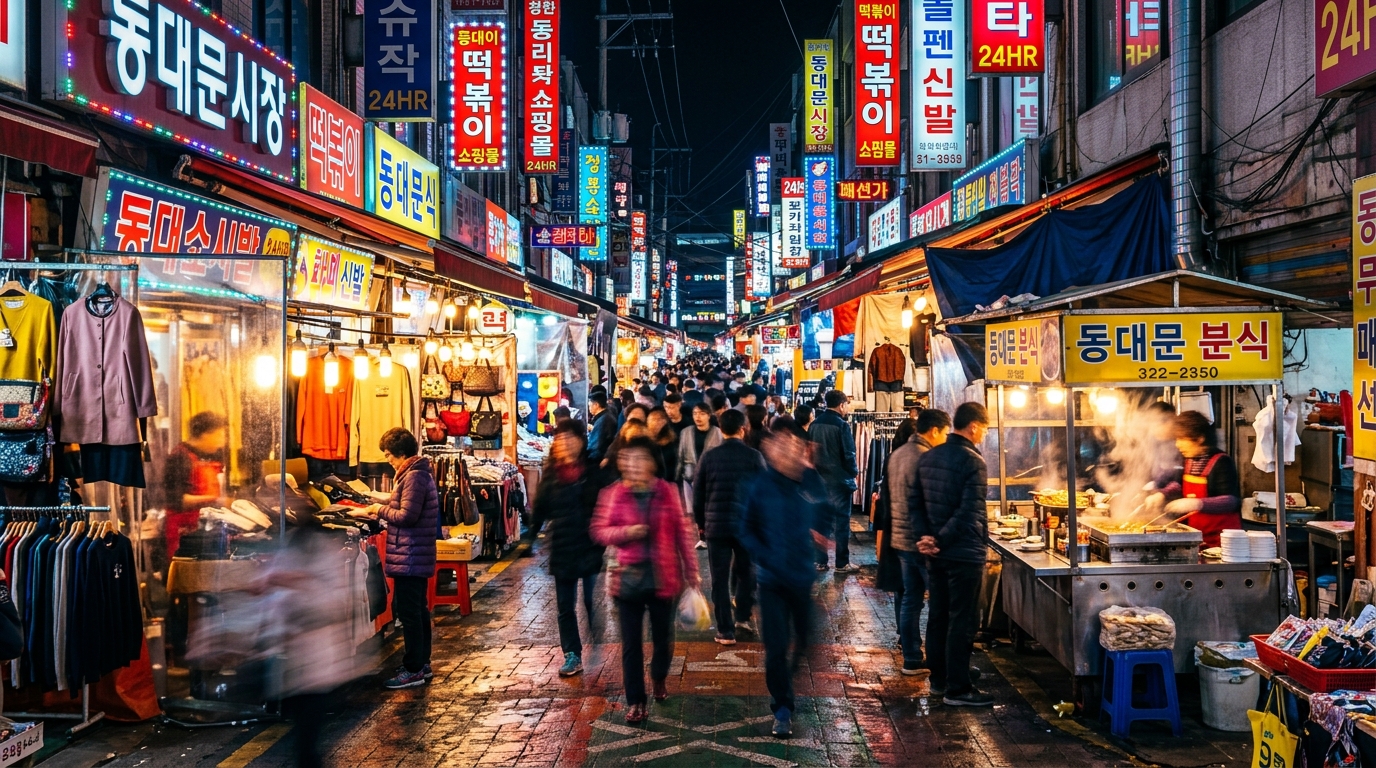
Many visitors make the mistake of assuming everything in Dongdaemun is open to the public during daytime hours. The truth is that the most vital, high-energy wholesale action at venues like Nuzzon or APM Place does not peak until well past midnight. If you are a casual shopper just looking for a few items, Doota Mall is your safest bet; it operates like a standard, air-conditioned retail mall with set, daytime-friendly hours. The price-to-value ratio here is staggering, especially if you focus on the ‘Made in Korea’ sections. Do not be fooled by the fast-fashion mass-market items; look for the independent stalls in the upper floors that specialize in high-quality wool blends and bespoke-lite tailoring.
Hongdae: The Epicenter of Youth Rebellion
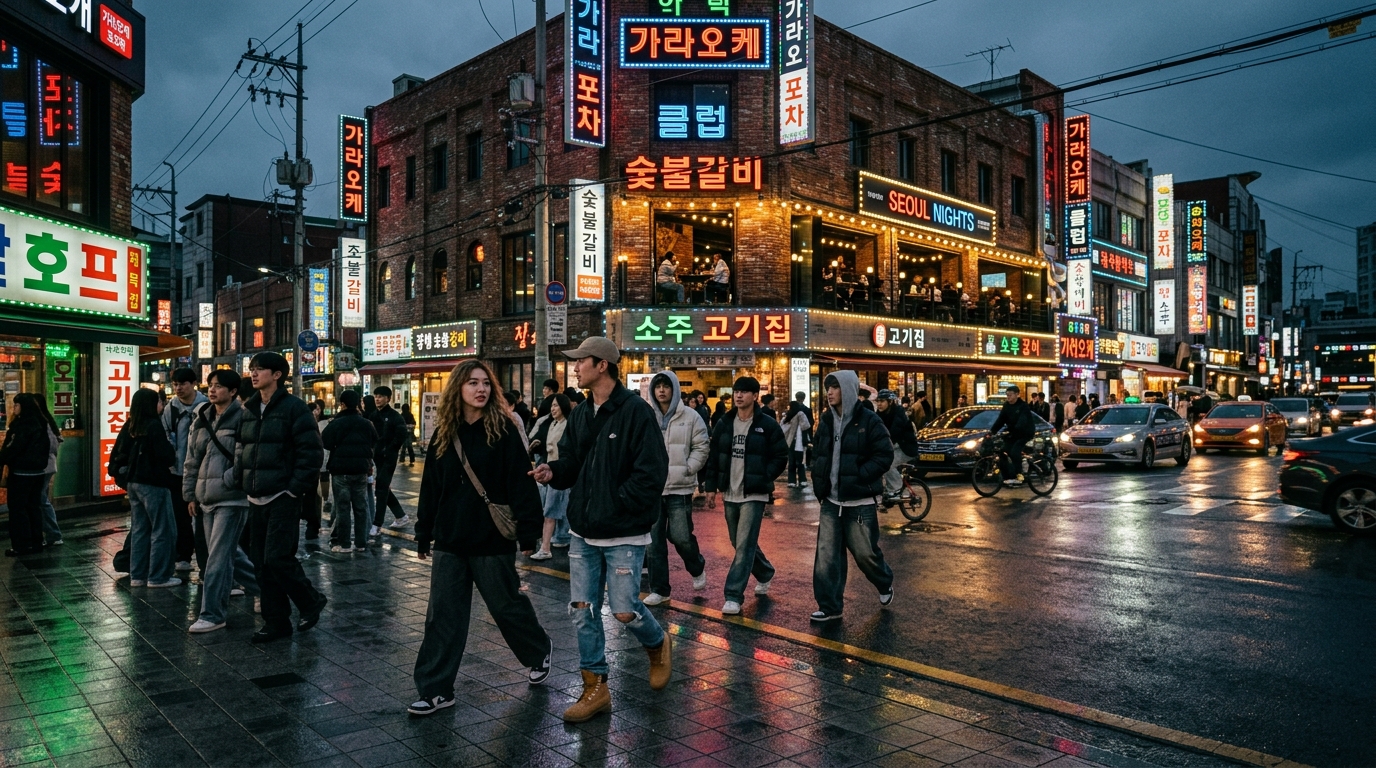
Hongdae is chaotic in a way that feels organic and uncontrolled. Because of the proximity to Hongik University, the fashion here is governed by the volatile tastes of art students, indie musicians, and street performers. When I want to see what will be trending in mainstream K-pop fashion six months from now, I go to the narrow side streets of Hongdae. This is not the place for established luxury; it is the arena for experimental silhouettes, massive denim cargo pants, and labels that are still finding their voice.
Focus your energy on the Red Road, which acts as the main artery for buskers and art exhibitions. Make sure to stop by KT&G Sangsangmadang to check out their rotating, design-heavy exhibitions. If you are looking for specific, influential local brands, look for the Musinsa flagships. Musinsa has effectively become the gatekeeper of Korean streetwear. Walking into their flagship store is like walking into a physical manifestation of their massive online influence. It is where you find the ‘Seoul look’ in its most concentrated, youthful form.
Itaewon: The Cosmopolitan Crossroads
Itaewon feels distinctly separate from the rest of the city. Because of its history as a hub for international visitors and military personnel, it has developed a hybrid aesthetic that blends traditional Korean craftsmanship with western-leaning, individualistic tailoring. When I need a perfectly cut blazer or a hard-to-find vintage item, I look to the shops tucked away behind the Noksapyeong bridges.
It is critical to remember that the fashion scene here is more understated than the hype-filled streets of Hongdae. You will find fewer logo-heavy drops and more longevity-focused boutiques. Keep an eye on the schedule for the Antique and Vintage Festival; if your trip coincides with it, you will find items that are impossible to source anywhere else in the city. The vibe here is slower, more curated, and feels significantly more like a European design district than any other part of Seoul.
Who Should Visit These Districts (And Who Should Not)
Choosing the right neighborhood for your shopping trip depends entirely on your specific goals as a buyer or traveler.
You should visit Seongsu if: You are an architectural enthusiast or a design professional who values the atmosphere of a store just as much as the products inside. This is the place for high-end, conceptual shopping.
You should visit Dongdaemun if: You are a professional buyer, a thrifty trendsetter, or someone who loves the adrenaline of late-night commerce. If you are looking to buy one or two items, this might be overwhelming.
You should visit Hongdae if: You are looking for an experimental wardrobe, appreciate indie music, and enjoy high-energy, crowded environments where you can browse for hours without a specific goal.
You should visit Itaewon if: You prefer a slower, more curated experience and have a genuine interest in vintage exploration or high-end bespoke tailoring. It is the most ‘personal’ district in the city.
Skip these districts if: You are looking for a relaxing, quiet walk. None of these neighborhoods offer true tranquility; they are high-traffic, sensory-heavy environments that require significant walking. If you want a luxury shopping experience without the crowds, stick to the flagship department stores in Gangnam instead. The pressure to keep moving in Dongdaemun or the crush of students in Hongdae can be draining if you aren’t prepared for it.
Cost and Value Breakdown: A Stylist’s Perspective
Value in Seoul is entirely subjective and depends on your ability to discern quality. In the wholesale markets of Dongdaemun, you can pick up high-quality cotton shirts or basic trousers for as little as $15–$25 if you know how to bargain and buy in volume (usually two or more pieces). Conversely, a trip to a flagship store in Seongsu can easily run you $300–$800 for a single designer piece.
My personal strategy is to mix the two tiers. I buy my base layers, simple knits, and accessories at NyuNyu or the smaller stalls in Dongdaemun, and then I save my budget for one or two ‘hero’ pieces from established Korean designers like Minju Kim or Post Archive Fashion. This ‘high-low’ approach is exactly how most local stylists achieve their signature look. Do not spend your entire budget on one item; the beauty of the Korean fashion scene is the ability to layer affordable, high-quality basics with a single, expensive, statement silhouette.
Common Mistakes to Avoid
Ignoring the Monday Rule: I once arrived at the Leeum Museum of Art in Itaewon on a Monday, only to realize that almost every major cultural destination and many independent boutiques in the district close on Mondays. I wasted an entire morning because I failed to check the website. Always check the operational hours 24 hours in advance.
Overestimating Your Stamina: Seoul is a walking city. In Dongdaemun alone, I have easily logged 20,000 steps in a single night. Do not wear heels or stiff leather shoes. Prioritize comfort, as you will likely be navigating steep stairs and uneven industrial flooring in repurposed warehouse spaces in Seongsu.
- Misunderstanding Wholesale Etiquette: If you are visiting a wholesale-only mall in Dongdaemun, do not be surprised if a vendor refuses to sell you a single item. They are there to fulfill bulk orders for retail stores. If they say no, just move on to the next stall without making a scene. It is not personal; it is just business.
- disneyparksblog.com
- www.vogue.in
- www.koreatimes.co.kr
- www.bbc.com
Frequently Asked Questions
1. Is it possible to shop wholesale in Dongdaemun if I’m not a professional buyer?
Yes, it is possible, but approach it with the right etiquette. Some stalls in the wholesale-only malls like the upper floors of APM Luxe may refuse to sell single pieces, especially if they are actively packing shipments. Always ask politely, “One piece, okay?” with a smile. If they say no, simply nod and move to the next stall. Many smaller shops are happy to make the sale if they have stock on hand.
2. Are the sizes in Seoul fashion districts the same as international sizes?
Generally, no. Korean sizing tends to run smaller and is often tailored for a slimmer, more structured silhouette. If you are buying ‘oversized’ or ‘boxy’ streetwear pieces, this is less of an issue, but for tailored pants or shirts, I highly recommend trying everything on. Do not trust the tags; always check the garment against your own measurements.
3. Do I need to carry cash for these districts?
While Korea is rapidly becoming a digital-first economy, cash is still highly useful in the Dongdaemun wholesale markets. Vendors often give a small discount if you pay in cash, as it helps them avoid credit card transaction fees. For Seongsu and the major flagships, credit cards are standard and expected. I suggest carrying at least 100,000 KRW in cash as a contingency for small, indie pop-up shops that might not have a terminal.
Conclusion
Seoul’s fashion districts offer a masterclass in modern retail. By splitting your time between the industrial-chic warehouses of Seongsu, the high-energy streets of Hongdae, and the nocturnal intensity of Dongdaemun, you will see the full spectrum of the Korean style evolution. My best advice is to remain flexible. Some of my favorite pieces in my closet didn’t come from a planned store visit, but from a small pop-up I stumbled upon while trying to find a shortcut back to the subway. Wear your most comfortable sneakers, keep your camera ready for the unexpected, and leave room in your suitcase; you will need it.