
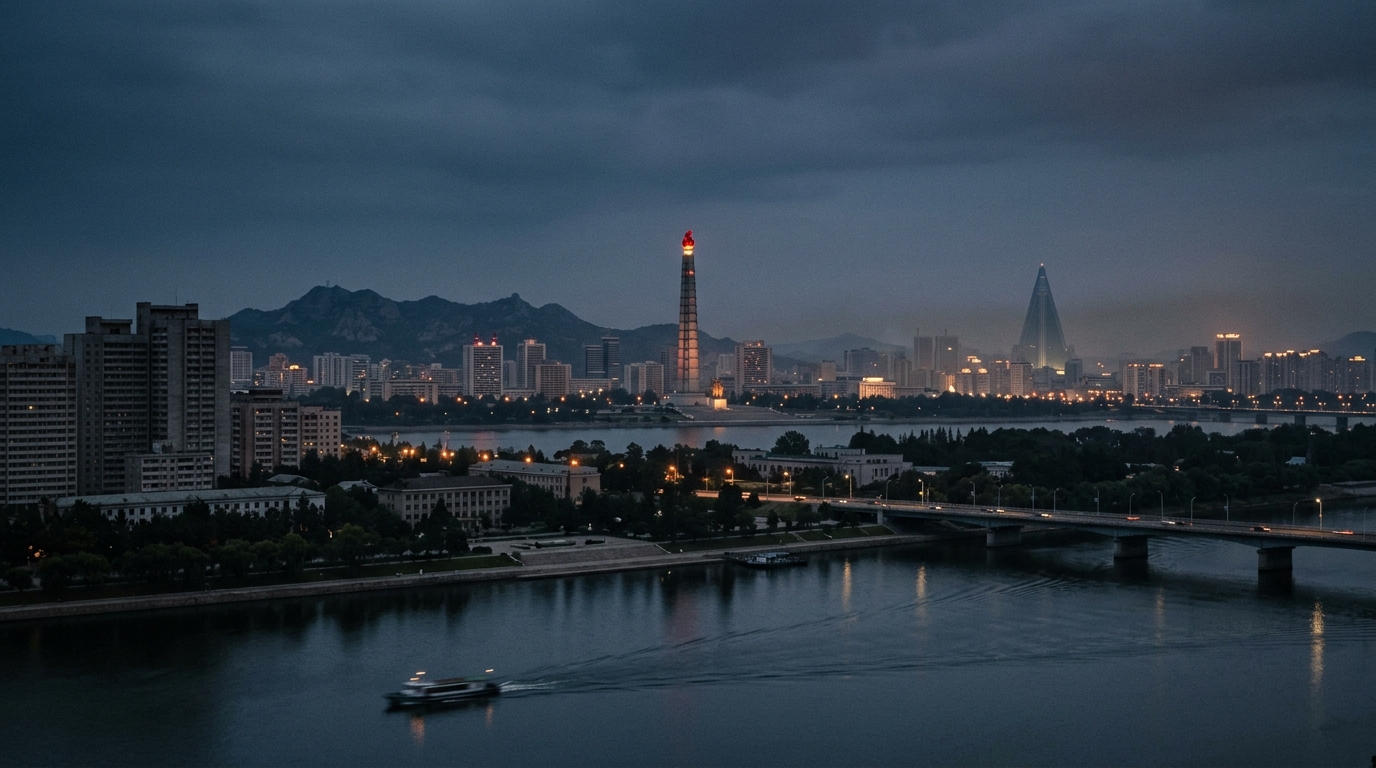

Navigating the opaque and often contradictory world of north Korea politics requires a firm grasp on the intersection of hereditary power, state-controlled propaganda, and the daily survival mechanisms of its 26 million citizens. When you look beyond the bluster of missile tests and the choreographed parades in Pyongyang, you find a state that prioritizes the maintenance of the ‘Paekdu bloodline’ above all else. Having spent years tracking the internal shifts within the Kim regime, the most important realization I’ve reached is that the state’s outward projections—those giant military hats and the claims of genius—are functional tools designed to mask deep-seated fragility rather than expressions of genuine strength.
Quick Summary
Hereditary Succession: The grooming of Kim Jong Un’s daughter, Ju-ae, serves to stabilize the fourth-generation transition of power, signaling continuity to the elite.
Propaganda vs. Reality: While the regime promotes a ‘genius’ narrative for its leaders, the public remains largely cynical, viewing state claims with detached indifference.
Military Aesthetics: Exaggerated military headgear is a psychological tool used to project dominance and mask the physical impact of decades of food insecurity.
economic Resilience: The regime utilizes a mix of total surveillance and restricted market activity (Jangmadang) to prevent collapse, with 98% of trade tied to China.
Strategic Signaling: North Korea views its nuclear arsenal as an existential insurance policy rather than a bargaining chip for disarmament.
The Bottom Line: What You Need to Know
If you are trying to understand the current trajectory of the DPRK, the bottom line is that the regime is not interested in total denuclearization, and it never will be. For the average policy observer, the most important development is the pivot toward ‘arms control’ rather than disarmament. North Korea views its nuclear arsenal as an existential insurance policy against regime change. If you are looking for policy solutions, focus on threat reduction and crisis management. If you are looking for social context, realize that the ‘myth’ of the Kim family is a forced performance, not a spontaneous expression of national love. The citizens are trapped in a system where survival depends on the public validation of lies they know to be false.
The Hereditary Succession: Positioning the Fourth Generation
In early 2026, I watched with interest as Kim Jong Un brought his daughter to the Kumsusan Palace of the Sun. This was a calculated move. By placing her in the most sacred space of the state, the regime is signaling to its cadre that the ‘Paekdu bloodline’ is secure. International observers often get bogged down in trying to identify her by name or age, but inside the country, those details are irrelevant. The regime’s messaging has shifted from portraying her as a child to a poised, adult-like figure, often dressed in formal attire that mirrors the gravity of her father’s role.
My research suggests that the state’s effort to brand her as an ‘exceptional genius’ is not meant to convince the elite—who know the truth—but to solidify the succession narrative for the lower-level bureaucracy. When I hear reports from informants in Ryanggang, they speak of a cynical public that mocks these displays. Yet, this mockery is quiet, private, and deeply dangerous. The regime doesn’t need people to love her; they need people to accept her presence as an inevitable fact of nature. It’s a transition being managed through sheer repetition and the erasure of alternatives.
Military Aesthetics: The Psychology of the ‘Giant Hat’
One of the most striking features of the Korean People’s Army (KPA) is the absurdly oversized service cap. I once had a conversation with a military analyst who pointed out that these aren’t just fashion choices; they are tactical psychological tools. During the 1990s, the famine—often called the ‘Arduous March’—caused widespread stunting in the population. The average North Korean soldier today is significantly shorter than their South Korean counterpart.
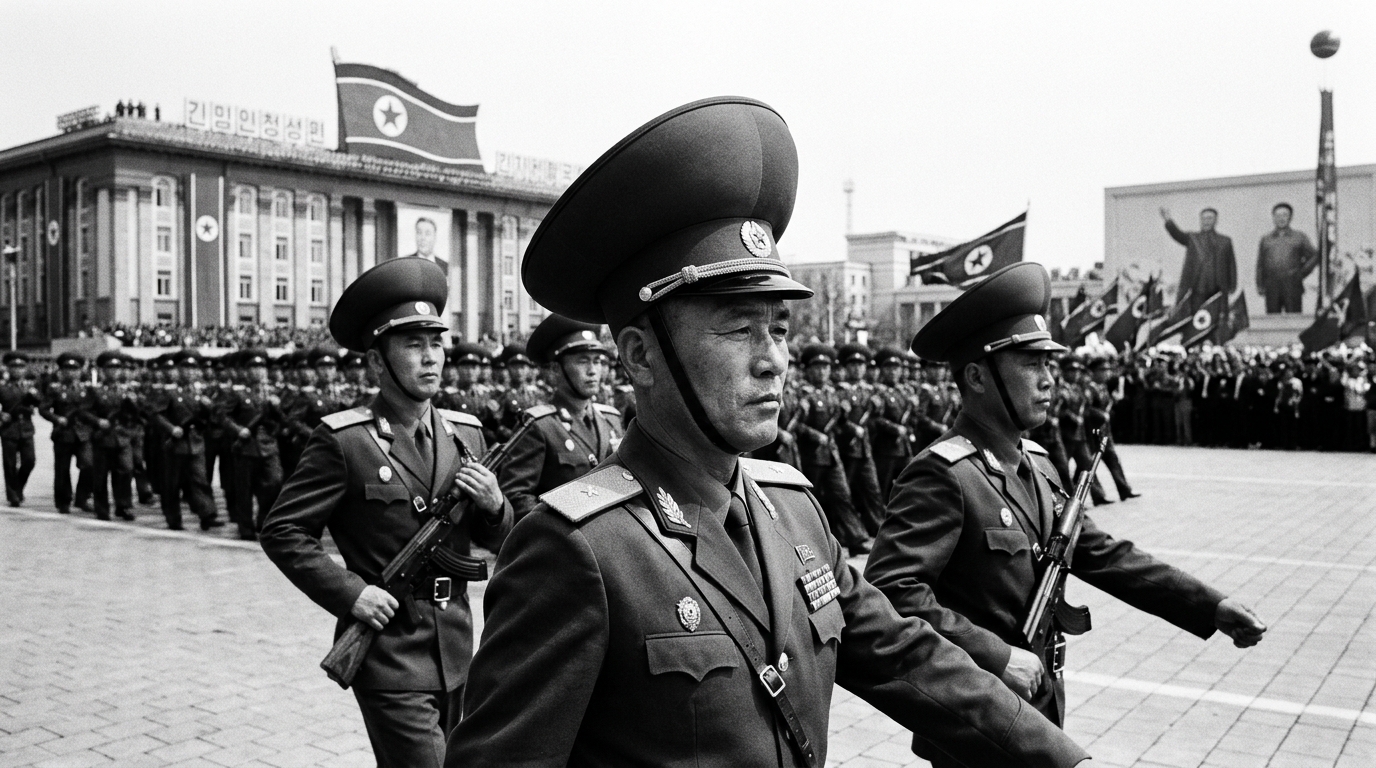
By inflating the size of these hats, the regime creates a visual ‘false front’ that makes soldiers look taller and more imposing. The design, which borrows heavily from Soviet and even historical authoritarian aesthetic roots, is meant to instill fear in foreign observers and maintain a strict sense of hierarchy at home. I’ve found that the more ornate and exaggerated the headgear, the more likely that unit is a ‘propaganda unit’ designed for parades rather than actual combat. If you see a soldier in an oversized cap, you aren’t looking at a hardened front-line fighter; you are looking at a living billboard for the state’s attempt to project strength amidst persistent malnutrition.
Diplomatic Overtures: The ‘Trump Factor’ and the Future
There is a peculiar kind of diplomatic nostalgia in Pyongyang. When Kim Jong Un speaks of his ‘fond memories’ with Donald Trump, it isn’t just empty rhetoric. It reveals a preference for a specific style of diplomacy: the leader-to-leader, transactional model. Pyongyang remains allergic to multilateral talks or phased disarmament plans like those proposed by previous South Korean administrations. Any ‘step-by-step’ agreement is viewed by the KWP as a trap designed to lead to the regime’s eventual dismantling.
For anyone following these developments, the shift is clear: North Korea is betting that it can outlast international patience. They have successfully ignored two decades of sanctions while expanding their nuclear arsenal by an estimated 15 to 20 weapons per year. This is a massive shift. The goal has evolved from ‘getting to the table’ to ‘getting the table to accept us as a nuclear power.’ If the U.S. and its allies shift toward a framework that accepts the status quo of a nuclear-armed North, we will see a rapid acceleration in high-level diplomatic activity. But this comes at the cost of abandoning the non-proliferation goals that have defined regional policy for over 30 years.
Life Under Totalitarian Control: The Daily Struggle
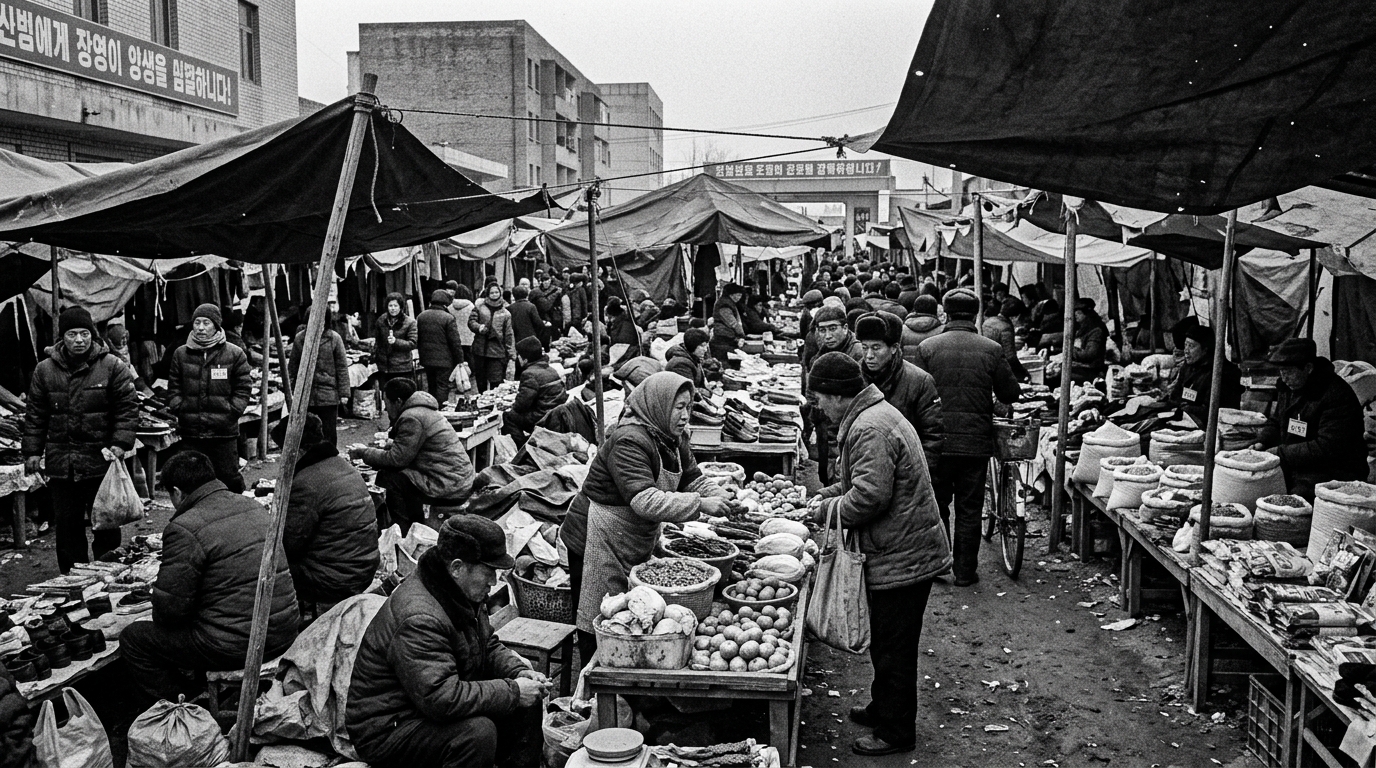
Beyond the geopolitics, the reality for the average citizen is one of managed terror. I am often asked if there is a ‘middle class’ in North Korea. Yes, sort of. Those who work in the trade sectors or participate in the state-tolerated (but often targeted) Jangmadang markets have access to more resources than the average farmer. But even for them, the threat of the labor camp is a constant shadow. I’ve read reports where families were sent to camps for the ‘crime’ of owning a single USB drive with foreign movies.
This isn’t just about controlling information; it’s about atomizing the population. When you create a society where you cannot trust your neighbor, or even your family member, to keep a secret, you prevent the formation of any organized opposition. I once read about a child who was taught in school that the regime controls the weather. It sounds ridiculous to us, but for a child who has never seen the internet, who has never read an uncensored book, that is the baseline reality. The regime’s greatest strength isn’t its nukes—it’s its ability to monopolize the very definition of truth.
Economic Realities and the China Connection
We must acknowledge that China remains North Korea’s essential economic lifeline, serving as its top trading partner for over two decades. In 2023, China accounted for approximately 98% of North Korea’s official imports and exports. This dependency creates a delicate balance. While Beijing provides direct aid in the form of food and energy, they are increasingly concerned about the instability of their neighbor. UN agencies estimate that over 40% of the population, or approximately 11 million people, remains undernourished.
My research into the Jangmadang markets suggests these are the only true ‘engine’ of the North Korean economy. There are at least 436 officially sanctioned markets nationwide, generating an estimated $56.8 million USD annually for the regime in stall rents and taxes. This marketization is a bottom-up response to the collapse of the state-run Public Distribution System. While the regime attempts to tax and control these spaces, it has created a nascent civil society where citizens share price information via private mobile networks, operating largely outside the state’s reach.
Who Should Study North Korea Politics (And Who Should Not)
This is ideal for:
Policy Analysts: If you are working in international relations or defense, understanding the ‘why’ behind the rhetoric is crucial. You need to distinguish between posturing and genuine state interest.
Historians of Totalitarianism: The DPRK provides a masterclass in how a regime maintains control in the digital age while remaining effectively analog.
Human Rights Advocates: The fight for basic visibility and aid for the 26 million people living under this system requires a granular understanding of how power flows through the KWP.
You might want to skip this if:
You are seeking quick solutions: There are no easy ‘fixes’ to the situation. If you are looking for a simple path to regime change or disarmament, you will only be disappointed.
You cannot handle dark subject matter: The realities of the labor camps and the systemic human rights abuses are genuinely harrowing. It is not a topic to approach casually.
The Strategic Deterrence Failure
We must address the uncomfortable truth that the ‘golden age’ of deterrence—where we assumed a conventional, static approach would contain the North—is ending. A recent Atlantic Council study involving over 100 experts confirms that the primary risk is not an all-out invasion, but coercive escalation. North Korea is moving toward a strategy where they believe they can use limited violence to achieve political goals without triggering a regime-ending response.
This is a dangerous game. Pyongyang now has a stockpile of over 50 warheads, including tactical variants like the Hwasan-31. When you combine this with solid-fuel ICBMs and nascent submarine-launched capabilities, the escalation ladder becomes significantly more complex. The U.S.-ROK alliance is currently poorly structured for these ‘mid-level’ conflicts. We are essentially trapped in a system that only has two modes: ‘peacetime’ and ‘total war.’ We need to develop better crisis management protocols that don’t rely on the empty promise of ‘preemptive’ strikes which only encourage the North to ‘use it or lose it.’
Common Mistakes to Avoid
- Assuming the Regime is ‘Rational’ by Western Standards: Western observers often model North Korean behavior on ‘rational actor’ theories, assuming that if the price is right, they will give up their nukes. This fails to understand that for Kim Jong Un, the nukes are the regime. Giving them up is not a bad trade; it’s a suicide pact. I’ve seen analysts spend years building economic models for denuclearization that completely ignore the existential security dilemma the regime perceives.
- Confusing Propaganda with Public Opinion: Never mistake the cheers at a parade or the adulation in a state newspaper for the actual feelings of the people. In a system where non-participation is viewed as treason, performance is a survival mechanism. Do not interpret the ‘enthusiasm’ you see on state TV as evidence of legitimate support. I recall a colleague once pointing out that even the most fervent parade marchers are often the same people who, in private, would risk years of labor camp imprisonment to trade a sack of rice on the black market.
Frequently Asked Questions
Is the North Korean military actually as powerful as it looks in parades?
Not really. While they maintain a massive standing army and a nuclear arsenal, their conventional equipment is largely outdated—much of it dating back to the Cold War. Many units function more as labor forces, working on infrastructure projects rather than training for combat. The ‘power’ is concentrated in the elite strategic units and the nuclear weapons themselves. Do not be misled by the pageantry of the parades; they are designed to compensate for the reality that the North lacks the resources to modernize its entire infantry.
Why does the regime hold on to its strict isolationist stance despite the food shortages?
Control is more important than comfort for the Kim regime. The state knows that opening the country to foreign influence, trade, and the internet would inevitably lead to questions about the legitimacy of the Kim family. They consciously choose a smaller, impoverished, and controlled nation over a prosperous, open, and potentially uncontrollable one. This preference for total control over economic prosperity is a foundational, non-negotiable tenet of North Korean internal politics.
Is there any hope for change from within?
Historically, change in totalitarian states often comes from the elite or from a collapse caused by economic exhaustion. Currently, the internal security apparatus is so effective that the risk for any individual to organize is nearly 100%. Genuine change will likely require a ‘black swan’ event, such as a severe internal power struggle or a total economic implosion that the state can no longer suppress. While the growth of the private markets provides some hope for a slow, bottom-up shift, we should remain cautious about expecting a democratic transition anytime soon.
What is the current impact of the Russia-North Korea partnership?
This has fundamentally shifted the diplomatic landscape. With the signing of the June 2024 defense treaty, North Korea has moved to provide an estimated 5 million artillery shells to Russia for the war in Ukraine. This relationship has effectively insulated Pyongyang from traditional UN sanctions and provided it with a more independent maneuver space. For U.S. policymakers, this alliance has made it much harder to use the UN Security Council as a tool for pressure, as Russia and China have effectively signaled they will no longer participate in the international isolation of the North.
Conclusion: Looking Ahead
Studying North Korea politics is a sobering reminder of the limits of external influence. The regime is a master of adaptation, having survived the collapse of the Soviet Union, the famine of the 90s, and the isolation of the COVID-19 pandemic. My takeaway is that we must stop viewing the DPRK as an anomaly that will soon ‘fix itself.’ Instead, we must treat it as a permanent, high-stakes variable in global security. If there is a way forward, it lies in small, iterative steps toward threat reduction and the agonizingly slow process of information penetration—helping the people of North Korea see a world that the regime works so hard to keep hidden. Keep watching the internal ‘Lecture Outlines’ of the KWP; they are the true ledger of how this country is evolving. We should focus on long-term engagement and strengthening the ROK-US alliance to ensure that we don’t succumb to a catastrophic miscalculation. The future of the peninsula will likely be defined by the tension between the regime’s desperate need for control and the slow, inevitable creep of economic reality.