
Traveling to gangnam on a budget requires shifting your perspective from the curated, high-gloss image seen in global media to the hyper-functional, neighborhood-level reality that residents navigate every day. When I arrived for my first extended stay in Seoul, I was intimidated by the sheer scale of the high-rises and the perception that everything in this district commanded a premium price. I spent my first afternoon avoiding restaurants that didn’t have English menus, which was a costly mistake that almost ruined my daily allowance. By the third day, I learned that the secret to enjoying this district isn’t about finding ‘cheap’ spots, but about identifying the authentic local infrastructure that exists alongside the luxury.
Quick Summary
Prioritize Transit: Use Naver Map or KakaoMap exclusively; Google Maps provides inaccurate walking and transit data in Seoul.
Strategic Stays: Base yourself in Sinnonhyeon or Sinsa for better price-to-accessibility ratios than the main station hub.
Smart Dining: Target “Bib Gourmand” restaurants and basement-level local eateries to enjoy world-class meals under $15.
Book Early: Secure accommodation at least 3-4 months in advance to avoid surge pricing during business travel peaks.
The T-Money Advantage: Use a T-Money card for all subways and buses to take advantage of integrated transfer discounts.
Can You Actually Afford Gangnam?
Yes, you can absolutely enjoy this neighborhood without living in a constant state of financial stress. The common misconception is that Gangnam is a monolith of luxury; in reality, it is a highly segmented district. You can spend $400 on a steak dinner in Apgujeong, but you can also find an incredible, filling bowl of cold buckwheat noodles for $8 just three blocks away. The key is to resist the gravitational pull of the most visible tourist magnets and commercial malls. By leaning into the local habits of office workers—who, contrary to popular belief, are looking for affordable, quick, and high-quality meals—you align your spending with the people who live and work here.
Choosing Your Base: Neighborhood Breakdown
Where you drop your bags dictates how much time and money you will spend on transit. Gangnam is sprawling, and while the subway is world-class, spending an hour commuting across the district because your hotel is poorly positioned is a waste of your vacation time.
Sinnonhyeon: The Strategic Sweet Spot
If you want to experience the intensity of Seoul without being trapped in the commercial sterility of the main business hub, Sinnonhyeon is my top recommendation. It serves as a central transit node that gives you equal access to the trendy boutiques of Sinsa and the corporate energy of the central district. I found the 24-hour barbecue spots here to be lifesavers; they are populated by locals finishing late shifts, meaning the food is consistently fresh and the pricing is designed for the neighborhood, not for international tourists.
Gangnam Station: The Hub of Efficiency
This is the beating heart of the local subway network. Choosing to stay here is a trade-off: you sacrifice quiet nights and neighborhood charm for unparalleled logistical speed. The crowds here are a physical force, especially during rush hour. If you are the type of traveler who views a hotel as a place to sleep and a subway stop as a gateway to the entire city, this is your zone. Just be warned that the aesthetic is pure concrete and glass; do not expect a view of a tranquil park from your window.
Sinsa-dong: Fashion and Cafe Culture
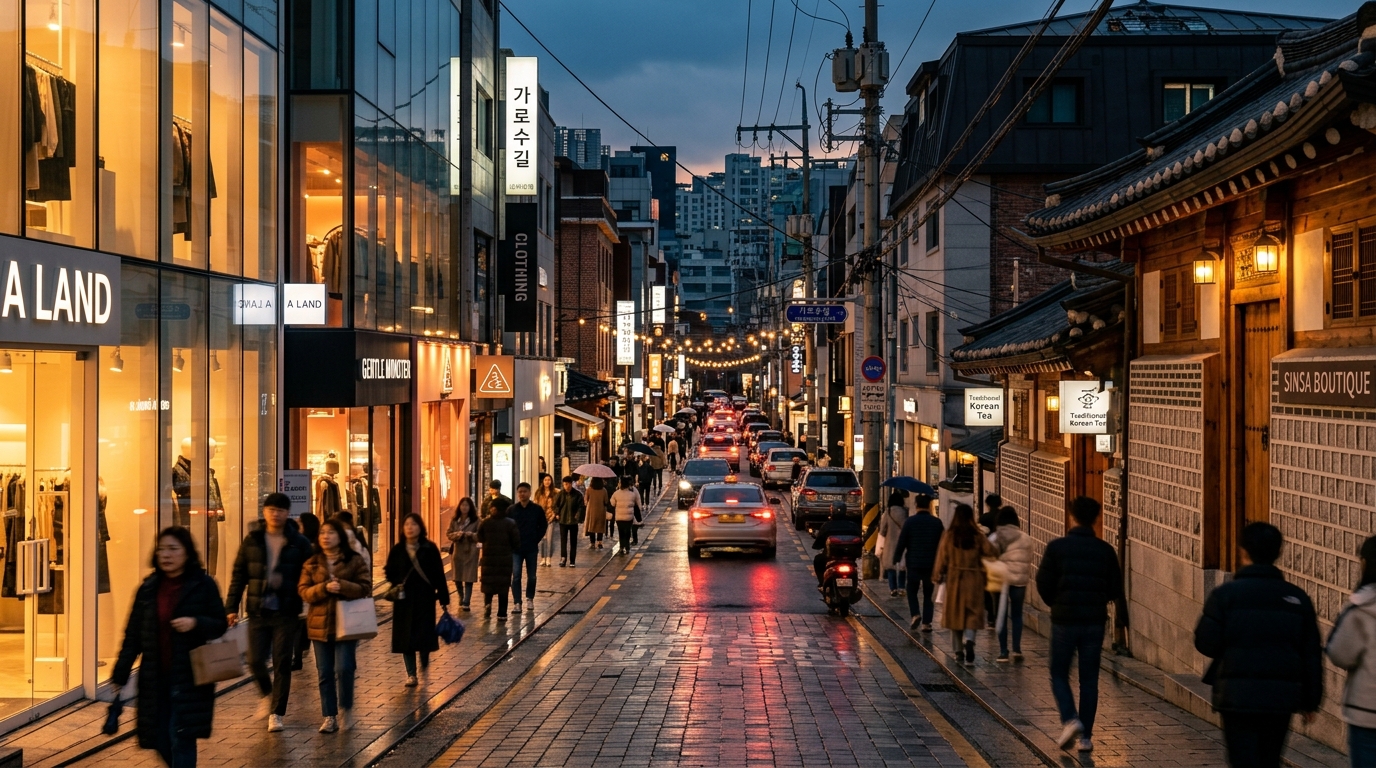
Sinsa-dong is where you go if you want a more human-scale experience. The tree-lined streets, specifically around Garosu-gil, offer a respite from the glass canyons of the business district. It is undeniably trendier, which can lead to higher prices, but the trade-off is the quality of the coffee and the independent boutiques. I spent hours walking these streets without buying a single high-end garment; the people-watching and the atmosphere are free, and that is where the real value lies.
Samseong-dong: The Mall Experience
This area is defined by the COEX complex. It is essentially an indoor city. If you are traveling during the sweltering heat of summer or the bitter cold of winter, this might be the most comfortable place to be. It is sterile, yes, but it is extremely reliable. Families often favor this area because the proximity to the aquarium, library, and massive food courts eliminates the stress of navigating an unfamiliar city for every single meal.
Culinary Strategy: Eating Well Without the Markup
Dining in Gangnam is a test of your ability to ignore the flashy signs. When I first visited, I would walk right past the best restaurants because they were located in basement levels with small, handwritten menus. I learned to look for places that were crowded with people in business-casual attire; these workers are looking for speed, value, and high quality—the exact same requirements I had as a traveler.
Local Specialties to Prioritize
- Pyeongyang-style Dumplings: These are much lighter than the heavy, greasy dumplings you might find elsewhere. A simple, fragrant broth with fresh vegetables and handmade dough provides a substantial meal for a very low cost.
- Grilled Pork Butt: Do not feel obligated to order the most expensive Wagyu-style beef. High-quality cured pork butt grilled over Binchotan charcoal is a foundational Seoul experience. It is rich, smoky, and typically paired with a vast array of complimentary side dishes.
- Soy Sauce-Marinated Crab: This is a delicacy that looks expensive but is often priced reasonably at specialized, family-owned shops. It is a messy, hands-on experience, but it is one of the most unique flavor profiles you will encounter in South Korea.
- You are on a literal shoestring budget: While this is a budget-focused guide, the ‘floor’ for prices in Gangnam is still higher than in northern Seoul districts like Seongbuk or Dongdaemun.
- Trusting Google Maps for Walking: This is the most common error. Google Maps is often imprecise in Korea, leading you on long, convoluted routes that avoid the shorter, pedestrian-only alleyways. Use Naver Map or KakaoMap. These apps are the local standard and will show you exactly which subway exit to take to avoid an unnecessary 15-minute walk.
- The ‘All-in-One’ Itinerary Trap: Do not try to visit the temple, the mall, the fashion district, and a street market in the same day. Gangnam is physically large. You will spend more time on the subway than actually exploring. Choose one corner of the district per day and go deep. If you are in Sinsa-dong, commit to it. Explore the back alleys for coffee, find a local bookstore, and eat at a shop that looks like it hasn’t changed since 1995. You will save money and gain a deeper understanding of the area.
- destinationlesstravel.com
- www.willflyforfood.net
- www.straitstimes.com
- destinationlesstravel.com
- matadornetwork.com
Dining Rules of Thumb
Always look for the ‘Bib Gourmand’ label. This indicates a high level of quality at a moderate price. Also, do not underestimate the power of the convenience store. South Korean convenience stores offer prepared meals that are far superior to the ‘sad sandwiches’ you might find in Western equivalents. A quick kimbap roll or a freshly prepared lunchbox from a nearby store can fuel you for a morning of walking at a cost of less than $4.
Balancing Modernity and History
It is easy to get lost in the neon, but the city has preserved critical pockets of history. My visit to the Bongeunsa Temple was the single most important ‘reset’ of my trip. It sits directly across from the busy COEX mall, but as soon as you step through the stone gate, the noise of the traffic vanishes. It provides an essential perspective on time; these structures have stood for over a thousand years, watching the skyscrapers grow up around them. Entry is free, and the quiet gardens are the perfect place to sit with your thoughts when the city’s intensity feels like too much.
Similarly, the Seonjeongneung Royal Tombs are a massive, forested oasis. You are paying a small entry fee for peace. The walking paths are well-maintained, and you can spend an hour wandering through the trees, completely disconnected from the digital noise of the office district. I recommend heading here on a weekday morning to avoid the weekend crowds.
Who Should (And Who Should Not) Visit Gangnam
This district is a high-octane environment that demands a certain type of traveler to appreciate its specific pace.
This is ideal for:
The Efficient Explorer: If you want your transit to be on time and your services to be available 24/7, this is the most capable district in the city.
The Food Enthusiast: If you want to witness how traditional, centuries-old recipes are adapting to the modern, high-speed pace of a global business capital.
The Urban Photographer: If you want to document the sharp, jarring contrast between brutalist skyscrapers and ancient temple architecture.
You might want to skip this if:
You seek a slow, pastoral experience: If you are looking for a ‘traditional’ experience akin to rural village life, you will be disappointed. Try Bukchon Hanok Village or Insadong instead.
You hate sensory overload: The flashing lights, the massive screens, and the sheer volume of humanity during rush hour can be overwhelming if you are prone to overstimulation.
Common Mistakes to Avoid
Cost and Value Breakdown
To manage your budget, it is helpful to understand where your money goes. The biggest variable is, as always, your accommodation.
| Item | Daily Estimate (USD) | Tips for Saving |
|---|---|---|
| Accommodation | $100 – $250 | Book 3+ months early; look for business hotels. |
| Dining | $30 – $60 | Stick to local, non-chain restaurants; avoid hotel breakfasts. |
| Transportation | $10 – $15 | Use a T-Money card; avoid taxis during peak hours. |
| Attractions | $0 – $20 | Most historic sites have very low entry fees. |
These numbers reflect a realistic, mid-range experience. If you find yourself spending more, it is likely due to spontaneous retail purchases or premium alcohol. The beauty of Seoul is that the ‘essential’ cost of living well—great food and efficient transit—is surprisingly low.
Frequently Asked Questions
Is it safe to walk around Gangnam late at night?
Yes, it is remarkably safe. Seoul consistently ranks as one of the safest cities in the world. I have walked back to my hotel at 2:00 AM surrounded by crowds of students, office workers, and shop owners. You will rarely feel vulnerable. The most common ‘danger’ is simply the congestion of the sidewalks near the major subway exits, where you might get bumped by someone rushing to a late-night venue.
Can I survive here without speaking Korean?
Absolutely. While learning a few basic phrases—like ‘thank you’ (gamsahamnida) and ‘this please’ (igeo juseyo)—will earn you smiles and perhaps slightly better service, you do not need to be fluent. Most businesses in this district see international visitors every day. If you struggle, pointing at the menu or using a real-time translation app on your phone works perfectly well. Do not let the language barrier stop you from trying the smaller, local-looking restaurants; owners are usually delighted that you made the effort to find them.
How far in advance should I book my hotel?
I advise a 3 to 4-month window for the best rates. Gangnam is a massive business hub, and hotel prices spike during major conventions or holiday periods. If you book last-minute, you are often left with either overpriced luxury suites or poorly located options that force you to spend extra money on taxis. By planning ahead, you can secure the ‘hidden gems’—those quiet, comfortable business hotels that offer the perfect balance of proximity to the subway and a restful atmosphere.
Why do people say taxis are better? Are they?
For most travelers, the subway is definitively superior. It is clean, perfectly climate-controlled, and immune to the legendary traffic jams that can turn a 10-minute car trip into an hour of sitting in gridlock. Taxis are convenient if you are carrying heavy luggage or traveling in a large group late at night, but for your daily itinerary, they are an unnecessary expense that exposes you to the unpredictable nature of city traffic. Use the rail system and save the taxi budget for a better meal.
Conclusion
Navigating Gangnam on a budget is not about deprivation; it is about choosing authentic experiences over superficial ones. By basing yourself in a strategic neighborhood, relying on local transit, and prioritizing local eateries, you can experience the best this district has to offer without the expected price tag. The real soul of Gangnam is found in the quiet moments—the steam rising from a bowl of local noodles, the silence of a centuries-old temple, or a walk through an artsy alleyway at dusk. When you let go of the pressure to check every box on a generic ‘must-see’ list, you create space to find the aspects of the city that actually resonate with you. Travel with a plan, stay flexible, and focus on the daily rhythm of the people who call this fast-paced district home.