
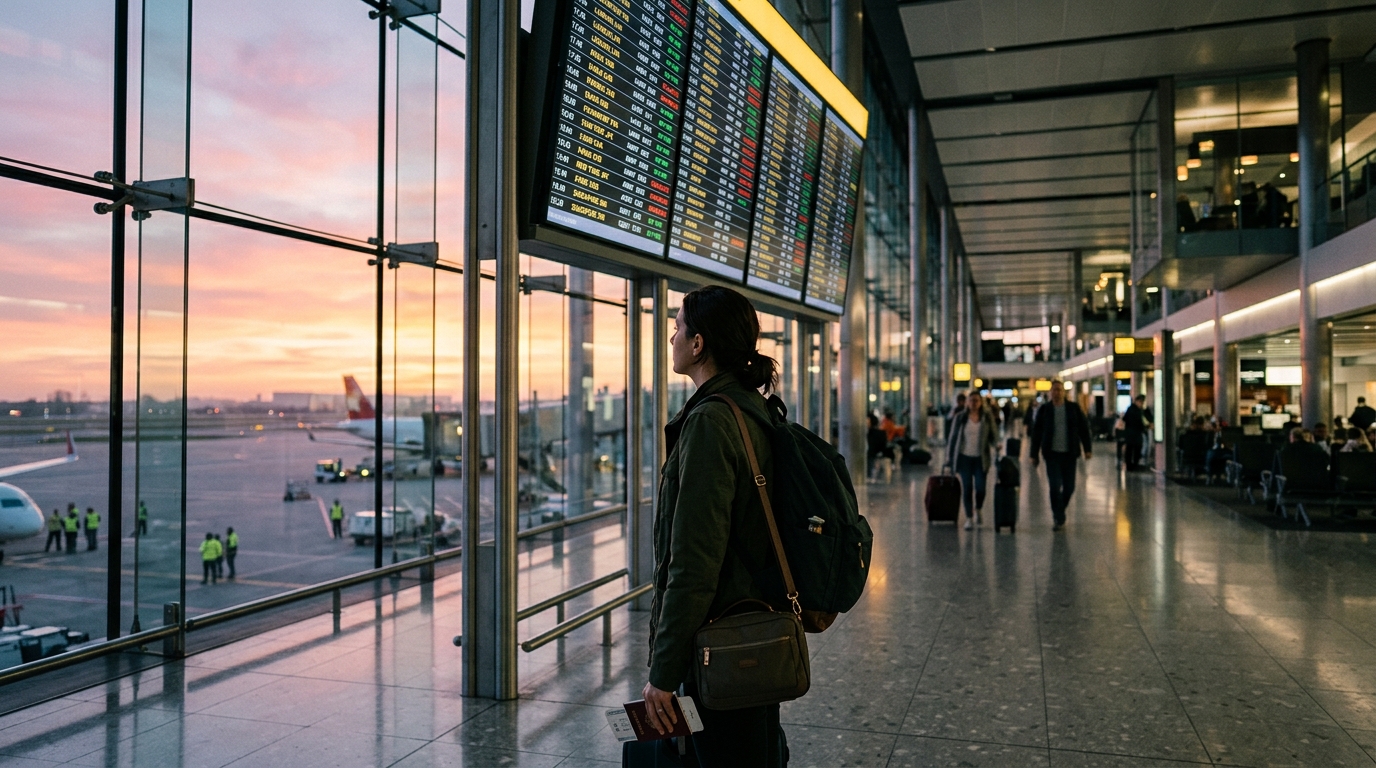

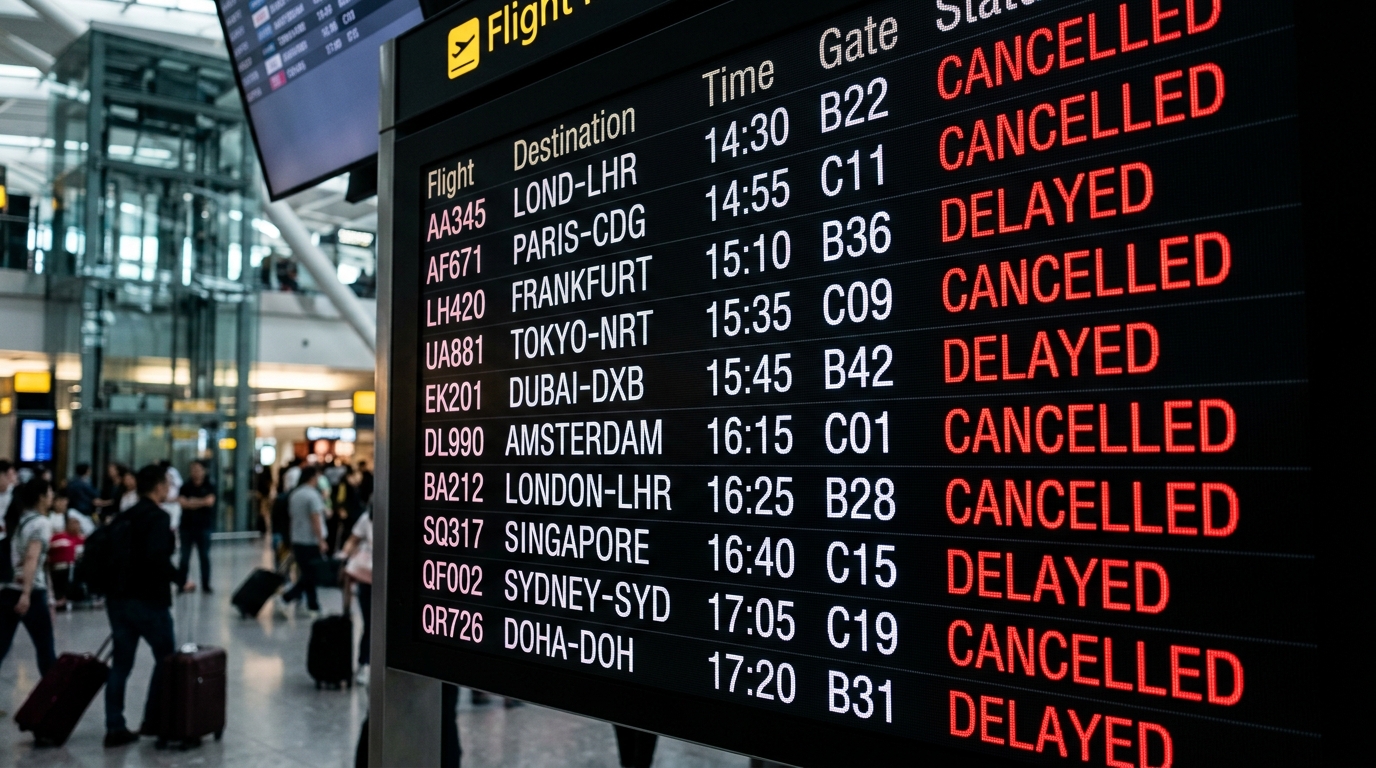
Navigating <a href="https://travelatlas.quantosei.com/2026/03/27/japan-transit-guide-2026-the-essential-strategy-for-travel/” title=”Japan Transit Guide 2026: The Essential Strategy for Travel”>flight disruptions in Japan has become an essential skill for any traveler as airlines face increasing operational volatility. When I sat at Narita last year watching the departure board turn bright red, I quickly learned that waiting for a gate agent is the slowest way to reach your destination. Recent data confirms that major hubs including Haneda, Kansai, and Fukuoka are experiencing consistent scheduling instability, often triggered by a cascade of mechanical issues, staff shortages, and regional air traffic management challenges.
Quick Summary: Key Takeaways
- Stay Alert: Monitor your airline’s mobile app 48 hours before departure to catch changes early.
- Understand Hubs: Tokyo’s Narita and Haneda are high-capacity hubs; if you are stuck, these airports offer the most rebooking options compared to regional alternatives.
- Mind Your Tickets: Always book your journey on a single itinerary to ensure the airline covers rebooking if a connection fails.
- Be Proactive: If you see a cancellation, immediately look for alternative flights on your phone before standing in a physical service line.
- Use Social Media: Sometimes, direct messaging an airline’s official handle on platforms like X is faster than waiting on hold for two hours.
- Know Your Rights: If you are delayed overnight, the airline is often required to provide vouchers for meals and hotel accommodations. Keep every receipt, as you will likely need to file for reimbursement later.
- Carry Essentials: I now pack a ‘go-bag’ with a change of clothes, phone charger, and basic toiletries in my carry-on. My checked luggage has spent the night in Tokyo without me more than once while I was stuck at a hotel in Chiba.
- Monitor Partner Airlines: If you are flying on a code-share, look at both the operating carrier’s site and the marketing airline’s site. They often display different information regarding seat inventory.
- www.travelandtourworld.com
- nomadlawyer.org
- www.scmp.com
- www.moroccoworldnews.com
- ftnnews.com
Why Your Flight Suddenly Vanishes
I once had a flight out of Osaka canceled simply because an incoming aircraft from Hokkaido was delayed by a rogue snowstorm. It seemed like a minor hiccup until I realized my entire connection to the U.S. West Coast was gone. Modern aviation is a delicate, interconnected web. When a carrier like JAL or ANA faces a minor technical fault with a 777 or 787, the downstream effect on crew duty hours and gate availability is immediate and severe.
Beyond mechanical issues, we are seeing broader systemic shifts. For example, recent airspace management protocols in Beijing and regional wind shear patterns have caused ripple effects across the entire Asian hub-and-spoke model. I learned the hard way that when the board goes blank, it is rarely just about my flight—it is about a system struggling to maintain rigid schedules amidst shifting environmental and diplomatic pressures.
Navigating the China-Japan Travel Freeze
If your travel plans involve transit through or between China and Japan, you need to be aware of the current cooling of bilateral relations. As of February 2026, many scheduled flights between these nations have been suspended or significantly thinned out due to geopolitical tension and official advisories. I recommend checking your route status daily if you have tickets booked through October 2026. Major carriers are currently offering fee-free refunds, but you must act quickly to secure these before the standard booking windows expire. Always double-check your status on the operating carrier’s website, especially if you booked through a third-party aggregator.
Why You Should Avoid Short Connections
I cannot stress this enough: do not book a 90-minute connection in Tokyo. Even without delays, clearing customs and navigating from a domestic gate to an international terminal takes time. During peak capacity, if you arrive 15 minutes late, your seat might already be reassigned to a standby passenger. I make it a rule to schedule at least a four-hour window for any connection in Japan. This buffer has saved me more than once when my arrival flight was redirected or held on the tarmac.
Practical Tips for the Stranded Traveler
Frequently Asked Questions
Should I rebook my own flight when I see a cancellation notice?
Yes, absolutely. Do not wait for the airline to call you. Use the mobile app to search for alternative flights immediately. The goal is to get your name on a new flight while others are still standing in the physical queue at the help desk. If the app is glitchy, call the airline’s international support line. I have found that international desks often have more flexibility and inventory access than local domestic desks, especially when dealing with complex multi-leg bookings.
What happens if I miss my connection due to these disruptions?
If your flights are on a single ticket (a ‘through-booked’ itinerary), the airline is legally obligated to get you to your final destination at no extra cost. This usually includes duty of care items like meals and hotel stays. However, if you ‘self-connected’—meaning you booked two separate tickets—the airline is not responsible for your missed second leg. You would essentially be on your own to buy a new ticket, which is why I never recommend self-connecting through high-risk international hubs.
Are there specific airports in Japan I should avoid right now?
Major hubs like Narita, Haneda, and Kansai remain your best bet because they have the most staff and the highest frequency of flights. If you get stranded at a smaller regional airport, you might be looking at a 24-hour wait for the next departure. If you have a choice, stick to the major international gateways. They are better equipped to handle mass rebookings, even when things are running behind schedule.
Final Thoughts
Travel is inherently volatile, and my most successful trips are the ones where I assume something will go wrong. Approach the airport with a buffer in your schedule and a backup plan for your connections. Airline staff are usually doing their best, so being polite but persistent will get you much further than being angry. Keep your documents organized, stay informed, and always have a contingency plan for your next major journey through Japan.