
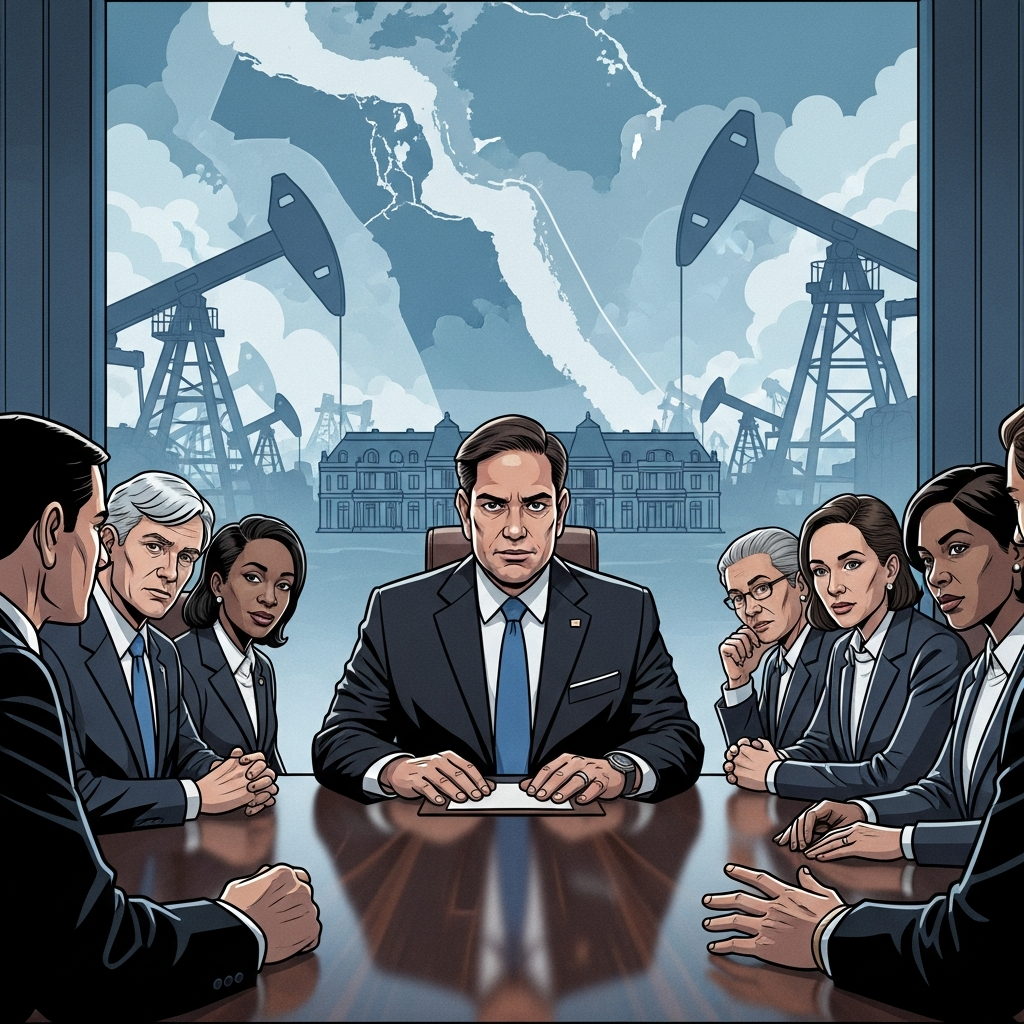

Secretary of State Marco Rubio faces a high-stakes diplomatic challenge in France this week. His critical mission involves rallying support for a contentious U.S.-Israeli Iran strategy amid soaring global fuel prices. Deep skepticism from America’s G7 allies complicates this effort. This pivotal meeting near Versailles will test transatlantic cooperation. It aims to shape the future of global security and economic stability. The world grapples with interconnected issues, from Middle East instability to energy market volatility.
Unpacking the Contentious Iran Strategy and its Economic Fallout
At the core of Rubio’s agenda lies the “Iran strategy.” This refers to a specific U.S.-Israeli military operation against Iran. It has sent significant ripples across the global economy. A dramatic surge in fuel prices is the most visible manifestation. Escalation in the region directly impacts critical maritime routes. The Strait of Hormuz is notably affected. Its potential closure to international shipping, including vital oil tankers, is a grave concern. This threat significantly drives the current energy crisis. It endangers supply chains and global economic stability. Understanding the strategy’s origins and implications is crucial. It helps grasp the current volatile geopolitical landscape. Broader implications extend beyond immediate conflict. They touch on energy security, international trade, and the delicate balance of power in a volatile region.
Conflicting Rationales and Domestic Debates
President Donald Trump’s administration has presented fluid reasoning for its actions concerning Iran. Secretary Rubio himself drew criticism for suggesting the U.S. strikes were a preemptive measure. He implied they aimed to forestall Iranian retaliation after anticipated Israeli attacks. This explanation fueled suspicions of Israeli influence over U.S. foreign policy decisions. However, President Trump publicly contradicted Rubio. He denied Israel forced his hand. Trump stated his strong opinion that Iran was poised to attack first. He claimed, “If we didn’t do it, they were going to attack first.” This internal discrepancy highlights the administration’s struggle. It reveals difficulty in presenting a unified and consistent rationale for significant military actions. Such actions face both domestic and international condemnation.
G7 Allies’ Reserved Response: A Challenge to Unity
Almost all other G7 nations have expressed a cool reception to the U.S. military approach. Britain, Canada, France, Germany, Italy, and Japan largely declined participation. They did not join the U.S.-Israeli operation. This widespread reluctance previously drew sharp criticism from President Trump. He asserted America’s self-sufficiency yet expressed frustration. He worried over the lack of allied support. The G7 meeting offers a crucial opportunity. Secretary Rubio can bridge these divides. He can articulate the administration’s rationale. He seeks to align a fragmented international stance on this pressing issue. The discussions will focus on reconciling divergent perspectives on regional security.
European Discontent and a Shifting Stance
Internationally, the U.S. actions also faced criticism. President Trump rebuked UK Prime Minister Keir Starmer. This was over Britain’s refusal to support offensive strikes on Iran. Starmer publicly asserted the UK does not believe in “regime change from the skies.” He defended his decision not to allow British bases for the strikes. Despite this friction, recent days show a subtle shift. Several allies now indicate a willingness to back “appropriate action.” This action would restore normal traffic through the critical Strait of Hormuz. This evolving stance suggests a pathway for renewed cooperation. It is contingent on careful negotiation and clear shared objectives. Secretary Rubio’s mission involves leveraging this shift. He aims to build a more cohesive international front.
Rubio’s Diplomatic Tightrope: Navigating the Versailles Agenda
Secretary Rubio’s participation in the G7 foreign ministers meeting carries immense diplomatic weight. It is held near the historic palace of Versailles outside Paris on Friday. The official agenda aims “to advance key U.S. interests.” It also seeks to “discuss shared security concerns and opportunities for cooperation.” Yet, beneath these diplomatic pleasantries lies an urgent task. Rubio must persuade reluctant allies. Areas slated for focus include the ongoing Russia-Ukraine war. The volatile situation in the Middle East is another. Broader “threats across the world to peace and stability” are also included. Rubio must skillfully navigate these complex discussions. He must balance U.S. strategic objectives with collective concerns. These include the economic realities facing G7 member states. His ability to build consensus will be critical. It is essential for defusing regional tensions and fostering greater international collaboration.
The Internal Political Landscape and Rubio’s Rising Profile
Rubio’s performance on this mission also resonates within Washington’s political landscape. He is reportedly in an emerging “horse race” with Vice President Vance. Both seek President Trump’s favor and potential succession for the Republican Party leadership. Trump has lavishly praised Rubio for perceived successes in Venezuela and Iran. This boosts Rubio’s profile. However, the Iran conflict itself is politically sensitive. One fundraiser notes it is “not popular, win-the-midterms moves.” Rubio’s position, though currently elevated as a “hero” by some, remains “tenuous.” This is due to potential shifts in public opinion if the war falters or gas prices continue to climb. This internal competition underscores the immense pressure on Rubio to deliver results and maintain presidential favor.
The Interconnected Web of Global Crises
The Iran strategy does not exist in a vacuum. It links intricately to a complex tapestry of global crises. These include the persistent Russia-Ukraine war and the broader Middle East conflict. These overlapping challenges amplify existing tensions. They complicate diplomatic solutions. The G7 discussions will highlight these links. Actions in one region have far-reaching consequences. They affect energy markets and geopolitical alliances. The foreign ministers must consider ripple effects. This applies to decisions on these interconnected fronts. They strive for comprehensive strategies. These address multiple threats simultaneously. A holistic approach is essential. It helps achieve lasting peace and stability in an interdependent world.
Multilateral Talks and U.S. Diplomatic Role
Geneva is concurrently hosting critical, back-to-back negotiations. These concern Iran’s nuclear program and the ongoing war in Ukraine. U.S. envoys are central to these efforts. They aim to de-escalate tensions and avert further conflict. The Iran negotiations are fraught with skepticism. While Secretary Rubio expressed doubt about a deal, he confirmed the U.S. would “try.” President Trump prefers a diplomatic resolution. However, Washington is also preparing for a “catastrophic scenario.” This includes dispatching another aircraft carrier to the Persian Gulf. Trump has even suggested “regime change” in Tehran. Meanwhile, Iran firmly states it will not “submission before threats.” It is ready to dilute enriched uranium for sanctions relief but rules out renouncing missiles. These discussions highlight the intricate balance between pressure and diplomacy.
The Strait of Hormuz: A Bottleneck for Global Energy Security
The Strait of Hormuz is a pivotal choke point. It profoundly affects global oil trade. Its closure, or even the credible threat of it, deeply impacts international oil prices. Nearly a fifth of the world’s oil supply passes through this narrow waterway. Disruptions here instantly create an energy crisis. The current conflict and resulting uncertainty drive crude oil prices. They reach unprecedented levels. This affects consumers and industries worldwide. Restoring normal traffic through the Strait is not merely a regional security issue. It is a global economic imperative. Diplomatic efforts must prioritize de-escalation. They must protect international shipping lanes. This safeguards global energy security for every nation.
Strategic Imperatives: Balancing Security, Economy, and Diplomacy
The current geopolitical climate demands a delicate balance. It requires strategic security imperatives, global economic stability, and sustained diplomatic engagement. The Iran strategy aims at specific security objectives. Yet, it has undeniable economic repercussions. These affect every nation. Secretary Rubio’s challenge is to articulate this. He must show how security actions contribute to broader stability. He must convince allies that long-term benefits outweigh immediate economic costs. This involves demonstrating a credible path to de-escalation. It also ensures diplomatic channels remain open. This is true even amidst military posturing. International cooperation is paramount. It helps navigate these interconnected challenges. It requires a shared vision for resolution.
The Future of International Cooperation: A Test for the G7
The G7 foreign ministers meeting is more than a forum. It discusses the Iran strategy. It is a crucial test for the future of international cooperation. In an era of rising nationalism and fragmentation, leading industrial nations must find common ground. Their ability to do so on critical global issues is paramount. The outcomes of these discussions will influence the Middle East conflict’s trajectory. They will also set precedents for future crisis responses. The ability to unite against common threats is key. These include military, economic, or environmental challenges. This will define multilateral institutions’ effectiveness, like the G7. Their collective decisions will resonate globally. They will shape responses to future challenges.
Addressing Reader Concerns: The Path Forward
For readers, escalating global tensions are a significant concern. Their impact on daily life is profound. The G7 meeting’s discussions are highly relevant. They cover the Iran strategy and fuel prices. Understanding diplomatic efforts provides crucial context. These efforts aim to de-escalate conflicts and stabilize markets. Practical takeaways for individuals exist. These include preparing for continued energy market volatility. Staying informed about international developments is important. Recognizing the interconnectedness of global events helps. The focus on finding “off-ramps” and promoting cooperation offers hope. It suggests a less volatile future. It emphasizes sustained diplomatic engagement. This protects peace and prosperity.
Frequently Asked Questions
What are the core elements of the ‘Iran strategy’ Rubio is discussing?
The ‘Iran strategy’ Secretary Rubio is discussing primarily refers to a contentious U.S.-Israeli military operation against Iran. This strategic initiative aims to achieve specific security objectives in the Middle East. However, it carries significant economic consequences, notably impacting global oil markets and leading to surging global fuel prices. Rubio’s mission at the G7 meeting is to explain the rationale behind these actions and garner support from skeptical allies, despite internal disagreements within the U.S. administration regarding the precise justification for the strikes on Iran.
Where is Secretary Rubio holding these critical G7 discussions?
Secretary of State Marco Rubio is participating in the G7 foreign ministers meeting in France, specifically near the historic palace of Versailles, just outside Paris. This high-level diplomatic gathering provides the platform for critical deliberations. Rubio will engage with foreign ministers from Britain, Canada, France, Germany, Italy, and Japan. The discussions will center on advancing U.S. interests, addressing shared security concerns like the Middle East tensions, and navigating the global energy crisis fueled by the Iran strategy and its impact on vital shipping lanes like the Strait of Hormuz.
How might the U.S. ‘Iran strategy’ affect global energy security and consumer prices long-term?
The U.S. ‘Iran strategy’ poses significant long-term risks to global energy security and could profoundly elevate consumer costs. By creating instability in a region critical for oil production and transit, particularly threatening the Strait of Hormuz, it risks severe supply disruptions. A sustained closure of this waterway, which handles a fifth of the world’s oil, would send crude oil prices soaring. This would lead to higher transportation, manufacturing, and ultimately, inflated prices across all sectors globally. Nations would scramble for alternative energy sources, potentially destabilizing international relations and pushing global economies towards recession.
Conclusion:
Secretary Marco Rubio’s mission to the G7 meeting in France represents a pivotal moment in international diplomacy. Faced with skeptical allies, internal political pressures, and a complex web of global crises, his task of garnering support for the Iran strategy is formidable. The world watches as the interconnected challenges of soaring global fuel prices, Middle East instability, and strained allied relations demand urgent, cohesive action. The outcome of these high-stakes discussions will undoubtedly shape not only the immediate future of the Middle East but also the broader landscape of international cooperation and global energy security for years to come. The path forward requires unwavering diplomatic effort and a shared commitment to stability.”,
“imagegenerationprompt”: “A powerful image depicting a high-stakes diplomatic meeting. In the foreground, a determined Secretary of State Marco Rubio, perhaps at a grand, polished conference table. Around him, diverse G7 foreign ministers show expressions ranging from skepticism to concern. A background projection or subtle overlay could show elements like oil derricks, a map of the Strait of Hormuz, or a faint silhouette of the Palace of Versailles. Use a serious, slightly tense mood with a blue and grey color palette, highlighting global impact and urgency