
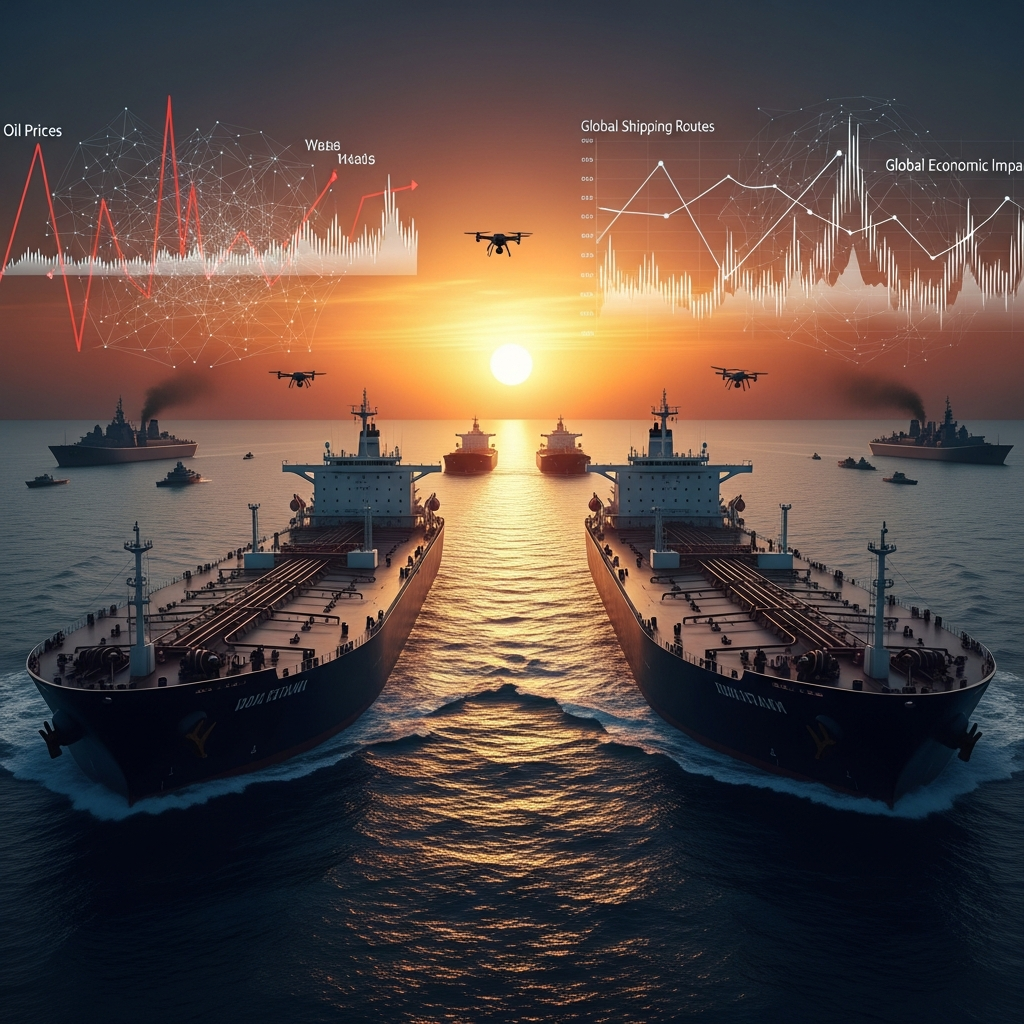

The world faces an unprecedented shift in global energy and travel dynamics, driven by intensifying disruptions in the Strait of Hormuz. Iran’s controversial decision to levy a transit fee of up to $2 million per vessel through this vital maritime artery has triggered immediate and far-reaching ripple effects. Oil prices are soaring, shipping costs are skyrocketing, and airfares are climbing. This fuels surging inflation across major global economies. This geopolitical move is significantly impacting global tourism, redefining travel patterns, and intensifying economic strain from North America to Asia.
The Strait of Hormuz: A Critical Geopolitical Bottleneck
Iran’s imposition of a $2 million transit fee marks a pivotal shift in control over one of the world’s most essential maritime pathways. Senior Iranian lawmakers present this as a sovereign response to wartime costs following the February 28, 2026, strikes. However, this policy is not universally applied. It operates selectively, targeting vessels from “friendly” nations while restricting or blocking others. Evidence suggests payments are often negotiated through intermediaries, many linked to the IRGC, potentially occurring via non-traditional channels like cash or cryptocurrency.
This selective enforcement transforms the Strait of Hormuz from a universally accessible route into a controlled toll corridor. While theoretically capable of generating $73 billion to $111 billion annually at pre-conflict traffic levels (100–150 vessels daily), the current reality is starkly different. Maritime traffic has collapsed by over 90%. Iran captures only a fraction of its potential earnings. The fee, while symbolically powerful, yields limited direct revenue compared to its projected scale.
Daily vessel transits have plummeted from over 100 ships to just 5–8. Tanker flows are now as low as 2–3 per day. Hundreds of vessels remain stranded in the Gulf, effectively locking an estimated 125 million barrels of crude out of global markets. This contraction forces long-haul rerouting, significantly increasing travel times and operational costs. Hormuz has become a tightly controlled bottleneck rather than a global energy highway.
The Looming Dual-Chokepoint Crisis
The crisis is escalating further with threats to the Bab el-Mandeb Strait. On February 28, 2026, the Houthi movement in Yemen announced its intent to re-enter the conflict, deploying advanced missile and drone launchers overlooking the Red Sea. This aims to shut down Bab el-Mandeb, creating a “dual-chokepoint crisis” that would sever the primary maritime route between Europe and Asia. Global shipping would then be forced into the long and costly journey around the Cape of Good Hope, exacerbating supply-chain instability and inflationary pressures worldwide.
Worldwide Economic Reverberations: Inflation and Energy Security Under Threat
The Hormuz Crisis extends its impact far beyond transit fees. It is profoundly reshaping global energy markets and geopolitical dynamics. Oil prices have surged sharply, with Brent crude rising from approximately $57 to nearly $119 per barrel, pushing towards projected highs of $126 to $140. Gas prices and shipping insurance costs have spiked dramatically. The International Energy Agency (IEA) has characterized this as the largest supply disruption in history, warning that the global economy faces a “major threat.”
Legally, Iran’s actions face strong opposition under international maritime law, particularly UNCLOS provisions guaranteeing transit passage. However, enforcement remains limited due to the ongoing conflict. Strategically, Iran leverages this crisis to reposition itself as a gatekeeper of global energy flows, selectively granting access to allied nations while exerting pressure on Western economies. This creates not just a shipping disruption but a systemic shift in global energy security and geopolitical power balance. IEA head Fatih Birol emphasized that “no country will be immune” to these effects, underscoring the urgent need for coordinated global action.
Individual nations are feeling the intense strain:
The United States: Despite producing over 13 million barrels per day, the US cannot escape global oil price shocks. Goldman Sachs raised inflation projections to 2.9% and cut GDP growth to 2.2%. Recession probability surged to 33% within a week. The Dallas Fed projected WTI at $115 if disruptions continue. Airlines plan for oil at $175. Petrol prices have crossed $5 per gallon in California. President Trump issued a 48-hour ultimatum on March 21, 2026, demanding Iran reopen the strait, threatening to “obliterate” Iran’s power grid if it fails to comply. The Federal Reserve now faces a policy dilemma between controlling inflation and supporting growth.
The United Kingdom: The crisis escalated rapidly, with gas reserves dropping to just 6,700–6,999 GWh, covering only two days of demand. Energy UK warned bills could rise £250 annually from July 2026. LCP Delta projected electricity prices rising 40% in 2026 and 18% in 2027, with gas prices up 70%. Cornwall Insight expects an additional £160 increase in the price cap. The loss of Qatari LNG threatens 25% of Europe’s storage refill window. The Bank of England may delay rate cuts.
Canada: Occupies a dual position, benefiting from elevated oil prices as a major crude exporter (over 4 million barrels per day), strengthening revenues. However, this upside is diluted by rising domestic fuel prices, increased logistics costs, and imported inflation across consumer goods. Supply-chain disruptions and longer shipping routes are raising costs for machinery, electronics, and industrial inputs. The Bank of Canada faces a policy dilemma as persistent inflation may delay rate cuts.
Germany: Entered 2026 already weakened by the loss of Russian gas. The Hormuz Crisis pushed gas prices up over 50% and oil near $100. Industrial consumption stands at 2.4 million barrels/day, making Germany highly exposed with gas storage only 20.6% full. Energy-intensive sectors like steel, fertilisers, and chemicals are at risk of an industrial recession.
France: Relatively insulated due to nuclear power but remains exposed through fuel imports and aviation, with approximately 30% of Europe’s jet fuel flowing through Hormuz. President Macron announced plans to escort ships once tensions ease, a move backed by a coalition of nations. Gas prices surged from €30/MWh to €56 before stabilising near €48.
Italy: Faces severe exposure with 60% of refinery crude sourced from the Gulf and $11.5 billion in imports from Qatar. LNG imports alone account for $4.4 billion annually. The crisis threatens direct supply, not just prices, risking supply shortages, rising costs, and economic slowdown across transport, manufacturing, and energy sectors.
Japan: Reliant on over 90% Middle East oil, with 75% passing through Hormuz. LNG exposure is 7%, but reserves cover only 2–4 weeks. Japan released 170 days of oil reserves. LNG shipping costs surged 650% to $300,000/day, with oil tanker rates also hitting record highs. LNG prices could rise 170%, potentially increasing electricity bills by 25.8%.
South Korea: Sources 70% of oil and 18% of LNG via Hormuz. Fuel imports cost $120 billion annually. Major firms like Lotte Chemical and LG Chem issued force majeure warnings. Tanker rates surged to $440,000–$555,000/day, with seven Korean tankers remaining stranded.
- India: Imports 46% of crude and 54% of LNG from the region. The rupee crossed ₹92/USD, with $3 billion capital outflow. RBI intervened with $12–15 billion from its reserves. Oil rising to $119 could cut GDP by 0.6–1.2 percentage points and raise inflation by 1.2 percentage points.
- www.rferl.org
- en.royanews.tv
- southfloridareporter.com
- www.pakistantoday.com.pk
- streamlinefeed.co.ke
The Toll on Global Tourism and Trade Routes
The Hormuz Crisis is triggering a far broader transformation across global travel systems. The aviation industry is under intense pressure, facing soaring jet fuel costs, longer rerouting times, and widespread cancellations. This translates directly into higher airfares and reduced travel demand, propelling a global tourism slowdown. Global shipping networks are equally disrupted, with vessels rerouted around longer corridors, increasing freight costs, delays, and supply-chain instability. Tourism flows are weakening, particularly across Middle Eastern transit hubs, as uncertainty reshapes travel behavior. What is emerging is not a temporary crisis but a structural shift where energy routes, trade flows, and travel networks are increasingly dictated by geopolitical control rather than market efficiency.
Adding complexity, the halt of Liquefied Natural Gas (LNG) exports from Qatar has caused heating and electricity costs to skyrocket across Europe and Asia. For import-dependent nations like Kenya, this translates into acute, near-term inflationary pressure, impacting manufacturing, logistics, and household budgets. The vulnerability of national currencies to external shocks further exacerbates these concerns.
In response to such profound changes, the global hospitality industry is already adapting. Events like Hospitality Tech360 2026 in London demonstrate the sector’s proactive embrace of technology for resilience and growth. This pivotal event gathers international leaders, focusing on innovation in AI, automation, and data analytics. It highlights the urgent demand for tech-driven solutions to navigate escalating operational costs and ensure service efficiency amidst global disruptions.
A Coordinated Global Response Amidst Regional Tensions
The international community has condemned Iran’s actions in the strongest terms. A joint statement issued on March 19, 2026, by leaders of over thirty nations, including the UK, France, Germany, Italy, Japan, Canada, and the UAE, unequivocally condemned Iran’s attacks on unarmed commercial vessels, assaults on civilian infrastructure, and its de facto closure of the Strait. These nations have demanded that Iran immediately cease its threats and comply fully with UN Security Council Resolution 2817 and the fundamental principles of international maritime law under UNCLOS.
This broad coalition affirmed its readiness to contribute to efforts ensuring safe passage through the Strait and welcomed preparatory planning by other nations. To stabilize global energy markets, leaders commended the International Energy Agency’s (IEA) decision to authorize a coordinated release of strategic petroleum reserves, pledging further steps to increase output from producing nations. China, heavily reliant on Hormuz for its oil supply, has called for de-escalation, warning of an “uncontrollable situation.” While maintaining “strategic neutrality,” Beijing has dispatched a special envoy for mediation, ensuring some partial oil flows continue under special arrangements.
Compounding the regional instability, the ongoing conflict in Lebanon, which began on March 2 with Hezbollah’s hostilities against Israel, presents another critical geopolitical challenge. Nations like Canada, France, Britain, Germany, and Italy have issued stark warnings against a potential significant Israeli ground offensive, fearing devastating humanitarian consequences. This broader regional tension, heavily influenced by Iran-backed groups, adds layers of risk to Middle Eastern trade and travel routes, underscoring the interconnectedness of these crises.
Frequently Asked Questions
What defines the current Hormuz Crisis, and what is the impact of Iran’s $2 million transit fee?
The current Hormuz Crisis is defined by Iran’s selective imposition of a $2 million transit fee per vessel passing through the Strait of Hormuz, stemming from perceived wartime costs. This move has drastically reduced maritime traffic by over 90%, effectively locking 125 million barrels of crude out of global markets. For global trade, this means soaring oil and gas prices (Brent crude rising from $57 to nearly $119), skyrocketing shipping insurance, and forced long-haul rerouting. These factors drive up freight costs, cause significant delays, and create widespread supply-chain instability, impacting economies worldwide and elevating the cost of travel and goods.
Which nations are most affected by the Hormuz Crisis, and how is the international community responding?
Major global economies are severely impacted, including the US, UK, Canada, Germany, France, Italy, Japan, South Korea, and India. Each faces unique challenges, from soaring domestic fuel prices and inflation to potential supply shortages and GDP contractions. Internationally, a coalition of over thirty nations, led by the UK, has condemned Iran’s actions, demanding compliance with UNCLOS and UN Security Council Resolution 2817. Coordinated efforts include plans to ensure safe passage through the Strait and the International Energy Agency’s release of strategic petroleum reserves to stabilize global energy markets. China, while urging de-escalation, is also actively engaged in diplomatic efforts to secure its vital energy interests.
How does the escalating Hormuz Crisis impact global travel and supply chain stability for consumers and businesses?
The escalating Hormuz Crisis significantly impacts global travel and supply chains. For consumers, the aviation industry faces soaring jet fuel expenses and longer rerouting times, leading directly to higher airfares and potential flight cancellations. This contributes to a global tourism slowdown as travel becomes more expensive and less reliable. Businesses face increased freight costs, delays, and widespread supply-chain instability due to rerouted vessels and reduced maritime traffic. The threat of a dual-chokepoint crisis involving the Bab el-Mandeb Strait further exacerbates these risks, threatening total disruption to key trade routes and increasing the cost of virtually all logistics-dependent goods and services globally.
Conclusion
The Hormuz Crisis, driven by Iran’s $2 million transit toll and compounded by broader regional tensions and the threat to Bab el-Mandeb, represents a profound structural shift in global trade, energy, and travel. The immediate consequences—skyrocketing oil price surges, spiraling travel cost inflation, and a significant global tourism slowdown—are already reshaping economic landscapes worldwide. Beyond the economic figures, this crisis underscores a shift toward geopolitical control over vital global arteries, challenging international maritime law and demanding a unified, sustained international response. Navigating this new reality requires adaptability, innovative solutions, and unwavering international cooperation to safeguard global prosperity and ensure energy security in a volatile world.