
Germany is spearheading Europe’s tourism resurgence, offering a compelling blend of sustainable practices and authentic experiences. In 2026, the nation transforms its travel landscape, drawing eco-conscious visitors and culture seekers beyond traditional city limits. This strategic evolution positions Germany as a global leader for responsible and accessible travel, responding to accelerating international demand, especially from dynamic Asian markets. Its commitment to preserving natural beauty while embracing digital innovation sets a new benchmark for enriching journeys.
Germany’s Tourism Ascendancy: A Global Magnet for 2026
The year 2026 marks a pivotal moment for Germany travel, showcasing its robust recovery alongside European peers. This resurgence is fueled by an unprecedented influx of international visitors. Notably, Germany recorded 442.1 million accommodation nights in 2025, solidifying its place among Europe’s top destinations. This growth signals a bright future for the entire industry.
Unprecedented Demand from Dynamic Markets
A significant driver of this growth is a surging interest from Asian travelers. Visitors from India, Southeast Asia (including Singapore, Malaysia, Thailand, and Indonesia), South Asia, Japan, China, and South Korea are arriving in greater numbers. These discerning travelers are captivated by Germany’s profound cultural heritage, rich history, and world-class attractions. This robust demand extends well beyond iconic cities, highlighting a global shift towards diverse and authentic experiences.
Beyond Urban Icons: Discovering Germany’s Regional Treasures
While vibrant urban centers like Berlin, Munich, and Hamburg remain popular, 2026 signifies a purposeful pivot. Germany actively promotes its diverse regional destinations. This strategy caters to a growing desire for more intimate, eco-friendly, and authentic travel options. Travelers are now exploring charming rural towns, majestic castles of Bavaria, and picturesque medieval villages. These hidden gems, once overlooked, promise unique adventures and deeper cultural immersion for every visitor. This aligns with a broader “slow travel” trend across Europe, encouraging longer, more immersive stays.
Pioneering Regenerative & Sustainable Travel in Germany
Sustainable Germany travel is not just a trend; it’s a foundational principle. The nation’s tourism sector is deeply committed to minimizing environmental impact while enhancing visitor experiences. This aligns perfectly with a global movement towards environmental consciousness among travelers. Germany moves beyond mere preservation, actively seeking to regenerate its natural environments.
Germany’s Deep Commitment to Green Initiatives
The German tourism industry rigorously prioritizes eco-friendly transportation, sustainable accommodations, and responsible visitor practices. Significant investments are made in green technologies, including electric vehicles (EVs), to reduce travel’s carbon footprint. Visitors are encouraged to utilize efficient public transport and explore via bike tours. This emphasis on preserving natural beauty benefits regions like the tranquil Black Forest and the scenic Rhine Valley. Travelers can enjoy charming, lesser-known areas while actively supporting local economies and green initiatives.
The Spreewald Model: A Blueprint for Regenerative Tourism
Germany’s Spree Forest (Spreewald) region exemplifies this commitment to regenerative tourism. This unique biosphere reserve, with its intricate network of canals, actively integrates human activity with ecological well-being. Rangers manage the human-shaped landscape, emphasizing intelligent design over non-interference. For example, the Michelberger Farm’s “food forest” practices ecological engineering, pruning pioneer species to accelerate growth in fruit trees. This yields abundant organic produce, integrated directly into the farm’s menu. Local businesses adhere to strict environmental standards, investing in renewable energy, local sourcing, and eco-friendly mobility. They also partner with the biosphere reserve, fostering a collective regional commitment to eco-tourism Germany.
EU-Wide Sustainable Solutions: Germany’s Role
Germany’s sustainable efforts are part of a broader European movement. In 2026, the EU implements revolutionary short-term rental regulations and bold overtourism solutions. Germany supports mandates for host registration and service standards, ensuring housing availability for residents. A new EU eco-tax, applied to tourism services, funds local environmental conservation and infrastructure. This collaborative approach fosters a more sustainable and equitable tourism landscape across the continent.
Seamless Journeys: Digital Innovation & Enhanced Accessibility
Enhancing the travel experience through technology is another cornerstone of Germany’s strategy. The nation dedicates itself to streamlining journeys for international visitors, from initial planning to staying connected.
Revolutionizing Travel with Smart Technology
Germany has embraced a significant digital shift in travel. Intuitive travel apps and online booking platforms simplify trip planning and transportation. These user-friendly tools also highlight sustainable travel options and provide valuable local information. Furthermore, Germany promotes its digital visa system. Travelers from countries like India and South Korea can apply online, significantly reducing administrative stress and making Germany an even more appealing destination.
Uninterrupted Connectivity Across Europe
For travelers seeking reliable mobile connectivity across Europe, including Germany, solutions like the Orange Holiday Europe SIM are invaluable. With its robust network coverage in nearly thirty-two countries, this SIM offers a generous 30GB data allowance. Travelers also benefit from unlimited calls and SMS within the EU, with instant activation upon arrival. Competitively priced at around 40 euros, it provides substantial cost savings over traditional roaming. The SIM supports hotspot functionality, allowing data sharing, and its recyclable packaging aligns with Germany’s eco-friendly practices.
Simplified Entry for UK Youth Groups
In a move to simplify entry for educational exchanges, Germany and many other EU nations now accept the UK collective passport. Effective March 2026, this system allows supervised groups of 5 to 50 UK minors to travel for up to 15 days using a single document. This offers significant cost savings, as a collective passport is substantially cheaper than individual minor passports. It also drastically reduces the administrative burden for organizers, promoting greater participation in youth travel. Future European travel regulations, like the EU’s Entry/Exit System (EES) from October 2026 and ETIAS from 2027, will introduce biometric data collection and authorization requirements, though collective passport holders will see temporary exemptions.
Economic Prosperity & A Future-Focused Tourism Vision
The surge in international visitors, coupled with Germany’s forward-thinking strategies, positions its tourism industry for robust, long-term growth. This diversified approach brings widespread benefits.
Diversified Tourism’s Positive Economic Ripple
Germany’s dual focus on sustainable practices and regional destinations attracts environmentally conscious travelers. This strategy concurrently boosts local economies. It ensures that tourism benefits are distributed more equitably across the entire country, reaching smaller towns and rural communities. Investment in regional infrastructure, including expanded airports and efficient transportation networks, further supports accessibility. High-speed trains and regional buses connect travelers to even remote locations, enhancing regional economic development.
A Holistic Embrace of German Hospitality
Germany travel offers a diverse tapestry of experiences, from vibrant urban centers to serene rural villages. Whether exploring ancient historical sites, hiking through breathtaking national parks like the Bavarian Alps, or savoring regional delicacies in the Saarland’s lush vineyards, visitors find their ideal escape. This dynamic and sustainable approach aligns perfectly with the evolving expectations of global tourists. They seek responsible, enriching, and accessible travel options. As Germany continues its recovery and growth in 2026, its dedication to sustainability, regional promotion, and digital innovation will solidify its status as a premier international destination.
Frequently Asked Questions
How is Germany leading sustainable tourism, particularly in 2026?
Germany is a frontrunner in sustainable tourism for 2026, transitioning towards regenerative practices. It actively prioritizes eco-friendly transportation, such as extensive public transit and bike tours, and invests in green technologies. The nation promotes sustainable accommodations and encourages visitors to explore its lesser-known regional destinations, like the Black Forest and the regenerative Spreewald. This strategy reduces pressure on overcrowded hotspots and robustly supports local economies. Germany further bolsters these efforts through its participation in broader EU initiatives, including new eco-taxes and regulations designed to combat overtourism and protect natural heritage.
What digital tools and connectivity options enhance travel to Germany and Europe?
International travelers can experience seamless digital journeys to Germany and Europe. Germany promotes user-friendly digital travel apps for comprehensive planning and booking, alongside a convenient digital visa system for many Asian travelers. For robust mobile connectivity across nearly thirty-two European countries, including Germany, the Orange Holiday Europe SIM is a highly recommended solution. It provides 30GB of data, unlimited calls/SMS within the EU, instant activation, and hotspot functionality. This ensures continuous access to navigation, communication, and essential online services for both individual and group travelers.
Why should travelers consider Germany’s regional destinations over major cities?
Travelers should prioritize Germany’s regional destinations for a more authentic, intimate, and eco-friendly experience. Beyond major urban centers, regions like the Bavarian Alps, the Rhine Valley, and the Spreewald offer unique cultural immersion and stunning natural beauty, often with fewer crowds. By visiting these areas, travelers directly support local economies and sustainable initiatives, aligning with the growing trend of responsible tourism. These regions provide opportunities for “slow travel,” deeper exploration, and a chance to discover Germany’s diverse heritage in a more personal and impactful way.
“,
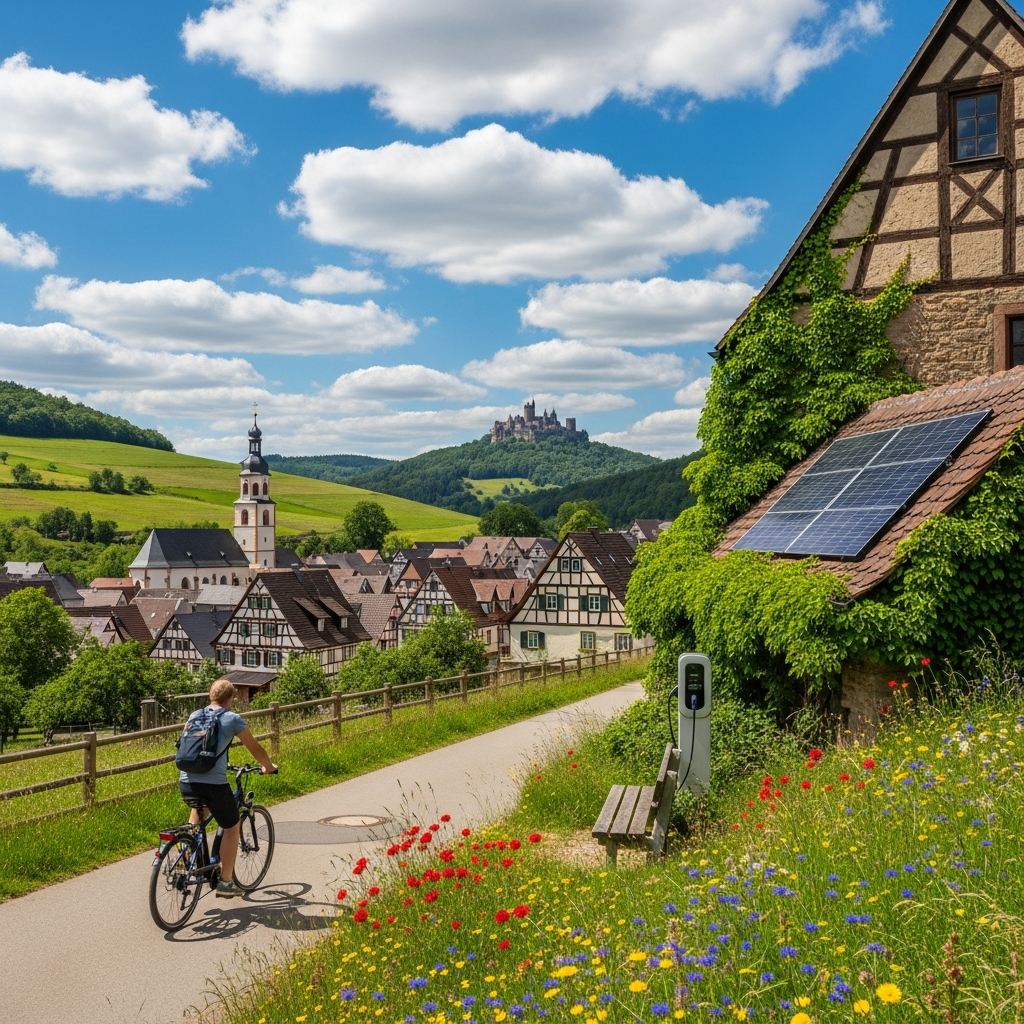
“imagegenerationprompt”: “A scenic, idyllic German landscape showcasing both natural beauty and subtle modern sustainable elements. Imagine rolling green hills with a quaint medieval village nestled in a valley, perhaps with a castle in the distance. In the foreground, a path where someone is riding an electric bicycle, and a small, almost hidden charging station or a solar panel array integrated discreetly into a traditional building. The sky is bright blue with fluffy clouds. The overall mood is peaceful, inviting, and forward-looking, emphasizing green travel and regional charm