
How to Find True Hidden Gems in Thailand (Zero Crowds)
Finding actual hidden gems in Thailand feels almost impossible when the country welcomes nearly 50 million tourists annually. I remember standing on a beach in Phuket during peak season, entirely boxed in by tour groups, selfie sticks, and the constant roar of boat engines. The reality of modern travel is that if a location is famous, it is likely overcrowded. But the country is geographically massive, and stepping just one or two towns over from the main tourist trail completely changes the experience.
By trading massive resort towns for car-free islands, and swapping globally famous temples for remote mountain stupas, you can still experience the country as it was decades ago. This guide breaks down exactly where to go, what it costs, and how to get there without relying on massive, overpriced tour buses.
Quick Summary
Skip the mega-resorts: Islands like Koh Yao Yai and Koh Mook offer car-free roads, empty beaches, and raw nature just a short boat ride from heavily congested hubs.
Head north for culture: Trade the crowded streets of Pai for the authentic, high-altitude coffee village of Mae Kampong or the quiet border town of Mae Hong Son.
Rethink ancient history: Sukhothai Historical Park sees a fraction of the foot traffic compared to Ayutthaya, allowing you to cycle through 13th-century ruins in total silence.
Transportation matters: Renting a scooter (usually around 200 THB/day) is the single most effective way to reach villages and waterfalls that tour buses cannot physically access.
Adjust your expectations: Remote travel means sacrificing 24/7 convenience. Prepare for limited ATM access, spotty Wi-Fi, and early closures.
The Direct Answer: Where to Go Instead
If you want to bypass the 50 million tourists visiting the country this year, you need to deliberately target locations lacking mass infrastructure.
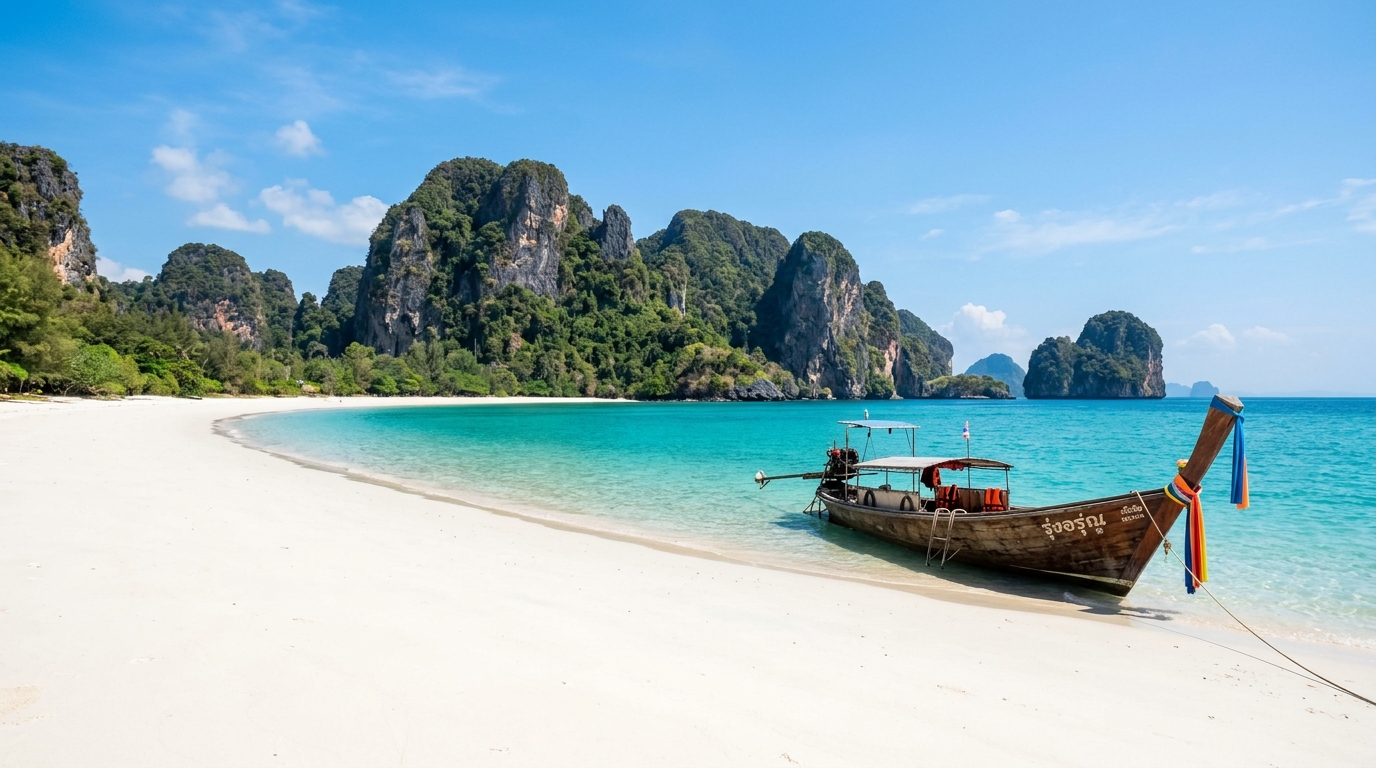
For quiet beaches: Skip Phuket, Koh Phi Phi, and the main zones of Koh Samui. Instead, book a ferry to Koh Lanta, Koh Yao Noi, or Koh Mook. These islands naturally restrict mass tourism due to a lack of mega-resorts and commercial airports.
For mountains and culture: Avoid the highly marketed town of Pai. Instead, head to Mae Kampong, a 4,200-foot-elevation village east of Chiang Mai known for its local coffee farms, or the twin northern towns of Lamphun and Lampang for traditional architecture and empty local markets.
For nature and wildlife: Trade the heavily trampled Erawan Waterfall for the remote Huay Mae Khamin Waterfall, which requires your own transport to reach. If you want deep jungle, stay in a floating raft house on the lake inside Khao Sok National Park.
Secluded Islands and Coastal Escapes
The southern coast is world-renowned, but that fame comes at a steep price in crowd density. Here are the coastal spots that remain distinctly local.
Koh Yao Yai and Koh Yao Noi (The Andaman Sea)
Located just a short boat ride from the intense commercialization of Phuket, the twin islands of Koh Yao Yai and Koh Yao Noi feel like they belong to a different decade. These islands are primarily populated by a welcoming Thai Muslim community, meaning the local culture, architecture, and daily rhythms are noticeably different from the Buddhist majority mainland.
When I first navigated the narrow dirt paths of Koh Yao Yai on a rented scooter, I was shocked to find entirely deserted stretches of white sand. There are no loud beach clubs here. Instead, you share the coastline with monitor lizards, crabs, and local fishermen.
The Downside: Do not expect a sprawling nightlife scene. Once the sun goes down, the islands are dead quiet. If you require constant entertainment, you will be bored.
Getting There: Take a fast boat or ferry directly from the Phuket port.
Koh Mook and the Emerald Cave
Further south lies Koh Mook, a tiny, virtually car-free island that serves as a gateway to the Chao Mai National Park. The island has no massive supermarkets and relies strictly on small, family-run guesthouses and restaurants.
The main draw here is the Emerald Cave. To reach the hidden, emerald-green lagoon locked inside the island’s interior, you literally have to swim through an 80-meter-long, pitch-black sea cave. It is an intense, slightly claustrophobic swim, but emerging into a sunlit lagoon surrounded by sheer cliffs is highly rewarding.
Khanom’s Pink Dolphins
Located on the Gulf of Thailand near Nakhon Si Thammarat, Khanom is an undiscovered coastal paradise. The beaches are long, sandy, and primarily empty. However, the true pull of this region is offshore: the rare pink dolphins.
A Costly Mistake: I assumed the pink dolphins were a guaranteed, year-round attraction. I showed up in mid-summer and learned they primarily appear during the winter months. During the off-season, Khanom is effectively a ghost town. If you visit outside of winter, go purely for the silence and the empty shoreline.
Koh Lipe (The Car-Free Diving Hub)
Situated near the Malaysian border on the edge of the Tarutao National Marine Park, Koh Lipe is small enough to navigate entirely on foot. There are virtually no vehicles here. While it has gained slightly more popularity recently due to its exceptional scuba diving and snorkeling over vibrant coral reefs, it remains isolated enough to keep the massive crowds away.
Logistics: You can catch a 90-minute speedboat from Pak Bara Pier in the Satun region for about 650 to 700 THB, or take a direct boat from Langkawi, Malaysia.
Northern Mountains and Authentic Villages
The north of the country is defined by steep mountains, dense jungles, and distinct tribal cultures. While Chiang Mai is an excellent hub, the real magic happens when you push further into the hills.
Mae Kampong: The High-Altitude Coffee Village
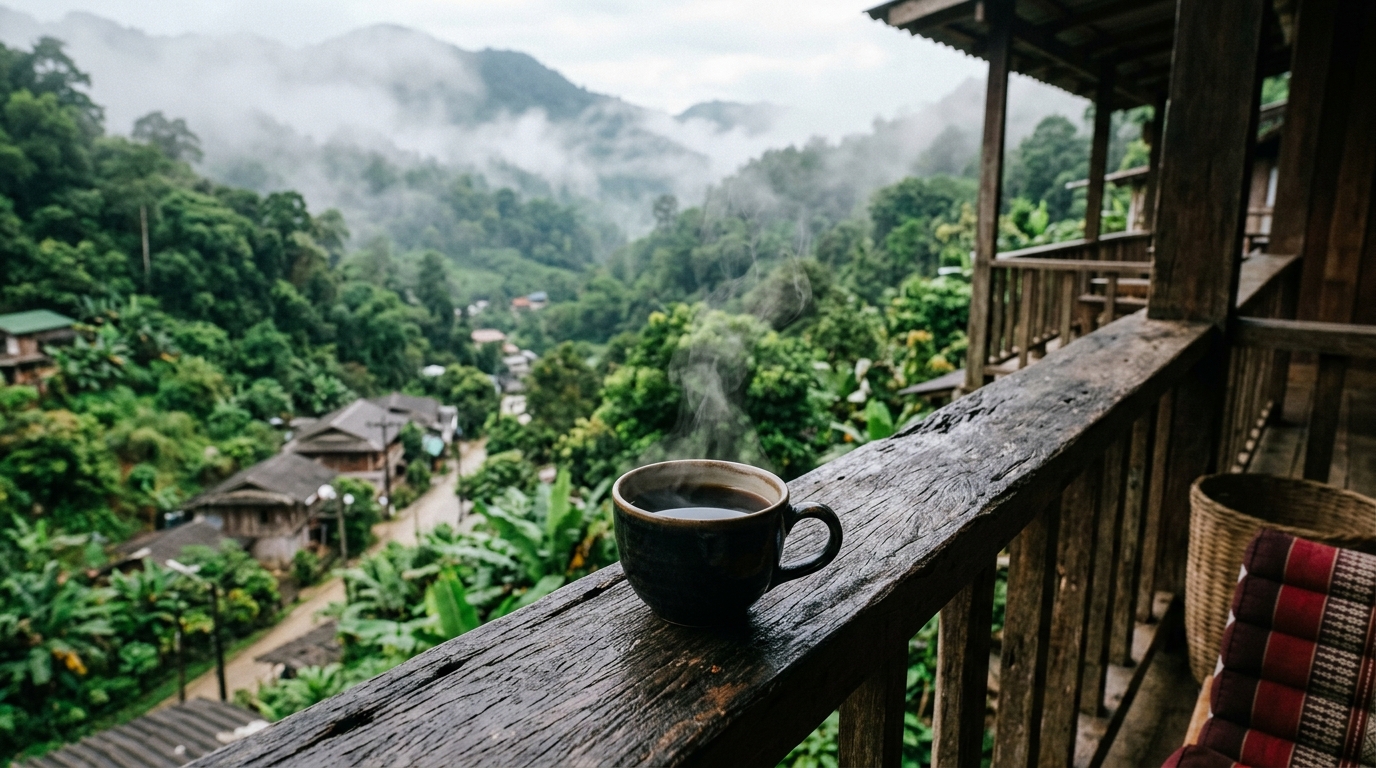
Located roughly an hour east of Chiang Mai, Mae Kampong is a century-old rural village sitting at an elevation of 4,200 feet. With a population of just under 400 residents, the town is built directly into a steep forested valley. Originally relying on tea production, the village has shifted to cultivating exceptional local coffee and mushrooms.
The climate here is dramatically cooler than the lowlands. You can spend the day eating traditional northern hot sausages, hiking to nearby waterfalls, and drinking incredibly fresh coffee on wooden terraces hanging over the river.
Crucial Context: While unknown to most Westerners, Mae Kampong is a favorite holiday spot for domestic Thai tourists. If you visit on a weekend, the narrow single-lane road running through the village will be packed with cars from Bangkok. Go on a Tuesday or Wednesday for maximum tranquility.
Lamphun and Lampang
If you want to witness historic northern architecture without dodging hundreds of temple-goers in Chiang Mai, rent a car and drive through Lamphun and Lampang. These twin towns showcase incredibly preserved wooden houses, completely authentic local markets, and a deeply layered cultural history. Exploring the markets here is entirely different from the tourist-focused night bazaars of the larger cities; the vendors are selling daily goods, rare produce, and local tools, not mass-produced souvenirs.
Mae Hong Son City
While thousands of backpackers flock to the heavily commercialized town of Pai (located in the Mae Hong Son province), the actual capital city of Mae Hong Son remains beautifully quiet. Located right near the Myanmar border, it features heavy Burmese architectural influences. The highlight is climbing the steep stairs to Phrathat Doi Kongmu, a monastery featuring two ornate white stupas that offer sweeping, 360-degree sightlines over the valley.
Temples and Historical Landmarks Without the Crowds
Sukhothai Historical Park vs. Ayutthaya
Ayutthaya is incredible, but its proximity to Bangkok (just an hour away) means it is constantly swarmed by day-tripping tour buses. For a much more atmospheric experience, travel further north to Sukhothai.
Sukhothai was the first capital of the Kingdom of Siam in the 13th century. The historical park is massive, flat, and heavily forested. Rent a bicycle for 50 THB at the front gate and spend hours pedaling between enormous, serene Buddha statues and crumbling stone columns. Because of its distance from the capital, you will often find yourself entirely alone at a massive temple complex, hearing nothing but the wind in the trees.
Wat Chalermprakiat (The Floating Stupas)
Located in the Chae Hom District of Lampang Province, this is one of the most visually striking locations in the country. White stupas are perched precariously on top of jagged, needle-like limestone peaks.
The Reality Check: Getting here requires effort. It is a two-hour drive from Chiang Mai, followed by a switchback truck ride up a mountain, and finalized by a 40-minute vertical hike up steep steel stairs. I did this hike in 95-degree heat and completely soaked through my shirt, but looking down at the valley from those isolated white peaks was highly rewarding.
Wat Pariwat (The Pop Culture Temple)
If you are stuck in Bangkok and want to see something completely bizarre, take the BRT (Bus Rapid Transit) south to Wat Pariwat. Instead of traditional mythological figures, the exterior carvings of this Buddhist temple feature pop culture icons like Batman, Winnie the Pooh, and Dobby the House Elf. It is completely free to enter, devoid of crowds, and offers a highly surreal look at modern Thai religious art.
Deep Nature: Jungles and Waterfalls
Khao Sok National Park
Widely considered one of the oldest evergreen rainforests on the planet, Khao Sok is located in the Surat Thani Province. The geography features towering limestone cliffs plunging straight into a massive emerald lake.
The definitive way to experience this park is to book a stay in one of the floating raft houses directly on the water. It forces a complete digital disconnect. You can spend your days kayaking, spotting wild monkeys in the canopy, and exploring hidden caves.
Transport Details: You can reach the park via a 2 to 6-hour bus ride from Phuket, Krabi, or Surat Thani. Bus tickets range from 120 to 800 THB depending on your origin point.
Huay Mae Khamin Waterfall
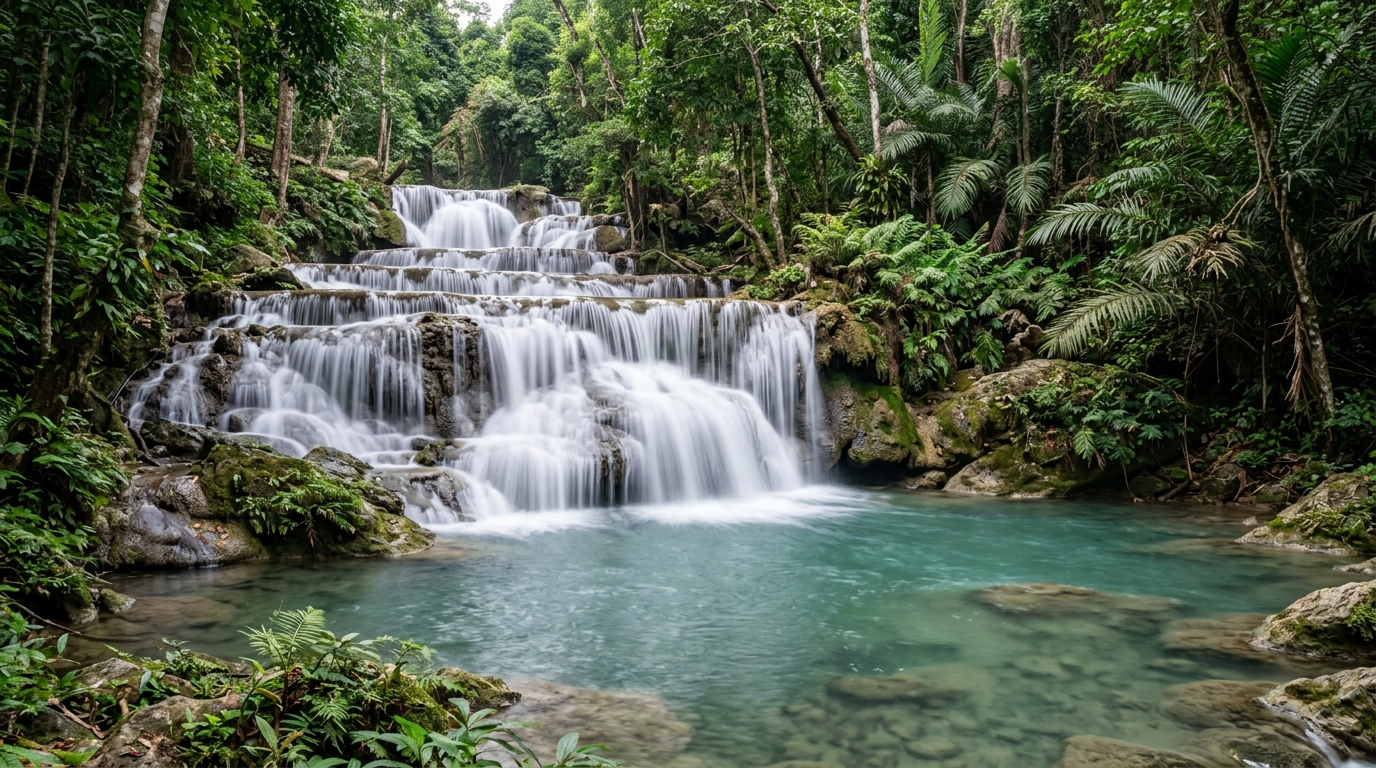
Everyone traveling to Kanchanaburi visits the Erawan Waterfalls. As a result, Erawan feels like a crowded public swimming pool. Instead, rent a scooter in town for about 200 THB and drive two hours deeper into the Khuean Srinagarindra National Park to reach Huay Mae Khamin.
This seven-tiered waterfall cascades gracefully over natural stepped limestone. Because public transport does not travel here, the crowds are non-existent.
Cost Breakdown: Foreign adult entry is 300 THB, and motorbike parking is an additional 20 THB.
My Mistake: I rented the absolute cheapest scooter I could find in Kanchanaburi to save a few dollars. The helmet lacked a visor, and when a sudden torrential downpour hit during the two-hour drive, the rain struck my face like needles. Always inspect your rental gear when driving to remote locations.
Cost Comparison: Mainstream vs. Remote Travel
Traveling to hidden gems in Thailand often lowers your daily food and accommodation expenses, but it can temporarily spike your transportation costs due to the lack of shared public transit.
Expense CategoryPhuket / Samui (Mainstream)Koh Phangan North / Trat (Remote)Cost DifferenceMid-Range Hotel (Per Night)2,500 – 4,500 THB800 – 1,500 THB~60% Cheaper in remote areasLocal Seafood Dinner600 – 1,200 THB150 – 300 THB~75% Cheaper in remote areasScooter Rental (Per Day)300 – 500 THB150 – 250 THB~50% Cheaper in remote areasTransport to Location100 THB (Airport bus)600 – 1,500+ THB (Private taxi/ferry)More expensive to reach remote spotsOrganized Day Tour1,500 – 3,000 THB0 THB (Self-guided via scooter)Massive savings by traveling independently
Who Should Travel This Way (And Who Should Not)
Choosing to venture off the beaten path is a deliberate travel style that requires specific trade-offs.
This style of travel is ideal for:
Independent Navigators: If you are comfortable renting a scooter, reading offline maps, and managing your own schedule, you will thrive in provinces like Lampang or Trat.
Budget Optimizers: Once you cover the initial transport cost to a remote island or village, your daily expenses for food and lodging will plummet compared to Bangkok or Phuket.
Culture Seekers: If your goal is to observe traditional farming, authentic morning markets, and unedited daily life, villages like Promlok or Koh Klang deliver exactly that.
You might want to skip this if:
You Require Flawless Infrastructure: Remote islands lack high-speed Wi-Fi, 24/7 pharmacies, and sprawling Western grocery stores.
You Have Limited Time: Reaching places like Wat Chalermprakiat or Khao Sok takes multiple hours of transit. If you only have a seven-day vacation, stick to locations with direct airport access to avoid spending 30% of your trip in vans and boats.
You Hate Inconvenience: When traveling remotely, ferries get canceled due to weather, local restaurants close randomly at 4:00 PM, and language barriers are highly prevalent.
Common Mistakes to Avoid
1. Misjudging the Scale of the Country
Many travelers attempt to cram a northern mountain trip (Mae Kampong) and a southern remote island (Koh Lipe) into a tight 10-day itinerary. Thailand is over 1,000 miles long from top to bottom. Moving between remote northern villages and southern islands requires a full day of travel involving a bus, a domestic flight, a minivan, and a ferry. Pick one region and explore it deeply rather than spending your entire vacation in transit.
2. Expecting Mainstream Amenities on Quiet Islands
When visiting spots like Koh Yao Noi or Koh Mook, travelers often assume they can just hit up an ATM or a large pharmacy whenever they need to. These islands have highly limited cash facilities and basic medical supplies. Always pull out enough Thai Baht on the mainland to cover your entire stay, and bring a personal first-aid kit with any specific medications you require.
Frequently Asked Questions
Are hidden gems in Thailand safe for solo travelers?
Yes, extremely safe. In fact, remote villages and islands often boast lower petty crime rates than heavily touristed areas like Pattaya or central Bangkok. The primary safety concerns in remote areas are related to nature and transit—specifically, poor road conditions when driving a scooter, and a lack of immediate emergency medical care on tiny islands. Always wear a helmet and buy travel insurance.
How do I navigate places where no one speaks English?
While English is heavily spoken in Phuket and Chiang Mai, it drops off sharply in places like Lamphun or Trat. Download the Thai language pack on Google Translate for offline use. Pointing, smiling, and learning basic phrases for “hello” (Sawasdee) and “thank you” (Khop Khun) will get you incredibly far. Local vendors are generally highly patient and eager to help.
Can I still find good internet for remote work off the main trail?
It depends entirely on the location. Places like Chaloklum (north Koh Phangan) have excellent infrastructure and are popular with digital nomads. However, if you book a floating raft house in Khao Sok National Park or a homestay in a deep rural village, expect zero cellular reception and spotty, weather-dependent Wi-Fi. Always verify internet speeds with your specific guesthouse before booking if you need to work.
Is it acceptable to wear beachwear in remote Thai villages?
No. While tourists walk around Phuket in bikinis, traditional Thai culture is highly modest. This is especially true on southern Muslim islands like Koh Yao Yai and Koh Klang. When you leave the immediate sand of the beach to walk through a village, rent a scooter, or buy food, you must put on a shirt and cover your shoulders and thighs. Respecting local modesty is the easiest way to be welcomed.
Final Thoughts
Escaping the massive crowds of Thailand does not require an unlimited budget or extreme survival skills; it simply requires intentionality. By renting a scooter to bypass tour bus routes, substituting heavily marketed towns for their quieter neighbors, and accepting a few minor logistical inconveniences, you unlock an entirely different country.
Whether you are swimming through pitch-black caves to reach hidden lagoons in Koh Mook, drinking locally farmed coffee at 4,200 feet in Mae Kampong, or cycling alone through 13th-century ruins in Sukhothai, the effort to go off the trail pays off immediately. Pick one region, secure independent transport, and give yourself the time to explore slowly.