
Finding genuine off the beaten path Thailand experiences feels nearly impossible when nearly 40 million tourists flood the country annually. You might assume every pristine shoreline has a mega-resort on it, and every mountain village operates solely as a commercialized tourist trap. Fortunately, that assumption is entirely wrong.
I spent two months systematically navigating the quiet corners of this country that mass tourism has not swallowed yet. By moving just one or two provinces away from major international airports, the entire landscape shifts. You trade corporate coffee shops for family-run eco-lodges, and heavily trafficked party beaches for empty stretches of sand.
This guide breaks down exactly where you need to go, what you will spend, and how to navigate the logistical hurdles required to find authentic local culture, untouched ecosystems, and serious peace and quiet.
Quick Summary
Swap Ayutthaya for Sukhothai: Explore 13th-century ruins by bicycle without fighting large tour groups for photo opportunities.
Prioritize the deep south: Rent a scooter in Khanom to seek out rare pink dolphins instead of joining crowded speedboat tours in Phuket.
Pack winter layers for the north: Nighttime mountain temperatures in Phetchabun regularly drop to 5°C, requiring actual winter gear.
Prepare for off-grid limitations: Islands like Koh Wai have no ATMs, zero proper shops, and severely restricted generator electricity.
Avoid the monkey-handling camps: Choose ethical wildlife encounters, such as spotting wild elephants in Khao Yai National Park with dedicated local guides.
The Direct Answer: How to Escape the Crowds
If you want to escape the crowds, you must stop treating the country’s main transportation hubs as your final destination. Bangkok, Phuket, and Chiang Mai are incredible places, but they operate as fully commercialized tourist corridors. To find quiet authenticity, you must utilize these major hubs solely as launchpads into neighboring regions.
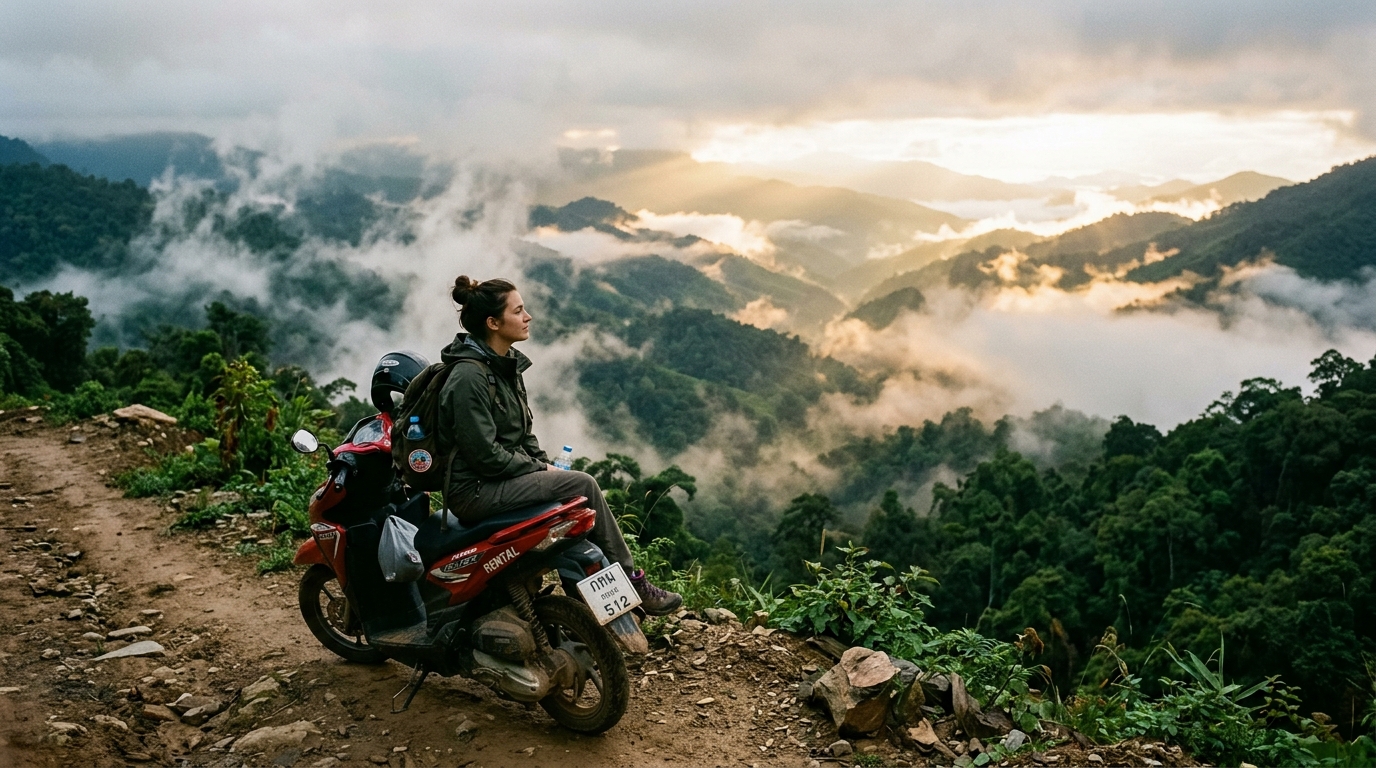
Instead of fighting for towel space on Patong Beach in Phuket, take a short 30-minute ferry ride over to Koh Yao Noi, where local agrarian fishing communities offer empty shorelines. Rather than riding the chaotic Mae Hong Son loop alongside hundreds of other tourists, take a scooter through the rural, misty valleys of Nan.
When you leave the primary tourist trail, local prices drop drastically. Your travel budget directly supports independent families rather than multinational hotel chains. You just need a willingness to ride local buses, rent your own scooter, and navigate minor language barriers. Most importantly, you need to rely entirely on cash, as credit card machines practically disappear once you leave the provincial capitals.
The Northern Frontier: Mountains, Monks, and Mists
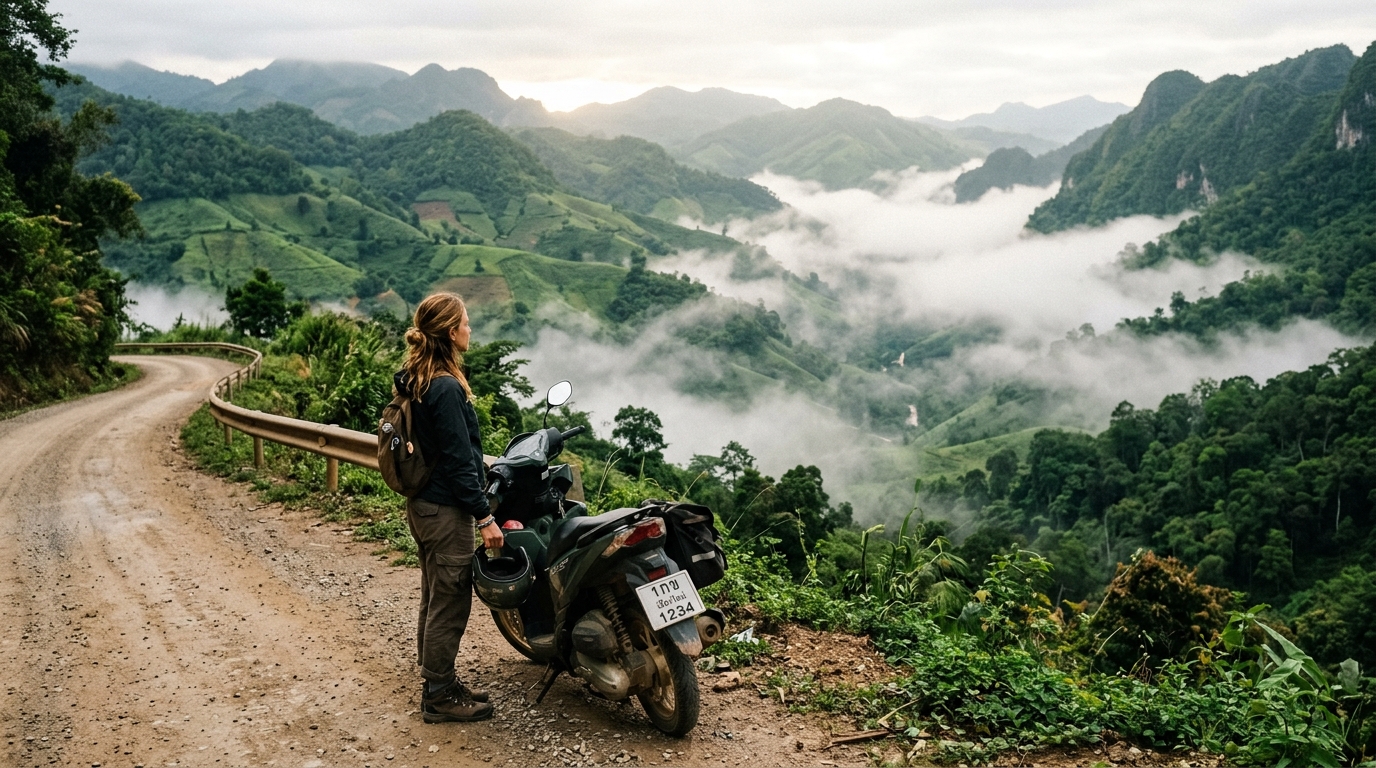
The mountainous north offers a totally different frequency than the chaotic southern beaches. However, popular spots like Chiang Mai suffer from intense digital nomad traffic. To find the authentic north, you must drive higher and farther.
1. Phetchabun: Freezing in the “Thai Alps”
Most travelers pack nothing but linen pants and swimsuits for this tropical country. That is a massive mistake if you head to Phetchabun. Known among locals as the “Thai Alps,” this north-central mountainous region demands actual winter gear.
I pitched a tent at the Phu That Boek campsite, the highest elevation point in the area. The temperature plummeted to 5°C overnight. I spent the evening shivering in my sleeping bag, questioning my life choices. However, the visual payoff at sunrise justifies the discomfort. You sit thousands of feet up, watching a dense sea of clouds roll directly through the valleys below you.
Getting here requires a six-hour bus ride from the Bangkok Bus Terminal, or a quick 50-minute domestic flight into Phitsanulok Airport. It is highly popular with domestic tourists from December to January but remains virtually unknown to international backpackers. Pitching your own tent costs a mere 50 THB, while renting a national park-issued tent runs about 400 THB.
2. Chiang Dao: The UNESCO Biosphere Shadow
The mountain town of Pai used to be the ultimate northern hippie retreat, but it now suffers from heavy international backpacker traffic and notorious police drug checkpoints. Chiang Dao, situated just an hour north of Chiang Mai, serves as the superior, quiet alternative. The town sits directly in the shadow of Doi Luang, Thailand’s third-tallest peak and a designated UNESCO Biosphere Reserve.
Summiting Doi Luang requires a mandatory guide (roughly 1,000 THB) and involves an overnight camping excursion. If you prefer to stay closer to the ground, spend an afternoon exploring the Chiang Dao Caves. This massive, 300-million-year-old limestone cave system ties deeply to regional Buddhist history.
If you visit in November, you can experience the famous Yi Peng lantern festival here without the crushing, shoulder-to-shoulder crowds found on the Nawarat Bridge in Chiang Mai.
3. Wat Chaloem Phra Kiat: The Floating Pagodas
Located roughly 60 kilometers from Lampang city, this spectacular mountain temple perches precariously on jagged rocky cliffs. Reaching it requires commitment.
After taking a mandatory mountain bus from the base (which is covered by the 200 THB adult entry fee), you face a grueling 400-meter vertical climb on foot to reach the summit. The steel stairs are steep, and the humidity is relentless. Yet, when you reach the top, you are rewarded with a sprawling, 360-degree panorama of the northern countryside, punctuated by small white pagodas resting on individual limestone peaks. Arrive right when they open at 7:30 AM to experience the atmosphere at its most serene.
Central Ruins & Jungles: History Without the Hordes
Central Thailand is dominated by the sprawling metropolis of Bangkok. While the capital demands respect, the regions located just a few hours outside the city limits offer profound historical and natural depth.
4. Sukhothai Historical Park: The Quiet Capital
If you love ancient architecture but hate waiting in lines, skip the heavily touristed ruins of Ayutthaya or the Grand Palace in Bangkok. Instead, take a train from Krung Thep Aphiwat Central Terminal to Phitsanulok to access Sukhothai.
Serving as the first capital of Siam in the 13th century, this UNESCO World Heritage Site features deeply intricate architectural details and serene Buddha statues spread across a vast park. The best way to navigate the five distinct sections of the ruins is by renting a bicycle for a few dollars a day. Because it sits roughly 430 kilometers north of Bangkok, it weeds out the casual day-trippers. You often have vast sections of the complex entirely to yourself, especially right at dawn.
5. Khao Yai National Park: Ethical Jungle Treks
Ethical wildlife encounters require strict vetting to avoid supporting abusive animal tourism. Khao Yai National Park sits just a two-hour drive from Bangkok and offers some of the best wild elephant spotting in Asia.
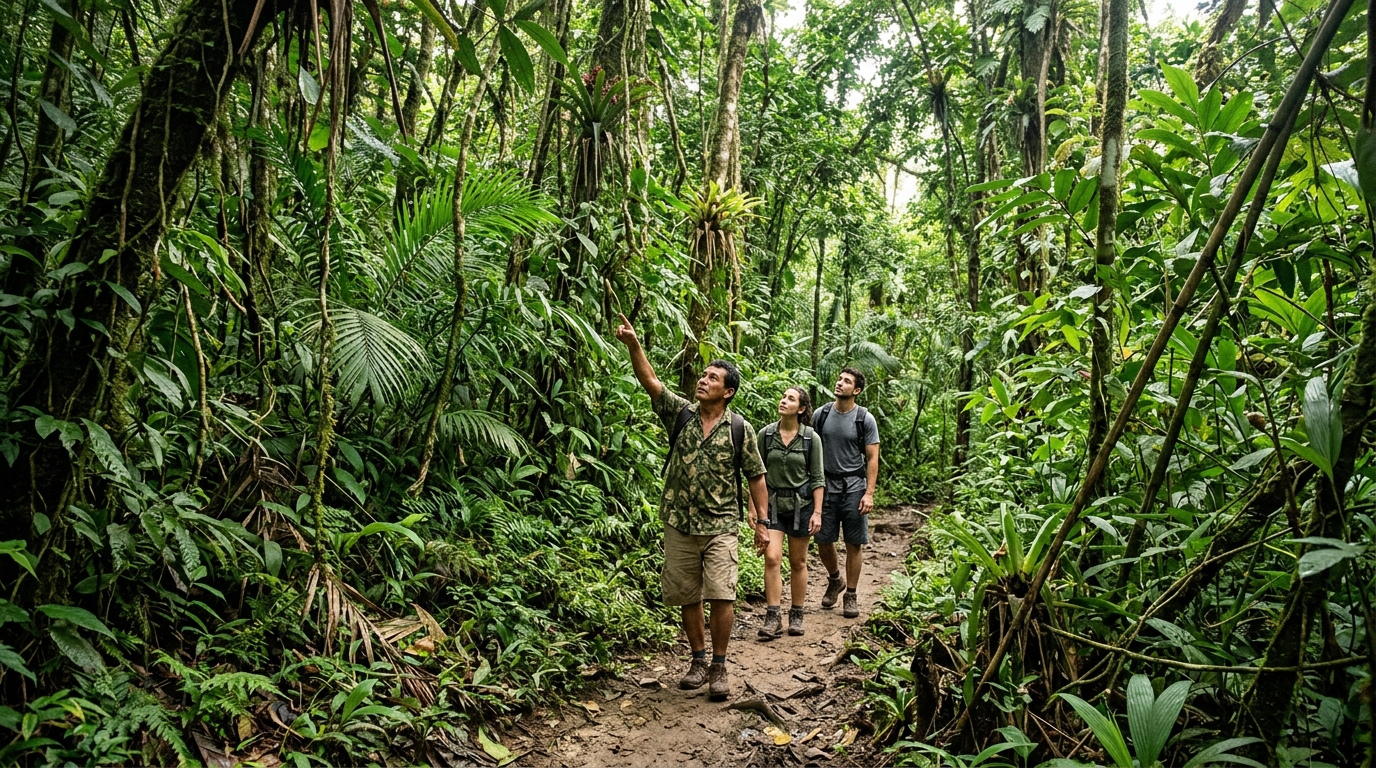
I highly recommend staying at the Greenleaf Guesthouse in the gateway village of Pak Chong. Their local guides are incredibly dedicated. During my trek, our guide expertly carried a heavy spotting scope through thick mud to show us resting hornbills, macaques, and gibbons high in the canopy.
They will provide you with thick fabric leech socks for your hike. Do not skip wearing them. Pulling bloated bloodsuckers off your bare ankles halfway through a humid, muddy jungle trek instantly ruins the mood. The park requires physical exertion, but hearing wild elephants tearing through the bamboo thickets just fifty yards away is an unmatched thrill.
The Eastern Gulf & Isan: Raw Authenticity
The eastern region and the rural Isan province remain heavily ignored by mainstream travel agencies. This area is ideal for independent travelers who want to stretch their budget and witness a lifestyle unaffected by Western influence.
6. Phanom Rung Historical Park: The Volcano Temple
Head east to Buriram Province to visit Phanom Rung. This site offers a remarkably preserved representation of Hindu Khmer influence, drawing direct architectural comparisons to Cambodia’s Angkor Wat.
What makes this temple incredibly unique is its location: it was constructed directly atop an extinct volcano in the 10th century. The complex features highly complex architecture, decorated walls, and sky-puncturing towers. Because it sits so far off the typical backpacker trail, renting a car from Bangkok is the easiest way to access the rural Isan region. You will encounter zero tour buses here.
7. Koh Wai: The Off-Grid Adventure
If your sole objective is total isolation, Koh Wai requires your immediate attention. Located in the Gulf of Thailand south of Koh Chang, this island is meant for travelers who want a complete break from modern society.
Koh Wai completely lacks ATMs, proper shops, and public electricity. There are only five places to stay on the entire island. Two are high-end resorts with 24/7 generator power, while the remaining three are basic accommodations that only offer electricity for a few hours a day. You come here to shore-snorkel over the magnificent coral reef located just 40 meters off the northern coast, read books in a hammock, and exist quietly in nature.
The logistical catch? The ferry from Koh Chang to Koh Wai only runs once a day. If you miss it, your itinerary halts immediately.
The Andaman Sea: Unspoiled Western Islands
The western coast of Thailand boasts famous spots like Phuket, Krabi, and Koh Phi Phi. Mass tourism has severely degraded these ecosystems. Maya Bay, for example, was forced to close for four years after 80% of its coral reefs were destroyed by tourist boat anchors and sunscreen chemicals. To avoid contributing to this damage, redirect to the lesser-known islands.
8. Koh Kradan & Koh Mook: The Car-Free Escapes
Located in the southern Trang province, Koh Kradan was officially voted the world’s best beach for 2025, yet it remains blissfully uncrowded. You will find absolutely no streets and no permanent local village on the island. The infrastructure is limited entirely to a handful of small eco-resorts. It operates as a massive open-air wellness retreat.
Nearby Koh Mook feels like a trip backward in time. The island completely lacks cars. You walk, cycle, or hire a local sidecar motorcycle to navigate the dirt paths. I booked a cheaper local ferry to get here thinking I would save a few baht. It turns out the four-hour ride in choppy waters was a massive mistake that caused intense nausea, but arriving on the island instantly cured my regret.
The standout feature on Koh Mook is the Emerald Cave. You have to swim through an 80-meter pitch-black tunnel wearing a life jacket. It feels mildly terrifying until you emerge into a spectacular open-air lagoon surrounded by towering vertical cliffs.
9. Koh Yao Noi: The Accessible Hideaway
Surprisingly located right between two major tourist hotspots (Krabi and Phuket), Koh Yao Noi is a quiet paradise that perfectly balances seclusion and comfort. It maintains a deeply local, agrarian atmosphere centered around rubber plantations and fishing villages.
The roads are perfectly suited for casual scooter rides. Head to Little Long Beach for a completely empty stretch of sand. From here, you can also hire a private longtail boat for the famous Four Islands Day Trip at a fraction of the cost you would pay on the mainland.
The Deep South: Rainforests and Rare Wildlife
As you move closer to the Malaysian border, the culture shifts, the food gets much spicier, and the crowds thin out significantly.
10. Khanom: Pink Dolphins and Empty Coastlines
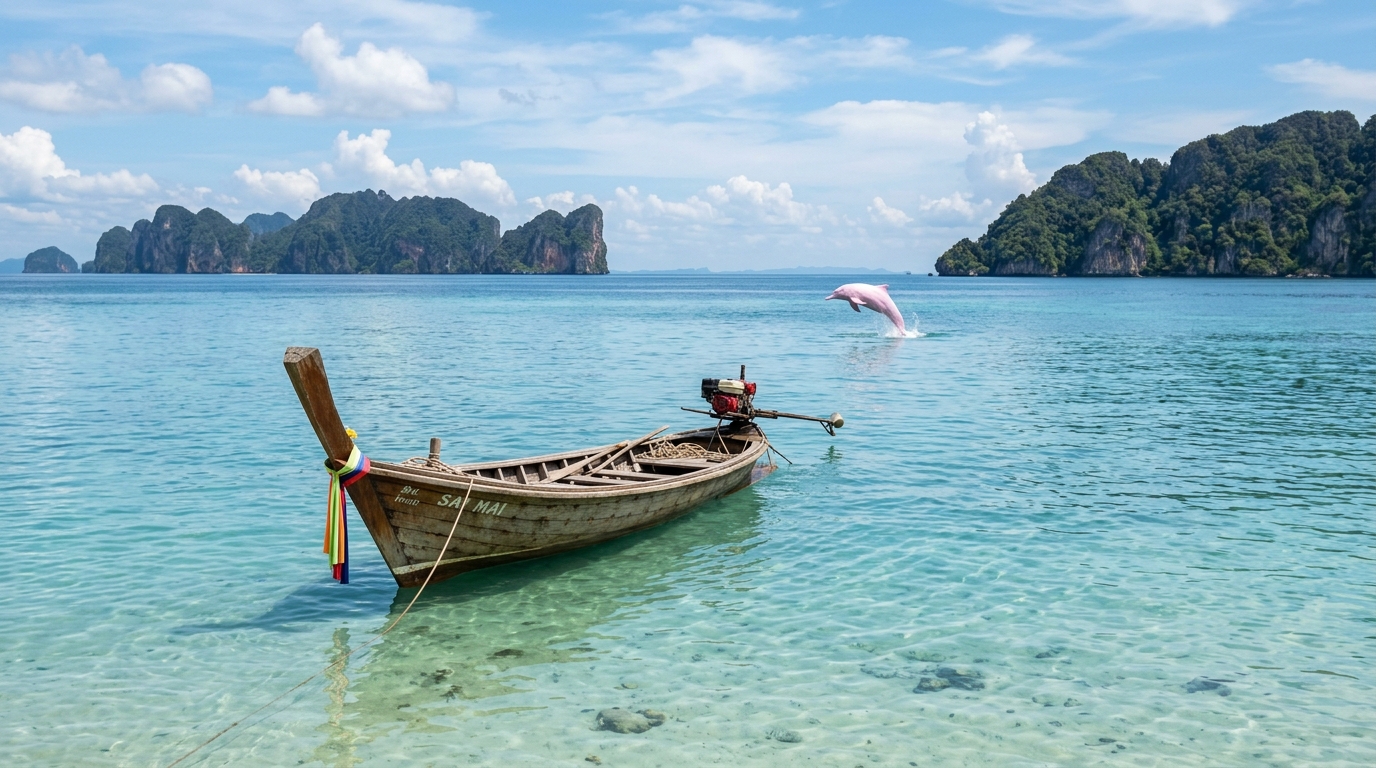
Down in the southern province of Nakhon Si Thammarat lies the coastal district of Khanom. It boasts at least ten completely quiet beaches that easily rival the most famous spots in the country. The major unique attraction here is the resident population of rare pink dolphins.
You can hire a local fisherman’s boat to ethically observe these mammals in their natural habitat. The major downside to this region? Local taxis operate like an aggressive monopoly and charge wildly inflated rates for very short trips. You absolutely must rent your own scooter or car to explore the coastline economically. Without your own transport, you will quickly blow through your daily budget just getting from your guesthouse to a restaurant.
The True Cost of Remote Travel
Traveling away from the primary tourist trail drastically alters your daily budget structure. Food, lodging, and national park access fees plummet, but isolated transit costs can temporarily spike.
Thailand is highly affordable; couples can easily travel off the beaten path on $35 to $40 USD per day. However, relying on ATMs requires strategy. Thai banks charge a flat 200 THB (roughly $6.50 USD) fee for every foreign card withdrawal. You must pull maximum amounts while you are still in a major transport hub before catching a ferry to an island like Koh Wai.
Here is a realistic breakdown of what you can expect to spend when you seek out these quiet locations:
| Destination / Activity | Expected Cost (THB) | Important Notes |
|---|---|---|
| Local Bus Rides | 8 – 16 THB | Excellent cheap transit within provincial towns. |
| Pai Bamboo Bridge | 30 THB | Best photographed during early morning light. |
| Phetchabun Tent Rental | 400 THB | National park-issued tent for the 5°C nights. |
| Khao Yai Trekking | 1,200 THB | Full day. Includes guide, lunch, and hotel transfers. |
| Erawan National Park | 300 THB | Standard foreign adult entry fee for the waterfalls. |
| Motorbike Rental (Daily) | 200 – 300 THB | Essential for coastal towns like Khanom. |
Common Mistakes to Avoid
Navigating rural provinces requires a different mindset than hopping between major beach clubs. Avoid these frequent errors to keep your trip running smoothly.
Mistake 1: Relying Entirely on Digital Maps
Assuming Google Maps works perfectly in the deep jungle is a fast way to get hopelessly lost. The best hiking trails, hidden hot springs, and unmapped valley waterfalls simply do not exist on the app. Cellular service drops constantly on the islands and in the northern mountains. You must ask local coffee shop owners, guesthouse hosts, or gas station attendants for directions. Word-of-mouth remains the primary navigation tool in the outer provinces.
Mistake 2: Ignoring Regional Microclimates
Assuming the weather will be a balmy 32°C everywhere leads to absolute misery when you hit the northern highlands. The climate shifts dramatically based on elevation. Destinations like Chiang Dao and Phetchabun get incredibly cold once the sun goes down. Always research the specific elevation of your destination before packing your bag.
Mistake 3: Wearing Improper Footwear in Caves
I tried navigating a 300-million-year-old limestone cave system wearing cheap beach flip-flops. It was genuinely dangerous. The rocks inside these systems are jagged, slick with condensation, and completely uneven. You must bring proper trainers or hiking shoes if you plan to explore the interior geography safely.
Who Should Go Off the Grid (And Who Should Not)
This style of travel requires flexibility and patience. It is ideal for:
Independent travelers who possess basic scooter-riding skills and a desire to integrate into local schedules.
Wildlife enthusiasts looking for ethical observation rather than staged animal shows.
Photographers and hikers who value profound quiet over late-night entertainment.
You might want to skip this approach if:
You require constant air conditioning, high-speed Wi-Fi, or predictable luxury. Places like Koh Tarutao and Koh Wai heavily restrict their electricity grids.
You experience severe anxiety when navigating massive language barriers.
- You panic when a local bus runs 45 minutes late. If tight schedules dictate your mood, stick to the main resort towns.
- thealwayswanderer.com
- beyondthebucketlist.co
- www.travelcentre.us
- visatravelphiphi.com
- www.bookaway.com
Frequently Asked Questions
How do you physically get around the remote Thai provinces?
Renting a scooter is the most efficient and economical method. Public transit practically disappears once you leave the major highway corridors, and local taxi monopolies can be viciously expensive. Always ensure you carry an International Driving Permit with a valid motorcycle endorsement to remain legally compliant with local police checkpoints.
Can I use credit cards in rural towns and islands?
Absolutely not. While Bangkok and Phuket are heavily digitized with tap-to-pay systems, rural vendors, national park offices, and small guesthouses operate exclusively on a cash basis. Always pull sufficient Thai Baht from ATMs while you are still in a major transport hub before catching a ferry or mountain bus.
Is it safe to travel to the mountainous border regions?
Generally, provinces like Mae Hong Son are entirely safe for foreign tourists. However, you should stay on established roads and avoid wandering deep into unmapped jungle areas due to historical border tensions with Myanmar. Always check your embassy’s current travel advisories before driving north, and respect local military checkpoints.
What is the best month to visit the Gulf islands like Koh Wai?
While the general dry season runs from November through April, the Gulf of Thailand maintains relatively good weather even during the start of the rainy season (July to September). However, the absolute best balance of good weather, low prices, and empty beaches occurs during the shoulder season months of May and June.
Final Thoughts
Trading the commercial hubs for rural provinces completely transforms your perspective of this massive country. You willingly trade modern convenience for deep authenticity, and manufactured luxury for profound natural quiet.
By venturing just a few hours outside the primary tourist zones, you can still find deserted white-sand beaches on Koh Kradan, ancient temple ruins free of crowds in Sukhothai, and jungles teeming with wild elephants in Khao Yai. Rent a reliable scooter, pack some leech socks alongside your swimsuit, withdraw plenty of cash, and head toward the outer provinces. The extra logistical effort is always worth the reward.