
Exploring Thailand off the beaten path requires explicitly trading convenience for raw, unpolished authenticity. When I first moved away from the standard backpacker trail of Bangkok, Chiang Mai, and Phuket, I honestly doubted that true isolation still existed in a country receiving tens of millions of annual visitors. I assumed every pristine white-sand shoreline had a luxury resort and every historic ruin featured a line of idling tour buses. I was entirely wrong.
True Thai culture—characterized by slow-paced coastal fishing villages, freezing highland farming communities, and deeply welcoming locals—thrives just a few hours outside the major metropolitan transit hubs. Finding these uncrowded frontiers shifts your travel dollars to rural economies that actively desire your patronage, while rewarding you with unparalleled solitude.
Quick Summary
Swap the Andaman hotspots for the Deep South: Islands like Koh Tarutao and Koh Kradan offer deserted white sands at the cost of modern conveniences like air conditioning and 24/7 electricity.
Embrace the altitude: Northern provinces like Phetchabun require steep mountain drives but reward independent travelers with rare hill-tribe encounters and near-freezing nighttime temperatures.
Logistics matter more than luxury: Authentic locations operate on local schedules. Seasonal marine park closures, cash-only transactions, and language barriers are standard hurdles you must plan for.
Prioritize independent transport: Securing your own scooter or rental car is virtually mandatory to reach uncommercialized zones without paying exorbitant private taxi fares.
Head to Isan for history: The northeastern region holds spectacular ancient Khmer ruins that easily rival Cambodia’s temples, completely devoid of the usual tourist traffic.
The Direct Answer: How to Travel Thailand Off the Beaten Path
If you want to experience the country without the massive crowds, you must explicitly avoid any island with an international airport. Instead of booking flights to Krabi or Koh Samui, route your trip toward the Trang province in the south, or the remote mountainous borders shared with Myanmar and Laos in the north.
To execute this successfully, you must rent a vehicle (a 125cc scooter or a 4×4 car), carry physical Thai Baht in small denominations, and download offline translation apps. Opt for local homestays or national park campsites over chain hotels. By simply taking a three-hour local bus ride away from any major transit hub, you will immediately cut the foreign tourist population by ninety percent. You have to commit to slower transit—accepting that an eight-hour night bus or a slow wooden cargo ferry is the mandatory entry fee for reaching untouched locations.
Unspoiled Island Escapes (The Deep South & Gulf)
Most international travelers associate Thai islands with full-moon parties and packed resort beaches. However, a massive archipelago exists where the lack of infrastructure deliberately filters out mass tourism.
Koh Tarutao: The Former Prison Island
Located in the Andaman Sea, just a 30-minute speedboat ride from the highly developed Koh Lipe, Koh Tarutao is Thailand’s largest marine park. It also carries a dark history. It was once a brutal penal colony housing thousands of inmates. Today, this translates to an island completely devoid of luxury resorts.
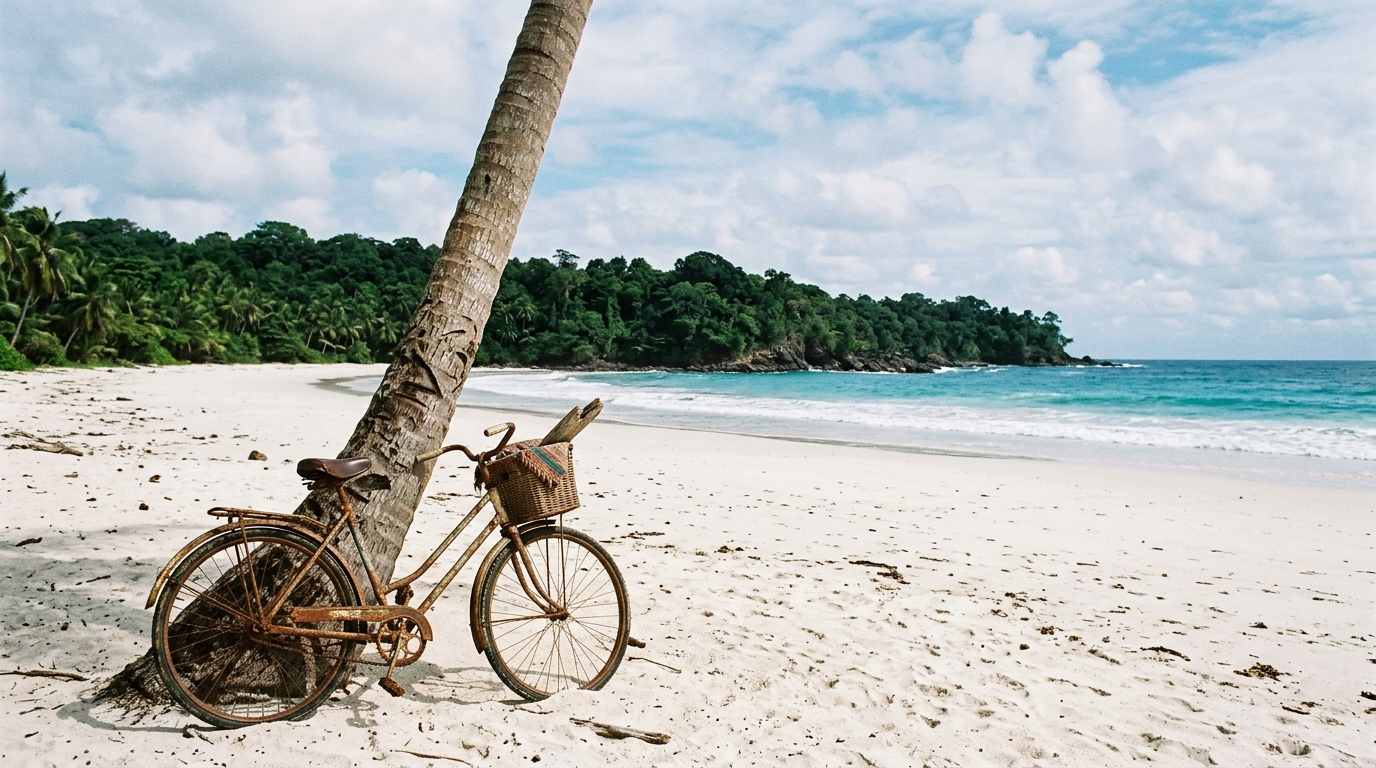
When I stepped off the ferry at Pak Bara pier, I was met by absolute silence, interrupted only by the rustling of native macaques in the canopy. You either rent a basic national park bungalow on Ao Molae beach or pitch a tent. Electricity is restricted to a few hours in the evening, and air conditioning simply does not exist.
To navigate the island, you rent a bicycle for about 250 THB ($7) per day to traverse miles of entirely empty coastline. One massive caveat: The Thai government strictly closes the island from May 15 to October 15 during the monsoon season. Do not attempt to book travel here during those months.
Khanom and the Rare Pink Dolphins
The coastal district of Khanom, located in Nakhon Si Thammarat province near the Donsak pier, offers a bizarre geographical anomaly: an indigenous population of rare pink dolphins.
While Koh Samui sits just across the water receiving millions of tourists, Khanom remains a quiet, local beach town. Instead of paying premium prices for generic commercial boat tours, you can charter a traditional long-tail boat from Nang Kam Beach directly from a local fisherman. Seeing a bright pink dorsal fin break the surface of the water against the backdrop of untouched limestone cliffs is surreal. To explore Khanom properly, you must rent a scooter. Local public transport is nearly nonexistent, and the few taxis available charge punishingly high rates.
Koh Mook and Koh Kradan
If you want to step backward in time, head to the Trang province. Koh Kradan, which has no streets and no permanent local inhabitants outside of a few low-key resorts, offers incredibly peaceful coral reefs.
Nearby Koh Mook is slightly more rugged. It remains an essential refuge for rare marine wildlife, including Dugongs (sea cows). You can spend your days snorkeling the Emerald Cave or relaxing on Charlie Beach. The island operates at an incredibly slow pace, making it perfect for those wanting to disconnect completely.
Mountain Peaks and Ethical Encounters (The North)
While Chiang Mai is a spectacular ancient capital, its old town and famous temples suffer from severe gridlock. To find quiet altitude, you must push further toward the borders.
Phetchabun: Camping in the “Thai Alps”
Thailand is notoriously hot and humid, which makes Phetchabun a geographical anomaly. Locals refer to the Khao Kho National Park region as the “Thai Switzerland.”
The primary draw is Phu That Boek, the highest campsite in the province. The elevation creates a stunning phenomenon where you literally wake up above a thick ocean of morning clouds. I rented a heavy canvas tent directly from the park rangers for 400 THB ($11). I severely underestimated the climate; daytime temperatures hover around a pleasant 15°C (59°F), but at night, the thermometer plummeted to 5°C (41°F). I spent the night shivering in my sleeping bag, relying entirely on hot tea and noodle soup sold by a local vendor. Pack serious winter layers if you plan to camp here.
The Mae Hong Son Loop and the Kayan Tribes
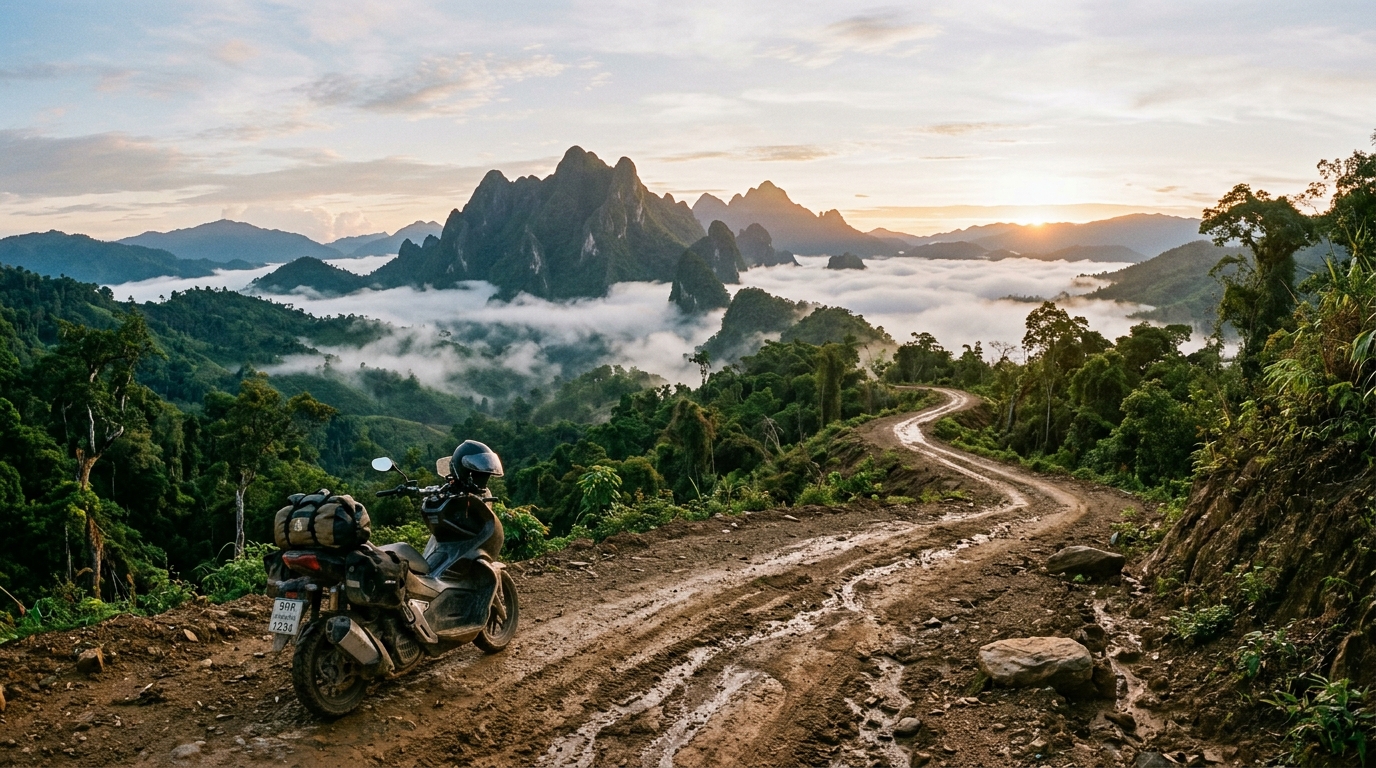
Located on the northwestern border with Myanmar, Mae Hong Son requires a strong stomach for twisting mountain roads. The famous 800-kilometer motorbike loop is arguably the most scenic drive in Southeast Asia, but I must emphasize a strict warning: only confident, experienced riders should attempt this. The hairpin turns are merciless.
The province is home to various hill tribes, including the Kayan people, internationally recognized for the brass rings worn around the women’s necks. Historically, many of these villages operated uncomfortably like human zoos run by exploitative tour operators. To visit ethically, you must bypass the roadside tourist traps. Hire an independent local guide to take you via riverboat to the deeper, self-sustaining villages. Buy their handmade jewelry and textiles directly from the artisans. Always ask for explicit permission before taking photographs.
Lampang’s Sky Temple (Wat Chalermprakiat)
Located about 90 minutes outside of Chiang Mai, this temple is physically demanding to reach. After paying the 200 THB entry fee, you are loaded into the back of a modified local jeep. The driver rockets up a terrifyingly steep, narrow mountain path.
Once the road ends, you must complete a brutal 400-meter vertical climb on foot via a metal staircase bolted directly to the cliff face. The physical punishment is worth it. At the summit, white pagodas are perched precariously on jagged limestone peaks 1,000 meters above the Thung Valley. The silence is profound, punctuated only by hundreds of tiny brass temple bells ringing in the mountain wind.
Chiang Dao and Mae Salong
Chiang Dao, known as the “City of the Stars,” sits 80 kilometers north of Chiang Mai. It is home to the Dara-Ang (Silver Palung) tribe, who migrated to Thailand in the 1980s. Women in the village wear distinctive silver hoops as belts over bright red clothing. Instead of rushing through on a day trip, stay for a few days to sample their locally roasted coffee and explore the limestone caves.
Further north in Chiang Rai province lies Mae Salong. Founded in 1961 by Chinese soldiers fleeing communist rule, the town looks and feels entirely Chinese, complete with sprawling tea plantations. If you visit during the local New Year, you might witness the Akha and Lisu tribes performing mesmerizing trance dances from dawn until dusk.
The Isan Region & Ancient Khmer Ruins
The northeastern region of Isan is widely considered the most authentic area in the country, largely ignored by Western backpackers.
Phanom Rung and Phimai
Instead of fighting thousands of day-trippers at Ayutthaya, history enthusiasts should head to Phanom Rung in Buriram province. It is the largest and best-preserved Khmer monument in Thailand, uniquely constructed on the rim of an extinct volcano. Built between the 11th and 12th centuries, its architecture directly mirrors Cambodia’s Angkor Wat. The crucial difference? You can explore the intricate stone carvings in total silence.
Nearby in Nakhon Ratchasima province lies Phimai Historical Park. If you visit during the annual three-day Phimai Festival, you can watch spectacular traditional Apsara Thai dances performed right inside the ancient temple walls.
Ban Chiang Archaeological Site
Located in Udon Thani province, this is a premier destination for serious archaeology buffs. Discovered accidentally in the 1960s by a college student who tripped over a pottery shard, Ban Chiang features ruins dating back to 2000 BC.
To get here, take the 8-hour night bus from Bangkok to Udon Thani. Once there, hire a local taxi. The active dig site and the Ban Chiang National Museum are separated by a 10-minute drive, and having a dedicated driver makes navigating the rural roads drastically easier.
Wildlife Immersion and Jungle Treks
Many visitors restrict their nature viewing to commercialized animal parks. Seeing authentic wildlife requires putting boots on the ground in dense, unpredictable rainforests.
Khao Sok’s Cheow Lan Lake
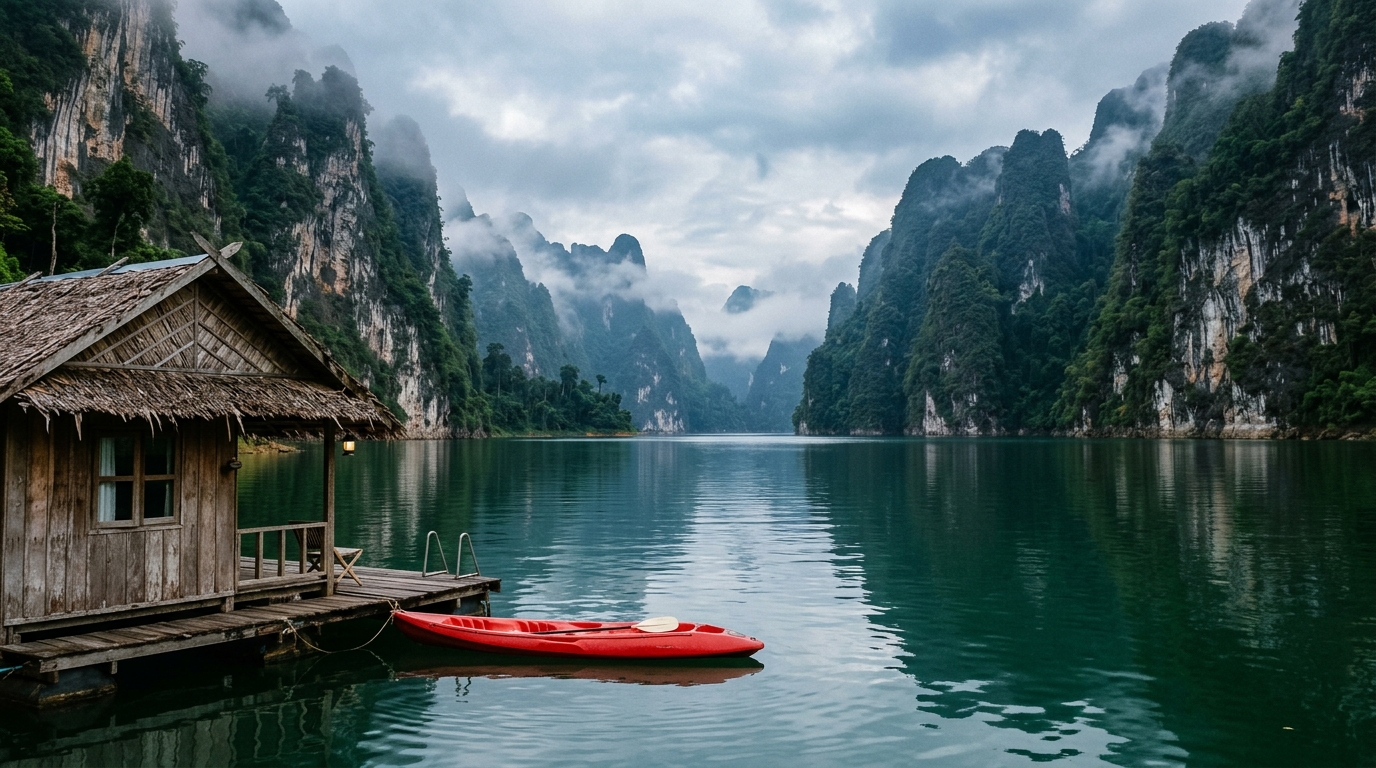
Khao Sok spans a massive 739 square kilometers, featuring the world’s oldest evergreen rainforest. The centerpiece is Cheow Lan Lake, an emerald green reservoir punctuated by over 100 towering limestone karsts.
To experience it properly, I highly recommend booking a floating stilted cabin directly on the water, such as those at the 500 Rai Resort. Their operational motto is “Disconnect to Reconnect,” meaning they intentionally provide zero Wi-Fi or internet access. Waking up, stepping out of your bamboo door, and diving directly into the warm, incredibly deep water as the morning mist rolls off the cliffs is unmatched.
Khao Yai National Park
Just a two-hour drive from Bangkok, Khao Yai is one of the few places in Southeast Asia where wild elephants still roam freely.
Rather than wandering aimlessly, I hired a local tracker from the Greenleaf Guesthouse in Pak Chong. This is mandatory if you actually want to see wildlife. My guide enthusiastically hauled a massive spotting scope through the dense brush, allowing us to view hornbills, white-handed gibbons, and monitor lizards safely.
Crucial tip: You must wear leech socks here. The jungle floor is teeming with them, especially after rainfall. The guesthouse provided them, and I absolutely needed them.
Sangkhlaburi and the Mon Bridge
Tucked into the deep jungle near the Myanmar border, a few hours west of Kanchanaburi, lies Sangkhlaburi. The village is divided by a 400-meter-long wooden bridge (the longest in Thailand), known as the Mon bridge.
The western side of the bridge is heavily influenced by Myanmar. Do not be alarmed when you see locals with severely reddish-black teeth; this is a cultural norm resulting from chewing betel nuts, a local stimulant. I highly recommend staying at P Guesthouse, which features a private pier offering direct access to the local lake, where you can hire a long-tail boat to explore “secret” underwater temples flooded by a local dam project.
Koh Chang Noi (Ranong Province)
Do not confuse this with the massive resort island of Koh Chang in the east. Koh Chang Noi sits on the Andaman coast near the Myanmar border.
Reaching it requires boarding a slow, wooden cargo boat from Ranong. I shared my two-hour crossing sitting on sacks of rice next to crates of live chickens. When I visited, there was no internet, no ATMs, and definitely no convenience stores. If your ideal vacation involves doom-scrolling on a sunbed, you will hate it here. If you want to drink cheap local beer in a hammock while watching hornbills fly overhead, it is paradise.
Cost Comparison: Mainstream vs. Off-Path
One of the massive advantages of exploring unknown provinces is the drastic reduction in daily costs. Because these areas cater heavily to the local economy, prices reflect actual Thai living standards.
| Expense Category | Mainstream Hub (Phuket/Samui) | Off-Path Location (Trang/Isan) | Value Difference |
|---|---|---|---|
| Local Meal (Noodles/Curry) | 120 – 250 THB ($3.50 – $7.00) | 40 – 60 THB ($1.15 – $1.75) | ~75% Cheaper |
| Scooter Rental (Per Day) | 300 – 500 THB ($8.50 – $14.00) | 150 – 200 THB ($4.25 – $5.75) | ~50% Cheaper |
| Standard Bungalow (Nightly) | 1,500 – 3,000 THB ($42 – $85) | 400 – 800 THB ($11 – $22) | ~70% Cheaper |
| Domestic Beer (Large) | 100 – 150 THB ($2.85 – $4.25) | 60 – 80 THB ($1.70 – $2.25) | ~40% Cheaper |
| National Park Tent Rental | N/A (Mostly Resorts) | 400 THB ($11.00) | Highly Affordable |
| Private Boat Hire (Half Day) | 2,500 – 4,000 THB ($70 – $114) | 800 – 1,200 THB ($22 – $34) | ~68% Cheaper |
Note: Prices are approximate and fluctuate based on seasonal demand, but the ratio of savings remains highly consistent.
Who Should Travel Off the Beaten Path (And Who Should Not)
Choosing to pursue these remote locations requires a specific travel mindset.
This approach is ideal for:
Independent Planners: If you are comfortable researching local bus schedules, negotiating with longtail boat operators via translation apps, and navigating without relying on a hotel concierge.
Cultural Purists: Travelers who prefer eating a 40 THB bowl of noodles on a plastic stool surrounded by locals rather than dining in a heavily stylized fusion restaurant.
Nature Enthusiasts: Those willing to endure humidity, insect bites, and early mornings for the chance to see dolphins, wild elephants, or empty horizons.
You might want to skip this if:
You require modern luxury: If the absence of air conditioning, high-speed Wi-Fi, or English-speaking staff will ruin your day, avoid places like Koh Tarutao or Cheow Lan Lake.
You are on a hyper-compressed schedule: Transit in rural Thailand takes time. A 150-kilometer journey might take five hours due to mountain roads or slow ferries. If you only have seven days in the country, stick to the major domestic flight hubs.
- You fear local fauna: Stray dogs, assertive macaque monkeys (especially at temples in Phetchaburi or Lopburi), and massive tropical insects are unavoidable facts of rural Thai life. I once had a monkey aggressively steal a water bottle straight out of my backpack in Lopburi—you must be vigilant.
- visatravelphiphi.com
- thailandstartshere.com
- gotothailand.com
- www.travelcentre.us
- www.simplynomadiclife.com
- thealwayswanderer.com
- thailandinsider.com
Common Mistakes to Avoid
Venturing away from the tourist infrastructure strips away the safety nets that usually catch international travelers.
Mistake 1: Ignoring the rainy season logistics.
Many tourists assume the monsoon season just means dealing with an hour of afternoon rain. In reality, the Thai government actively closes dozens of national parks and marine reserves during this time to allow the ecosystems to recover and to prevent maritime accidents. If you try to visit Koh Tarutao or certain waterfalls in September, you will be turned away at the locked gate. Always check the official Thai National Parks website for closure dates (often May 15 to October 15) before booking transit.
Mistake 2: Relying solely on digital payments and cards.
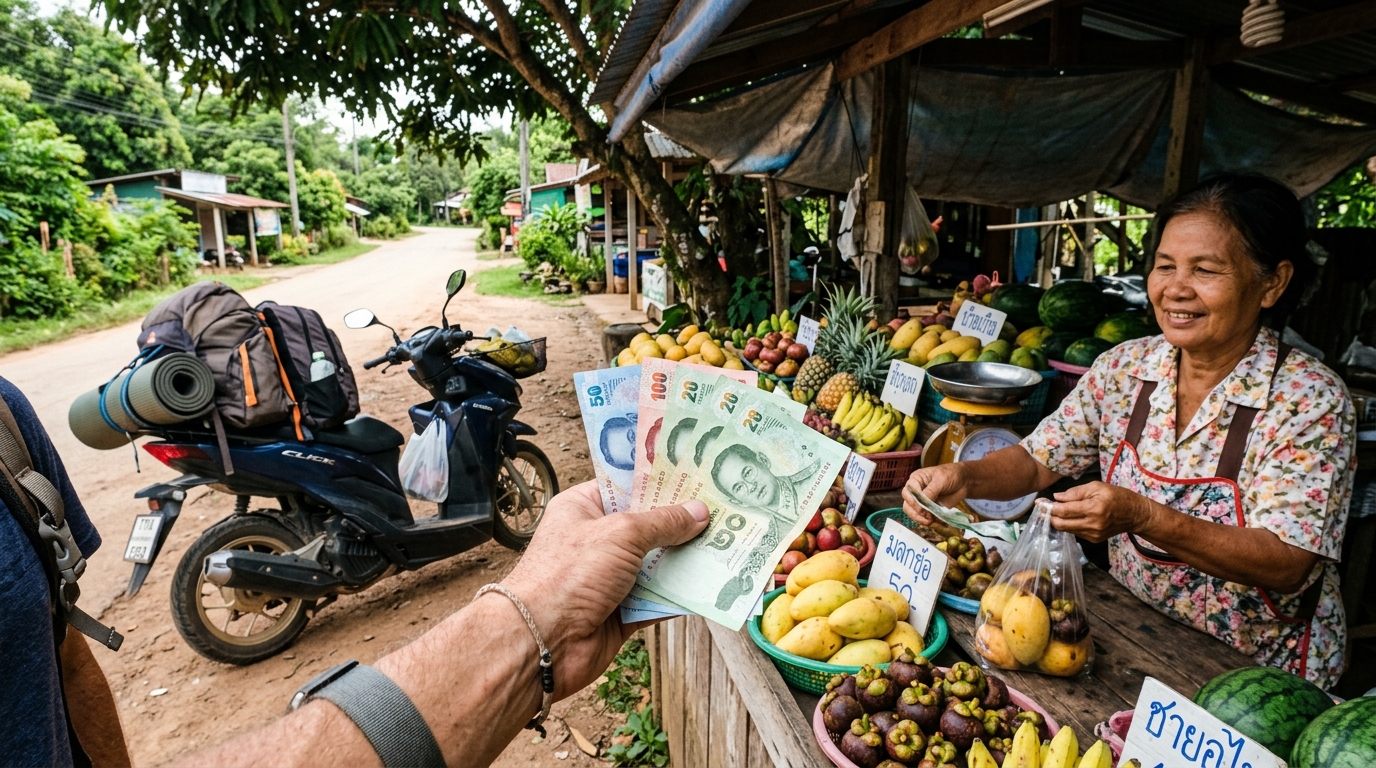
While Bangkok runs almost entirely on the PromptPay QR code system and credit cards, rural Thailand still operates heavily on physical cash. I once found myself on a remote northern mountain pass in Mae Hong Son with an empty gas tank, only to discover the sole village fuel pump was a hand-cranked barrel that only accepted small-denomination Baht notes. Always carry a hidden stash of 100 and 50 Baht notes when leaving major cities.
Frequently Asked Questions
Is it safe to travel to remote Thai provinces alone?
Yes, violent crime against tourists in rural Thailand is exceptionally rare. The primary safety risks in remote areas are vehicular accidents (particularly involving rented scooters on mountain roads or in the rain) and encounters with aggressive wildlife like street dogs or temple monkeys. If you drive cautiously and maintain situational awareness, these regions are incredibly hospitable.
How do I navigate if the locals don’t speak English?
The language barrier is a stark reality in places like Sangkhlaburi or Lampang. Download the Thai language pack on Google Translate for offline use. Pointing, smiling, and using a translation app for complex requests will get you through almost any situation. Locals in these areas are famously patient and will often go out of their way to help you decipher a menu or a bus schedule.
What is the best time of year to explore these locations?
The cool, dry season from November to February is universally the best time to explore. The temperatures are manageable for intense jungle hikes, the ocean is calm for cargo boat crossings, and rare wildlife (like Khanom’s pink dolphins) are most active. Furthermore, rare flora like the dok siew flowers in Chae Son National Park only bloom between January and February.
How do I find authentic local food in towns without English reviews?
Look for visual cues rather than digital reviews. If a roadside open-air restaurant has plastic chairs, bright fluorescent lighting, and a parking lot packed with local scooters at 7:00 PM, pull over immediately. Areas like Trang are legendary among domestic travelers for having the cheapest, highest-quality barbecued pork and noodle dishes in the country, completely devoid of English menus.
The Final Word on Thailand’s Secret Corners
Deciding to skip the famous resort coastlines or the heavily trodden backpacker streets requires a massive leap of faith. It means trading the comfort of guaranteed English menus, reliable air conditioning, and luxury mattresses for the unpredictability of slow cargo ferries, mandatory leech socks, and basic fan-cooled bungalows.
However, the reward for that trade-off is immense. By exploring the misty, freezing peaks of Phetchabun, the utterly silent beaches of Koh Tarutao, or the ancient Khmer ruins of Phanom Rung, you get to experience the raw, unfiltered hospitality that earned this country its legendary reputation in the first place. These are the specific locations where your travel budget directly supports local families, and where you can finally sit on a spectacular stretch of coastline without fighting a hundred other people for the view. Grab a physical map, rent a scooter, stash some cash in your bag, and deliberately point your compass away from the crowds.