
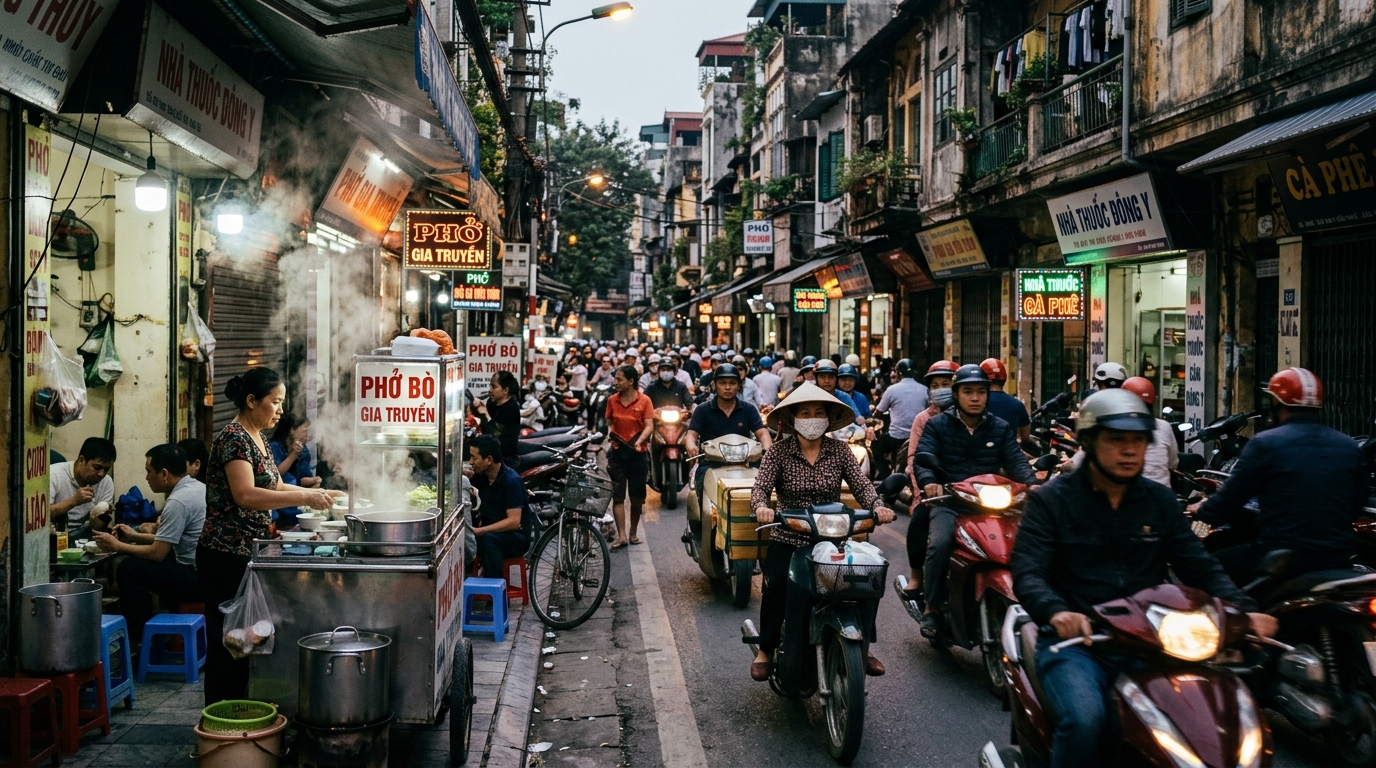

Finding a comprehensive Hanoi cultural travel guide is absolutely essential if you want to understand the manic, beautiful, and deeply layered rhythm of Vietnam’s thousand-year-old capital. When I first stepped out of Noi Bai International Airport, the immediate sensory overload—the smell of diesel mixed with simmering star anise, the relentless wave of motorbikes, the heavy, humid air—was entirely overwhelming. It is not a city that hands you its charm on a silver platter. You have to earn it. Navigating this environment requires more than just a map; it requires an understanding of how to absorb a traditional civilization that operates at warp speed.
Quick Summary
Dedicate at least four days: Treating the capital as a quick 24-hour layover before your coastal cruise guarantees you will miss the historical context entirely.
Organize your days by historical era: Group your sightseeing into the 11th-century dynastic roots, the french colonial period, and 20th-century wartime history to avoid mental burnout.
Expect strict rules at spiritual sites: Access to the Ho Chi Minh Mausoleum and all operating pagodas strictly requires covered shoulders and knees.
Embrace the sidewalk dining culture: The best culinary experiences, from authentic Phở to egg coffee, happen on tiny plastic stools, not inside luxury restaurants.
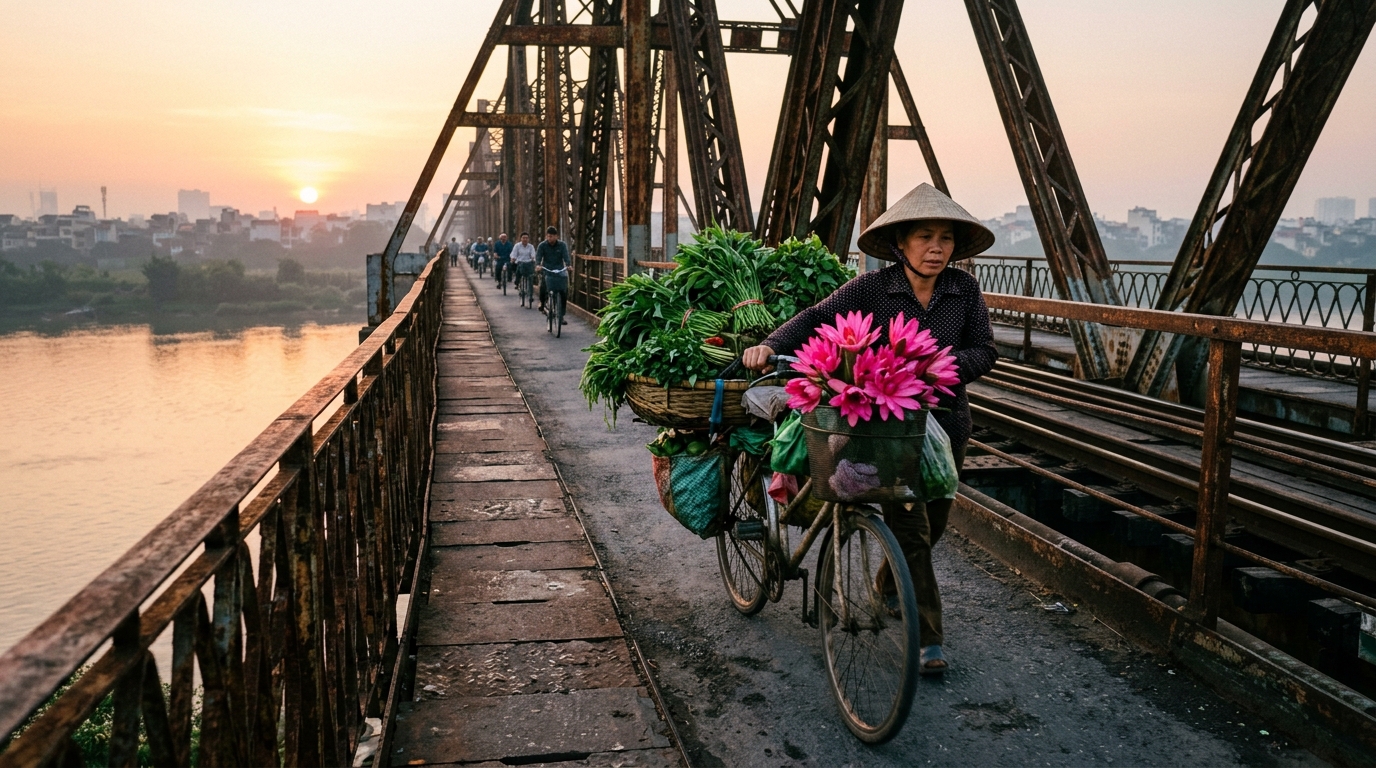
Visit local markets at extreme hours: The true local rhythm is most visible at the 2:00 AM Quang Ba Flower Market or during a 5:30 AM walk across the Long Bien Bridge.
The Direct Answer: How to Approach Hanoi
If you are wondering how to tackle your visit without burning out by day two, the answer is simple: stop trying to see everything at once, and organize your itinerary chronologically by historical era. To genuinely experience the capital, you need a minimum of four full days.
Dedicate your first day to the 11th-century ancient roots by visiting the Temple of Literature and Tran Quoc Pagoda. Spend your second day exploring the commercial history of the Old Quarter and the French Colonial influence around the Opera House. Use your third day to understand 20th-century wartime resilience at the Ho Chi Minh Mausoleum, Hoa Lo Prison, and the D67 Command Bunker. Finally, reserve your fourth day for a dedicated cultural excursion outside the urban center, such as the ancient pottery village of Bat Trang or the limestone peaks of Ninh Binh.
By categorizing your days by era, the seemingly chaotic architecture begins to make complete sense. You will stop seeing random pagodas squished next to yellow French villas and start reading the architectural timeline like an open book.
The Four Pillars of Hanoi’s Cultural DNA
To truly appreciate what you are looking at, you have to understand the specific elements that have shaped the local mindset for over a millennium. The culture here is distinctly layered into four primary pillars.
1. The Crafts of the Guilds
Since the 15th century, the city’s commercial life has been organized around specialized trades. This is most obvious in the Old Quarter, where entire streets are still dedicated to a single craft. Tradesmen originally followed the royal family to the newly named Thang Long (Rising Dragon) capital, forming these guilds.
2. Traditional Arts and Music
While tourists flock to the Water Puppet Theatre, the city’s artistic soul goes deeper. Ancient music forms like Ca Trù (ceremonial singing) and Xẩm (blind busker’s singing) are still performed on weekend evenings outside Dong Xuan Market.
3. A Philosophy of Balance
The daily life, architecture, and even the street layout are quietly shaped by the wisdom of Confucianism, Taoism, and Buddhism. This dictates everything from family hierarchies to how a temple is positioned facing a lake.
4. Culinary Minimalism
Northern Vietnamese cuisine is strictly defined by tradition. It is entirely different from the sweeter, spicier southern dishes found in Ho Chi Minh City. Northern food focuses on subtle, savory broths, fermented fish sauces, and mountains of fresh, raw herbs.
Layer 1: Ancient Roots and Spiritual Foundations
During my time in the city, I realized that bouncing randomly from an ancient temple to a 1970s military bunker leads to quick historical whiplash. Focus your first day entirely on the foundational eras.
The Temple of Literature (Văn Miếu)
Located about two kilometers west of Hoan Kiem Lake, this complex is a monument to education rather than traditional religious worship. Built in 1070 under Emperor Ly Thanh Tong, it opened in 1076 as Vietnam’s first national university.
The entry fee is exactly 30,000 VND, and it is worth every penny. The complex features five serene courtyards. The third courtyard holds my favorite architectural detail: 82 remaining stone stelae (out of an original 116) resting on the backs of large stone tortoises. The tortoise is one of Vietnam’s four holy creatures, symbolizing longevity and wisdom. These heavily worn stones record the names of successful doctoral candidates from centuries past.
Tran Quoc Pagoda & West Lake
For a lesson in spiritual serenity, head to West Lake (Hồ Tây) to visit Tran Quoc Pagoda. Dating back to the 6th century during the reign of Emperor Ly Nam De, it officially claims the title of the oldest Buddhist temple in the city. Its slender, 11-tiered red tower reflects beautifully on the water at sunset.
First-hand tip: I made the mistake of showing up at the pagoda right at 5:45 PM thinking I could catch the sunset from the inner courtyard, only to find the gates firmly locked. The official hours technically say they close at 6:00 PM, but you need to arrive before 4:00 PM to guarantee entry.
The Guarding Temples
The city was historically protected by “Four Guarding Temples” at its compass points. Bach Ma Temple, built in the 9th century in the Old Quarter, is considered the oldest temple structure. Legend states that King Ly Thai To was guided by a vision of a white horse to build it. Over in the west, Voi Phuc Temple honors a prince who rode a kneeling elephant into battle against Chinese invaders.
Layer 2: Imperial Power and The Citadel
For over a millennium, the political and military epicenter of Vietnam sat squarely in the Ba Dinh district.
Thang Long Imperial Citadel
Designated a UNESCO World Heritage Site in 2010, this massive complex served as the seat of power for various dynasties for 13 consecutive centuries. The entry fee is 30,000 VND (closed on Mondays).
The most fascinating aspect of the Citadel is the jarring juxtaposition of history. You can walk through the majestic Doan Mon Gate—historically reserved exclusively for kings—and just a few minutes later descend into the D67 House and Tunnel. This subterranean bunker served as the command center for the North Vietnamese military during the American War in the 1960s and 70s.
Layer 3: The 36 Streets of the Old Quarter
Also known as Old Town, this dense square kilometer north of Hoan Kiem Lake has been the commercial heart of the city for over a thousand years.
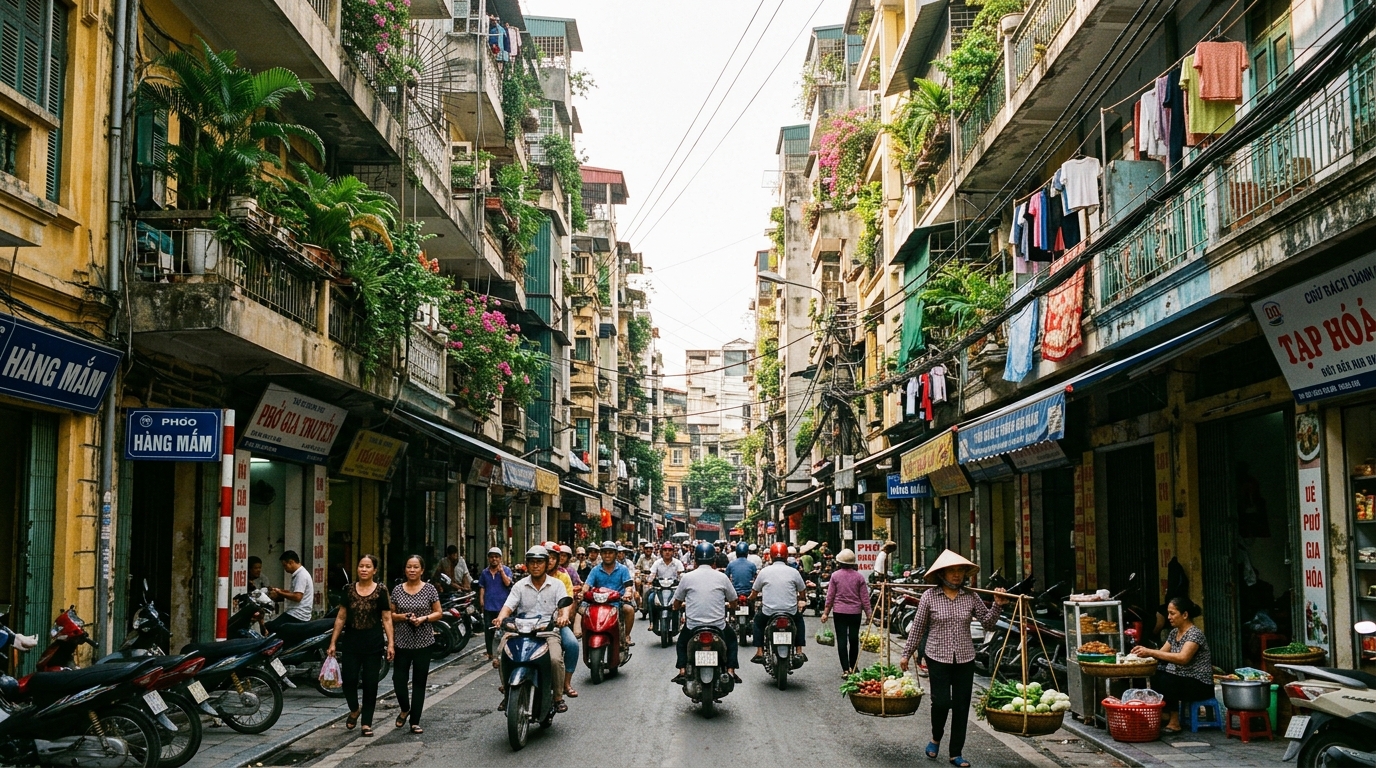
The street names still begin with “Hang” (meaning shop or merchandise), providing literal clues to their historic inventory. Hang Bac is the street for silver jewelry, Hang Ma is known as “Lantern Street” for paper goods and votive offerings, and Hang Duong specializes in traditional sweets.
The architecture here is defined by narrow “tube houses.” Locals originally built these incredibly deep, narrow structures to avoid steep colonial taxes that were based entirely on street frontage. Today, the sidewalks are blocked by parked motorbikes, forcing you to walk in the street alongside honking traffic. It is intense, loud, and entirely mesmerizing.
Layer 4: Colonial Echoes and Modern History
Beginning in 1883, a 70-year French occupation radically altered the urban landscape. They drained swamps to build wide, tree-lined boulevards and imposing yellow colonial villas.
St. Joseph’s Cathedral & The Opera House
Built in 1886, St. Joseph’s Cathedral is a stunning neogothic Roman Catholic church that looks heavily inspired by Notre Dame de Paris. A few blocks away sits the Hanoi Opera House, erected between 1901 and 1911. With its vibrant yellow walls and white columns, it actively hosts symphonies today.
Ho Chi Minh Mausoleum
This solemn marble monument, constructed between 1973 and 1975 using materials sourced from all over Vietnam, houses the preserved body of former President Ho Chi Minh.
Be prepared for an intense environment. Visitors must dress formally, keep the entry line moving, refrain from pointing, and maintain absolute silence. Photography inside the tomb is strictly forbidden, and guards in immaculate white uniforms enforce these rules without hesitation. Expect heavy queues outside, especially in the early morning. Note: The mausoleum frequently closes from October onward as the remains are sent to Russia for annual maintenance.
Hoa Lo Prison Museum
Originally built by French colonists to hold political prisoners, it was later used by Northern Vietnam to hold U.S. prisoners of war, who sarcastically dubbed it the “Hanoi Hilton.” Designed to hold 450 inmates, the population swelled to nearly 2,000 by the 1930s. The museum is dark, emotionally heavy, and vital for understanding the extreme human cost of the region’s conflicts.
B-52 Wreckage in Huu Tiep Lake
For a raw, unfiltered piece of history, skip the tourist zones and head to the Ngoc Ha neighborhood. Here, in the shallow waters of Huu Tiep Lake, sits the rusted wreckage of an American B-52 bomber shot down in 1972. It remains exactly where it crashed, half-submerged, surrounded by quiet residential homes and local cafes.
Culinary Culture: Street Food Strategy
The local food scene relies entirely on sidewalk dining. All socioeconomic classes mix on tiny plastic stools to eat bowls of steaming broth. If you only eat in your hotel restaurant, you are missing 50% of the city’s culture.
Phở vs. Bún Chả
Traditional Northern Phở is distinctly minimalist. Unlike southern bowls crowded with bean sprouts and hoisin sauce, authentic northern pho relies entirely on a crystal-clear bone broth simmered for hours with star anise and cinnamon, served with flat rice noodles and thin slices of beef.
Bún chả, however, is arguably the city’s greatest gift to the culinary world. It consists of heavily charred grilled pork belly served in a warm broth of fish sauce, vinegar, and sugar, accompanied by cold rice noodles and fresh herbs. The most famous spot is Bun Cha Huong Lien, visited by Barack Obama and Anthony Bourdain. Despite the fame, it remains packed with locals paying roughly 60,000 VND ($2.50) for a massive portion.
The Origins of Egg Coffee
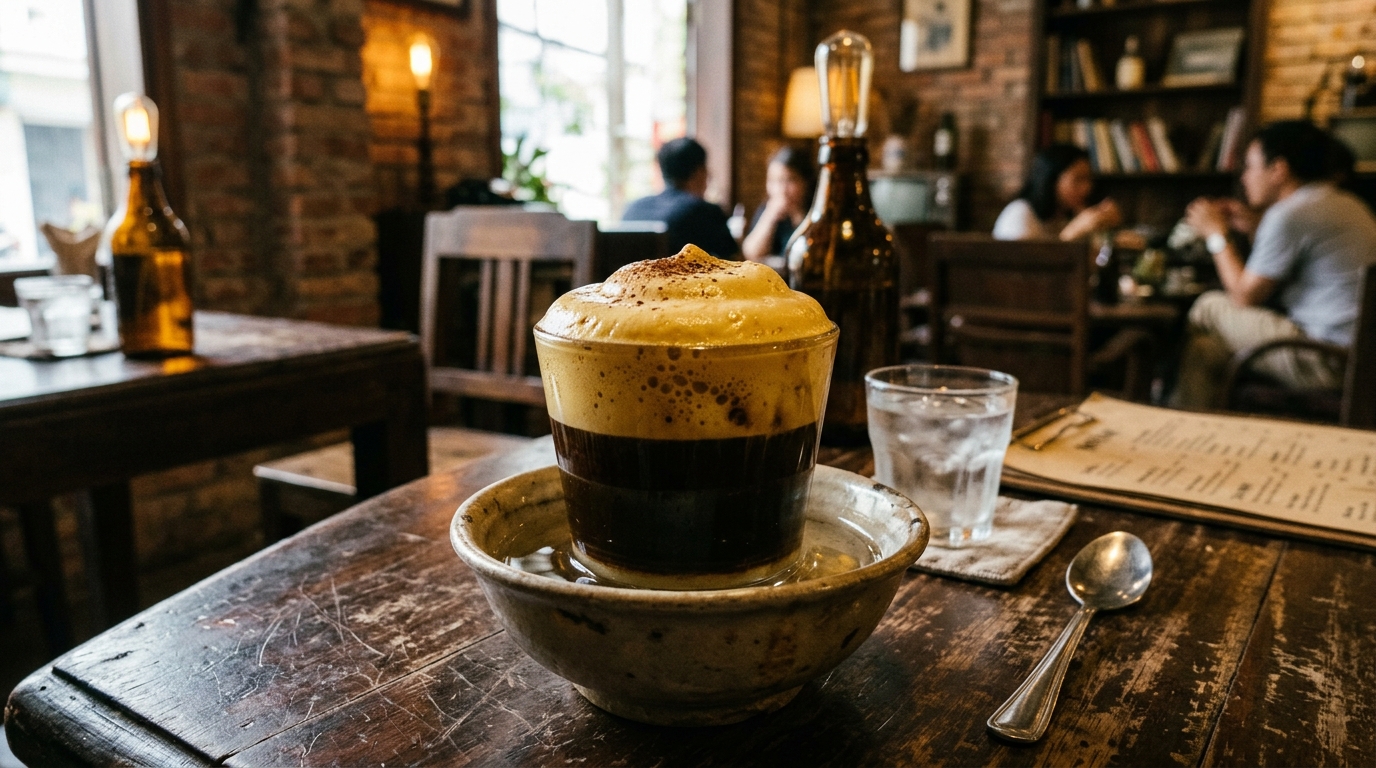
For a caffeine fix, Cà phê trứng (egg coffee) is mandatory. Invented in the 1940s during a dairy shortage at Café Giảng, locals whisked egg yolks with sugar and sweetened condensed milk into a dense, meringue-like foam to top robusta espresso. The thick, sweet foam sticking to your lip before the bitter coffee hits is an incredible sensory contrast.
Day Trips Worth Your Time
If you have four or five days, you absolutely must leave the city center to understand the broader Red River Delta culture.
Bat Trang Pottery Village: Located just 45 minutes from the center, this 1,000-year-old living craft village allows you to watch artisans throw clay and fire ceramics in family workshops.
Ninh Binh (The Inland Halong Bay): A two-hour drive south brings you to the ancient capital of Hoa Lu. The landscape here features towering limestone karst mountains jutting straight out of vivid green rice paddies. A boat tour through the caves at Trang An is vastly superior to crowded coastal cruises.
Who Should Prioritize Hanoi (And Who Should Not)
This is ideal for:
History and politics nerds: If you want to trace the exact lines from ancient dynastic rule to French colonialism and the Vietnam War, this city offers unparalleled historical density.
Street food enthusiasts: Those willing to sit on a dusty sidewalk to eat world-class meals for under $3 will be endlessly rewarded.
Early risers: The city is at its absolute best between 5:30 AM and 7:00 AM, when locals practice Tai Chi around Hoan Kiem Lake and the markets are fully operational.
You might want to skip this if:
You require pristine order and quiet: The traffic is chaotic, the noise level is constant, and personal space on the sidewalks does not exist. If you want a highly curated, quiet resort town, head to Hoi An instead.
You struggle with extreme humidity: During the summer months (specifically June through August), the heat and thick humidity make walking completely exhausting.
- You have severe mobility issues: Wheelchair access is virtually nonexistent, and the sidewalks are treated as parking lots for scooters, forcing pedestrians into the active roadways.
- vietnam.travel
- hanoicity-tours.com
- asiamystika.com
- www.thewanderfulme.com
- littlegreybox.net
- vietnam.travel
Cost Comparison and Budget Breakdown
Traveling here offers incredible value, but the disparity between local street costs and luxury colonial experiences is vast.
| Expense Category | Budget / Local Option | Mid-Range Option | Luxury Option |
|---|---|---|---|
| Accommodation (Per Night) | $10 – $20 (Hostel/Basic Guesthouse) | $40 – $75 (Boutique hotel in Old Quarter) | $200 – $450+ (Sofitel Legend Metropole) |
| Meals (Per Person) | $1.50 – $3.00 (Street food Phở or Bún chả) | $15 – $25 (Air-conditioned traditional restaurant) | $60 – $120+ (High-end French/Fusion dining) |
| Transportation | $0.50 (Public bus) | $1.50 – $3.00 (Grab motorbike taxi) | $15 – $25 (Private car across districts) |
| Attractions | $1.20 – $1.50 (Standard 30,000 VND Temple fee) | $25 – $40 (Guided walking/food tour) | $100+ (Private full-day curated history tour) |
Common Mistakes to Avoid
1. Panicking while crossing the street
When I first tried crossing the road near Hoan Kiem Lake, I froze halfway across out of sheer panic as dozens of scooters barreled toward me—which is exactly what you aren’t supposed to do. The traffic flows like water. The golden rule is to maintain a slow, completely predictable, steady walking pace. Do not run, do not step backward, and do not make sudden movements. The drivers are watching you and will adjust their path to flow around you.
2. Booking a single-day trip to Ha Long Bay
I booked a cheaper one-day Ha Long Bay tour thinking I’d save $40. Turns out, the grueling 4-hour bus ride each way completely ruined the experience. You spend 8 hours in a vehicle for roughly 3 hours on the water. If you want to see the bay, commit to at least an overnight cruise, or skip it entirely and visit Ninh Binh instead.
3. Ignoring the afternoon heat
Many travelers try to march through the sites from 9:00 AM to 5:00 PM. By 1:00 PM, the humidity will drain your energy entirely. Do what the locals do: wake up at 6:00 AM, explore until 11:30 AM, eat a heavy lunch, go back to your air-conditioned hotel to sleep until 3:00 PM, and head back out as the sun begins to set.
Frequently Asked Questions
What is the best time of year to visit Hanoi?
For the most comfortable weather, target the autumn months of September through November. The extreme summer humidity breaks, leaving clear skies and mild temperatures around 24°C (75°F). Spring (March and April) is also pleasant and coincides with numerous cultural festivals, though it can occasionally be damp with light drizzle.
Is the street food actually safe to eat?
Yes, provided you follow basic local rules. Look for vendors with high turnover and a crowd of locals—this ensures the ingredients are fresh and constantly moving. Stick to cooked foods served steaming hot, like heavily boiled broths and freshly grilled meats. Avoid raw salads or unpeeled fruits from street carts if you have a sensitive stomach.
Do I need to book heritage sites in advance?
For the most part, no. You can purchase tickets for the Temple of Literature (30,000 VND), the Citadel (30,000 VND), and local pagodas directly at the gate. However, if you plan to see a performance at the Thang Long Water Puppet Theater or wish to join a highly-rated guided food tour, booking at least 48 hours in advance is highly recommended as they frequently sell out.
How does the Grab app work for transportation?
Grab is Southeast Asia’s equivalent of Uber and is absolutely vital for getting around. You can book standard cars or hop on the back of a scooter (GrabBike) for a fraction of the cost. The app locks in the price beforehand, completely eliminating the need to haggle with local taxi drivers over meter rates. Fares around the city center rarely exceed $3.00 USD.
Final Thoughts on Your Itinerary
Executing a perfect schedule comes down to surrendering to the city’s pace rather than fighting it. It is a place that rewards the observant traveler. Do not rush from the Imperial Citadel to the French Quarter just to check a box. Sit on a tiny stool, drink an overly sweet coffee, and watch the thousand-year-old rhythm unfold in front of you. By giving yourself at least four days to explore the distinct historical layers, you transform a potentially chaotic stopover into the most profound cultural education of your entire Southeast Asian journey.