
When mapping out the best places to visit in vietnam, you are immediately confronted with a massive geographical challenge. This long, narrow country stretches over 1,000 miles from the misty, jagged peaks bordering China down to the tropical, humid swamps of the Mekong River. During my month-long solo trip navigating the country from top to bottom, I quickly learned that following the standard tourist brochure will often lead you into crowded parking lots and overpriced buffet restaurants. The real magic happens when you ditch the pre-packaged hotel tours, sit shoulder-to-shoulder with locals on low plastic stools, and embrace the sheer, unfiltered chaos of the streets.
Whether you are looking for complex culinary traditions, world-record-holding cave systems, or simply a cheap spot to drink a cold beer on a white sand beach, this guide will break down exactly where you need to spend your time.
Quick Summary
Secure your e-visa early: You cannot get a visa on arrival. Citizens of the US, Australia, and most of Europe must apply online at least 10 days before flying.
Swap Ha Long Bay for Bai Tu Long Bay: Avoid the severe pollution and mass tourism of the famous bay by booking a cruise slightly further north for the exact same limestone scenery.
Pacing is critical: Do not try to see the North, Central, and South regions in a single week. You will spend your entire vacation sitting inside domestic airport terminals.
Motorbikes are the ultimate tool: Renting a scooter gives you total freedom, but you must know how to drive a semi-automatic or manual bike if you plan to tackle the northern mountain routes.
Watch your zeros: The Vietnamese Dong (VND) is a high-denomination currency. Tourists frequently overpay because they confuse a 50,000 VND note with a 500,000 VND note.
The Direct Answer: Where Should You Go?
If you are searching for the absolute best places to visit in Vietnam and only have 10 to 14 days, you must be ruthless with your itinerary. Fly into Hanoi and spend two days eating street food in the Old Quarter. Take a two-night cruise into Bai Tu Long Bay or Lan Ha Bay. From there, take an overnight sleeper train down to Central Vietnam to spend four days split between the lantern-lit streets of Hoi An and the imperial history of Hue. Finish your trip with a flight down to Ho Chi Minh City to experience the intense urban energy and the War Remnants Museum before flying home.
If you have 3 to 4 weeks, you can unlock the country’s greatest regions. You should dedicate a full week to the deep North to ride the Ha Giang Loop and trek the terraces of Sapa. Add a stop in Phong Nha to explore massive underground river caves, and conclude your month by traveling down to the remote Con Dao islands for world-class scuba diving and untouched beaches.
Northern Vietnam: Mountains, Terraces, and Broths
The northern region experiences distinct seasons, meaning it gets genuinely cold between December and February. It is defined by its deep history, Chinese-influenced architecture, and an intense dedication to subtle, perfectly balanced culinary traditions.
1. Hanoi: The Gateway and Culinary Capital
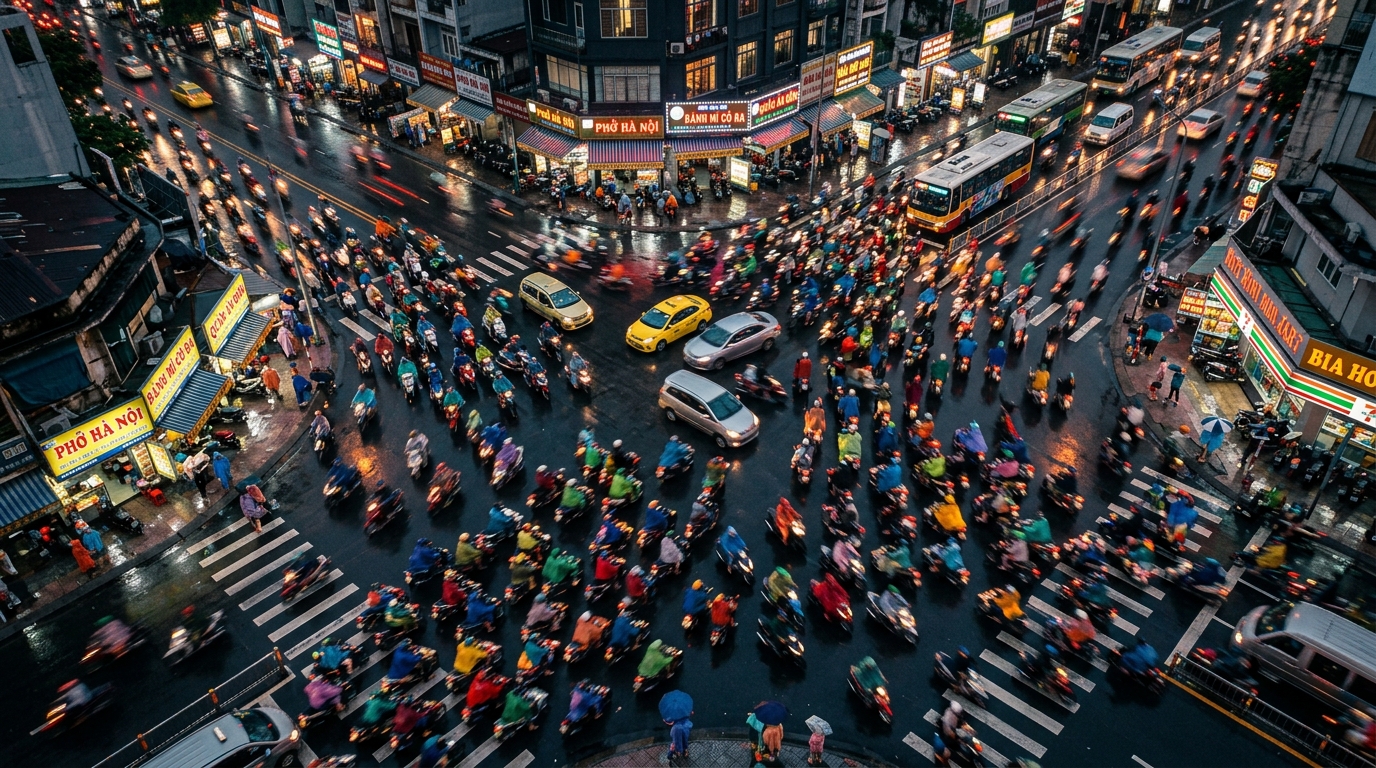
Hanoi operates at an incredibly high frequency. When I first arrived, I stood on the curb of the Old Quarter for ten straight minutes, entirely incapable of crossing the road through the relentless swarm of scooters. Eventually, an elderly vendor grabbed my elbow and dragged me into the street, teaching me the golden rule of Vietnamese pedestrianism: walk at a slow, predictable pace, and the traffic will flow around you like water.
Hanoi is the birthplace of Pho. Skip the hotel breakfast and sit on a tiny red plastic stool on the sidewalk. Expect to pay about 20,000 to 40,000 VND ($0.85 to $1.70) for a massive bowl of bone broth that has been simmering for 24 hours. I highly recommend seeking out Bun Cha (grilled fatty pork in a diluted fish sauce broth) and stopping at The Note Cafe for traditional egg coffee—a wildly sweet concoction made with egg yolks and condensed milk that tastes remarkably like liquid cake batter.
For accommodation, budget travelers can find excellent hostels in the Old Quarter for around 100,000 VND ($4) a night, while those looking for luxury can book the historic Sofitel Legend Metropole, which features elegant French colonial architecture.
2. Ha Giang Province: The Ultimate Motorbike Route
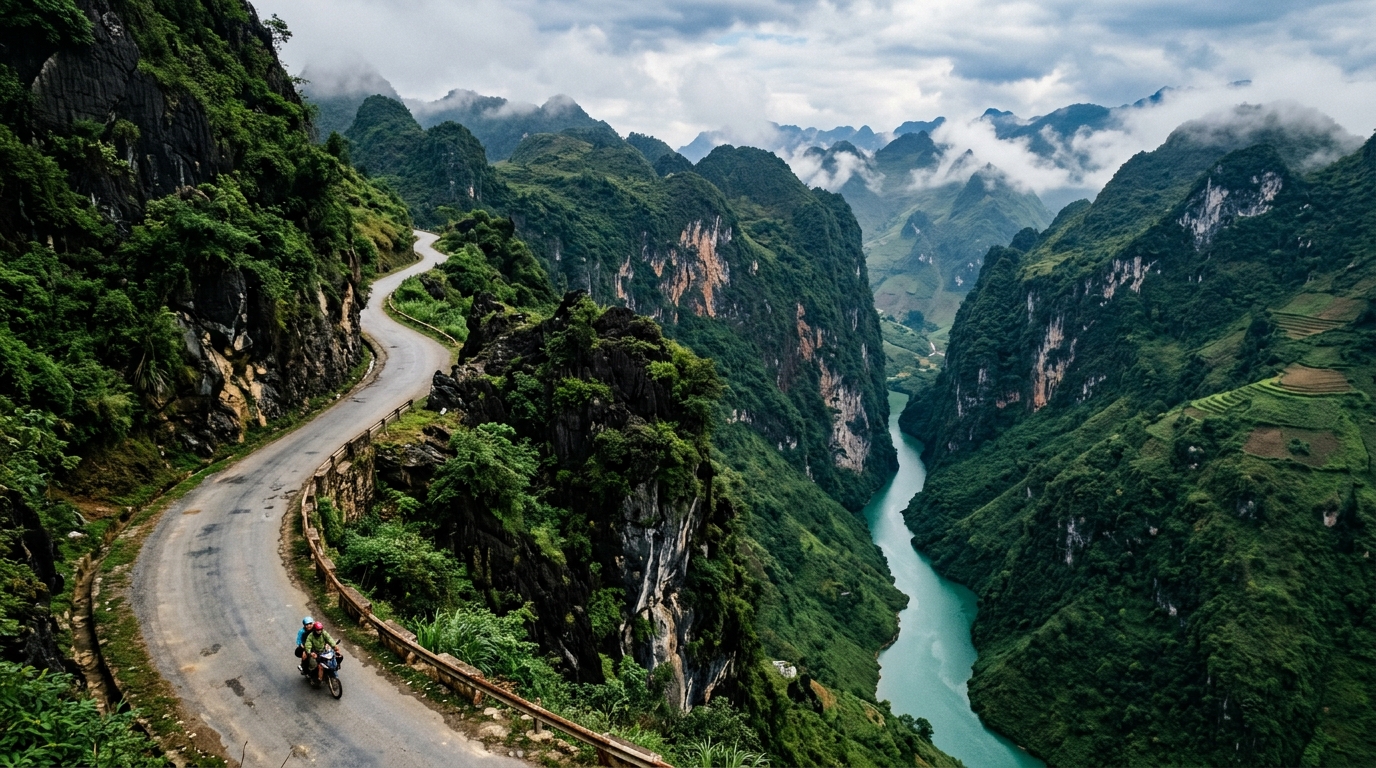
Bordering Southern China, Ha Giang offers the most dramatic, jaw-dropping mountain scenery in Southeast Asia. The main draw here is the Ha Giang Loop, a 3-to-4 day circular highway route through deep canyons, towering limestone cliffs, and indigenous villages.
However, I must be completely honest: the roads here are highly dangerous for novice riders. The hairpin turns are blind, the weather changes rapidly from glaring sun to thick, freezing fog, and you legally cannot drive an automatic scooter on these steep inclines. If you do not have significant experience operating a manual or semi-automatic motorcycle, you must swallow your pride and hire an “Easy Rider”—a local guide who will pilot the bike while you sit on the back, allowing you to safely take photos of the staggering Ma Pi Leng Pass overlooking the Nho Que River.
3. Sapa: Trekking the Clouds
Reaching Sapa requires a 6-hour sleeper bus or overnight train from Hanoi to Lao Cai. The reward is a high-altitude town wrapped in thick mist, featuring terraced rice paddies that carve into the steep mountain walls like giant green staircases.
Sapa is the premier location for multi-day trekking. You will hike alongside members of the local Hmong and Red Dao ethnic minority groups. While the views are spectacular, especially right before the autumn rice harvest, Sapa has become a massive tourist hub. You will encounter aggressive street sellers and large crowds. If you want a physical challenge, you can arrange a guided summit of Mount Fansipan, the highest peak in Indochina at 3,147 meters—though a cable car now exists for those who prefer to skip the multi-day hike.
4. Bai Tu Long Bay and Lan Ha Bay (The Ha Long Alternatives)
Ha Long Bay is arguably the most famous tourist attraction in the country. Unfortunately, its UNESCO World Heritage status has led to severe over-tourism and distressing levels of water pollution. I booked a standard day trip here years ago, and it was a mistake—dozens of identical white “junk boats” jockeying for position while loud music blared across the water.
To find the best places to visit in Vietnam, you have to pivot slightly away from the center. Instead of Ha Long, book an overnight cruise into Bai Tu Long Bay (further north) or Lan Ha Bay (accessible via Cat Ba Island). These areas feature the exact same geographical wonders—thousands of towering limestone pillars erupting from emerald waters—but the government strictly limits the number of boats allowed. You can kayak through silent lagoons at dawn and actually experience the serenity the area is famous for.
5. Ninh Binh: The “Halong Bay on Land”
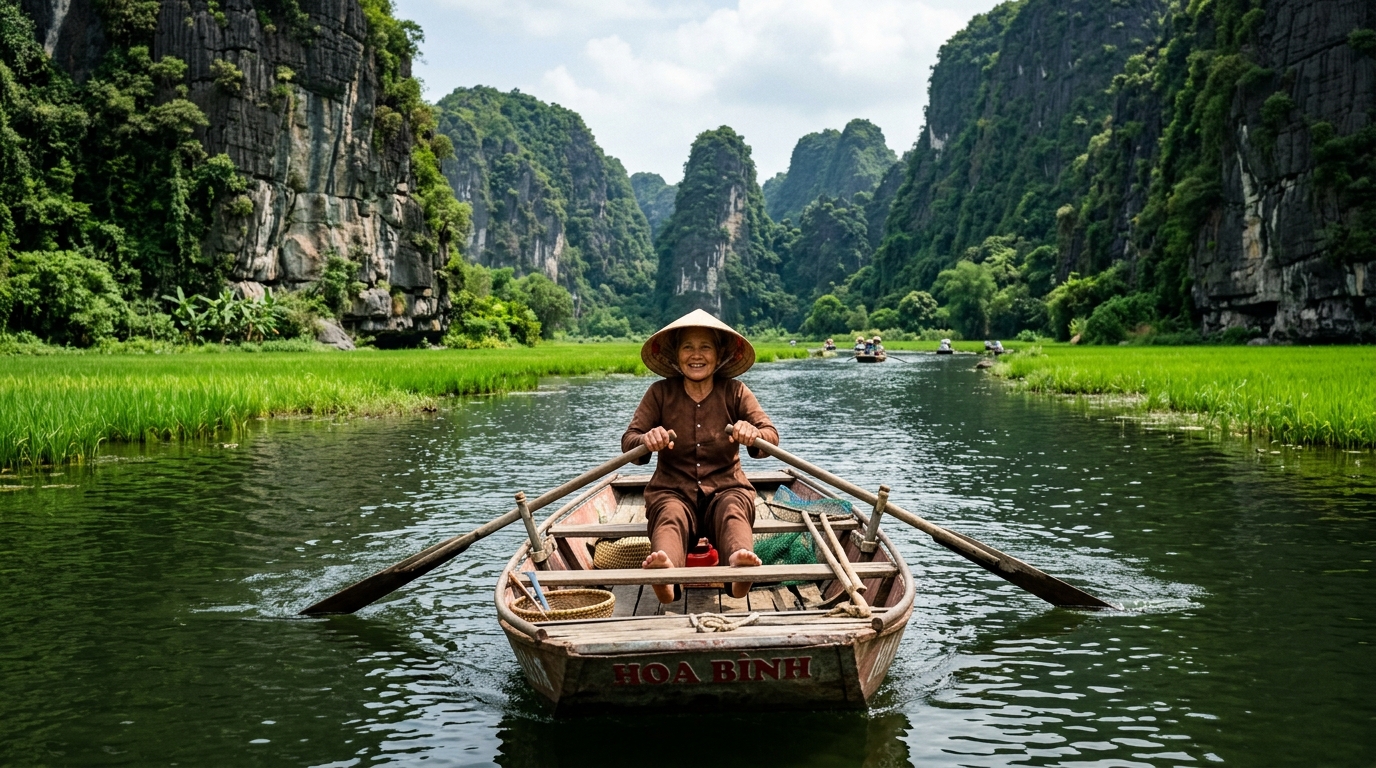
Just 90 minutes south of Hanoi via a shared minibus sits Ninh Binh, a rural province defined by flat, vibrant green rice paddies pierced by massive limestone mountains.
Many travelers attempt this as a frantic day trip from the capital, but staying at least one night in a local bungalow in the Tam Coc area is crucial. The premier activity is taking a small rowboat tour through the Trang An cave system. Interestingly, the local women who guide these boats row the oars using their bare feet to prevent back strain. Later in the day, climb the 500 steep, uneven stone steps of Mua Cave. The hike is brutal in the humidity, but reaching the carved stone dragon at the summit just before sunset offers the best panoramic photo opportunity in the region.
Central Vietnam: Caves, History, and Coastlines
As you move south on the Reunification Express train line, the climate shifts, the food becomes noticeably spicier, and the country narrows significantly, squeezed between the Annamite Mountains and the East Sea.
6. Phong Nha-Ke Bang National Park
If you have any interest in adventure travel, Phong Nha is non-negotiable. This heavily forested national park is the caving capital of the world. It is home to Son Doong, the single largest cave on earth.
Accessing Son Doong requires booking a 4-day, $3,000+ camping trek that sells out months in advance. If you lack the budget or time, you can visit Paradise Cave (a massive, dry cavern requiring a 1-kilometer walk and 500-meter incline) or Hang Toi (Dark Cave), which involves zip-lining into the entrance and swimming through pitch-black mud pits. Take note: many of the deeper caves flood completely and are strictly closed to visitors during the rainy season from October to December.
7. Hue: The Former Imperial Capital
Hue served as the capital of the Nguyen Dynasty from 1802 to 1945. It often gets skipped by backpackers rushing between Hanoi and Hoi An, which is a massive oversight for history buffs.
The city is anchored by the Imperial City, a sprawling, moated complex of palaces and shrines that takes a minimum of four hours to explore properly. Hue is also widely considered the gastronomical capital of the country. You must try Bun Bo Hue, a fiery, lemongrass-heavy beef noodle soup that completely outshines standard Pho. For a slightly creepy afternoon excursion, pay a small tip to the security guard at the Ho Thuy Tien abandoned water park to wander around the rusting, multi-story concrete dragon decaying in the middle of a pine forest lake.
8. Da Nang: The Modern Beach Metropolis
Da Nang is a rapidly modernizing coastal city that perfectly bridges the gap between urban convenience and relaxed beach living. It serves as the commercial hub of the region and features an international airport just 10 minutes from the city center.
The expat community is heavily concentrated in the An Thuong neighborhood on the beach side of the Han River. Rent a scooter to drive up the Son Tra Peninsula to see the 67-meter-tall Lady Buddha statue and look for endangered Red-Shanked Douc langur monkeys. On weekends, crowds gather along the river to watch the massive steel Dragon Bridge actually spit fire and water. If you want a bizarre, theme-park experience, take the cable car up to Sunworld Ba Na Hills (1,400 meters above sea level) to walk across the famous Golden Bridge held up by two colossal stone hands.
9. Hoi An: The City of Lanterns and Tailors
Just 45 minutes south of Da Nang lies Hoi An, a remarkably well-preserved 15th-century trading port. Because the Old Town is closed to car traffic, walking past the mustard-yellow French colonial facades and wooden Chinese shophouses feels like stepping back in time.
Every evening, the town transforms as thousands of silk lanterns illuminate the streets and the Thu Bon River. However, Hoi An gets uncomfortably crowded with large tour groups after 4:00 PM. I recommend waking up at 6:00 AM to photograph the Japanese Covered Bridge while the streets are empty.
Hoi An is also the bespoke tailoring capital of Southeast Asia. You can walk into a shop like NY Central Tailor on Monday morning with a magazine photo of a designer suit, and by Tuesday afternoon, you will have a perfectly fitted, custom-made replica for under $150.
Southern Vietnam: Urban Chaos and Tropical Deltas
The southern region is defined by year-round heat, wet and dry tropical seasons, and the frenetic, relentless economic engine of the country’s largest metropolis.
10. Ho Chi Minh City (Saigon)
Ho Chi Minh City operates at 100 miles per hour. It is louder, hotter, and more chaotic than Hanoi. The city is massive, but most tourists base themselves in District 1 to be near the Notre Dame Cathedral and the Saigon Post Office, while expats heavily favor the upscale cafes and foreign restaurants in District 2 (Thao Dien).
The city is deeply tied to the history of the Vietnam War (known locally as the American War). Visiting the War Remnants Museum in District 3 is absolutely essential. Be warned: the museum features highly graphic, uncensored photography documenting the effects of Agent Orange and civilian casualties. It is a heavy, sobering experience that provides critical historical context.
Outside the city, you can take a half-day tour to the Cu Chi Tunnels, a 250-kilometer underground network used by the Viet Cong. Crawling through the 50-meter tourist section is incredibly claustrophobic and not recommended for anyone prone to panic in tight spaces.
11. The Mekong River Delta
South of Ho Chi Minh City lies the Mekong Delta, a vast, flat maze of rivers, swamps, and islands where boats entirely replace cars.
The biggest mistake travelers make is attempting a day trip here from Ho Chi Minh City. By the time your tour bus arrives at 10:00 AM, the famous floating markets are completely dead. You must spend the night in the region and hire a private small boat at 5:30 AM to watch hundreds of wooden boats trade pineapples and watermelons at sunrise. While many tourists flock to the city of Can Tho, the waterways there have become highly commercialized. For a more authentic experience, travel further south to Soc Trang, a quieter town featuring distinct Khmer Buddhist temples and far fewer tour groups.
12. Phu Quoc vs. Con Dao (The Island Debate)
If you need a traditional beach vacation to end your trip, you have two primary options in the south.
Phu Quoc is the most accessible. Located in the Gulf of Thailand, it features international luxury resorts (like the JW Marriott), the world’s longest over-water cable car, and miles of white sand. A major perk is that travelers flying directly into Phu Quoc can receive a 30-day visa exemption. However, rapid commercial development has stripped away some of its rugged charm.
Con Dao, an archipelago reached via a 4-hour speedboat ride or a short flight, is the harder-to-reach alternative. It offers significantly cleaner beaches and the best scuba diving in the country. The island has a dark history, serving as a brutal political prison complex for 113 years under French and American forces. Today, the “tiger cages” are open for historical tours, providing a stark contrast to the pristine natural beauty of the coastline.
Who Should Visit Vietnam (And Who Should Not)
This destination is ideal for:
Culinary travelers: If you travel to eat, the regional variations between northern broths and southern spices will keep you fascinated for weeks. The street food culture is cheap, complex, and deeply integrated into daily life.
Budget-conscious backpackers: Vietnam remains one of the highest-value destinations on earth. You can secure a private hotel room, eat three substantial meals, and pay for local transport for under $40 a day.
Adventurous riders: Motorbike enthusiasts will find the northern mountain passes to be some of the most rewarding and technically challenging routes in the world.
You might want to skip this if:
You require strict hygiene standards: If the thought of eating meat prepared on a sidewalk, or sitting next to stray dogs while dining, makes you uncomfortable, you will miss out on 90% of the country’s best food.
You hate high humidity: From May to September, the heat and humidity across most of the country are highly oppressive. You will sweat constantly, and there is no escaping it outside of air-conditioned malls.
- You have severe mobility issues: Sidewalks in major cities are used entirely for motorbike parking, tiny plastic chairs, and food stalls. Pedestrians are routinely forced to walk in the busy, chaotic streets, which can be highly dangerous and stressful.
- joujoutravels.com
- travelnation.co.uk
- www.stokedtotravel.com
- www.findawayabroad.com
Realistic Cost and Value Breakdown
Vietnam operates on the Vietnamese Dong (VND). A critical tip: Pay close attention to the number of zeros on the bills. The blue 500,000 VND note and the pinkish 50,000 VND note look somewhat similar in the dark, and accidentally handing over a $20 bill instead of a $2 bill for a bowl of noodles is a rite of passage for tired tourists.
| Expense Category | Budget Traveler (Per Day) | Mid-Range Traveler (Per Day) | Luxury Traveler (Per Day) |
|---|---|---|---|
| Accommodation | $5 – $15 (Hostel dorm or basic homestay) | $30 – $60 (Boutique hotel with pool) | $150+ (5-star international resort) |
| Food & Drink | $5 – $10 (Street food Pho, 5k VND local draft beer) | $20 – $40 (Air-conditioned cafes, mid-tier dining) | $80+ (High-end seafood, imported wine) |
| Transportation | $3 – $8 (Local buses, Grab motorbike taxis) | $15 – $25 (Private Grab cars, overnight sleeper trains) | $50+ (Private drivers, domestic flights) |
| Activities | $5 – $15 (DIY hiking, cheap temple entry fees) | $30 – $80 (Guided small-group tours, cooking classes) | $150+ (Private boat charters, luxury spa days) |
Common Mistakes to Avoid
1. Messing up the E-Visa Timing
You cannot get a visa on arrival in Vietnam. I have personally seen frantic travelers turned away at the airline check-in counter because they assumed they could fill out a form at the destination airport. You must apply for the official government E-Visa at least 10 days before your flight. The system frequently experiences delays, and a minor typo on your application will result in a rejection that forces you to start the waiting period over again.
2. Renting an Automatic Scooter in the Mountains
Many tourists rent cheap, fully automatic scooters in Hanoi and attempt to drive them up to Sapa or Ha Giang. This is incredibly dangerous. Automatic brakes overheat rapidly on steep, prolonged mountain descents, leading to total brake failure. Furthermore, local police frequently set up checkpoints; driving without an International Driving Permit (IDP) and a proper motorcycle license invalidates your travel insurance immediately if you crash.
Frequently Asked Questions
What is the best time of year to visit Vietnam?
Because the country is over 1,000 miles long, the weather varies wildly by region. However, February to June is generally considered the most reliable window for cross-country travel. You avoid the freezing winter in the northern mountains and the torrential daily monsoon rains that hit the central and southern regions between September and November.
Is the street food safe to eat?
Generally, yes. The golden rule is to look for stalls with high turnover rates that are packed with locals. High turnover means the food is cooked fresh continuously. Look for stalls where the meat is cooked to order over an open charcoal flame or submerged in a rolling, boiling broth. If you have a highly sensitive stomach, avoid raw leafy greens and ice in rural areas.
How should I travel between major cities?
Do not waste your daylight hours on a bus. For mid-distance travel (like Hanoi to Hue, or Da Nang to Nha Trang), book a ticket on the “Reunification Express” train. Opt for the 4-berth soft sleeper cabins for overnight journeys. For long distances (Hanoi to Ho Chi Minh City), book a cheap domestic flight on VietJet or Vietnam Airlines to save yourself 30 hours of ground transit.
Do I need cash, or are credit cards widely accepted?
Vietnam remains a heavily cash-based society. While luxury hotels, modern supermarkets, and high-end restaurants in major cities accept Visa and Mastercard, you cannot pay for a $1 bowl of noodles, a Grab motorbike ride, or a local ferry ticket with a card. Always carry a stack of 100,000 and 50,000 VND notes.
Conclusion
Deciding on the best places to visit in Vietnam ultimately comes down to your tolerance for adventure versus your desire for relaxation. You can easily spend your vacation being pampered in a luxury resort in Da Nang or drinking cocktails on the white sands of Phu Quoc. But the true heartbeat of this country is found in the friction. It is found in the freezing fog of the Ha Giang mountain passes, the claustrophobic maze of the Hanoi Old Quarter, and the blistering heat of the Mekong Delta. Secure your e-visa early, pack high-quality rain gear, learn a few basic phrases, and throw yourself into the chaos. The reward is access to one of the most culturally complex, visually stunning, and affordable destinations on earth.