
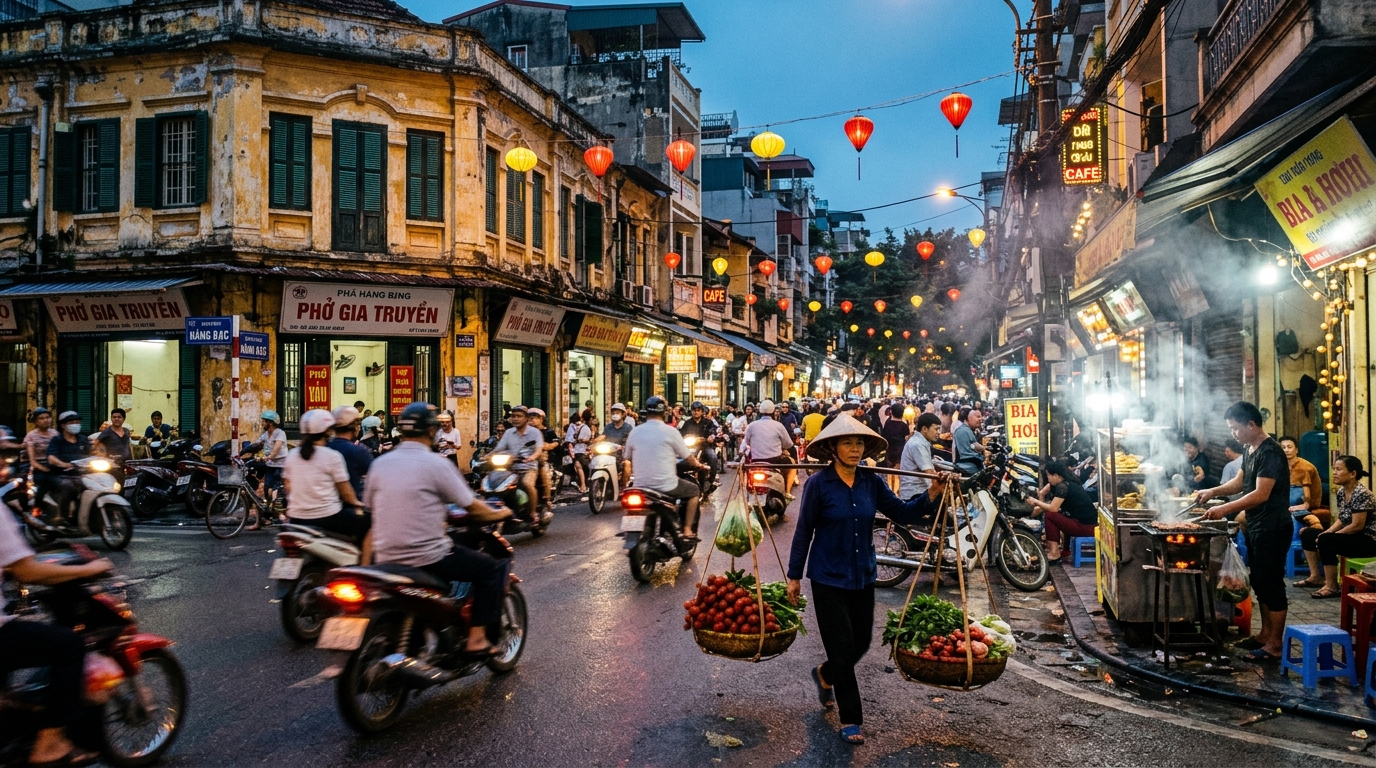

Executing a proper Hanoi culture trip requires stepping directly into a living, breathing timeline where eleventh-century architecture shares a wall with twentieth-century war bunkers and modern cafes. When I first visited Vietnam’s kinetic capital, I spent my initial forty-eight hours completely overwhelmed. The constant hum of motorbikes, the dense humidity clinging to my shirt, and the sheer volume of sensory inputs made it difficult to find the authentic soul of the place. I was looking at monuments, but I wasn’t actually experiencing the environment.
It wasn’t until I abandoned the standard tourist checklist and started organizing my time around the city’s historical rhythms that the capital finally made sense. I woke up at 5:00 AM to watch tai chi by the lake. I learned to eat meals sitting on low plastic stools on the sidewalk. I specifically sought out traditional acoustic performances instead of commercialized backpacker bars.
This guide breaks down exactly how to construct an authentic, deeply layered exploration of one of Southeast Asia’s most complex destinations.
Quick Summary
Ideal duration: Plan for 3 to 4 full days to balance urban exploration with rural craft villages.
Best time to go: Target autumn (September to November) for crisp air and golden sunlight, avoiding the brutal summer typhoons.
Geographic anchor: Use the 100-hectare Old Quarter as your primary base for walkability.
Mobility warning: The uneven, heavily obstructed sidewalks make this city extremely challenging for travelers relying on wheelchairs or walkers.
local transit: Rely on the Grab app for longer distances and traditional cyclos for safe, slow navigation of the narrow historical streets.
Financial reality: The authentic local economy runs almost entirely on cash, so carry small denomination notes daily.
The Direct Answer: How to Structure Your Trip
If you want to know exactly how to approach this destination, the formula relies on strategic pacing and seasonal timing. You need three full days on the ground, ideally scheduled between late September and November when temperatures hover comfortably between 70°F and 80°F. Do not try to cram this city into a 24-hour layover, or you will only experience the traffic.
Your first day should focus on the historical foundations. Dedicate this time to the ancient universities and historical museums that explain the local Confucian philosophy and colonial past. Your second day must be spent primarily on foot. Get intentionally lost in the 36 Streets of the Old Quarter to witness daily residential life and commerce up close.
Your third day should take you slightly outside the urban core to process the contrast. Head either to the 1,000-year-old pottery workshops of Bat Trang or the dramatic limestone rivers of Ninh Binh. To move around effectively within the city, use ride-hailing apps for cross-town trips and walk the localized districts.
The Shock of Arrival: Managing the Elements
Landing at Noi Bai International Airport immediately immerses you in the region’s intense energy. The 45-minute drive into the city center costs roughly $15 to $20 USD and serves as a rapid introduction to local driving mechanics. Lanes are merely suggestions, and the horn is used as a tool for communication rather than aggression.
When I first stepped out of my taxi in the Old Quarter, the sensory load was immense. The air smelled simultaneously of fresh cilantro, roasting pork fat, and sharp diesel exhaust. The sidewalks were entirely co-opted by grandmothers cooking over charcoal stoves, parked motorbikes, and vendors carrying bamboo shoulder poles.
The initial instinct is to retreat indoors, but the key is to lean into the chaos. Hanoi does not hand you its charm on a silver platter in an air-conditioned lobby. It demands that you walk its uneven pavement, negotiate with vendors, and adapt your personal pace to the flow of the street.
Navigating the Old Quarter (The 36 Streets)
The Old Quarter is a 100-hectare labyrinth located in the Hoan Kiem District. It serves as the economic and cultural heart of the city. Historically, the area was organized into 36 distinct streets, each dedicated to a specific traditional trade guild.
I thought I could easily walk the area without a map my first time. I ended up looping around the exact same silver shops three times, completely disoriented in the maze. Today, many streets still retain the prefix “Hang,” which translates roughly to “merchandise,” dictating what is historically sold there.
Hang Bac (Silver Street) remains the premier destination for jewelry and traditional metalworking. Hang Gai (Silk Street) operates as the center for high-quality fabrics, scarves, and tailoring. Hang Ma (Paper Street) is famous for selling paper goods, votive offerings, and elaborate festival decorations.
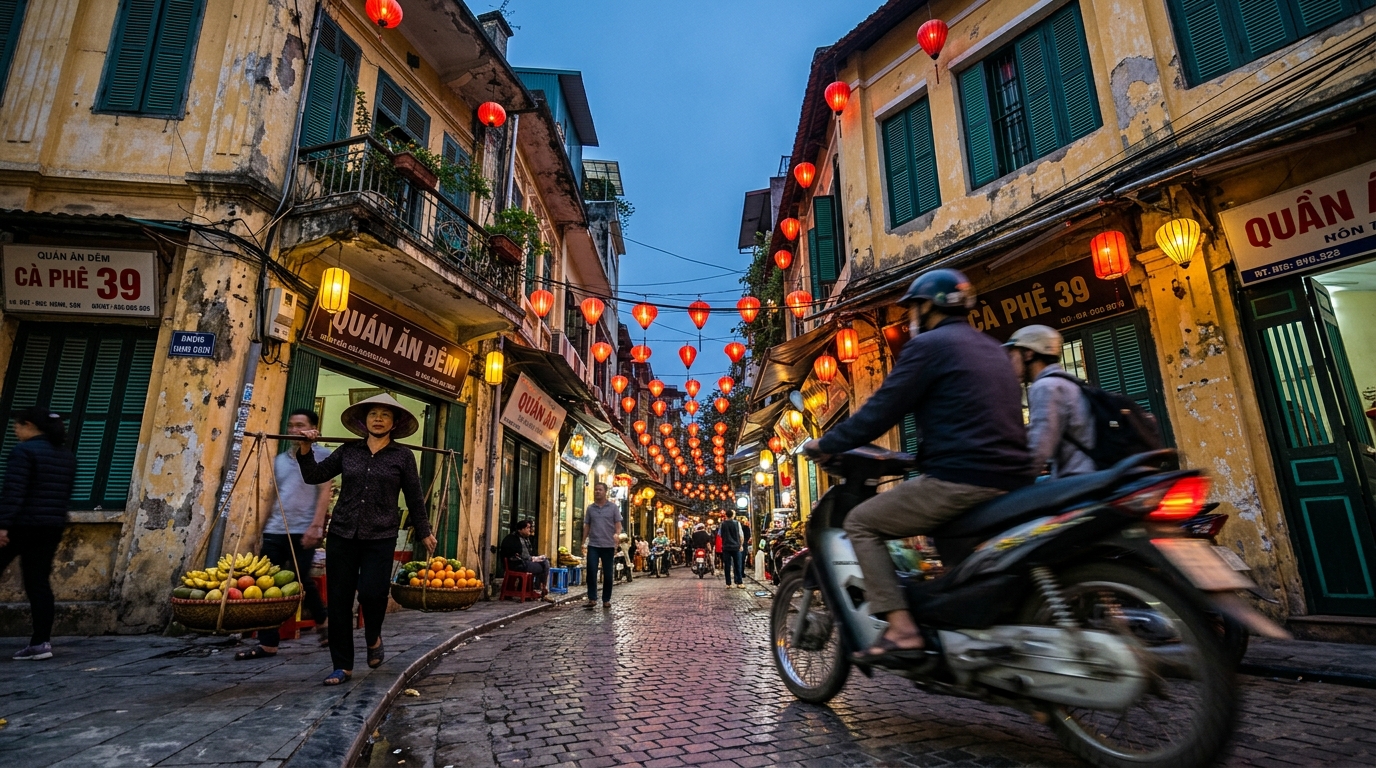
Architecturally, the neighborhood features preserved French-style houses built primarily in the 1920s. These structures feature narrow, pastel-yellow facades, intricate iron balconies, and tiled roofs. They sit adjacent to traditional “tube houses”—buildings designed to be incredibly narrow at the front to avoid historical street-frontage taxes, while stretching far back into the block.
The Four Pillars of the Capital’s DNA
To understand the local environment, you have to look past the overwhelming traffic. The city’s cultural identity rests on four distinct pillars that dictate daily life.
1. Generational Crafts
The local economy remains deeply tied to historical trade guilds. In the central district, entire blocks are still dedicated to singular crafts just as they were a millennium ago. You will see silversmiths hammering metal and merchants measuring fabrics right on the sidewalk.
These are not tourist demonstrations created for photos. These are active family businesses operating exactly as they have for generations. Just 13 kilometers outside the city center, villages like Bat Trang have sustained specific ceramic techniques since the 14th century.
2. Performing Arts
Traditional art here is highly regional and specific to the geography. Water puppetry originated in the flooded rice paddies of the Red River Delta in the 11th century. It remains a mesmerizing, complex performance where puppeteers stand waist-deep in water behind a bamboo screen, maneuvering wooden figures across the surface.
Meanwhile, ancient ceremonial singing (Ca Trù) and blind busker street music (Xẩm) are still performed in quiet courtyards on weekends. These highly academic, haunting vocal performances are recognized by UNESCO and require deep concentration to appreciate.
3. Culinary Philosophy
Northern Vietnamese cuisine is entirely different from the sweeter, spicier profiles found in the south near Ho Chi Minh City. The philosophy here relies on absolute balance. Broths are clean and clear, heavily reliant on fresh herbs like dill and cilantro rather than overwhelming chili heat.
Dishes like smoky grilled pork (Bún chả) and turmeric-marinated fish (Chả cá) define the region. The food is inherently social, designed to be eaten communally on the street rather than in isolated dining rooms.
4. Layered Philosophy
The local mindset is an ongoing blend of Confucianism, Taoism, and Buddhism. This spiritual foundation is combined with a fierce sense of national independence born from centuries of foreign occupation and conflict. This layered identity shows up physically in the city’s design, where 6th-century pagodas sit mere blocks away from brutalist war museums.
The 3-Day Immersive Itinerary
Creating a meaningful timeline means balancing heavy historical context with unstructured neighborhood wandering. Here is exactly how to pace your days.
Day 1: The Foundations of the City
Begin your morning at the Temple of Literature (Văn Miếu – Quốc Tử Giám). Built in 1070 under Emperor Ly Thanh Tong, this complex served as Vietnam’s first national university. The site features five serene courtyards shaded by ancient banyan trees, providing a stark contrast to the noise outside the walls.
The most striking visual here is the collection of massive stone steles bearing the names of historic scholars. Each stone tablet rests on the back of a carved stone turtle, symbolizing enduring wisdom. It is an ideal introduction to the country’s deep respect for education.
For lunch, find a crowded, smoke-filled corner shop serving Bún Chả. In the afternoon, head to the Imperial Citadel of Thang Long, a massive UNESCO World Heritage Site. You can walk through the ancient Doan Mon Gate, traditionally reserved for kings, and then descend a concrete stairwell into the D67 House—a subterranean bunker used as a military command center during the Vietnam War.
End your evening at the Thang Long Water Puppet Theater near Hoan Kiem Lake. Follow this with a guided street food crawl to help you identify the unfamiliar ingredients you’ll be eating for the rest of the week.
Day 2: The Alternative Angles
Start early and head to the Ngoc Ha neighborhood near Truc Bach Lake. Your specific target here is Huu Tiep Lake. Resting half-submerged in the shallow water is the rusted wreckage of an American B-52 bomber shot down in 1972.
Seeing this weapon of war sitting quietly next to local women selling vegetables is a stark, unforgettable contrast. It serves as a quiet neighborhood relic rather than a formal museum exhibit. From there, visit the Hoa Lo Prison (Maison Centrale).
Originally built by the French colonial government to incarcerate local political dissidents, Hoa Lo was later used to hold American POWs during the Vietnam War. The museum uses reconstructed solitary confinement cells to tell a grueling story of survival. It is a heavy, sobering experience that demands respect.
In the late afternoon, walk along the Hanoi Ceramic Mosaic Wall. This massive, 4-kilometer-long masterpiece was woven together by local artists depicting national myths entirely in shattered, colorful tile.
Day 3: Rural Cultural Transitions
For your final day, leave the concrete behind. You have two distinct options depending on your energy levels.
Option A: Ninh Binh (Full Day). Often called “Ha Long Bay on land,” this trip takes you 100 kilometers south to Hoa Lu, the ancient royal capital. You’ll take a slow, rhythmic rowboat ride through the Trang An cave systems, surrounded by towering limestone mountains rising straight out of flooded rice paddies. It is physically exhausting but visually spectacular.
Option B: Bat Trang Pottery Village (Half Day). Located just 45 minutes from the city center, this is a living craft village that has sustained its pottery techniques for a millennium. You can walk through family-run workshops, smell the wet clay baking in massive kilns, and sit down at a potter’s wheel to try the craft yourself.

How to Eat Like a Local (Without Getting Sick)
The street food scene is the primary reason many travelers visit the region. However, eating safely requires following a few specific local rules.
First, always choose stalls that are crowded with locals, particularly at peak meal times. High customer turnover guarantees that the ingredients are fresh and the broth is actively boiling. Second, ensure that your hot food is served steaming hot right off the charcoal or stove.
My stomach is relatively sensitive, but I found that sticking to properly cooked items like Phở (beef or chicken noodle soup) and Bún chả caused no issues. I did, however, learn to avoid the massive baskets of raw lettuce and herbs sitting in tepid water at some of the lower-end stalls.
You cannot leave the city without trying Egg Coffee (Cà phê trứng). Invented in the 1940s during a dairy shortage, this drink combines robust Robusta coffee with a sweet, creamy meringue-like egg yolk foam. The sharp bitterness of the black coffee perfectly cuts through the thick sweetness of the egg topping. Cafe Giang in the Old Quarter is the historical birthplace of the drink.
After Dark: Real Nightlife Beyond “Beer Corner”
Most tourists inevitably end up on Ta Hien street—famously known as Beer Corner—drinking cheap local lager. While it offers a fun, high-energy atmosphere, it is loud, heavily commercialized, and mostly populated by backpackers. For authentic evening culture, you have to look elsewhere.
Instead, seek out a Ca Trù performance at the Kim Ngan Temple on Hang Bac street. This ancient ceremonial singing features highly academic vocals accompanied by a single-string instrument. It is an acquired taste, but an incredibly rare cultural experience.
If you prefer modern music, visit the Binh Minh Jazz Club located near the Opera House. Founded by a respected local musician, this dimly lit, intimate venue features live nightly performances. The musicians here play with intense passion, offering a refined contrast to the noise of the streets outside.
For a truly surreal visual, set your alarm for 2:00 AM and take a taxi to the Quảng Bá Night Flower Market. This is peak wholesale hour. Under stark floodlights, vendors trade massive buckets of sunflowers and roses. The market smells heavily of damp earth, crushed orchids, and the sharp exhaust of delivery trucks.
Who Should Take a Hanoi Culture Trip (And Who Should Not)
Understanding if this specific travel style matches your preferences will save you significant frustration.
This destination is ideal for:
History enthusiasts who want to physically touch the intersection of ancient dynasties, French colonialism, and the Cold War.
Culinary travelers willing to eat at plastic tables on the sidewalk to experience complex, authentic flavor profiles.
Active travelers who do not mind walking 15,000 steps a day in heavy humidity and dodging traffic.
You might want to skip this if:
You are looking for a highly manicured, resort-style vacation with pristine beaches. (Route your trip to Phu Quoc or Da Nang instead).
You are easily overwhelmed by constant noise, aggressive street commerce, and chaotic road conditions.
You have severe mobility issues. The sidewalks are incredibly uneven, lack ramps, and are largely blocked by parked motorbikes and food stalls, making wheelchair access nearly impossible.
Realistic Costs & Value Breakdown
Vietnam offers exceptional value for travelers holding Western currencies. However, knowing the baseline prices prevents you from overpaying for basic services. The local currency is the Vietnamese Dong (VND), and the exchange rate hovers roughly around 24,000 to 25,000 VND to 1 USD.
| Item / Experience | Local Cost (VND) | Approximate USD | Notes |
|---|---|---|---|
| Bowl of Pho / Bun Cha | 40,000 – 60,000 | $1.60 – $2.50 | Standard street food pricing. Pay in cash. |
| Cyclo Ride (1 Hour) | 150,000 – 300,000 | $6.00 – $12.00 | Always negotiate the total price clearly before sitting down. |
| Grab Car (Short ride) | 35,000 – 50,000 | $1.50 – $2.00 | Much safer and easier than hailing random street taxis. |
| Temple Entrance Fees | 30,000 – 50,000 | $1.20 – $2.00 | Keep small bills (10k, 20k notes) handy for ticket windows. |
| Mid-Range Boutique Hotel | 1,200,000 – 2,000,000 | $50.00 – $80.00 | Per night, usually includes breakfast and air conditioning. |
| Ha Long Bay Day Cruise | 1,100,000 – 1,500,000 | $45.00 – $60.00 | Book through a reputable agency to avoid hidden transport fees. |
For budgeting purposes, a budget traveler can easily survive on $30 to $50 a day staying in hostels and eating street food. A mid-range traveler aiming for boutique hotels, guided day trips, and sit-down dinners should budget roughly $80 to $120 per day.
Common Mistakes to Avoid
1. Underestimating the Climate and Geography
During my first trip, I decided to walk the entire 100-hectare Old Quarter in July instead of paying a few dollars for a cyclo. I thought I would save cash and see more of the architecture. The relentless afternoon heat and chaotic traffic left me exhausted, dehydrated, and miserable by 1:00 PM.
From June to August, the city experiences brutal humidity and sudden typhoons. If you must visit in the summer, plan your heavy walking exclusively for the early mornings between 6:00 AM and 10:00 AM. Retire to an air-conditioned museum during the midday heat.
2. Ignoring Strict Dress Codes
Many travelers assume Southeast Asia means shorts and tank tops around the clock. I made the mistake of showing up to the Ho Chi Minh Mausoleum complex in knee-length shorts. I was immediately turned away by armed guards.
Religious pagodas, active temples, and political monuments enforce strict modesty rules. You must have your shoulders and knees covered to enter. Always carry a lightweight scarf or a pair of thin, long trousers in your day bag to throw on over your summer clothes when approaching these sites.
3. Falling for the “Closed Attraction” Scam
This is a common tactic deployed near major sites like the Temple of Literature. A friendly local will approach you on the sidewalk and claim that the temple is closed for a special lunch hour or ceremony. They will then offer to take you to a “better” temple on their motorbike.
The attraction is almost never closed. They are simply trying to divert you to a tailor shop or souvenir market where they receive a high commission. Always walk directly to the official ticket counter to verify operating hours yourself.
The Art of Crossing the Street
Crossing the street here is a cultural initiation rite. When you stand at the edge of a multi-lane roundabout, the wall of motorbikes looks impenetrable. Do not wait for a clearing in the traffic; a clearing will never come.
The local method is to step off the curb and walk forward at a slow, completely predictable, and steady pace. Make eye contact with the approaching drivers. The motorbike riders are highly skilled and expect this behavior. They will naturally adjust their speed and flow around you like water moving around a stone in a river.
The absolute worst thing you can do is suddenly stop, run, or step backward. Unpredictable movements are what cause accidents.
Frequently Asked Questions
Is two days enough time for a Hanoi culture trip?
No. Two days is highly rushed and forces you to bounce frantically between major tourist sites without actually experiencing the environment. A minimum of three to four days allows you to dedicate time to the historical foundations, explore the residential neighborhoods at a walking pace, and take a necessary day trip out to the rural craft villages.
How much cash do I need to carry daily?
While major hotels, upscale cafes, and large tour operators accept credit cards, the authentic local economy runs entirely on cash. Plan to carry around 500,000 to 1,000,000 VND ($20 to $40 USD) per day in smaller denominations (10k, 20k, 50k notes). You will need this specifically for street food, temple entrance fees, cyclos, and small market purchases.
Is the tap water safe to drink?
Absolutely not. You should never drink water straight from the tap anywhere in Vietnam. Stick strictly to bottled or filtered water. However, the ice served at established cafes, restaurants, and busy street stalls is generally produced in commercial factories using purified water and is generally safe to consume.
When is the best time to see the train pass through Train Street?
The famous railway that cuts narrowly through residential neighborhoods has varying schedules depending on the day. Generally, on weekends (Saturday and Sunday), trains pass frequently throughout the day starting at 6:00 AM. On weekdays, the passes are mostly limited to the evening hours after 7:00 PM. Always arrive 30 minutes early, obey the safety barricades, and verify the current schedule with local cafe owners, as authorities frequently change access rules for safety.
Conclusion
Executing a proper Hanoi culture trip is an exercise in embracing deep, constant contrast. It is not a destination that allows you to be a passive observer. It requires a willingness to transition quickly from the quiet, academic courtyards of ancient universities to the exhaust-filled intersections of the local markets.
To succeed here, you must respect the climate, carry small denomination cash, and learn to slow down. Sit on the plastic stool, order the hot broth, and watch the city move. By giving the capital at least three days, relying on traditional cyclos to save your energy, and pushing past the standard backpacker streets to find ancient music, you will uncover one of the most resilient, complex cities in the world. Secure your e-visa, pack lightweight layers, and prepare to walk.