
Finding the best hidden beaches in Lombok requires a willingness to trade smooth asphalt for rutted dirt roads, but the reward is absolute coastal isolation. When I first visited this Indonesian island, I booked the cheaper local boat from Bali thinking I’d save a few dollars—turns out the six-hour ride in choppy waters wasn’t worth the nausea. However, the moment I rented a scooter and drove fifteen minutes outside of the main tourist hub, I understood why travelers whisper about this island in reverent tones.
Lombok is frequently billed as “what Bali was twenty years ago.” While that comparison is wearing thin as heavy machinery rolls into the southern districts, there are still vast stretches of untouched coastline where your only company will be local fishermen, roaming water buffalo, and the rhythmic crash of the Indian Ocean.
Quick Summary
The Development Clock is Ticking: Massive government projects (like the Mandalika resort area) are rapidly commercializing the south. Visit remote spots like Pantai Tunak now before they are permanently altered.
Timing is Everything: The famous pink hue of Pantai Pink 3 disappears entirely by 12:00 PM due to changing light, while Mawun beach requires a high-tide visit for swimmable waters.
Cash is King: You will encounter informal bamboo toll barriers and parking fees (usually Rp 10,000) at most remote access roads.
Infrastructure is Raw: Expect unpaved, deeply rutted dirt roads to reach the most spectacular spots like Semeti Beach. Do not attempt these on a scooter unless you are a highly proficient rider.
Environmental Realities: During the wet season (January-February), shifting winds push massive amounts of ocean debris onto the western shores, severely impacting the pristine aesthetic.
The Direct Answer: Where Should You Actually Go?
If you want the absolute best remote coastal experience right now, bypass the northern Senggigi resort strip entirely and establish your basecamp in Kuta, South Lombok. From here, you have strategic access to the most dramatic, undeveloped shorelines.
For pristine, calm swimming without the crowds, drive west to Tampah Beach early in the morning. If you want raw, dramatic photography and extreme geology, navigate the difficult dirt paths to Semeti Beach. For complete isolation, hire a private driver ($20 per day) to take you to the far east coast to see Pantai Pink 3 before noon. Do not try to cover the entire island from one hotel; the transit times will eat up your entire itinerary. Split your stay between the deep south for surfing and raw coastlines, and the Sekotong peninsula for island-hopping the empty, secret Gilis.
The Changing Landscape: Why You Need to Visit Now
Before detailing the specific coastlines, we need to address the reality on the ground. Lombok is in a massive transitional phase.
The government’s Mandalika Project is transforming the Kuta area to accommodate mass tourism, complete with a massive convention center, seven luxury hotels, and a Grand Prix racing circuit. When I drove through the southern corridor recently, the contrast was jarring: massive earth-movers flattening hillsides right next to local farmers manually tending their crops.
This aggressive development means the window to experience a truly quiet Lombok is closing. Places like Gunung Tunak National Park already have large-scale developments underway. If you prefer raw nature over manicured resort loungers, you need to prioritize this trip immediately.
The Southern Coast: Surf, Sand, and Seclusion
The southern rim of the island offers the highest concentration of high-quality shorelines. While Kuta Beach itself is heavily developed, driving just twenty minutes east or west changes the environment entirely.
Tampah Beach (The Quiet Escape)
Located about thirty minutes west of Kuta, Tampah Beach represents exactly what most travelers are searching for: an immaculately clean, sweeping bay with virtually zero commercial footprint.
I arrived here at 8:00 AM and found myself completely alone. The locals have put considerable effort into maintaining this stretch, keeping it free of the plastic debris that often plagues Southeast Asian shores. There are no massive concrete structures here—only a few small, traditional warungs (food shacks) built with coconut-leaf awnings providing much-needed shade.
The Vibe: Utterly peaceful. No aggressive sarong vendors, no loud beach clubs.
Activities: Snorkeling is surprisingly good on the far left-hand side of the bay. You can rent a basic mask from the warung operators.
Cost Data: Sunbeds run about Rp 50,000 for the day, though you can easily negotiate this down to Rp 25,000 if you only plan to stay for the morning.
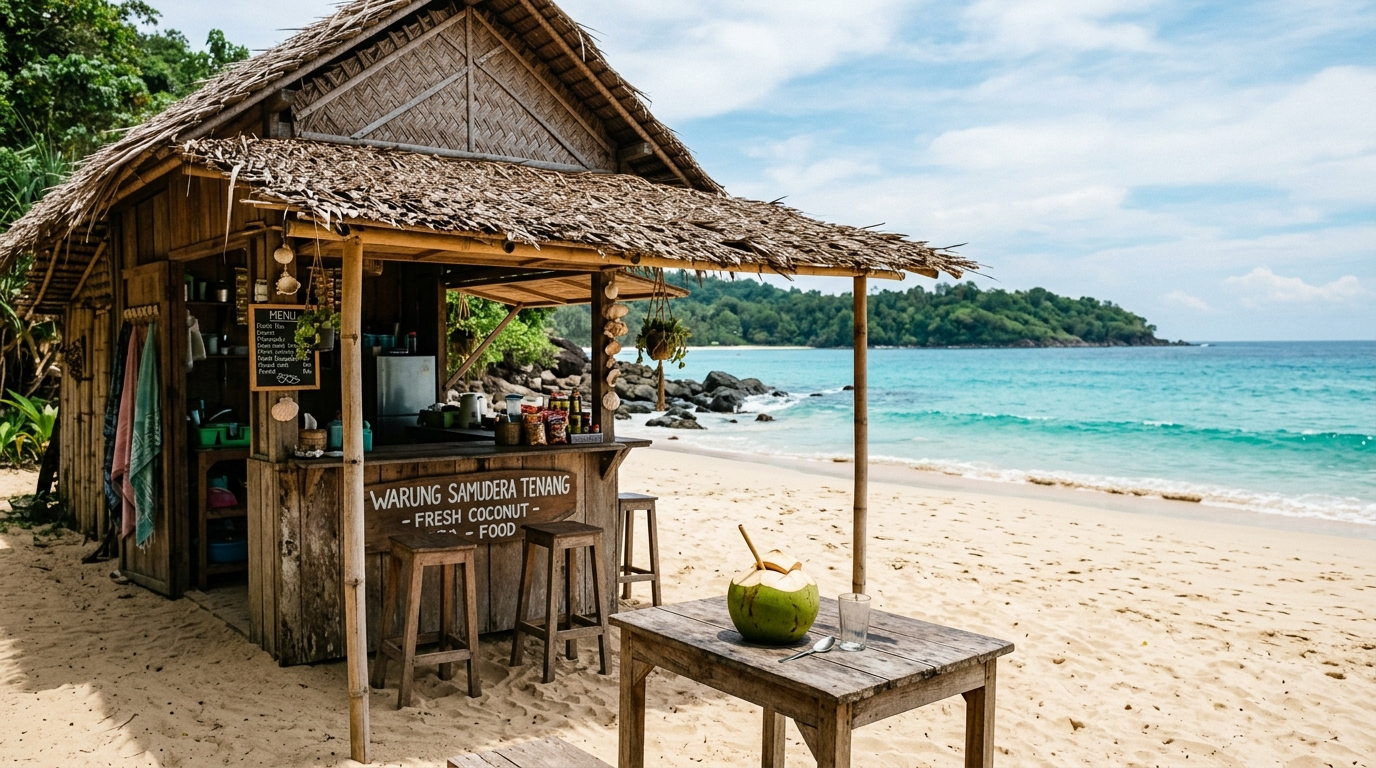
Mawun Beach (The Curved Bay)
Just ten minutes down the road from Tampah lies Mawun. Topographically, it is stunning—a near-perfect horseshoe bay flanked by steep, green hills.
However, Mawun comes with a major caveat: tidal dependency. The center of the bay experiences heavy surf and strong undertows, making it genuinely dangerous for casual swimmers. The outer edges of the crescent are calmer, but you must visit during high tide. At low tide, the receding water exposes a rocky, unappealing sea floor.
When accessing Mawun, be prepared for informal “tolls.” Locals have set up bamboo barriers on the access road, charging a Rp 10,000 entrance fee per motorbike.
Selong Belanak (The Surfer’s Nursery)
If you continue west past Mawun, you will eventually hit Selong Belanak. While this is arguably the “busiest” of the secluded southern beaches, it remains remarkably low-key compared to anything in Bali.
The sand here is blindingly white and as fine as powdered sugar. It features a gently sloping shoreline that creates consistent, mellow waves—making it the premier spot on the island for beginner surf lessons. What makes Selong Belanak truly unique, however, is the local livestock. Around late afternoon, you will likely share the sand with a herd of local water buffalo casually strolling along the surf line.
Amenities: You can rent surfboards, buy fresh grilled corn, and purchase a freshly hacked green coconut for under Rp 15,000 (less than €1).
Eco-Initiative: This area has been designated as a “plastic-free beach,” heavily monitored by local operators and NGOs like the Pelita Foundation.
The Rugged Core: Extreme Geology and Hidden Caves
If you want to move beyond standard sunbathing, Lombok’s rugged central and eastern fringes offer dramatic geological anomalies that look completely alien.
Semeti Beach (The Krypton Rocks)
Located just a few kilometers from Selong Belanak, Semeti Beach remains a tightly guarded secret primarily because getting there is a logistical nightmare. The access route is heavily degraded, consisting of deeply rutted dirt paths that turn into impassable mud traps during the rainy season.
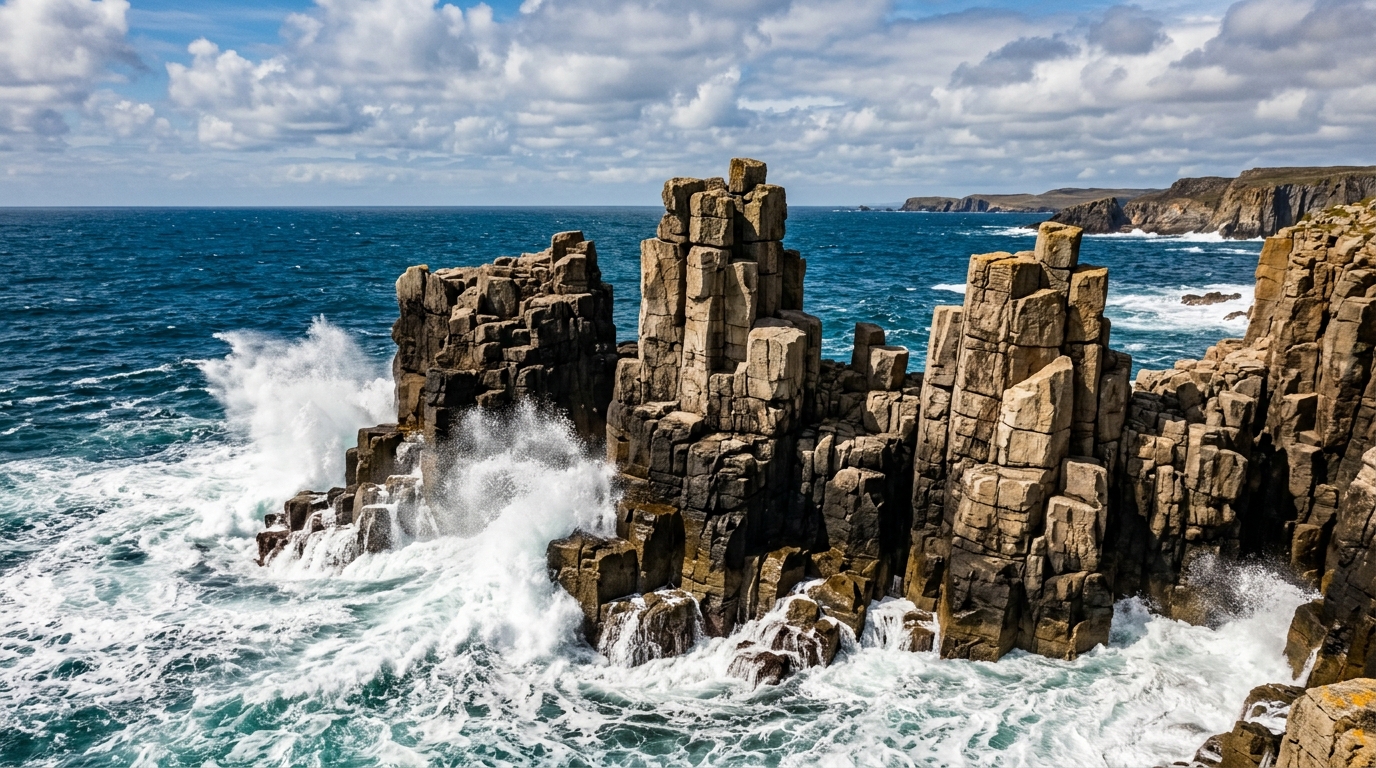
The draw here is not the sand, but the rocks. Semeti features dramatic, blocky limestone and volcanic formations that jut out of the ocean like the crystal structures from Superman’s home planet of Krypton. Other formations closely resemble ancient Egyptian pyramids taking a beating from the ferocious ocean swells.
Actionable Advice: Do not attempt this in flip-flops. Wear heavy-duty, closed-toe shoes. To get the best photographic angles, you must scale jagged boulders that reach up to 20 meters high.
Nambung Beach (The Saltwater Waterfall)
Situated 60 kilometers east of Mataram City, Nambung is gaining notoriety for a bizarre natural phenomenon: a “waterfall of the sea.”
Large ocean swells violently crash against a specific cliff rock formation, sending massive volumes of water spilling over the top and cascading down into a crystal-clear lagoon below. The visual is striking, surrounded by local seaweed farms operating in the shallows.
The Downside: Infrastructure here is nonexistent. There are no road signs, no public restrooms, and no transport links. You must hire a private driver, and you will need to frequently roll down the window to ask locals for directions to the coast.
Bangkang Cave (The Underground Detour)
While not a beach, Bangkang Cave (also known as Gale-Gale Cave) is an essential stop if you are already exploring the southern coast near Mawun. Hidden beneath a hill in Pujut District, this massive limestone cavern looks like a set piece from an Indiana Jones film.
Sunlight pierces through natural holes in the ceiling, illuminating massive stalagmites and karst pillars. The cave is home to thousands of bats.
Pro Tip: Time your visit for dusk. Standing near the entrance as the massive colony of bats wakes up and swarms out into the fading light is an eerie, spectacular event.
The Extreme East: Pink Sands and Unforgiving Tides
The eastern edge of Lombok is the most isolated, requiring long drives through rural villages where tourists are still an uncommon sight.
Pantai Pink 3 (The Secluded Pink Beach)
Lombok is famous for its pink beaches, a hue created by microscopic organisms called Foraminifera that produce red pigment on the coral reefs. When the red coral breaks down and mixes with the white sand, it creates a blush-pink shoreline.
Most tours head to the primary Pantai Pink, which has become relatively crowded. Instead, aim for Pantai Pink 3.
The Catch: You must arrive early. The distinct pink color is heavily dependent on the angle of the sun and the moisture in the sand. By 12:00 PM, the lighting shifts, the sand dries out, and the beach simply looks white. I dragged myself out of bed at 5:30 AM to make the two-hour scooter drive from Kuta, arriving at 8:00 AM. I had the entire pink cove entirely to myself.
Tanjung Poki (The Ferocious Blowhole)
Further east lies Tanjung Poki, a jagged cliffside that looks out over the Alas Strait. The defining feature here is a massive water blowhole.
Ocean water forces its way into a narrow, curving canyon in the rock face, building immense pressure before erupting ten meters into the air. The raw acoustic power of the water crashing against the rock is deafening.
Safety Warning: This area is incredibly dangerous. There are no guardrails, and rogue waves frequently sweep over the lower rocks. Do not attempt to swim here under any circumstances. People have been swept out to sea getting too close for a photograph.
Pulau Pasir (The Starfish Sandbar)
Accessible only by boat from the East Lombok harbors, Pulau Pasir is not a traditional beach. It is a tiny, shallow sandbar that only fully emerges during low tide.
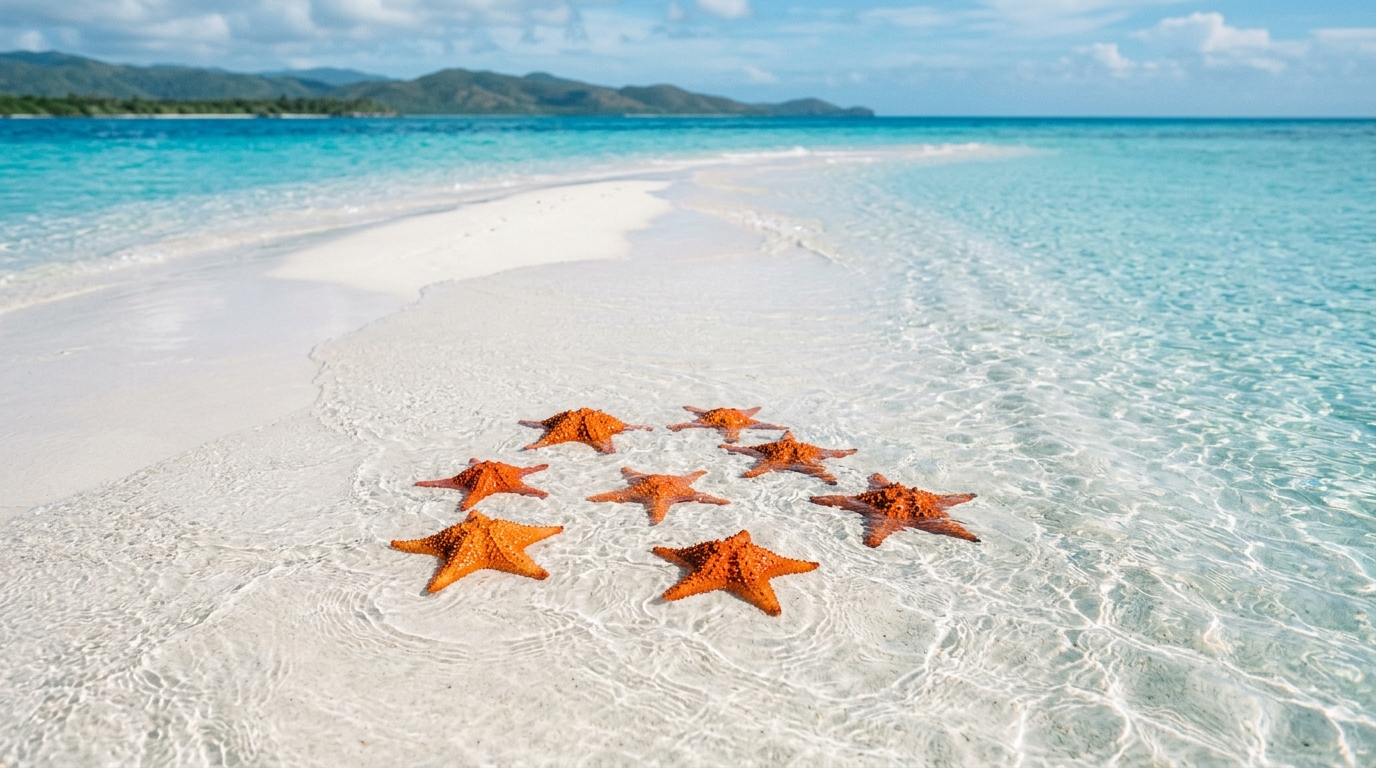
The surrounding ankle-deep water is heavily populated with large, bright orange starfish. If you book an eastern island-hopping tour, this is usually the first stop.
Ecological Warning: Do not touch or pick up the starfish. Human skin carries oils and bacteria that are highly toxic to these creatures. Removing them from the water, even for a few seconds for a photograph, causes them severe distress and often leads to death.
The Southwest: The Secret Gilis
When people hear “The Gilis,” they instantly think of Gili Trawangan, the famous party island off the northwest coast. However, “Gili” simply translates to “small island” in the local Sasak language, and Lombok is surrounded by dozens of them.
If you want the pristine white sands and diving of Gili Trawangan without the thumping bass and backpacker crowds, head to the Sekotong peninsula in the southwest.
From here, you can charter a small outrigger boat to Gili Nanggu, Gili Sudak, and Gili Kedis.
Gili Kedis is so small you can walk around its entire circumference in about three minutes. The water clarity here is absolute, making it a premier snorkeling destination. For the ultimate castaway experience, local operators can arrange overnight camping trips on Gili Kedis, where you sleep in a tent, cook freshly caught fish over a bonfire, and have the entire island to yourself until morning.
Cost Breakdown: What to Actually Expect
Lombok remains significantly cheaper than its neighboring islands, provided you step outside the luxury resort bubbles.
Scooter Rental: Rp 60,000 to Rp 80,000 per day (approx. $4 – $5.50 USD).
Private Driver: Hiring a car and local driver for an entire 8-hour day costs around $20 to $30 USD. This is highly recommended for the eastern beaches.
Beach Access/Parking: Rp 5,000 to Rp 10,000 per motorbike.
Sunbed Rentals: Rp 25,000 to Rp 50,000 per day.
Local Food (Warungs): A plate of Nasi Goreng (fried rice) or grilled fish directly on the beach will cost between Rp 25,000 and Rp 40,000.
Ride-Sharing: Uber and Grab do not operate reliably outside Mataram City. You must rely on local taxis, private drivers, or your own rented scooter.
Who Should Seek Out These Hidden Beaches (And Who Should Not)
Lombok’s raw coastlines are not for everyone. You need to align your expectations with the reality of the infrastructure.
This is ideal for:
Confident scooter drivers who don’t mind navigating dirt roads and loose gravel.
Travelers seeking absolute quiet and zero commercial beach clubs.
Surfers looking for uncrowded breaks ranging from beginner (Selong Belanak) to advanced (Mawi Beach).
Budget-conscious travelers who prefer eating at local wooden shacks over expensive resort restaurants.
You might want to skip this if:
You expect seamless digital infrastructure (no ride-sharing apps, spotty cell service on the east coast).
You require paved roads and manicured walking paths to access the water.
You hate being approached by vendors. While less intense than Bali, local children and women selling sarongs will still approach you on beaches like Tanjung Aan.
You are traveling with mobility issues, as access often requires climbing down steep, unpaved inclines.
Common Mistakes to Avoid
Mistake 1: Trusting GPS blindly on coastal dirt roads.
Google Maps will often calculate the shortest physical distance between two beaches, routing you through “roads” that are actually washed-out goat paths. I made this mistake trying to cut across the hills near Semeti and ended up having to walk my scooter backward down a steep gravel incline. Always stick to the main paved arteries as long as possible before cutting down to the coast, even if the map suggests a shortcut.
Mistake 2: Visiting the west coast during the peak rainy season.
If you book a trip in late January or February, understand that the prevailing westerly winds act as a massive conveyor belt, pushing open-ocean trash directly onto the western shorelines. The pristine white sand you see in dry-season photographs will likely be buried under plastic bottles and organic debris. If you must visit in the wet season, stick to the southern or eastern bays which are shielded from these specific winds.
Frequently Asked Questions
When is the best time of year to visit Lombok’s beaches?
The dry season, running from April to October, is the optimal window. The skies are clear, the ocean currents are manageable, and the beaches are free from the monsoon debris. The shoulder months of May and September offer the best balance of excellent weather and minimal tourist traffic.
Do I need an international driver’s permit to rent a scooter?
Legally, yes. While local rental shops will happily hand over the keys without checking your paperwork, local police frequently set up checkpoints on the main roads out of Kuta. If you are pulled over without an International Driving Permit (with the motorcycle endorsement), you will be subjected to an on-the-spot fine. More importantly, your travel insurance will be entirely voided if you crash without the proper license.
Are the beaches in Lombok safe for swimming?
It varies drastically by location. Bays like Tampah and the outer edges of Mawun are calm and safe. However, the southern coast faces the open Indian Ocean. Beaches like Mawi, Semeti, and Tanjung Poki have ferocious undertows, massive swells, and jagged rocks. Always observe the water for at least fifteen minutes before entering, and if you don’t see locals swimming, stay on the dry sand.
The Final Verdict
The window to experience Lombok’s coastal fringe in its raw, undeveloped state is shrinking rapidly. While the lack of infrastructure can be frustrating—bumpy roads, missing signage, and a reliance on cash—these are the exact barriers keeping the masses at bay.
If you are willing to embrace a bit of logistical friction, rent a reliable scooter, and wake up before the sun, you will find shorelines here that rival anywhere else on earth. Set up your base in Kuta, skip the crowded northern hubs, and start driving toward the dirt roads on the edge of your map.