
Finding unusual vacation destinations requires looking entirely past the algorithm-driven lists pushing the overcrowded European capitals and artificially curated tropical resorts. Real travel—the kind that shifts your perspective and leaves you with stories rather than just photographs—happens on the fringes. Over the last decade, I have actively sought out places that challenge the standard itinerary, swapping heavily congested tourist hubs for geological anomalies, highly regulated conservation zones, and remote provincial towns.
If you want to escape the crushing weight of mass tourism, you have to be willing to navigate gravel roads, deal with unpredictable weather, and occasionally accept a lumpy bed. But the trade-off is unparalleled solitude and a genuine connection to your environment. This guide strips away the marketing fluff to deliver a hard look at the world’s most compelling alternative locations, based on cold logistics, economic realities, and on-the-ground truths.
Quick Summary
Prioritize high-barrier conservation areas: Destinations like Bhutan and Koh Mak strictly regulate visitor footprints, resulting in cleaner, quieter environments and authentic cultural preservation.
Rethink European transit: You can reach incredibly remote-feeling towns like Sigulda, Latvia, or Miramar, Portugal, via simple 30-to-120-minute train rides from major capital cities.
Accept physical friction: The most isolated locations, from the deep jungles of Borneo to the steep paths of Meteora, require physical exertion. You cannot rely on elevators or paved ramps.
Alternative accommodation saves thousands: Utilizing housesitting networks or rural homestays can shave massive amounts off your budget, offsetting the higher cost of overland travel.
Avoid the midday rush unconditionally: Even in remote locations, arriving at sunrise is the only guaranteed way to secure total isolation and uncorrupted photography.
The Direct Answer: Why Pivot Your Travel Strategy?
If you are researching alternative travel, you are likely tired of waiting in line for two hours to take a photograph alongside three hundred strangers. The direct answer to why you should pivot your strategy toward the periphery is simple: low-density locations offer higher psychological value and significantly better economic returns.
When you visit Paris or Rome in July, you are paying a massive premium for a diluted, stressful experience. The local infrastructure is stretched to the breaking point. Conversely, when you route your trip through a place like the Accursed Mountains in Albania or the wind-battered coast of the Baltic Sea, your travel budget stretches nearly three times as far. You gain access to authentic local infrastructure rather than businesses propped up entirely by seasonal foreign cash.
However, getting off the main grid requires more logistical preparation. You cannot rely on seamless public transit, English-speaking signage, or ubiquitous Wi-Fi. You trade convenience for authenticity. Whether you are navigating the bizarre limestone jars in northern Laos or figuring out the complex permit system for visiting indigenous lands, the friction of travel is exactly what keeps the masses away.
Core Budgeting Strategies for Extended Travel
Before diving into specific locations, we need to address the financial realities of reaching them. Alternative destinations often lack major international airport hubs, meaning your overland travel and accommodation costs can spike if you do not plan accordingly.
The Housesitting Strategy
During a recent six-month stint crossing Europe and Southeast Asia, my travel partner and I entirely eliminated our accommodation expenses by utilizing housesitting platforms. The premise is straightforward: you care for a homeowner’s property and pets while they travel, and in return, you stay for free. A yearly membership to a reputable platform costs roughly $80. We recouped that entire fee on the first night. By staying in a residential neighborhood in Verona, Italy, instead of booking a cramped hotel in Venice, we saved thousands and gained access to a full kitchen, which drastically reduced our daily food expenditure.
Tactical Independent Vehicle Rentals
To access places like the backroads of the Hautes-Alpes in France or the remote coastal towns of southern Italy, public transit simply will not work. I recommend utilizing independent car rentals through companies like Europcar. By booking weeks in advance and choosing a manual transmission, I recently locked in a daily rate of $22 in Italy. The ability to drive 30 minutes outside a city center to eat at a local tavern—where prices are halved—quickly offsets the cost of the rental itself.
High-Barrier Conservation Zones
The best unusual vacation destinations are actively fighting to preserve their local identity against global homogenization. They do this by placing strict caps on the tourism maelstrom.
The Kingdom of Bhutan
Bhutan operates on a strict economic barrier to entry, charging a mandatory daily traveler’s fee of $250 (which excludes citizens of India, Bangladesh, and the Maldives). This policy intentionally filters out mass backpacker crowds, ensuring “clouds, not crowds.” The fee is not an arbitrary tax; it covers your driver, guide, accommodation, meals, and visas, with proceeds directly funding free domestic healthcare and education for Bhutanese citizens.
If you can stomach the upfront cost, the preservation of the environment is flawless. The country absorbs nearly three times more carbon than it emits and legally mandates maintaining at least 60 percent forest cover. Keep in mind that visiting iconic sites like the 17th-century Tiger’s Nest monastery requires a grueling 2-mile vertical hike at altitude. You cannot just take a taxi to the front door.
Trat and Koh Mak, Thailand
When people think of Thailand, they imagine the congested bars of Phuket or Bangkok. The eastern province of Trat tells a different story. Taking a speedboat out to Koh Mak, a small 16-square-kilometer island, offers a look at a genuinely sustainable economy.
The local community strictly enforces the “8 rules of Koh Mak” to maintain a low-carbon footprint. I rented a bicycle to explore the island’s organic papaya and passion fruit farms. I will admit, cycling uphill in 35-degree Celsius heat and 90 percent humidity was incredibly punishing. I was sweating through my clothes within ten minutes. But watching the sunset from the wooden Cocoscape bridge in total silence made the physical toll worthwhile.
Geological Oddities and Extreme Landscapes
Sometimes, the earth produces landscapes so strange they feel artificially generated. These spots require specific timing and respect for fragile ecosystems.
Salar de Uyuni, Bolivia
The massive salt flats of Bolivia offer a stark, disorienting environment. While traveling during the dry season offers more predictable weather, the real magic happens during the rainy season. A thin layer of water turns the vast white salt flats into a giant, perfect mirror, creating a surreal setting ideal for perspective-trick photography.
I recommend asking your 4×4 drivers to prepare a homemade lunch directly on the flats. Just be prepared for the altitude; Uyuni sits at nearly 12,000 feet above sea level, and altitude sickness is a very real threat if you do not acclimatize properly in La Paz beforehand.
Fly Geyser, Nevada (USA)
Located near the Black Rock Desert, Fly Geyser is a complete accident. In 1964, a geothermal energy company drilled a test well and failed to cap it properly. Today, boiling water shoots five feet into the air, while heat-loving thermophilic algae paint the growing mineral cone in loud reds and greens.
The Catch: It sits on private land. You cannot simply drive up to it unannounced. You must book a guided walk through the “Friends of Black Rock-High Rock” organization.
Pamukkale, Turkey
Known as the “Cotton Castle,” Pamukkale features cascading white travertine terraces filled with thermal spring water. The adjacent city of Hierapolis dates back to the 1st century. It is a striking visual, but it serves as a massive cautionary tale regarding over-tourism.
I made the error of arriving here at 11:00 AM on a Tuesday, assuming a weekday would be quiet. It was an absolute disaster. I was shoulder-to-shoulder with hundreds of day-trippers stepping into the pools. If you want to photograph the supposedly healing Cleopatra Antique pool without a crowd ruining the frame, you must be standing at the entrance gates precisely at dawn.
Overlooked European Peripheries
You do not need to leave Europe to find isolation; you simply need to look past the Mediterranean coast and the major western capitals.
The Accursed Mountains, Albania
Albania recently emerged from an era of deep isolation as the last bastion of Eastern Bloc communism. It features a strange architectural blend of Ottoman minarets, mosques, Roman ruins, and thousands of abandoned concrete military bunkers scattered across the countryside.
The ‘Accursed Mountains’ serve as Albania’s Alps. Hiking here is rugged and physically demanding. When I visited the half-abandoned post-communist village of Old Qeparo, I was struck by the absolute quiet. However, infrastructure is incredibly limited. Bring your own high-calorie snacks and water purification tablets, as there are often only one or two places to eat in these rural mountain towns.
Sigulda, Latvia
Latvia proves that venturing off the beaten path does not always require complex travel logistics. Sigulda is a prime destination for forest hiking and deep nature immersion. The air here smells distinctly of damp pine needles and cold earth.
I took a highly efficient, two-hour train ride from Riga, heading in the direction of Valga. Once there, the hiking potential is massive. During my stay, I managed to string together a 25-kilometer hike in a single day, passing medieval castles and dense woodland without encountering a single large tour group.
Malcesine, Italy
Italy is notorious for massive crowds, but Malcesine proves that quiet pockets still exist. Located at the northern end of Lago di Garda, it offers a beautiful, quiet lakeside alternative to the chaos of the Amalfi Coast or Venice.
You can fly into Verona, rent a car, and drive up to the lake. The water is cold, the local transit is reliable, and the town lacks the aggressive souvenir hawkers found further south.
Deep Asia: Jungles and Karst Mountains
Asia offers some of the most dramatic landscapes on earth, provided you are willing to leave the established banana pancake backpacker trail.
Bario, Borneo (Malaysia)
Historically significant for influencing Alfred Russel Wallace’s natural selection theories, Borneo is a wildly distinct ecosystem. Bario, located deep in the Kelabit Highlands, offers a mandatory digital detox. There is no internet, no ATMs, and no money changers. You must bring sufficient cash for your entire stay.
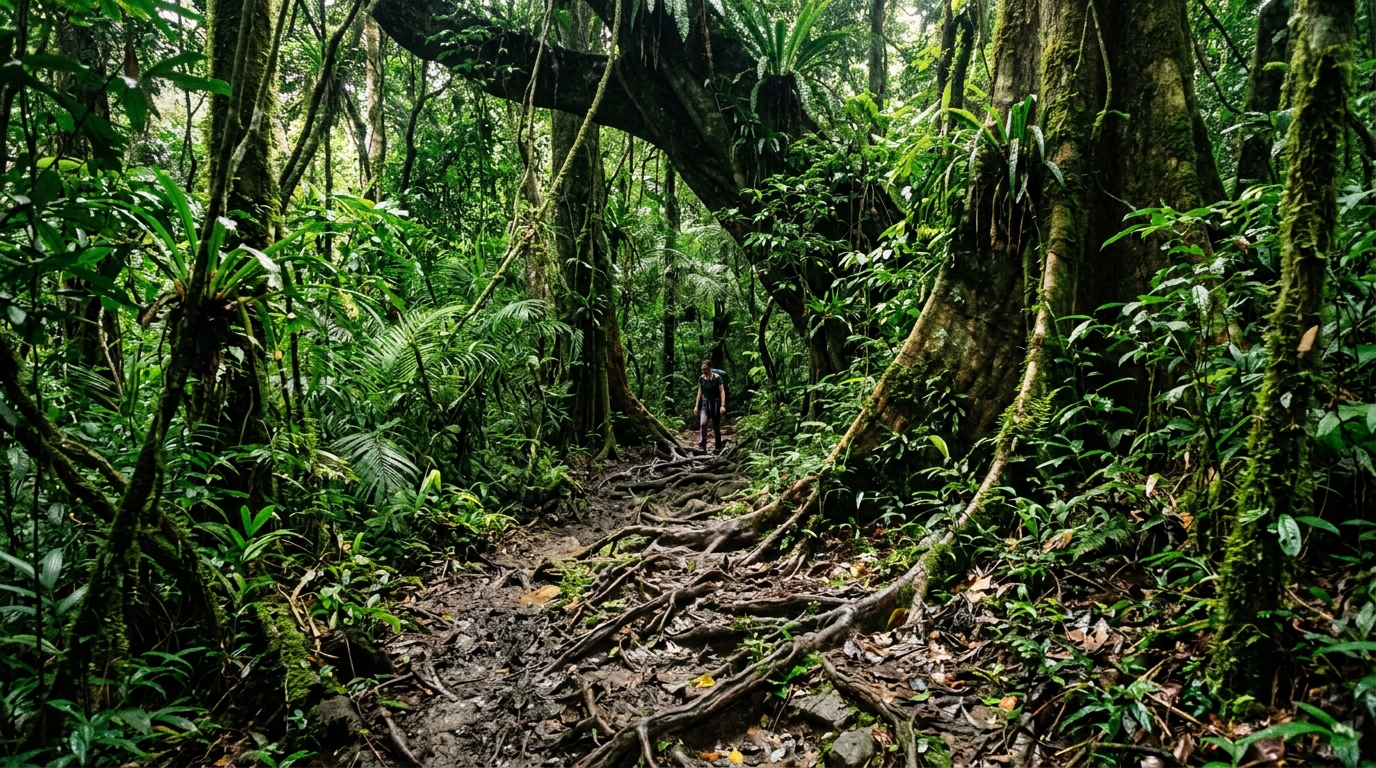
The local Kelabit tribe practiced headhunting until the 1920s, but today they offer incredibly hospitable traditional longhouse stays. Navigating the virgin rainforest trails requires serious physical stamina and sturdy, broken-in hiking boots to deal with the mud and leeches.
Phong Nha-Ke Bang National Park, Vietnam
Home to the oldest karst mountains in Asia, formed over 400 million years ago, this national park is filled with hundreds of spectacular underground caves and rivers.
Renting a motorbike here is incredibly cheap, allowing budget travelers to explore the jungle-draped hills and eat at inexpensive roadside cafes. However, a word of caution: I booked a cheaper local bus thinking I would save a few dollars getting to the park, and the resulting eight-hour ride on a cramped, un-air-conditioned vehicle with terrible suspension was absolutely not worth the minor savings. Spend the extra $10 for a comfortable transit option.
Cost and Value Comparisons
Evaluating unusual vacation destinations requires looking at the daily burn rate versus the density of the experience. Here is a realistic breakdown for a single traveler over a 7-day period (excluding flights):
| Destination Type | Location | Average Daily Cost | Crowd Level | Key Expense Driver |
|---|---|---|---|---|
| High-Barrier Conservation | Bhutan | $250 – $300 | Very Low | $250 Mandatory Daily Tourist Fee |
| Remote US Nature | Wind River Range, WY | $80 – $120 | Low | 4WD SUV Rental ($70/day) |
| Alternative Asia | Trat Province, Thailand | $45 – $65 | Low | Island Ferry & Organic Food |
| European Periphery | Sigulda, Latvia | $60 – $85 | Low | Train Tickets & Local Guesthouses |
| Middle East Nature | Oman | $130 – $180 | Low | Guided 4×4 Desert Tours |
Who Should Visit (And Who Should Not)
This style of travel is ideal for:
Independent problem solvers: If a flat tire on a dirt road in Wyoming or a delayed bus in rural Vietnam sounds like an interesting challenge rather than a ruined day, you will thrive here.
Budget optimizers: Travelers willing to trade luxury amenities (like room service and bellhops) for low daily costs and long-term stays in places like Albania or Latvia.
Photographers and introverts: Anyone who prefers the sound of wind over the noise of a packed resort bar.
You might want to skip this if:
You require rigid itineraries: Remote travel is entirely dependent on weather, local holidays, and mechanical luck. Things will go wrong.
Mobility is a major concern: Places like the steep paths of Meteora in Greece, the deep caves of Vietnam, or the high-altitude trails of Bhutan lack elevators, ramps, and paved walkways.
- You seek standardized luxury: If your vacation requires high-speed internet, air conditioning, and a familiar restaurant chain, stick to major urban centers.
- www.responsiblevacation.com
- lavieenmarine.com
- itsadrama.com
- www.anitahendrieka.com
- luggageandlipstick.com
- www.mapsandmerlot.com
Common Mistakes to Avoid
1. Ignoring Local Geography and Scale
Travelers constantly underestimate the sheer size of alternative locations, particularly in the United States and Australia. Planning to see the Eastern Sierra Nevada mountains and then drive over to the California coast in an afternoon is a mathematical impossibility. The same applies to driving the Ring Road in Iceland. Always pad your driving estimates by at least 30 percent when dealing with mountain passes, unpaved desert roads, or single-lane coastal highways.
2. Treating Protected Zones as Souvenir Shops
This happens constantly at unusual environmental sites. Tourists continuously pocket handfuls of sand, sea glass, or small rocks to take home. As a result, delicate ecosystems are actively disappearing. When visiting unusual vacation destinations, the rule is absolute: take nothing but photographs. Leave the local ecology exactly as you found it.
Frequently Asked Questions
Are unusual vacation destinations safe for solo travelers?
Yes, but they require a higher baseline of situational awareness. In remote areas like the Wind River Range or the Omani desert, your biggest threat is not street crime, but environmental exposure and a total lack of cell service. Always download offline maps, carry a dedicated satellite messenger, and inform a trusted contact of your exact daily itinerary.
How do I find alternative accommodations in remote towns?
While major booking engines cover large cities, rural areas rely heavily on regional platforms or direct contact. In Southeast Asia, asking a local restaurant owner about homestays often yields better, cheaper results than searching online. Additionally, utilizing housesitting networks is a highly effective way to secure lodging in towns that lack standard hotels entirely.
Is it more expensive to travel off the beaten path?
It depends on the infrastructure. Your daily cost for food and lodging will plummet in places like Albania, Latvia, or eastern Thailand compared to London or Tokyo. However, the upfront cost of accessing these areas—such as renting specialized 4×4 vehicles, hiring private boats, or paying mandatory conservation fees (like in Bhutan)—can require a larger initial budget.
What is the best way to avoid crowds at famous geological sites?
The only foolproof method is arriving before dawn. Sites like Pamukkale, the Pyramids of Giza, or the Giant’s Causeway become completely unmanageable by 10:00 AM. Rent a car, skip the hotel breakfast, and be standing at the entrance gate with a flashlight 20 minutes before the sun rises.
Conclusion
Transitioning away from standard tourist circuits toward unusual vacation destinations forces you to become an active participant in your travel rather than a passive consumer. Whether you are navigating the ancient ties of the Silk Road in Uzbekistan, hiking alongside 400-million-year-old karst mountains in Vietnam, or enduring the intense humidity of eastern Thailand for an empty, pristine beach, the friction is the reward.
Mass tourism dilutes the very things we travel to experience. By choosing the periphery, you protect vulnerable ecosystems, directly support local economies, and guarantee yourself an adventure that cannot be replicated in a heavily manicured resort. Start small: book a train ticket two hours outside of your next major city destination, step off into a town you cannot pronounce, and let the landscape dictate the rest of the journey.