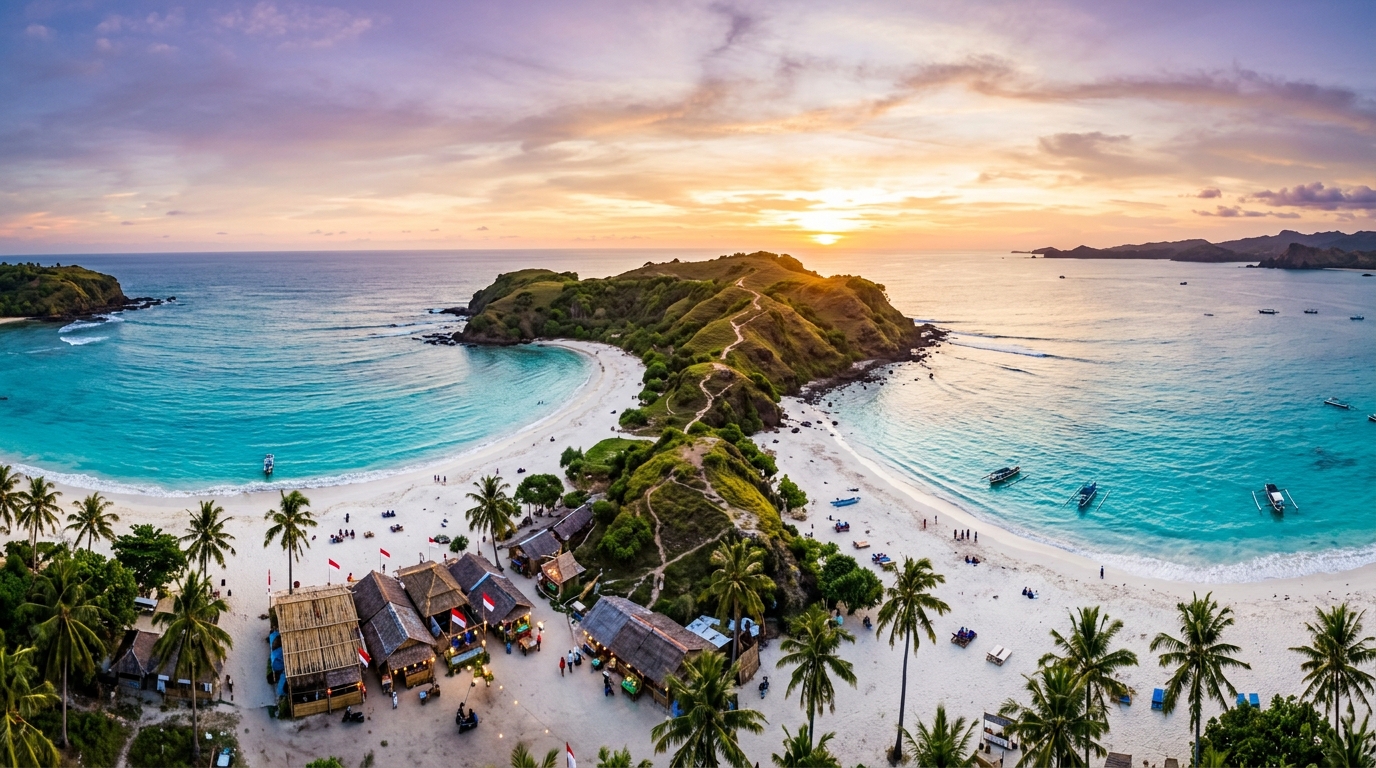

Hunting for the best beaches in Lombok requires a willingness to trade polished resort clubs for potholed dirt roads, informal bamboo toll gates, and some of the most spectacularly raw coastlines in Southeast Asia. I first visited this Indonesian island assuming it would simply be a quieter clone of its famous western neighbor, Bali. I was entirely wrong. Lombok’s coastline is wilder, sun-bleached, and radically less developed.
While the government is rapidly pushing massive infrastructure projects—like the Mandalika racing circuit in the south—large swaths of the island remain gloriously untouched. You will share the sand with wandering water buffalo, buy grilled fish cooked over coconut husks, and occasionally battle aggressive local vendors. But the payoff is immense: powder-white coves, world-class surf breaks, and limestone cliffs that look completely otherworldly.
Quick Summary
Basecamps matter: Stay in Kuta Lombok for southern surf beaches, or Senggigi for calmer northern bays and traditional fishing villages.
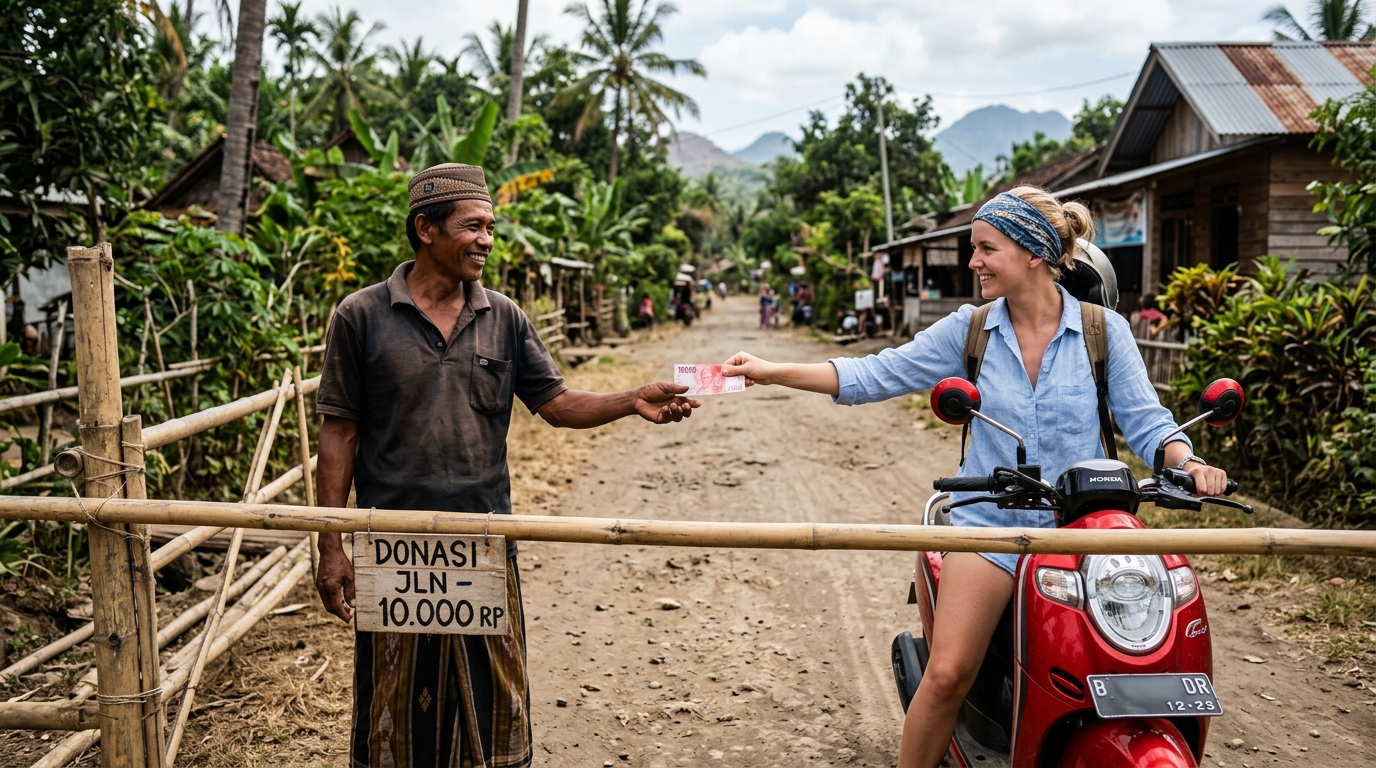
Bring small bills: Expect to pay informal parking fees and community “tolls” (usually 10,000 IDR) at almost every beach entrance.
Watch the seasons: Visit between May and October. January and February westerly winds push massive amounts of plastic debris onto west-facing shores.
Find the “Secret Gilis”: Ditch crowded Gili Trawangan and charter a local boat to Gili Nanggu or Gili Kedis for empty coral reefs.
Manage expectations: Pink Beach has largely lost its pink hue as of 2024, and the two-hour dirt road drive will punish your rental scooter.
The Direct Answer: How to Attack Lombok’s Coastline
If you want to maximize your time on the sand without spending half your trip in transit, do not try to circle the entire island. The roads in remote areas will aggressively slow you down. Instead, split your trip into two distinct halves and rent a scooter (around 50,000 to 75,000 IDR per day).
For your first three to four days, base yourself in Kuta Lombok (not to be confused with Kuta, Bali). From here, you can easily access the expansive, white-sand bays of the south coast, including Selong Belanak, Mawun, and Tanjung Aan. The roads directly around Kuta are newly paved and easy to navigate.
For the second half of your trip, move your base north to Senggigi. This area provides a launching pad to the calmer, sunset-facing beaches of the west coast, the dramatic northern cliffs, and the boats heading out to the Gili Islands.
When exploring, always carry a dry bag, a stash of 10,000 IDR notes, and your own drinking water. Outside of the immediate Kuta and Senggigi zones, commercial infrastructure drops to zero.
The Southern Surf and Sand Hubs
The southern coastline, stretching east and west of Kuta, is where you will find the classic, sweeping bays that have put Lombok on the map. This region is currently undergoing massive changes due to the Mandalika development project, so visit sooner rather than later.
Tanjung Aan: The Flawed Masterpiece
Just 15 minutes east of Kuta, Tanjung Aan is arguably the most visually striking bay on the island. It features a double-horseshoe shape and a bizarre geological quirk: two entirely different sand textures. One side of the bay feels like baking flour, while the other resembles large grains of white pepper. The bay boasts bright turquoise water that remains calm thanks to an offshore reef, making it perfect for swimming and stand-up paddleboarding (rentals run about 100,000 IDR per hour).
However, it comes with a major caveat. The vendors here are notoriously persistent. On my last visit, I could barely put my towel down before being surrounded by women selling sarongs and children offering woven bracelets. The best strategy is to firmly but politely say “no thank you” immediately, or simply buy a coconut from one of the bamboo warungs (food stalls) and use their designated seating.
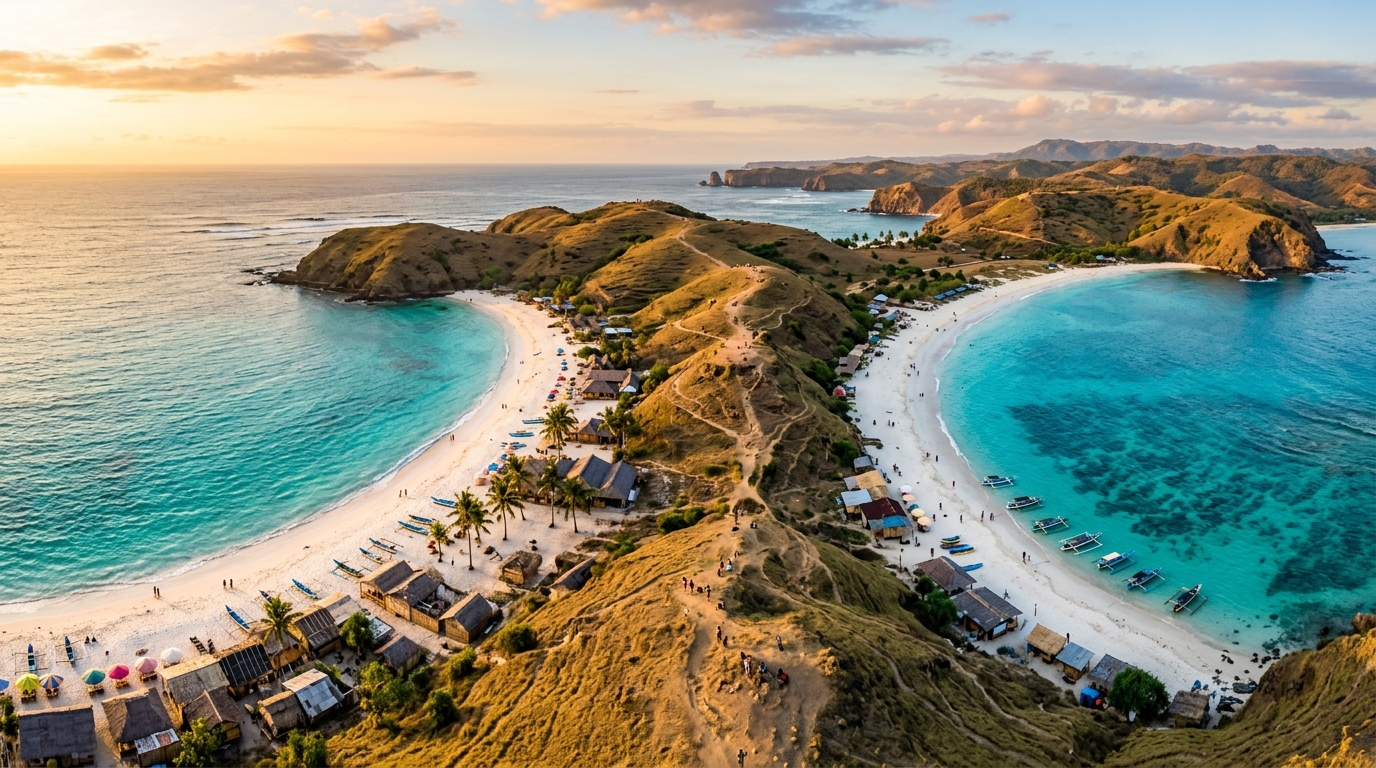
Before you leave, hike up Bukit Merese at the western edge of the bay. The climb takes less than ten minutes and rewards you with a massive panoramic view of the coastline—ideal for watching the sky turn lavender and gold at sunset.
Selong Belanak: Beginner Waves and Water Buffalo
Located about 40 minutes west of Kuta by scooter, Selong Belanak is a massive, two-kilometer sweep of ultra-fine white sand. The water here is uniquely calm near the shore but features gentle, consistent rolling waves further out over a purely sandy bottom. This makes it the premier spot in Southeast Asia for beginner surfers. Local shacks line the back of the beach renting thick foam longboards and offering cheap lessons.
What makes this beach iconic is the local agriculture. Every afternoon, farmers herd their water buffalo directly across the beach. It is a bizarre and brilliant photographic moment.
A word of warning: Selong Belanak has become highly commercialized. It gets exceptionally crowded on Sundays with local tourists, and there is a noted risk of petty theft. Do not leave valuables unattended on your towel while you surf.
Tampah Beach: The Spotless Sanctuary
If you find the vendors at Tanjung Aan or the crowds at Selong Belanak overwhelming, drive to Tampah Beach. Locals have officially signed it as a “no beach harassment” zone, and the community cleans the sand every single day.
It is the definition of a deserted tropical sanctuary. You will find a few bamboo shade shacks, impossibly clear water for swimming, and zero hawkers pushing souvenirs. You pay your 10,000 IDR parking fee, and you are left completely alone to read, swim, and relax.
Mawi and Gerupuk: The Pro Surfer Zones
If you are an advanced surfer, your itinerary will look entirely different. You want Mawi Beach (west of Kuta) and Gerupuk (east of Kuta).
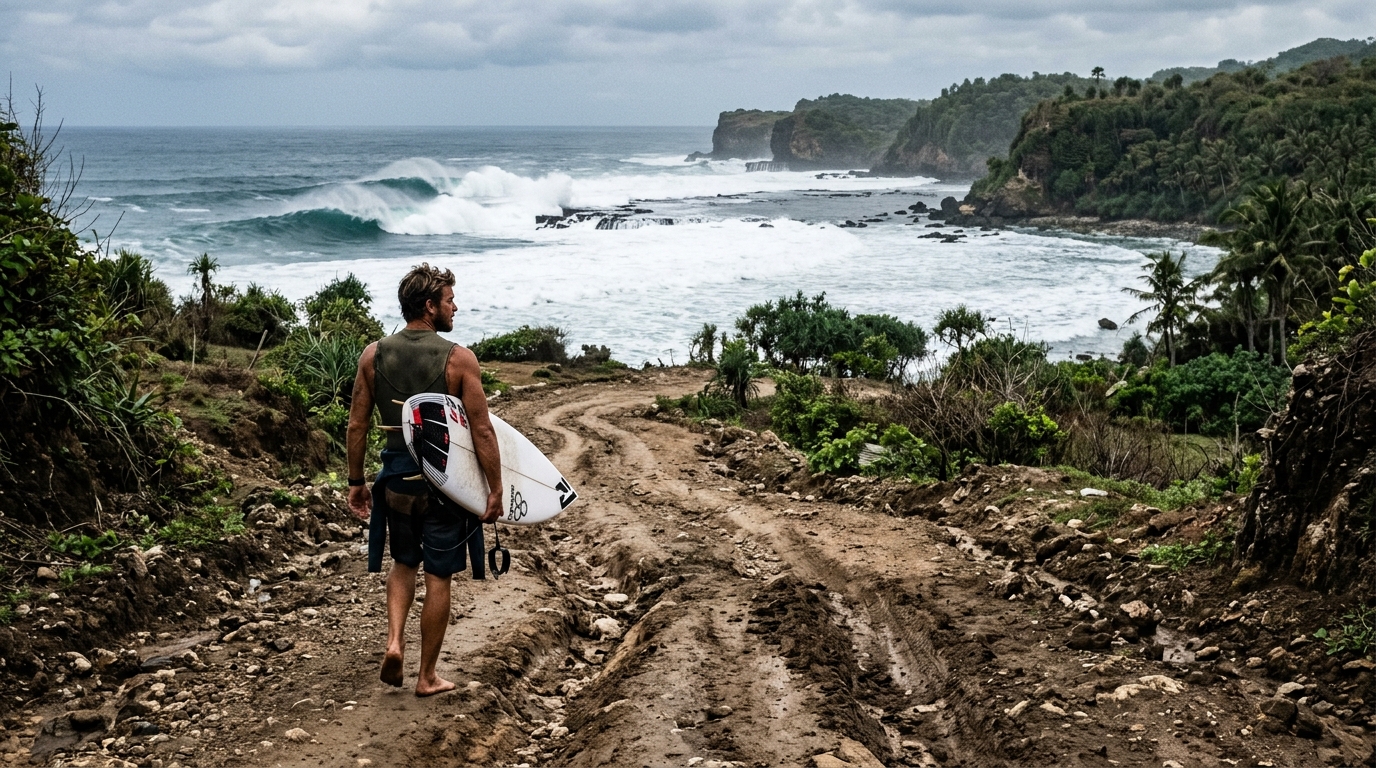
Mawi offers the island’s most consistent dry-season waves, but the access road is a punishing, deeply rutted dirt track that turns to slick mud after rain. The bottom is a sharp coral reef, making it terrible for casual swimming. Gerupuk requires hiring a local boat driver to take you out to the breaks (Gerupuk Inside and Outside). Neither of these spots are designed for lounging on the sand with a book—they are strictly functional, rugged surf hubs.
The West Coast: Sunsets and Seafood
While the south coast faces the Indian Ocean and misses the actual sunset, driving north from Senggigi takes you along a winding coastal highway that faces west toward Bali.
Senggigi and Pantai Nipah
Senggigi Beach features darker sand and heavily developed resorts like Qunci Villas and Puri Mas. It is a highly convenient base with calm waters. However, the real charm lies just a few kilometers north at Pantai Nipah.
Nipah is a sweeping curve of sand lined with dozens of local seafood stalls. Stop here around 4:30 PM, pick out a fresh snapper, and watch as locals grill it over a fire made entirely of dry coconut husks. The smell is incredibly distinct. Eating spicy grilled fish on a plastic stool as the sun drops behind Bali’s Mount Agung in the distance is a quintessential Lombok ritual.
Pantai Sire and the Urchin Threat
Located further north, near the public ferry terminal of Bangsal, Pantai Sire offers two kilometers of blindingly white sand and utterly flat, mirror-like water. It is remarkably peaceful and heavily shaded by palm trees.
However, I learned a stressful lesson here: the shallows are heavily populated with black sea urchins. I narrowly avoided stepping on one while wading out to snorkel. You absolutely must wear hard-soled water shoes if you plan to enter the water on the northern coasts.
The Pink Beach Dilemma (East Lombok)
Lombok’s Pink Beach (Pantai Tangsi) is famous for its blush hue, created when microscopic red organisms (Foraminifera) grow on dead coral fragments and mix with the white sand.
But here is a hard truth based on 2024 data: the beach has lost a significant amount of its pink color due to changing ocean conditions and coral degradation. It will likely not impress travelers who have visited the vibrant pink shores in Komodo National Park.
Furthermore, I nearly ruined my rental scooter—and my lower back—trying to drive there. The final stretch of road is a severely degraded dirt track. If you are determined to go, do not drive the grueling two hours from Kuta. Instead, hire a local boat from the fishing village of Tanjung Luar. A 30-minute boat ride gets you there effortlessly, and the captains usually include stops at smaller sandbars along the way.
The Gili Islands: Mainstream vs. Secret
When people hear “Gili Islands,” they think of Gili Trawangan, Gili Air, and Gili Meno off the northwest coast. These three islands are vehicle-free (transport is via bicycle or pony cart) and offer incredible marine life.
Gili Trawangan: The party hub. Great for cheap diving and late-night bonfires.
Gili Meno: The quiet honeymoon island. Features the famous Bask Nest underwater sculptures (48 life-size statues standing in a circle on the seabed).
Gili Air: The perfect compromise between the two, offering great sunset beach bars and accessible coral reefs.
The Secret Gilis of the Southwest
If you want pure isolation, skip the northern Gilis and head southwest to the Sekotong peninsula. From the harbors of Tawun or Tembowong, you can charter an outrigger boat to the “Secret Gilis.”
Gili Nanggu: Features sublime, shallow-water snorkeling directly off the beach. You will swim through dense schools of tropical fish without another tourist in sight.
Gili Kedis: Nicknamed the “Honeymoon Island,” this is a diminutive sandbank with a few shade trees. You can literally walk across the entire island in three minutes.
Gili Sudak: The perfect lunch stop. Eat fresh grilled fish with your feet soaking in the warm, shallow tide.
Who Should Visit Lombok (And Who Should Skip It)
Lombok is not a one-size-fits-all destination. You need to align your expectations with the reality of the island’s infrastructure.
This is ideal for:
Experienced and beginner surfers: The sheer variety of waves—from the sandy bottom of Selong Belanak to the heavy barrels of Mawi—is unmatched.
Independent explorers: If you enjoy strapping a dry bag to a scooter and driving an hour down a dirt road just to see what is at the end, you will thrive here.
Budget-conscious travelers: Accommodation, local food, and surf rentals are noticeably cheaper than in Bali or Thailand.
You might want to skip this if:
You want upscale beach clubs: If your ideal day involves plush daybeds, bottle service, and infinity pools overlooking the sand, stay in Seminyak or Canggu. Lombok has very few high-end beach clubs.
You dislike haggling and minor hassles: The informal economy here is strong. You will constantly be asked for small parking fees, and vendors on beaches like Tanjung Aan can be highly aggressive. If you want a manicured, hassle-free environment, book a private resort in Bali.
Cost & Value Breakdown: A Day on the Sand
Lombok remains highly affordable, provided you engage with the local economy rather than relying entirely on resort-provided services. Here is what you can expect to spend for a full day exploring the southern beaches:
| Item / Service | Estimated Cost (IDR) | Estimated Cost (USD) |
|---|---|---|
| Scooter Rental (24 hours) | 50,000 – 75,000 | $3.20 – $4.80 |
| Beach Parking Fee (Per beach) | 10,000 | $0.65 |
| 2 Sunbeds & Umbrella (Full day) | 50,000 – 100,000 | $3.20 – $6.50 |
| Fresh Coconut on the beach | 20,000 – 25,000 | $1.30 – $1.60 |
| Local Lunch (Nasi Goreng) | 25,000 – 35,000 | $1.60 – $2.30 |
| Surfboard Rental (2 hours) | 50,000 – 75,000 | $3.20 – $4.80 |
| Total Estimated Daily Budget | 205,000 – 320,000 | $13.15 – $20.65 |
Note: Exchange rates fluctuate, but 10,000 IDR is roughly $0.65 USD. Always keep exact change for parking attendants.
Common Mistakes to Avoid
Mistake 1: Ignoring the rainy season ocean currents.
Travel bloggers often claim that traveling during the wet season (November to April) is fine because the rain only lasts an hour a day. While true for the sky, they ignore the ocean. In January and February, powerful westerly winds drive massive amounts of ocean plastic and debris directly onto Lombok’s western and southern shores. Beaches like Mawun that are pristine in August can become heavily polluted with trash in February. If you prioritize clean sand, avoid the peak wet season.
Mistake 2: Getting angry at the bamboo toll barriers.
As you drive the rural dirt roads, you will encounter locals who have placed makeshift bamboo poles across the road, demanding 10,000 IDR to pass. Many tourists get furious, viewing it as extortion. The reality is more complex: the government is pouring billions into luxury hotel infrastructure, but local villages are largely cut out of the profits. These “tolls” are often community efforts to extract some value from the tourists driving through their backyards. Pay the 65 cents with a smile, consider it a local tax, and keep moving.
Mistake 3: Overestimating your scooter skills.
The main roads around Kuta and Senggigi are perfectly paved, lulling tourists into a false sense of security. But the access roads to beaches like Mawi, Semeti, and Pink Beach are treacherous, steep, and filled with loose gravel. Every week, tourists end up with “Lombok tattoos” (severe road rash) from crashing on these paths. If you are not a confident rider, hire a local driver for the day (roughly 500,000 IDR).
Frequently Asked Questions
Are the beaches in Lombok safe for swimming?
It depends entirely on the bay. Selong Belanak, Tampah, and the Gilis have flat, protected waters that are exceptionally safe for swimming. Conversely, south-facing beaches like Mawun have dangerous central rip currents, and places like Mawi feature lethal wave swells over shallow reefs. Always assess the water before jumping in, and stick to the outer edges of horseshoe bays if you aren’t a strong swimmer.
Is Lombok better than Bali for a beach holiday?
If your priority is untouched natural beauty, uncrowded line-ups for surfing, and exploring raw coastlines, Lombok is definitively superior. You will find whiter sand and clearer water. However, if your definition of a great beach holiday involves sophisticated dining, seamless infrastructure, and luxury beach clubs, Bali remains the better choice.
Should I book a day trip to Lombok from Bali just for the beaches?
Technically yes, but it is a punishing itinerary. The fast boat from Padang Bai (Bali) to Senggigi takes roughly two to three hours each way in good weather. I booked a cheap ferry once thinking I’d save money, and spent four hours bouncing violently over choppy swells. To actually enjoy the beaches without spending your whole day in transit, you need to spend at least three nights on the island.
What should I pack specifically for Lombok beaches?
You absolutely need a waterproof dry bag to protect your phone and cash on small boats or during sudden downpours. Pack hard-soled water shoes or reef booties (especially for the Gilis and northern beaches where sea urchins and sharp coral are common). Finally, bring a filtered water bottle (like a Grayl or Lifestraw) because clean drinking water is not readily available at remote coves.
The Final Verdict
Exploring the coastline of this remarkable island is an active, sometimes gritty adventure. It requires navigating broken roads, dealing with aggressive vendors, and accepting a severe lack of modern conveniences. But that friction is exactly what keeps these bays so pure.
If you want easy access to surfing, start your mornings at Selong Belanak. If you want pure visual drama, hike up Bukit Merese at Tanjung Aan. And if you want absolute, uninterrupted silence, charter a ride out to Tampah Beach or the Secret Gilis. Visit soon, pack a dry bag, and keep a stack of small bills in your pocket—because with the massive pace of resort development in the south, these raw coastal stretches will not stay this quiet forever.