
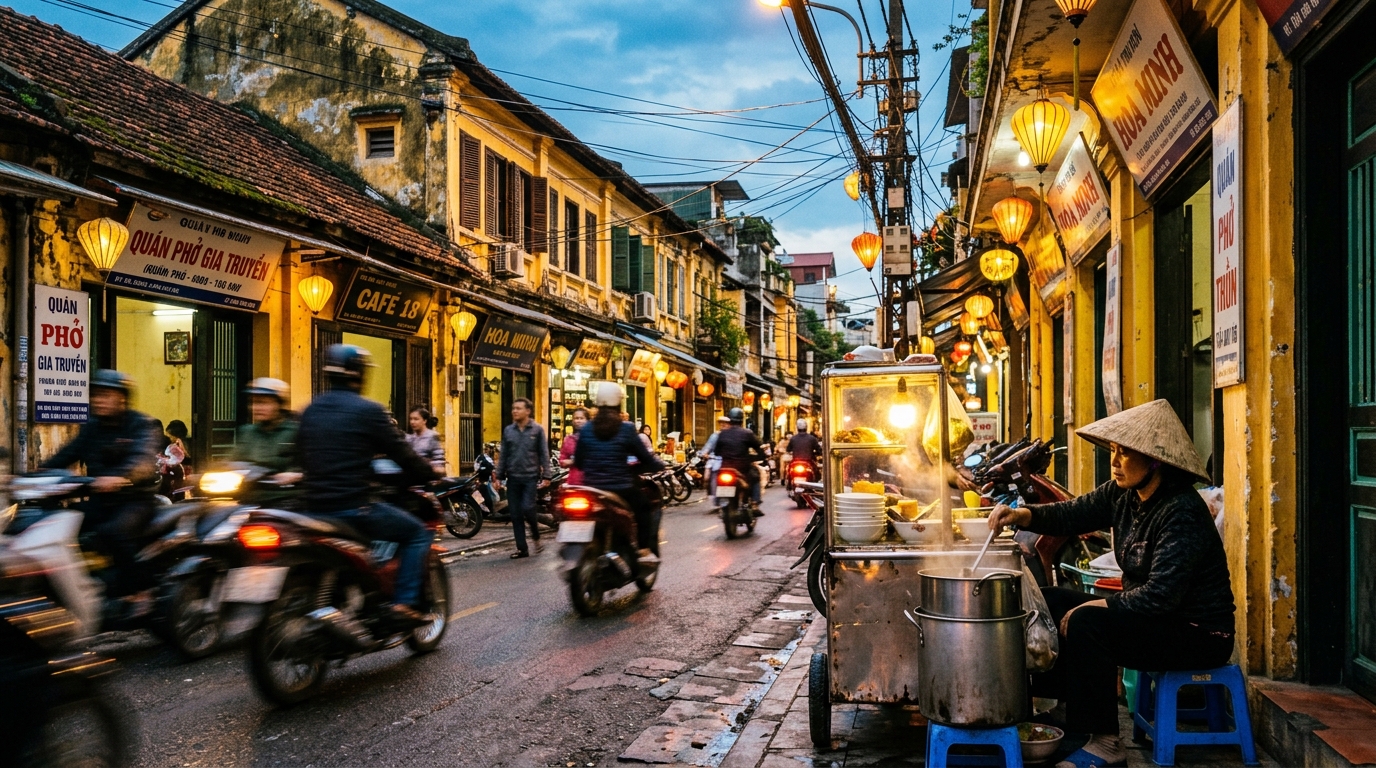

Embarking on a true hanoi culture trip requires tossing out the standard Southeast Asian backpacking playbook and slowing down to match the rhythm of a city that has survived for over a millennium. Vietnam’s capital operates on a frequency dictated by centuries of Confucian tradition, intellectual pursuit, and relentless artistic expression. It is an active, breathing museum where 1,000-year-old Buddhist sanctuaries share city blocks with French colonial architecture, propaganda art galleries, and narrow, motorcycle-clogged arteries. When I first visited Hanoi, I made the amateur error of treating it like a quick 48-hour layover before heading to the coastal bays. I realized almost immediately that understanding this environment takes deliberate time, an appetite for historical nuance, and a willingness to get hopelessly lost in its labyrinthine alleyways.
Quick Summary
Optimal Duration: Dedicate exactly three to four full days to balance ancient historical sites, local neighborhood exploration, and a rural craft village day trip.
Best Time to Go: Aim for Autumn (September–November) to avoid the brutal summer typhoons and extreme humidity that plague the region from May to August.
Core Cultural Pillars: Anchor your trip around four elements: artisanal crafts, traditional acoustic arts, hyper-regional northern cuisine, and spiritual philosophy.
Street Navigation: Never run across the road. Walk slowly and predictably, and the endless stream of motorcycles will naturally flow around you.
After-Dark Exploration: Hanoi entirely shifts its personality at night, from traditional Ca Tru performances to the chaotic 2:00 AM Quang Ba wholesale flower market.
The Direct Answer: How to Structure Your Trip
If you are wondering exactly how to tackle this city, here is the direct answer: you need a minimum of three full days, categorized by distinct themes. Do not attempt to compress this into a weekend window. Rushing through Hanoi completely defeats the purpose of being there; the city rewards slow, observant travel rather than rapid-fire sightseeing.
Dedicate Day 1 to the foundational classics—the Temple of Literature, the Imperial Citadel, and navigating the 36 historic streets of the Old Quarter. Dedicate Day 2 to colonial history and local life, exploring the French Quarter, contemporary art spaces, and the Ho Chi Minh complex. Finally, dedicate Day 3 to a specific cultural excursion outside the urban center, such as the 700-year-old pottery village of Bat Trang or the towering limestone karsts of Ninh Binh. Base yourself in the Old Quarter if you want to step right into the action, but manage your expectations regarding noise levels—the city wakes up loudly at 6:00 AM.
Understanding Hanoi’s Living History
Unlike the hyper-modern, commerce-driven environment of Ho Chi Minh City in the south, Hanoi is fiercely protective of its heritage. The city officially claims 6,000 relic sites and 1,793 intangible cultural heritages. To understand what you are looking at, you need a brief grasp of its historical timeline.
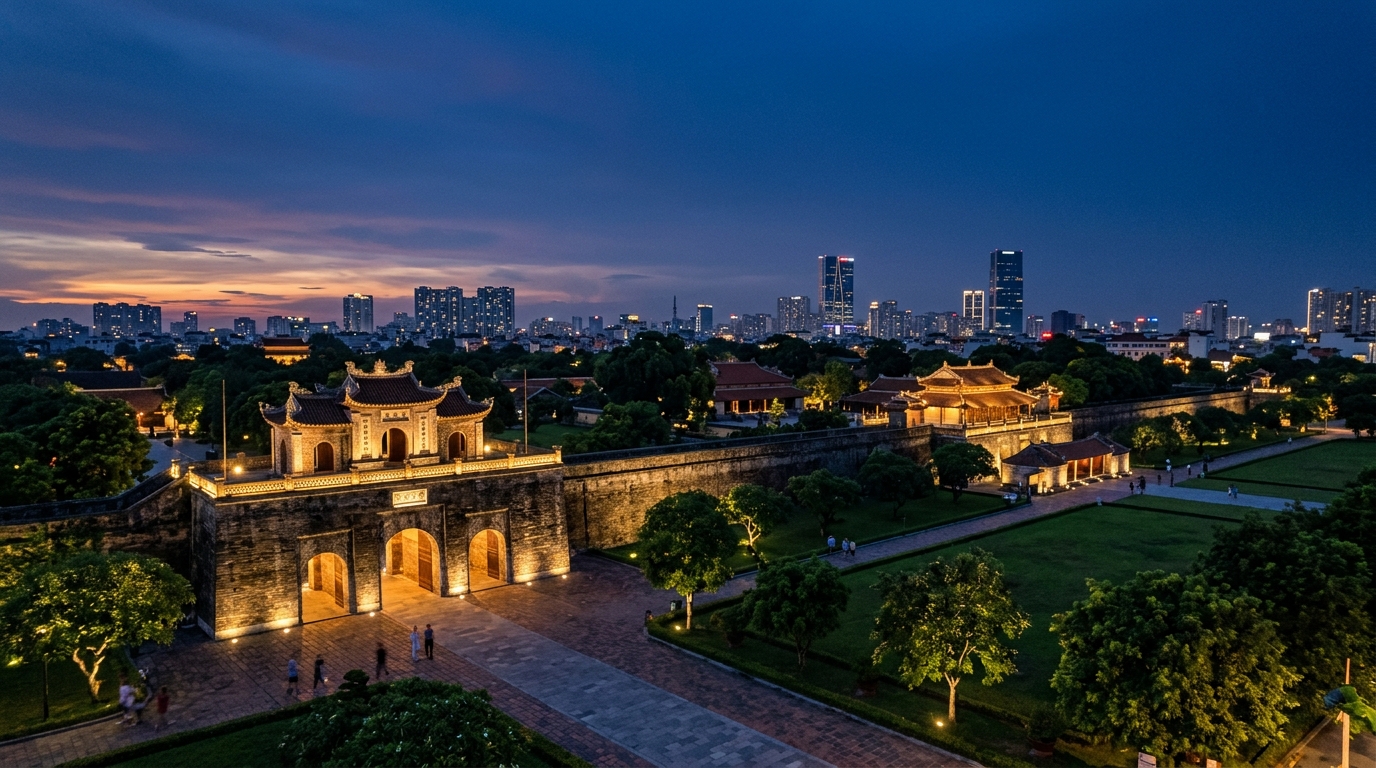
In 1010 CE, Emperor Ly Thai To established the capital here, naming it Thang Long (“Rising Dragon”). For over a thousand years, it served as the political and military heart of various Vietnamese dynasties. The architecture you see today was heavily influenced by a 70-year French colonial period beginning in 1883, which introduced wide boulevards, neo-Gothic cathedrals, and culinary staples like coffee and baguettes.
You will notice the architecture in the historical center consists of deeply narrow “tube houses.” This peculiar design was born out of a desire to avoid heavy French colonial street-frontage taxes—residents built their homes incredibly narrow at the front but stretching dozens of meters back. Then came the mid-20th century conflicts, leaving behind wartime relics that now sit quietly alongside ancient pagodas.
Neighborhood Breakdown: Where to Base Yourself
Choosing where to sleep dramatically alters your experience. The city is broadly divided into a few distinct zones, each catering to a different travel style.
The Old Quarter (Hoan Kiem)
This is the energetic, traditional core of the city. Comprising the original 36 craft streets, it is highly walkable to major icons.
Pros: You are mere steps away from the best street food, night markets, and Hoan Kiem Lake.
Cons: It is incredibly loud. Traffic is constant, and sidewalks are mostly occupied by plastic stools and parked scooters.
Average Cost: Hostels ($5–$10 USD), Mid-range ($30–$60 USD).
The French Quarter
Located just south of Hoan Kiem Lake, this area is defined by elegant, yellow-painted colonial buildings and wide, tree-lined sidewalks.
Pros: Much calmer evenings, luxury heritage hotels, and actual walkable pavements. Great for couples or architecture enthusiasts.
Cons: Fewer cheap street food options; you will pay a premium for the quiet atmosphere.
Average Cost: Boutique to Luxury ($100–$300+ USD).
West Lake (Tay Ho)
This massive freshwater lake houses affluent residential areas, artists, and the city’s expat community.
Pros: Relaxed pace, lake breezes, artisan bakeries, and international cafes.
Cons: It requires a 15 to 20-minute ride-hailing trip to reach the historical center, which becomes tedious if you are only visiting for a few days.
Average Cost: Mid-range apartments to upscale hotels ($50–$100 USD).
The Essential 3-Day Cultural Itinerary
To prevent geographical burnout, grouping your activities by neighborhood and theme is highly recommended. I learned the hard way that crossing town during the 5:00 PM rush hour can take an hour for a journey of just three miles.
Day 1: The Ancient Heart
Start your morning early (around 7:30 AM) at the Temple of Literature to beat the massive tour bus crowds. Built in 1070, this complex operated as Vietnam’s very first national university for nearly 800 years. Dedicated to Confucius, it features five distinct courtyards shaded by ancient banyan trees. You will see 82 surviving stone tortoises bearing large steles that record the names of successful doctoral candidates dating back to 1484.
By late morning, walk to the Imperial Citadel of Thang Long. Designated a UNESCO World Heritage site in 2010, it represents 13 centuries of layered history. Walking through it is a surreal experience in architectural juxtaposition—you enter through the massive Doan Mon Gate reserved for kings, but nearby sits the D67 House and Tunnel, an underground command center used during the mid-20th century conflicts.
Head into the Old Quarter for lunch. Find a local vendor serving Bun Cha, then spend the afternoon intentionally getting lost in the 36 streets. Grab an egg coffee at Cafe Giang. As evening falls, secure tickets to the Thang Long Water Puppet Theatre. This art form was invented 1,000 years ago by rice farmers in the Red River Delta and remains a vital piece of acoustic storytelling.
Day 2: Colonial Echoes and Modern Daily Life
Start at the Ba Dinh District to view the Ho Chi Minh Mausoleum. Keep in mind that dress codes here are strictly enforced, and photography inside is forbidden.
Move on to the French Quarter. Walk past the Hanoi Opera House, constructed in 1911 and modeled after Paris’s Palais Garnier. In the afternoon, visit the highly underrated Vietnam Museum of Ethnology. It documents the culture, history, and lifestyle of Vietnam’s 54 official ethnic groups, featuring full-scale outdoor replicas of traditional village homes.
In the late afternoon, seek out the city’s famous Train Street. Due to recent 2025 safety regulations, you can no longer wander freely on the tracks, but you can sit in designated, licensed cafes to watch the operational railway train pass just inches from your table. (Trains generally pass around 3:15 PM and 7:50 PM on weekdays, though schedules fluctuate wildly).
Day 3: Excursions into Craft or Karst Landscapes
For your final day, leave the dense urban center. You have two excellent choices depending on your energy levels:
Option A: Bat Trang Pottery Village (Half Day). Located just 13 kilometers from the city, this village has produced ceramics since the 14th century. You can walk through family workshops, observe multi-generational artisans painting intricate lacquerware, and try throwing pottery yourself. This is the perfect place to buy genuine cultural souvenirs rather than mass-produced airport trinkets.
Option B: Ninh Binh (Full Day). Often referred to as “Ha Long Bay on land,” this area features the ancient capital of Hoa Lu. You will take a two-hour rowboat tour through the Trang An landscape, floating through massive limestone karst caves while locals paddle the boats using their feet. It is a long day (roughly two hours of driving each way), but the geological history is unmatched.
The Culinary Heritage: Eat Like a Hanoian
Food in Northern Vietnam is an institution. Unlike the sweeter, heavily garnished dishes found in the south, traditional northern food is minimalist, relying on clean broths, bold individual spices (like star anise and cinnamon), and absolute freshness.
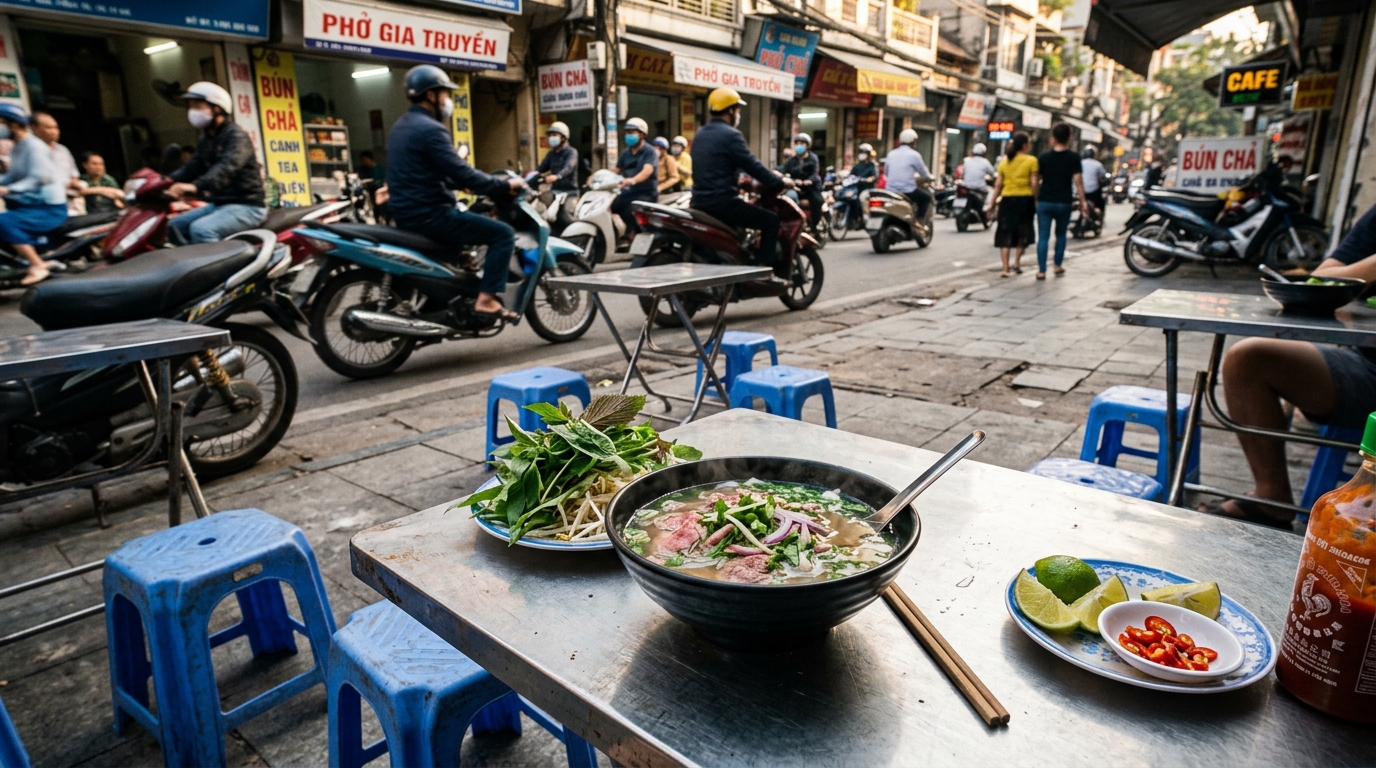
Pho: The world-famous noodle soup originated here in the early 20th century. The northern version focuses heavily on the clarity and depth of the beef bone broth, served with minimal garnish.
Bun Cha: A midday staple of grilled pork patties and pork belly in a warm, tangy broth served with cold rice noodles and herbs. It traditionally operates on a strict timeline—locals generally only eat this between 11:00 AM and 1:00 PM.
Cha Ca La Vong: Turmeric and galangal-marinated fish pan-fried at your table with massive amounts of fresh dill and spring onions. The Doan family has served this single dish at their restaurant since 1871. The smell of the turmeric sizzling in hot oil is intoxicating.
Egg Coffee (Ca Phe Trung): Invented in the 1940s due to severe fresh milk shortages during the First Indochina War. The cafe owner whipped egg yolks with sugar to create a dense, meringue-like foam that sits atop strong robusta coffee. I tried this on my second day, fully expecting it to taste strange, but it drinks exactly like a rich, liquid tiramisu.
The Night Culture: Hanoi After Dark
Hanoi entirely shifts its personality after the sun goes down. If you retreat to your hotel room at 8:00 PM, you are missing half the culture.
If you want modern chaos, head to Ta Hien Street (The Beer Corner). Locals and tourists sit on tiny plastic stools at a busy intersection to drink incredibly cheap, light Bia Hoi (fresh daily draft beer) for about $0.50 a glass. For a quieter evening, walk toward St. Joseph’s Cathedral. The illuminated neo-Gothic church provides a laid-back backdrop where young locals gather on curbs to drink lemon tea and talk.
For deep cultural immersion, look for weekend performances of Ca Tru, an ancient form of ceremonial sung poetry recognized by UNESCO, performed at Kim Ngan Temple. Alternatively, listen for Xam, the raw, emotional folk music historically sung by blind buskers for survival, often performed outside Dong Xuan Market on weekends.
For a truly surreal experience, set your alarm and take a taxi to the Quang Ba Flower Market exactly at 2:00 AM. This is when the wholesale vendors arrive from the countryside. The market is absolute chaos, smelling strongly of fresh lilies, exhaust fumes, and damp earth. It is an undocumented side of the city that most travelers never witness.
Cost and Value Breakdown
A trip here provides remarkable value for your money. Here is a realistic breakdown of what you can expect to spend (prices in USD equivalents for simplicity):
| Experience / Item | Estimated Cost (USD) | Value Rating |
|---|---|---|
| Temple of Literature Entry | $1.50 | Exceptional. Well-maintained and highly educational. |
| Bowl of authentic Street Pho | $2.00 – $3.00 | Exceptional. Better than expensive hotel variations. |
| Draft Beer (Bia Hoi) on Ta Hien | $0.50 | High. A quintessential local experience. |
| Thang Long Water Puppet Ticket | $5.00 – $8.00 | High. A unique, 45-minute traditional art show. |
| Egg Coffee at a historic cafe | $1.50 – $2.50 | High. A culinary staple you cannot miss. |
| Guided 3-hour Street Food Tour | $25.00 – $40.00 | Moderate to High. Great for nervous first-timers. |
| Day Trip to Ninh Binh (Group) | $45.00 – $60.00 | High. Covers transport, boat fees, and lunch. |
Who Should Take a Hanoi Culture Trip (And Who Should Not)
Understanding if this specific travel style fits your personality is crucial before booking flights.
This is ideal for:
History enthusiasts who enjoy digging into multi-layered timelines, from 11th-century dynasties to Cold War-era military history.
Adventurous eaters who are perfectly comfortable sitting on tiny plastic stools on a sidewalk while motorcycles pass just inches from their elbows.
Photographers looking for deep architectural contrast, gritty street life, and authentic daily routines.
You might want to skip this if:
You suffer from severe respiratory issues. The air quality index frequently dips into unhealthy territories, and the exhaust fumes in the Old Quarter can be aggressive.
You are looking for a pristine, heavily manicured resort vacation. The city is gritty, loud, and constantly moving.
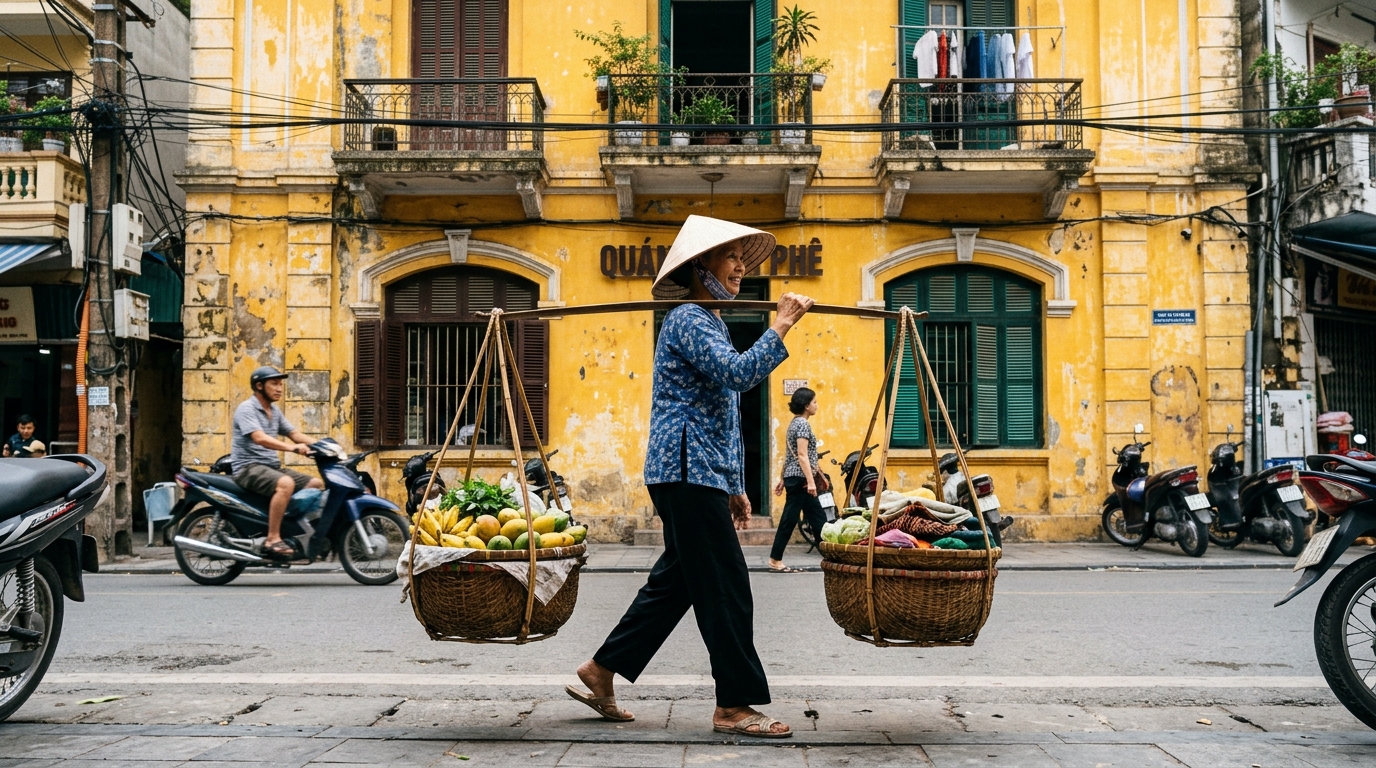
You struggle with mobility. Sidewalks are almost entirely occupied by parked scooters, low tables, and food vendors, forcing pedestrians to walk directly in the active roadways.
Common Mistakes to Avoid
Navigating this environment requires avoiding a few classic traveler traps.
Mistake 1: Traveling during the brutal summer months.
I made the massive error of visiting in July during my first trip to Northern Vietnam. The temperature sat around 98°F (37°C) with 95% humidity. I soaked through my clothes within ten minutes of leaving the hotel, and afternoon typhoons constantly forced us indoors. From May to August, the weather actively fights against you. Stick to the shoulder seasons of Autumn (September to November) or Spring (March to April) when the air is crisp, the golden leaves fall, and walking is actually pleasant.
Mistake 2: Disrespecting local temple etiquette.
These pagodas are not just tourist photo backdrops; they are active spiritual centers. Many travelers show up in tank tops and short shorts, which is deeply offensive to locals. Always carry a lightweight scarf to cover your shoulders, and ensure your knees are covered. Furthermore, when inside, always walk clockwise around sacred altars, and never point directly at statues or monks with your index finger—use your entire open hand to gesture instead.
Mistake 3: Booking the cheapest possible transit to the bays.
During my second trip, I booked a cheaper day-cruise transfer to Ha Long Bay thinking I’d save $20. Turns out, spending four hours each way crammed in a stuffy transit van with broken air conditioning entirely ruined the day. When booking excursions to Ninh Binh or coastal areas, spend the extra $15-$20 for a “Limousine Van” (a comfortable 9-seater with AC and wide seats). The comfort upgrade is mathematically worth every penny.
Frequently Asked Questions
How many days do I actually need in Hanoi?
You need a minimum of three full days to do the city justice. This allows you to spend one day on historical sites (the Citadel, Temple of Literature), one day exploring local culture and food in the Old Quarter, and one day for a regional excursion like Bat Trang pottery village or Ninh Binh.
Is it safe to eat the street food?
Generally, yes, and it is highly recommended. The rule of thumb is to look for stalls that have high turnover and are crowded with locals. If a vendor is constantly cooking and serving, the food is fresh. Start with cooked items like steaming bowls of Pho or grilled meats before experimenting with raw salads or herbs if you have a sensitive stomach.
How do I get from the airport to the city center?
Noi Bai International Airport is about 45 minutes to an hour outside the central Old Quarter. The easiest and safest method is to book a private transfer through your hotel or use the Grab app (the Southeast Asian equivalent of Uber). Avoid unmetered taxis waiting outside the arrivals terminal, as aggressive overcharging of tired tourists is unfortunately common.
Hanoi or Ho Chi Minh City: Which is better?
It depends entirely on your travel style. Hanoi retains stronger Chinese and Confucian influences; it is more traditional, features distinct seasons, and houses the nation’s ancient history. Ho Chi Minh City is larger, far more modernized, boasts intense nightlife, and feels much more westernized and commercially driven.
Final Thoughts on Your Journey
Organizing a successful Hanoi culture trip requires stripping away your expectations of how a capital city “should” operate. It demands patience as you navigate its chaotic avenues and an open mind when digesting its complex, thousands-of-years-old history. By allocating at least three days, respecting local customs, diving headfirst into the hyper-regional street food, and looking past the obvious tourist traps, you will discover a deeply intellectual, artistically rich environment that remains fiercely proud of its heritage. Take the leap, book the trip for the crisp autumn shoulder season, and prepare to walk until your feet ache. The city will reward you with an experience that cannot be replicated anywhere else in Asia.