
If you are searching for a comprehensive isaan travel guide that skips the sugar-coated tourist traps, you are exactly where you need to be. Thailand is massive, yet the vast majority of international visitors wedge themselves into a narrow, predictable corridor: Bangkok, the northern hub of Chiang Mai, and the southern islands of Phuket and Krabi. They complain about the aggressive commercialization, the inflated resort prices, and the lack of authenticity. Meanwhile, an entire third of the country sits virtually untouched by mass tourism, hiding ancient ruins, prehistoric cliff paintings, and arguably the best regional cuisine in Southeast Asia.
That region is Isaan. Located in the northeast on the Khorat Plateau, bordered by Laos and Cambodia, Isaan is the agricultural heartland of Thailand. It is a place where locals vastly outnumber backpackers, where sticky rice is a daily religion, and where millennium-old Khmer temples stand without the elbow-to-elbow congestion of nearby Angkor Wat.
When I first drove into Nong Khai, a tranquil province sitting right on the edge of the Mekong River, I counted exactly six other foreign travelers over a two-week period. That level of isolation is unheard of in modern Thailand. If you want a genuine, unpolished, and intensely flavorful adventure, it is time to look northeast.
Quick Summary
Transport is essential: You cannot rely on public buses to reach the best sites. Renting a car or motorbike is mandatory to explore the archaeological parks and rural villages properly.
The heat is intense: The best time to visit is the cool season (November to February). March through May brings dangerously hot temperatures and chronic drought.
Zero tourist crowds: You will have 11th-century Khmer temples, 3,000-year-old cliff paintings, and massive national parks almost entirely to yourself.
Prepare for serious spice: Isaan cuisine heavily influences menus across Thailand, but here at the source, it is notorious for its aggressive heat.
Radical affordability: Because it caters almost exclusively to locals, Isaan is drastically cheaper than Bangkok or the southern islands for food, lodging, and attractions.
Why Visit Isaan? The Direct Answer
You should travel to Isaan if you are actively seeking cultural authenticity and are willing to trade the convenience of English menus and beachside resorts for it. The region offers dramatic prehistoric landscapes, incredibly cheap Michelin-rated street food, and a cross-border cultural synergy you cannot find elsewhere in the country.
You will spend your days exploring ancient volcanic temples in Buriram, taking cold morning boat rides through a sea of pink lotuses in Udon Thani, and eating sticky rice with your hands alongside incredibly welcoming locals. It requires serious effort to navigate—you will get lost, you will struggle with the language barrier, and you will likely eat a chili that makes your ears ring. But the reward is experiencing the Thailand that existed twenty years ago, long before the era of Instagram check-ins and massive tour groups.
The Reality of Isaan: What Makes It Different
Before packing your bags, you need to understand exactly what Isaan is, both culturally and economically. Isaan is statistically the poorest region in Thailand, but Western travelers often hold severe misconceptions about what that means.
When I first visited, I expected grinding hardship. Instead, I found a fiercely proud, resilient society. There is virtually no homelessness. Even the poorest farming families own their land and homes, which are equipped with plumbing, electricity, and satellite television. The poverty here simply means cash flow is low compared to the thriving tech and tourism sectors of Bangkok.
Culturally, Isaan is a fascinating anomaly. Unlike the central and northern Thais who trace their lineage to the Tai people (migrants from southern China), Isaan’s inhabitants predominantly trace their roots to the ancient Khmer Empire. This explains why the southern plains of Isaan are dotted with grand Khmer ruins that share a direct architectural lineage with Cambodia. The region is also deeply influenced by neighboring Laos, separated only by the muddy waters of the Mekong River.
Life here is dictated by the “Rice Cycle.” Agriculture relies heavily on rainfall rather than advanced irrigation, leaving the region vulnerable to extreme climate shifts—ranging from prolonged droughts to violent floods. In the winter months, farmers utilize traditional slash-and-burn agriculture to clear fields. This leads to a genuine downside for travelers: between January and March, the air quality can plummet significantly due to agricultural smoke.
Getting Around: Transportation Logistics
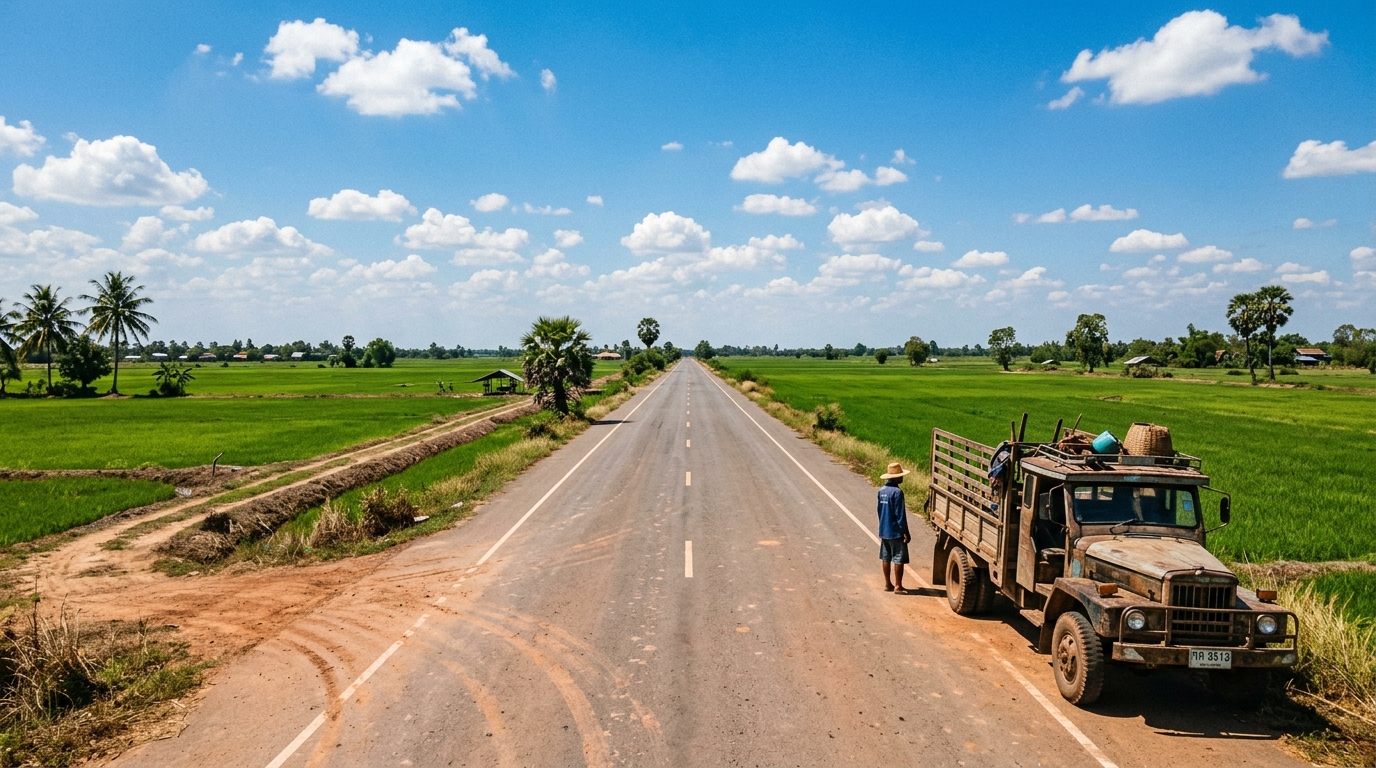
Let me be brutally honest: traveling through Isaan without your own wheels is an exercise in utter frustration. I learned the hard way that relying on local buses means you will only see bus stations and city centers, completely missing the ruins, silk villages, and national parks that make the region special.
While you can easily take a cheap domestic flight from Bangkok into major hubs like Udon Thani Airport (UTH) or Khon Kaen Airport (KKC), getting out of the cities is where the challenge begins. Public transportation between secondary towns is sparse, slow, and does not service the rural nature spots.
Organized day tours, a staple of Chiang Mai or Phuket, are virtually non-existent here. You have three realistic options:
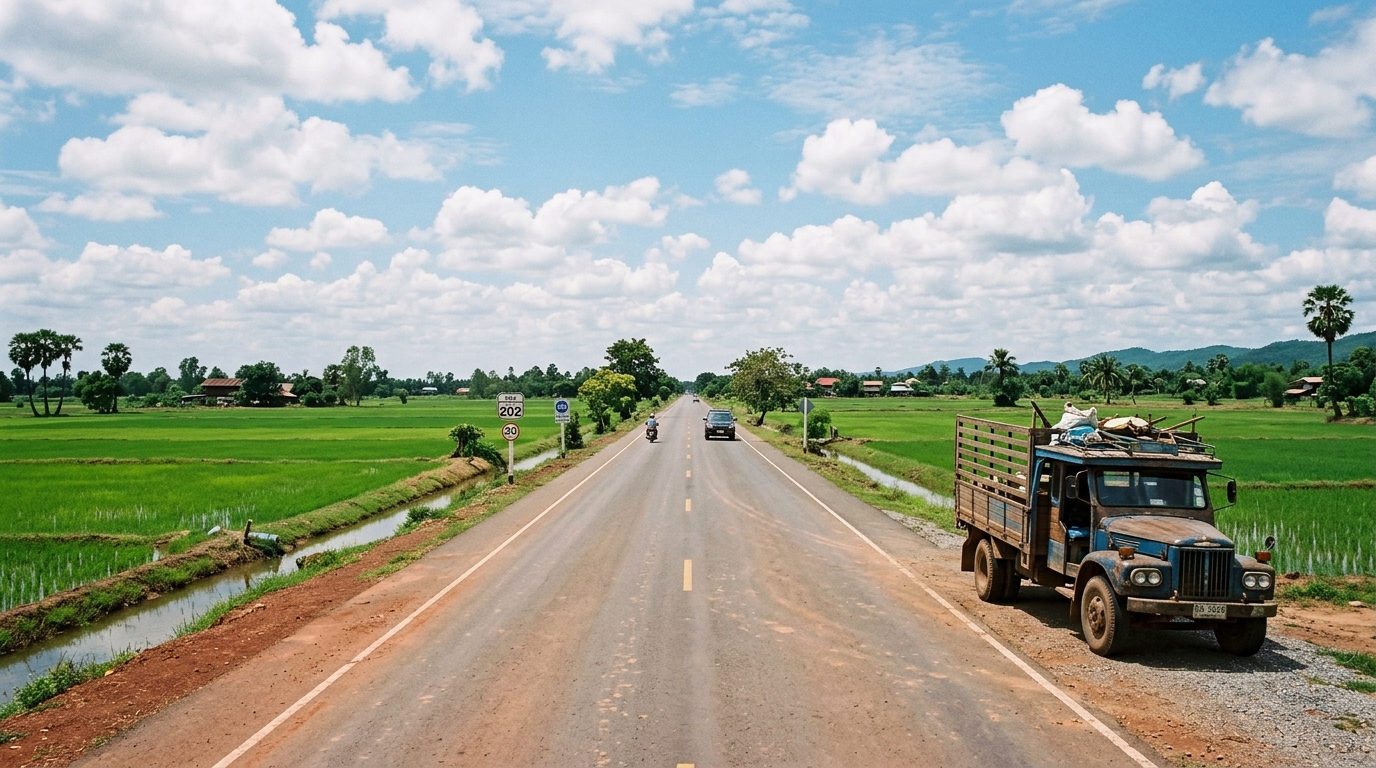
- Rent a Car (Highly Recommended): I rented a compact sedan through Discover Cars right at the Udon Thani airport. Driving in the northeast is surprisingly straightforward. The highways are well-paved, flat, and mostly empty during the day. Expect to pay about 1,000 to 1,200 THB ($30-$35 USD) per day. Caveat: Avoid driving at night if possible. The mountain roads become pitch-black, and I once drove through an insect swarm so thick it completely coated my rental car’s windshield, requiring me to pull over blindly to clean it.
- Rent a Motorbike: Ideal for solo travelers on a strict budget. You can rent a scooter for about 300 to 500 THB per day. However, the distances between provinces are massive, making this a grueling option for cross-region road trips.
- Hire a Private Driver: If you cannot drive, you will be forced to hire local drivers (songthaews or private cars) for day trips. Because drivers charge set flat rates for long distances, I highly recommend using Facebook groups like “Isaan Farang” to find fellow travelers to split the cost.
Strategic Itineraries & Timelines
Isaan comprises roughly one-third of Thailand’s landmass. Attempting to see it all in a single week is impossible. You need to pick a specific route based on your available time.
The “Edges of Isaan” Loop (10-14 Days)
This is the most efficient route for first-timers. You start in Bangkok, drive up to Korat, head east to Surin and Ubon Ratchathani, then drive north along the Mekong River through Mukdahan and Nakhon Phanom, finally cutting west across to Udon Thani and down to Khon Kaen before returning to the capital. This explores the outer perimeter of the region and offers maximum exposure to the Mekong River lifestyle.
The Deep Dive Trek (4 to 6 Weeks)
If you have serious time, this route cuts directly across the middle of Isaan, exploring remote national parks like Phu Phan and deeply obscure farming villages in Sisaket, Yasothon, and Roi Et. This pace allows you to spend three or four days in tiny towns where you are guaranteed to be the only foreigner in a fifty-mile radius.
Where to Go: Top Provinces & Sites to Explore
Here are the most rewarding provinces and the specific landmarks you should target.
Udon Thani & Nong Khai: History and lotuses
Udon Thani serves as the perfect basecamp because it perfectly blends modern infrastructure with deep history. Drive out to the Baan Chiang Archaeological Site, a UNESCO World Heritage area featuring pottery and silk artifacts dating back 3,000 years.
But the true highlight of the province is Talay Bua Daeng (The Red Lotus Sea). During the cool season from December to February, this massive lake erupts with thousands of bright pink lotus flowers. I made the rookie mistake of arriving at the lake at 10:30 AM. By then, the intense sun had caused most of the lotuses to close up. You need to arrive at 6:00 AM, hire a local boat for about 500 THB ($15), and float through the morning mist while the flowers are fully open.
Just north is Nong Khai, sitting directly on the Mekong River gazing into Laos. You must visit Sala Kaew Ku, a deeply surreal sculpture park built in 1978 by mystic Bunleua Sulilat. The park is filled with massive, imposing concrete statues of multi-headed nagas and Hindu-Buddhist deities towering over the tree line.
Ubon Ratchathani: Prehistoric Cliffs and Glowing Temples
Located in the far lower corner of Isaan, Ubon Ratchathani requires a long drive but pays off with unmatched natural beauty. I recommend staying outside the city near the Sirindhorn Dam (Kaysorn Siri Resort is an excellent, quiet local basecamp).
From there, drive to Pha Taem National Park. Geographically, this cliffside park is the very first place in Thailand to see the sunrise. As you hike along the sandstone cliffs overlooking the Mekong River, you will find incredibly preserved prehistoric rock paintings dating back 3,000 years. The hike is hot and exposed, so bring double the water you think you need.
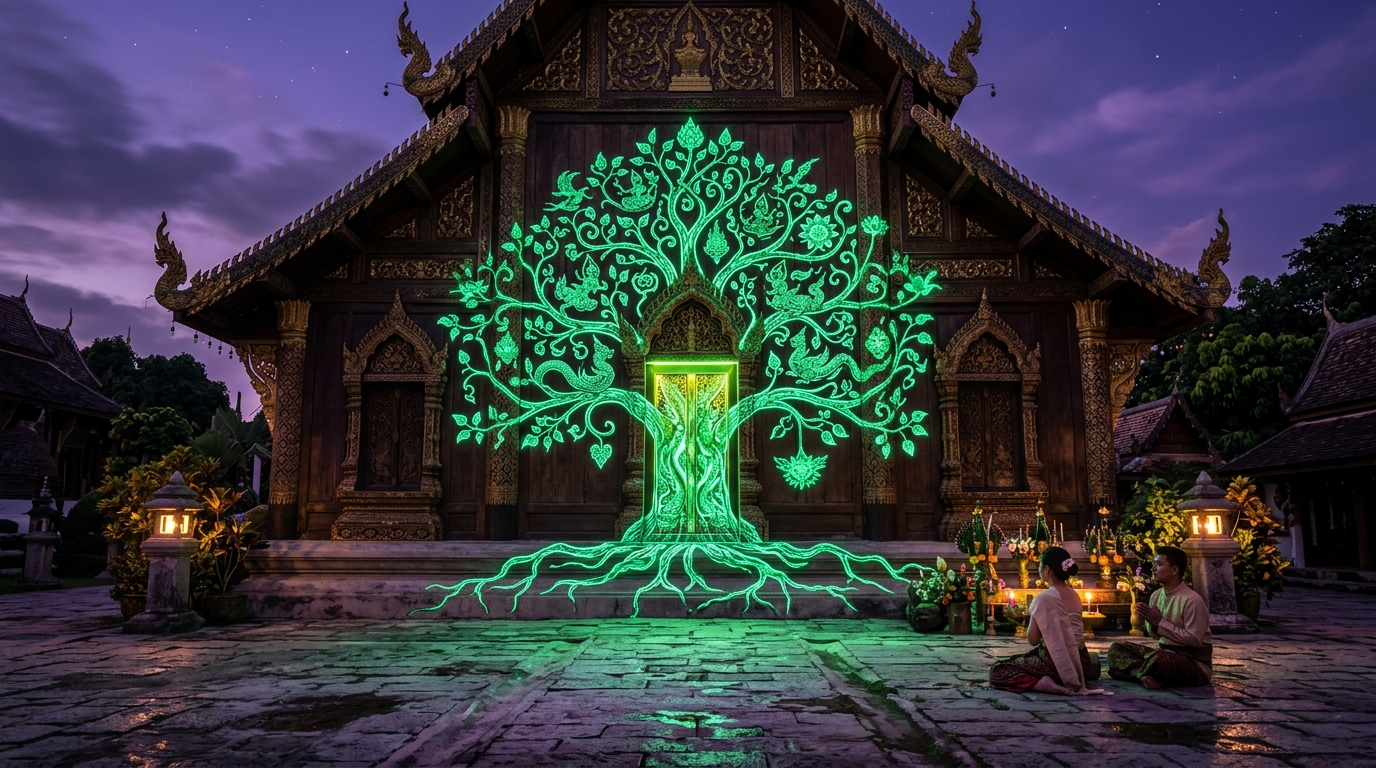
In the late afternoon, drive over to Wat Phu Prao (The Glowing Temple). Perched on a hill near the Laos border, this Lanna-style temple features a massive ‘Tree of Life’ mural carved into its rear wall. It is painted with phosphorescent paint, meaning as the sun sets and darkness falls, the tree literally glows in the dark.
Buriram: The Extinct Volcano Temples
Buriram sits on the southern edge of Isaan, bordering Cambodia. It is famous for Phanom Rung Historical Park, an incredibly grand Khmer temple complex built directly on top of an extinct volcano.
If you can align your trip with March or September, you are in for a serious treat. The temple was built with such precise astronomical calculation that during the equinox, the rising or setting sun aligns perfectly to shine its light straight through all 15 doorways of the complex simultaneously. I walked the grounds of Phimai and Phanom Rung alongside local school groups and absolutely zero foreign tour buses.
Loei: The Cultural Frontier
Loei is the most mountainous and quintessentially “Isaan” province. The sleepy town of Chiang Khan sits right on the Mekong River, defined by its traditional wooden homes and slow pace of life. Rent a bicycle and join the locals for morning alms-giving to the monks.
If you visit between June and July, head to the Dan Sai district for the Phi Ta Khon Festival. Often compared to Mexico’s Day of the Dead, this is Thailand’s ‘Ghost Festival.’ Locals wear massive, colorful, hand-carved wooden ghost masks and vibrant costumes, parading through the streets to honor spirits and awaken the rain gods.
Yasothon: The Artisan Villages
Isaan is famous for its bespoke textiles and home goods. In Yasothon, entire rural villages operate as manufacturing hubs for traditional Thai pillows. Garages, sheds, and porches are filled with triangle, square, and folding mattresses. I bypassed the markets in Bangkok and drove directly to a village two hours outside of Roi Et to buy goods directly from a 20-year-old local named Muoi, whose family had run their roadside pillow business for three generations.
The Food and Silk: Local Tastes and Trades
You cannot write a proper Isaan travel guide without heavily focusing on the local cuisine and textiles.
The Aggressive Cuisine
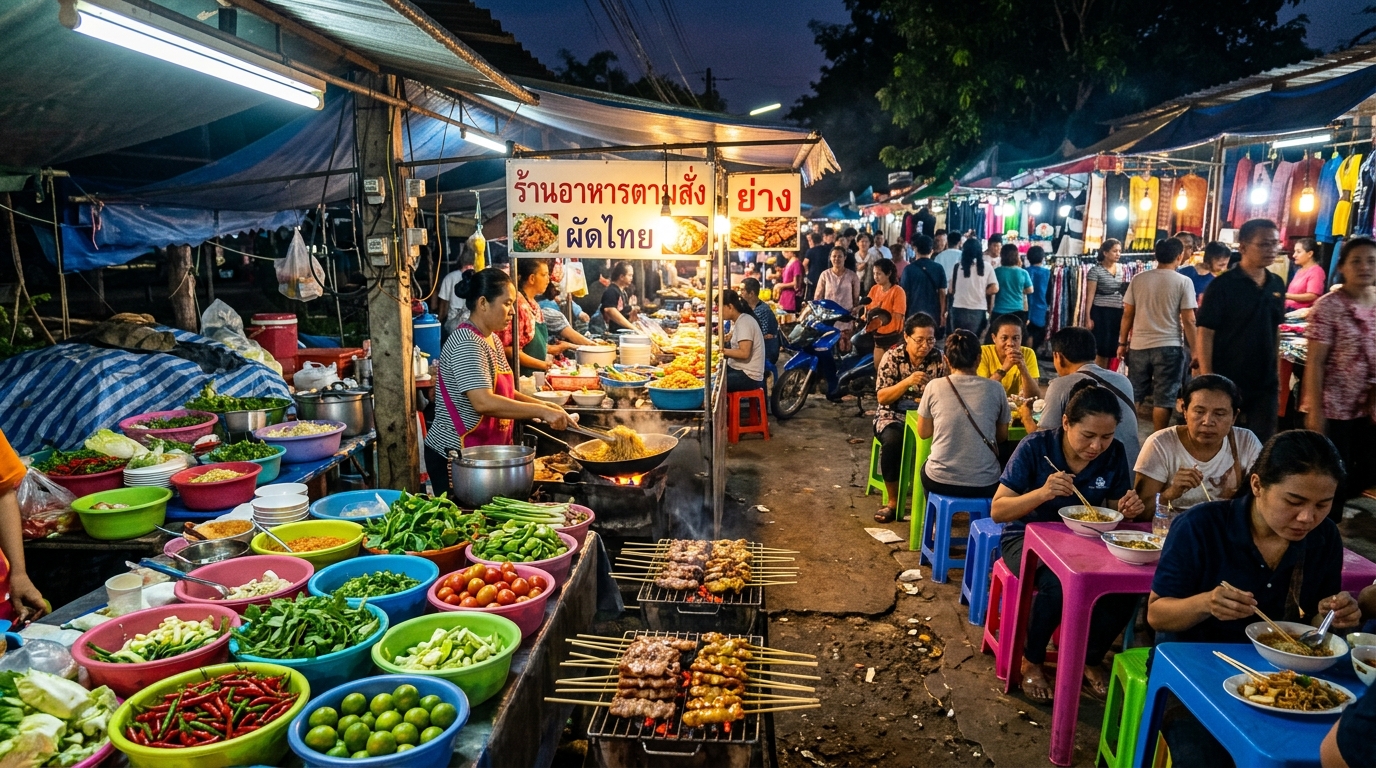
Isaan food is highly aromatic and unapologetically spicy. It completely eschews the sweet, coconut-milk-heavy curries of the south in favor of sharp lime, pungent fish sauce, and crushed dried chilies.
Som Tam (Green Papaya Salad): The undisputed king of Isaan food. Unripe papaya is shredded and pounded in a clay mortar and pestle with lime, palm sugar, fish sauce, peanuts, and fresh chilies. It hits every flavor note on the human tongue simultaneously.
Sticky Rice (Khao Neow): You will rarely see standard jasmine rice here. Sticky rice is served in small bamboo baskets. Do not eat it with a fork. You must pull off a clump with your fingers, roll it into a ball, flatten it slightly, and use it as an edible utensil to pinch your meat and soak up the spicy salad juices.
Laab: An incredibly flavorful meat salad dressed in lime juice, toasted rice powder, mint, and chili, using finely minced pork or chicken.
The cost of food here is staggeringly low. I once had a massive, multi-course dinner for three people at a local street side restaurant—including roast chicken, som tam, drumstick soup, and drinks—and the total bill came to exactly 150 THB (about $4.50 USD).
The Silk Safari
Isaan is the historical birthplace of Thai silk. It is the only region in Thailand where the mulberry tree—the sole food source for silkworms—successfully grows. The region’s forte is Mudmee silk, a highly labor-intensive process where weaving a two-meter bolt of fine fabric can take an artisan a full month. Rather than buying overpriced silk in Bangkok malls, travel to the villages near Khon Kaen to buy directly from the weavers. It puts money directly into the local economy and provides a fascinating look at ancient looms in action.
Who Should Visit Isaan (And Who Should Not)
This is ideal for:
Independent, experienced travelers: If you are comfortable renting a vehicle, navigating with offline maps, and eating at street stalls where English is not spoken, Isaan will reward you immensely.
History and culture buffs: If you prefer ancient ruins, quiet temple ordinations, and rural agricultural landscapes over nightlife and shopping malls.
Extreme budget travelers: Your money goes two to three times further here than in Phuket or Chiang Mai.
You might want to skip this if:
You want a relaxing beach holiday: There are no oceans here. The landscape is entirely composed of flat plains, rivers, and forested hills.
You rely on luxury tourist infrastructure: While there are nice hotels in major cities, rural Isaan lacks the five-star, English-speaking resort bubbles, reliable AC, and organized day-tours.
You cannot handle extreme heat or spicy food: The food is fiery, and navigating the historical parks requires walking in direct sunlight for hours at a time.
Cost Breakdown: Isaan vs. Southern Thailand
To give you an idea of why budget travelers love the northeast, here is a realistic daily cost comparison between an Isaan road trip and a standard stay in a popular southern hub like Phuket. In Isaan, I averaged a daily spend of just 900 THB ($26 USD), which included a private hotel room, motorbike rental, and all meals.
| Expense Category | Isaan (Udon Thani / Yasothon) | Southern Thailand (Phuket / Krabi) |
|---|---|---|
| Boutique Hotel / Guest House (per night) | 400 – 800 THB ($12 – $24) | 2,500 – 5,000+ THB ($75 – $150+) |
| Street Food Meal | 35 – 50 THB ($1.00 – $1.50) | 150 – 300 THB ($4.50 – $9.00) |
| Mid-Range Restaurant Dinner | 100 – 200 THB ($3.00 – $6.00) | 800 – 1,500 THB ($24.00 – $45.00) |
| Car Rental (Daily) | 1,000 – 1,200 THB ($30 – $35) | 1,300 – 2,000 THB ($40 – $60) |
| National Park Entry Fee | 100 – 200 THB ($3 – $6) | 400 – 500 THB ($12 – $15) |
| Local Coffee | 35 THB ($1.00) | 120 – 160 THB ($3.50 – $5.00) |
Common Mistakes to Avoid
1. Underestimating the Hot Season and Drought
Thailand has three distinct seasons: Cool (Nov-Feb), Hot (March-May), and Rainy (June-Oct). Visiting Isaan in April or May is a brutal mistake. The flat agricultural plains trap the heat, and temperatures regularly soar past 105°F (40°C). Furthermore, Isaan suffers from chronic seasonal drought. If you visit in the hot season expecting lush green rice paddies, you will instead find cracked, brown earth and severe air pollution from slash-and-burn farming.
2. Expecting Everyone to Speak English
In Chiang Mai, almost every vendor speaks basic English. In rural Isaan, English proficiency drops to near zero. I spent ten awkward minutes in an Ubon Ratchathani night market trying to figure out what kind of meat was on a skewer using hand gestures, only to realize I was buying grilled chicken hearts. You must download the offline Thai dictionary on the Google Translate app. Learn basic food vocabulary (Moo = Pork, Gai = Chicken), and embrace the awkwardness of pantomiming your way through transactions.
3. Trying to Book Accommodation Months in Advance
Because the region sees so few international tourists, you do not need to fight for hotel rooms. Aside from major festivals like Phi Ta Khon, you can reliably walk into local guesthouses and secure a room for 500 THB on the spot. Over-planning locks you into an itinerary in a region where travel delays are common.
Frequently Asked Questions
Is the Isaan region safe for tourists?
Yes, Isaan is incredibly safe. In fact, due to the lack of mass tourism, you are far less likely to encounter the petty scams, pickpockets, or aggressive touts that plague areas like Pattaya or Phuket. The biggest safety risks in Isaan are related to traffic (driving motorbikes on unlit rural roads at night) and heat exhaustion during the hotter months.
Can I cross into Laos from Isaan?
Easily. Isaan shares a massive border with Laos along the Mekong River. The most popular crossing is the Thai-Lao Friendship Bridge located in Nong Khai, which takes you directly into the Laotian capital of Vientiane. Using Isaan as a geographic bridge is a fantastic way to extend your Southeast Asian trip.
Why is Phu Kradueng National Park closed sometimes?
If you are planning to hike the famous sandstone plateau of Phu Kradueng in Loei province, be aware that the park is strictly closed to all visitors from June through September every year. The Thai forestry department enforces this closure to allow the local ecosystem and wildlife to recover from human foot traffic, as well as for safety during the peak monsoon rains.
Do I need to haggle for goods in Isaan?
Haggling is common for textiles, crafts, and market goods, but remember that prices in Isaan are already exceptionally low. A “farang” (foreigner) will likely be quoted a slightly higher price. If you are buying bulk items like silk or traditional pillows, it is highly recommended to have a trusted Thai local negotiate the price for you.
Time to Start Driving
Exploring Thailand off the beaten path does not have to be an intimidating prospect. Yes, the language barrier is steeper, the chilies are significantly hotter, and the logistics require self-reliance. But by renting a car and venturing into the northeast, you unlock a version of the country that feels entirely authentic and unspoiled.
From standing totally alone inside ancient Khmer temples at Phanom Rung to cruising the Mekong River and eating fresh, fiery papaya salad from a riverside market, Isaan offers the deepest cultural immersion available in Southeast Asia. Book a flight into Udon Thani, secure your rental vehicle, download your offline maps, and discover the agricultural heartland that the rest of the world has completely overlooked.