
The first time I stared at a map of Southeast Asia trying to figure out the best places to visit in vietnam, my brain completely short-circuited. The country stretches over 1,000 miles from the mountainous Chinese border down to the tangled waterways of the Gulf of Thailand. I made a massive rookie mistake on my first journey, assuming I could ride the sleeper trains from top to bottom in a mere ten days. The reality is that this long, skinny nation demands strategic, ruthless planning.
You have to choose your stops carefully based on complex regional weather patterns, your tolerance for grueling transit days, and your appetite for aggressive, chili-laden culinary exploration. Vietnam is culturally and geographically divided into three distinct regions: the rugged North, the heritage-rich Central coast, and the tropical, relentless South. To understand the country, you need to sample a piece of all three.
Quick Summary
Geographic timing dictates everything: The mountainous North (Sapa) requires vastly different weather planning than the Southern islands (Phu Quoc). You cannot pack a single wardrobe for the whole country.
Food changes by latitude: Northern broths are delicate and clean; Central food is fiercely spicy; Southern dishes lean heavily into sugar and coconut milk.
Avoid the main bay: Swap the overcrowded tourist boats of Ha Long Bay for the identical but significantly quieter Lan Ha Bay.
Domestic flights save sanity: Do not rely entirely on trains or buses. Utilizing budget airlines like Vietjet between Hanoi, Da Nang, and Ho Chi Minh City will save you days of travel time.
The middle is the sweet spot: If forced to choose, the Central region (Hoi An, Da Nang, Hue) offers the most efficient balance of deep history, beach relaxation, and phenomenal regional food.
The Direct Answer: Where Should You Go?
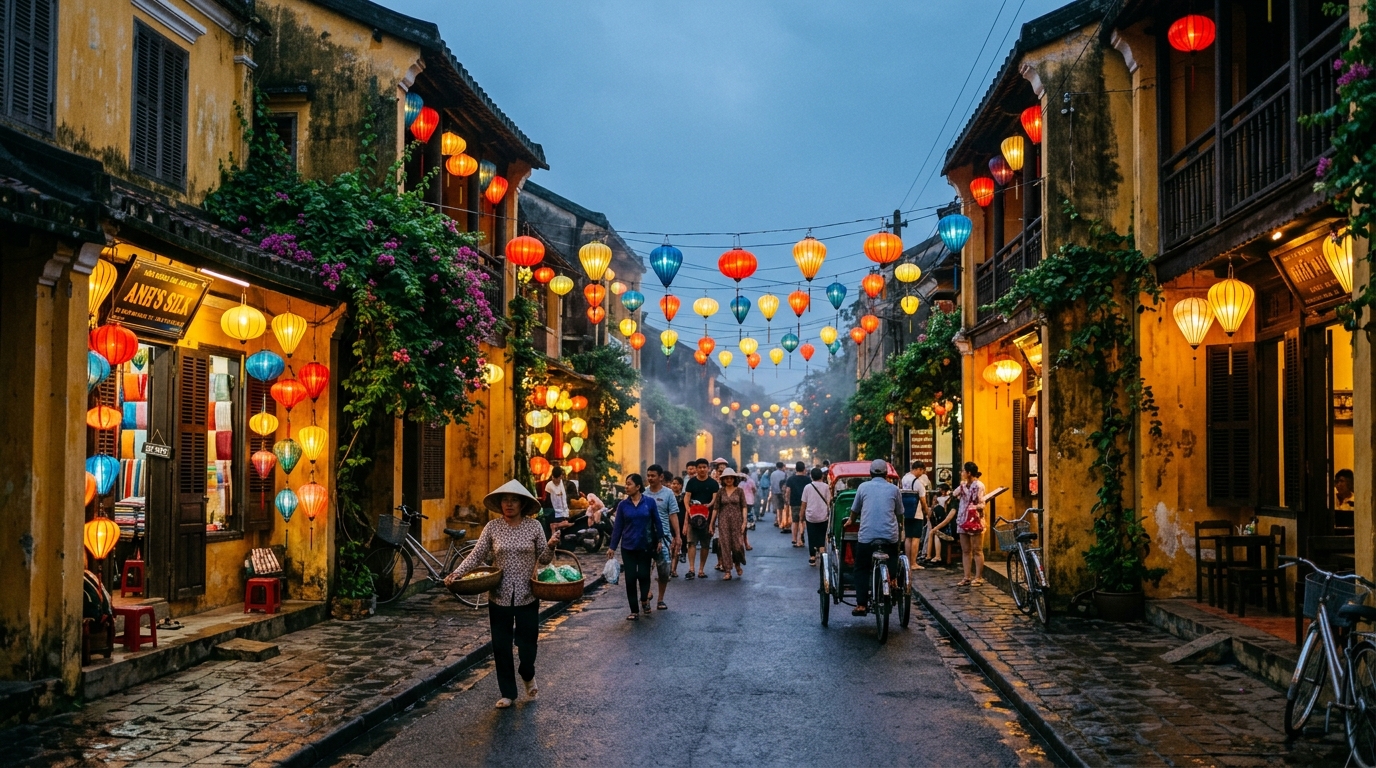
If you have fewer than 10 days, do not attempt to travel the entire length of the country. You will spend 40% of your waking hours inside airport terminals and bus stations. Stick to the North and Central regions. The absolute essential route for a first-timer on a tight schedule is Hanoi (for street food and chaotic energy), Ninh Binh (for dramatic limestone river landscapes), and a quick flight to Hoi An (for lantern-lit heritage streets and rapid custom tailoring).
If you have a full three to four weeks, you can comfortably add the extreme mountain terrain of the Ha Giang Loop in the far north, the subterranean caves of Phong Nha, and the frenetic heat of Ho Chi Minh City and the Mekong Delta in the south.
Northern Vietnam: Dramatic Peaks and Delicate Broths
The North is the historical and political heart of Vietnam. It features the most severe weather fluctuations—temperatures can drop below 10°C (50°F) in the winter—but rewards travelers with staggered rice terraces and deeply guarded traditional recipes.
Hanoi: The Chaotic Cultural Core
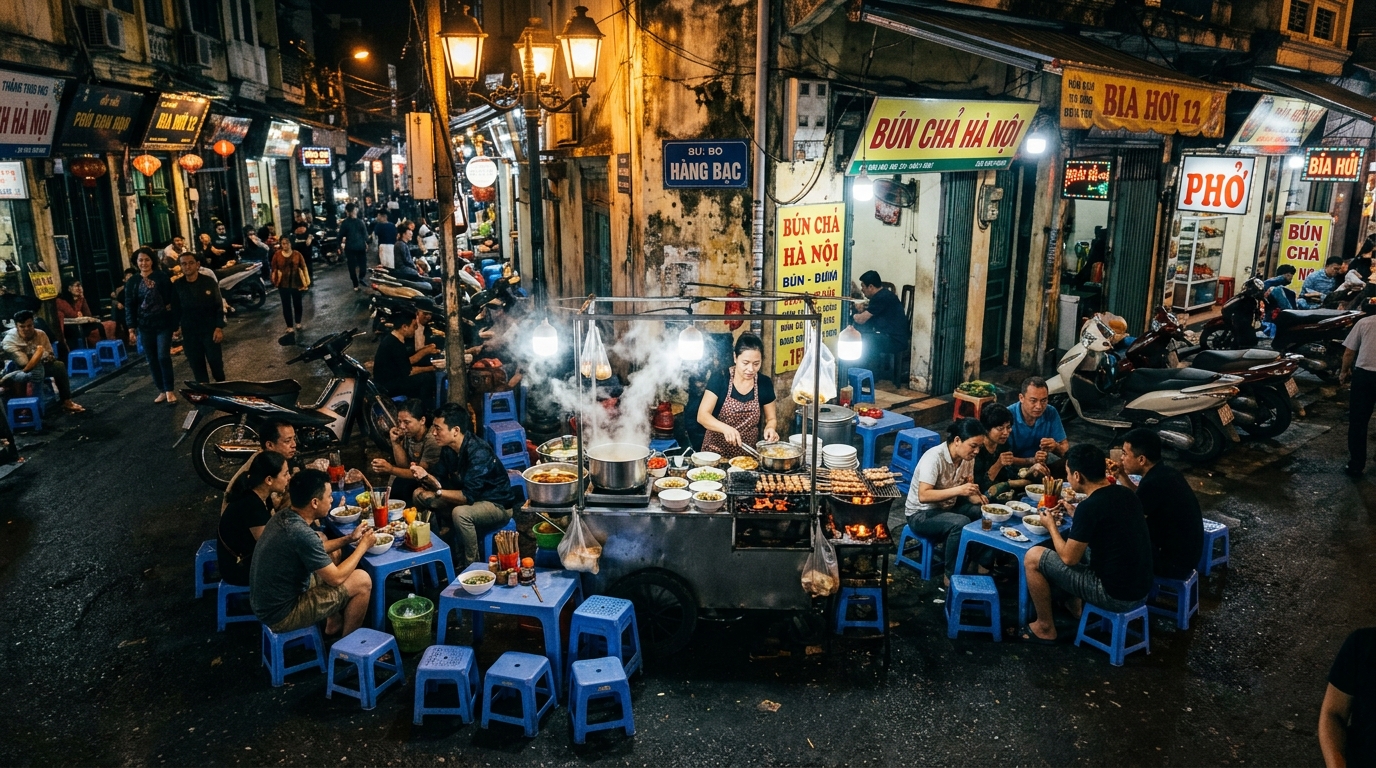
Hanoi’s Old Quarter is a premier culinary destination where meals are consumed morning, noon, and night on curbside plastic stools. The architectural clash here is fascinating; crumbling, mustard-yellow French colonial buildings sit next to brutalist concrete structures and centuries-old pagodas like the Temple of Literature.
The cardinal rule of Hanoi is to ignore hotel dining entirely. Seek out street stalls crowded with locals, specifically those offering a single-dish menu. When I took a local food tour, my guide taught me the “lime pip trick”—always squeeze your fresh lime into a flat-bottomed spoon first rather than directly into your pho broth. This catches the bitter seeds that can ruin the delicate balance of the soup.
You must track down Phở Gia Truyền Bát Đàn for beef noodle soup that literally melts in your mouth (expect to pay around 50,000 VND). Afterward, navigate to the hidden, alleyway cafes to drink traditional egg coffee—a thick, meringue-like concoction made from egg yolks whipped with condensed milk poured over robusta espresso.
Sapa and Ha Giang: The High-Altitude Frontiers
Located 350 kilometers northwest of Hanoi, Sapa is the gateway to the Tonkinese Alps. It is famous for the Muong Hoa Valley, where steep hillsides are intricately carved into cascading rice paddies by the local Hmong and Dao ethnic minority groups. Timing is critical here; visit in September or October when the rice turns a brilliant, shimmering golden hue just before the harvest.
If Sapa feels too developed, head further north to the Ha Giang Province. This region borders China and offers the Dong Van Karst Plateau Geopark. The main draw is the Ha Giang Loop, a thrilling three-to-four-day motorcycle route through stark drop-offs and sweeping panoramas. A word of warning: the weather here is volatile. Heavy fog can completely obscure the valleys, and the mountain passes require actual motorcycle handling skills. If you lack a license, hire a local “Easy Rider” to navigate the treacherous switchbacks while you sit safely on the back.
Halong Bay vs. Lan Ha Bay
Ha Long Bay is a UNESCO World Heritage site known for nearly 2,000 towering limestone karsts erupting from emerald waters. It is also the undisputed number one tourist destination in the country, resulting in diesel-polluted waters and massive traffic jams of junk boats.
I booked the cheaper, standard day-trip ferry to Ha Long on my first visit thinking I would save a few dollars. Turns out the four-hour ride surrounded by hundred-passenger party boats wasn’t worth the savings. Instead, take a bus to Hai Phong and catch a ferry to Cat Ba Island. From here, you can access Lan Ha Bay. It shares the exact same spectacular geology as Ha Long Bay, but sees a fraction of the commercial traffic. Waking up at 5:00 AM on a wooden junk boat in Lan Ha to watch the sunrise silhouette the limestone pillars in complete silence is an essential travel memory.
Ninh Binh: The Inland Archipelago
Often accurately described as “Ha Long Bay on land,” Ninh Binh sits just a two-hour drive south of Hanoi. It is defined by vast, flat rice fields punctuated by massive, vertical limestone mountains.
Base yourself in the Tam Coc or Trang An area. The primary activity is renting a small wooden paddleboat, where local women use their feet to row you through a network of flooded caves and lotus gardens. Afterward, commit to the grueling climb up the 500 steep, uneven stone steps to the top of Hang Mua (Mua Caves). The humidity will physically punish you, but standing next to the stone dragon draped across the mountain peak offers unparalleled 360-degree visibility of the Ngo Dong River below.
Central Vietnam: Imperial History and Lantern-Lit Nights
Moving south, the geography narrows significantly, and the culture shifts toward coastal living and ancient royal heritage.
Hoi An: Tailors and Trading Ports
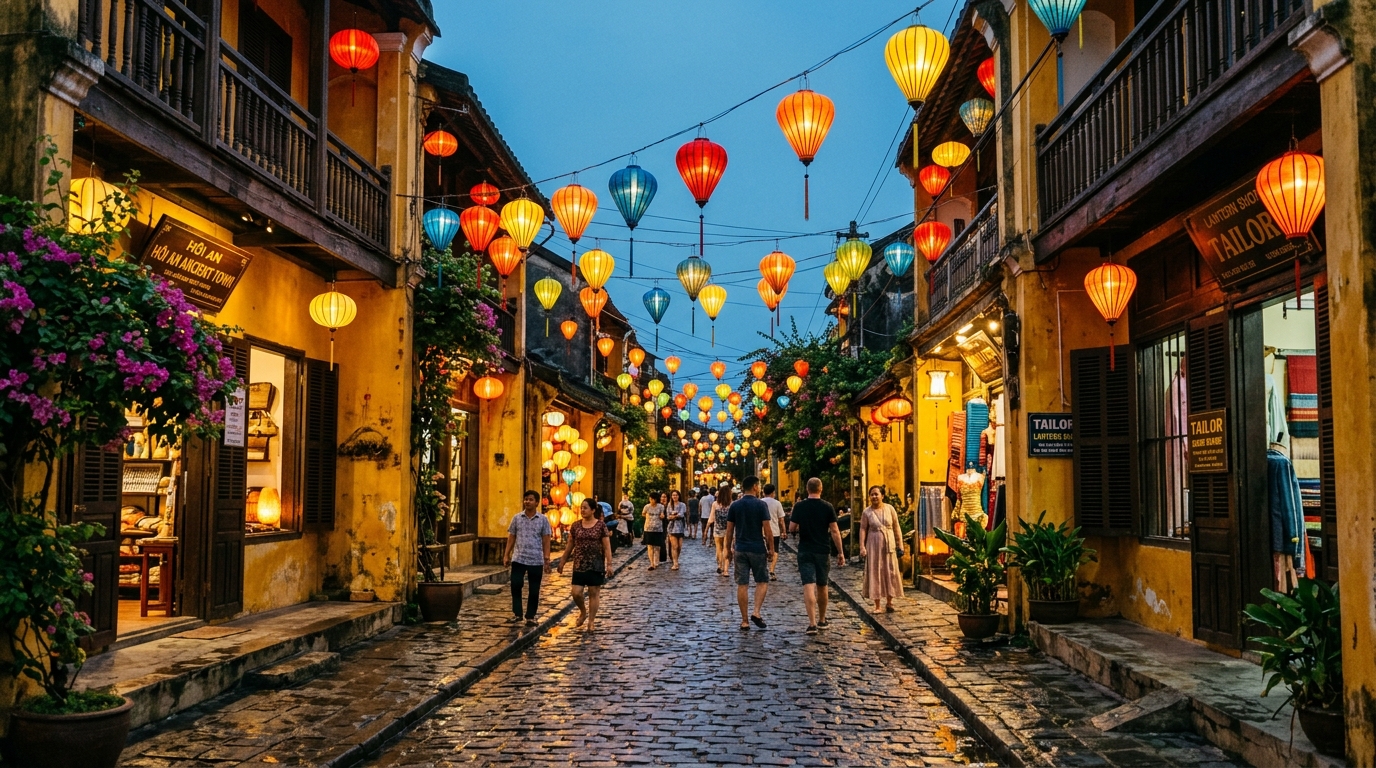
Hoi An is visually striking. Once a major 16th-century Southeast Asian trading post, its Ancient Town is a preserved living museum featuring a 400-year-old Japanese covered bridge and Chinese assembly halls. Every evening, the city physically shuts off its streetlights to illuminate the Thu Bon River with thousands of floating silk lanterns.
It is also the custom tailoring capital of the world. You can have full suits, winter coats, and leather shoes crafted to your exact measurements in 48 hours. A crucial piece of advice: do not just walk into the first shop you see. Research reputable tailors, bring reference photos of the exact garment you want, and budget time for at least two fitting adjustments.
While here, you must eat Cao Lầu. This regional pork noodle dish utilizes a specific, chewy noodle that locals claim can only be authentic if boiled using water drawn from an ancient, secret well located within the city limits.
Da Nang: Modernity and Marble Mountains
Just 45 minutes north of Hoi An, Da Nang serves as a stark modern contrast. It features massive, wide beaches like My Khe, wide boulevards, and a youthful, technological energy.
If you happen to be in Da Nang over the weekend, secure a spot near the Han River at 9:00 PM. The city completely halts traffic so the massive metal Dragon Bridge can physically breathe fire and spray water over the gathered crowds. Da Nang is also the perfect base camp to visit the Golden Bridge—the famous pedestrian walkway held aloft by two massive stone hands suspended 1,400 meters above sea level in the Ba Na Hills.
Hue: The Searing Imperial Capital
Hue, the former capital of the Nguyen Dynasty, is severely underrated by fast-moving backpackers. Situated on the Perfume River, it contains the Imperial Citadel—a sprawling complex featuring walls six meters high and 2.5 kilometers long, enclosing the Forbidden Purple City and royal tombs.
Hue is notorious for two things: extreme summer heat and incredibly spicy food. The local signature dish, Bún Bò Huế, is an aggressive, lemongrass-infused beef noodle soup that will make your nose run. Because the city sits in a valley that catches hot, dry winds from neighboring Laos, walking the unshaded grounds of the Citadel in July is brutal. Arrive at the gates the minute they open at 7:00 AM to beat the temperature spike.
Phong Nha-Ke Bang: Subterranean Giants
For extreme adventure, navigate to this national park in the Quang Binh province. It hosts Asia’s oldest karst system, dating back 400 million years, and contains Son Doong, officially the largest cave on the planet. To put its scale into perspective, Son Doong is over five kilometers long and tall enough to fit an entire New York City block of 40-story skyscrapers inside its main cavern.
You cannot just show up and walk into the mega-caves. Entry is strictly regulated by the government, and multi-day trekking permits sell out up to a year in advance. If you fail to secure a permit, the highly accessible Paradise Cave and Phong Nha Cave still offer massive, glittering stalactite formations that require no advanced booking.
Southern Vietnam: Relentless Energy and River Deltas
The climate in the south throws away the four seasons of the north in favor of two: the wet season and the dry season. It is consistently hot, sticky, and vibrating with economic momentum.
Ho Chi Minh City (Saigon): The Urban Jungle
Ho Chi Minh City operates at a terrifying, exhilarating speed. It is significantly more modernized than Hanoi, boasting glass skyscrapers like Landmark 81 standing adjacent to the 19th-century French colonial Notre Dame Cathedral.
The street food here is heavily influenced by historical trade routes and neighboring Cambodia. Broths are punchier, utilizing large amounts of rock sugar, and are served with massive handfuls of fresh culantro, Thai basil, and bean sprouts.
You must allocate a half-day to visit the Cu Chi Tunnels, located about 35 kilometers outside the city. This 200-kilometer underground network was utilized by Viet Cong soldiers during the war. Crawling through the widened tourist sections of the tunnels—which are still incredibly claustrophobic and hot—provides a visceral, sobering understanding of guerrilla survival tactics.
The Mekong Delta: Life on the Water
Known as the “Rice Bowl of Vietnam,” the Mekong Delta requires you to completely adjust your internal clock. The region is a massive, biodiverse maze of rivers, swamps, and stilt villages.
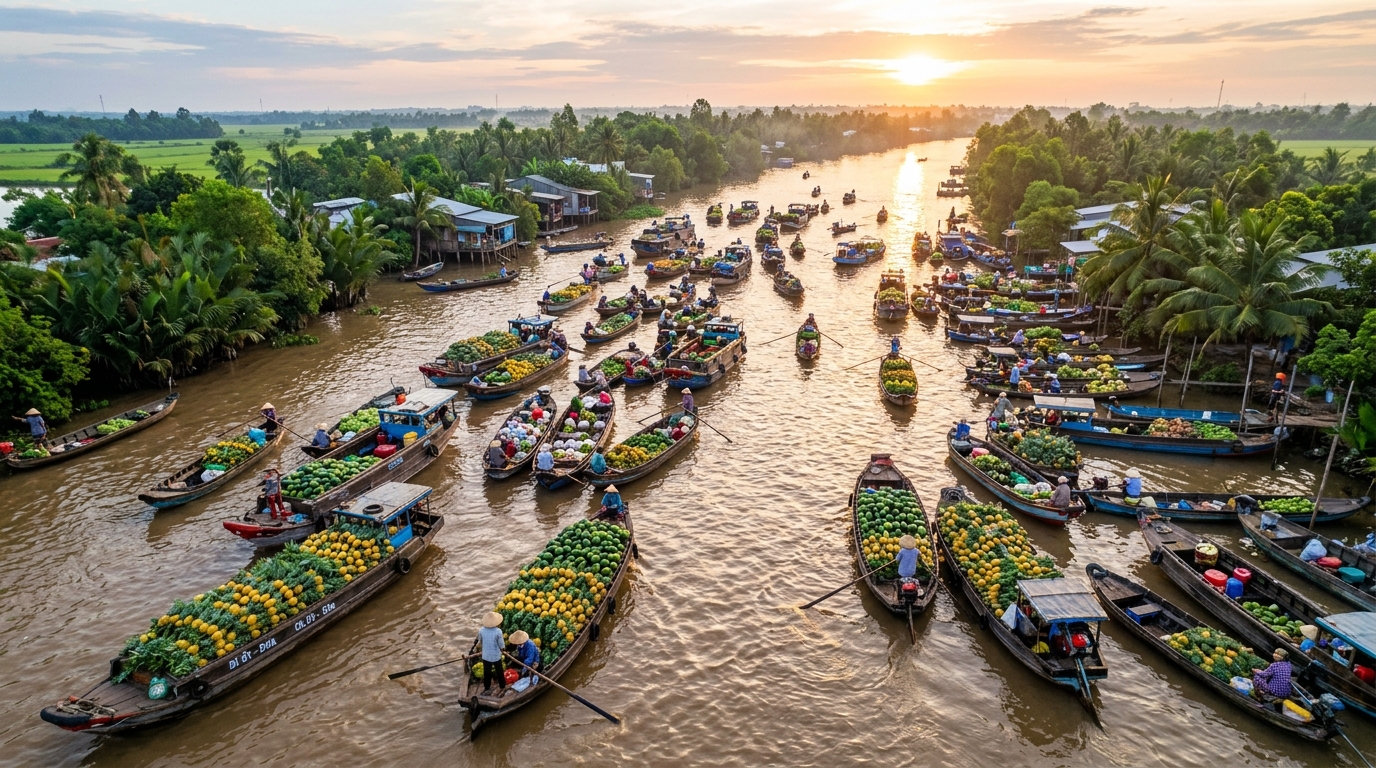
To witness the famous Cai Rang Floating Market, where hundreds of wooden boats trade durian, pineapples, and coconuts on the open water, you must be in a boat by 5:30 AM. If you attempt to visit via a standard 9:00 AM tourist bus departing from Ho Chi Minh City, you will arrive to find a mostly empty river. Book a riverside homestay in Can Tho the night before to ensure you hit the water before dawn.
Phu Quoc and Con Dao: Tropical Escapes
For pristine, powdery white sands, Southern Vietnam offers two distinct island experiences.
Phu Quoc, located in the Gulf of Thailand, is Vietnam’s largest island. Over 50% of the landmass is a protected national park, while the west coast is lined with high-end luxury resorts like the Salinda Resort. However, Phu Quoc has experienced rapid commercialization. The main commercial beaches get incredibly crowded with massive tour groups during the midday hours in high season.
If you want true, remote isolation, fly to the Con Dao archipelago. Historically a dark site housing a brutal French colonial prison, it has transformed into a rugged, heavily forested oasis. If you visit between May and December, you can stay at eco-resorts like Six Senses and participate in their magical sea turtle hatchling release programs on the beach.
Cost Comparison: How Far Does Your Budget Go?
Vietnam offers some of the highest value-for-money travel on the planet, provided you eat and travel slightly off the heavily marketed tourist trail. Here is what you can realistically expect to spend:
| Expense Category | Average Cost (VND) | Average Cost (USD) | What to Expect |
|---|---|---|---|
| Street Food Meal | 30,000 – 50,000 | $1.20 – $2.00 | A massive bowl of Pho or Bun Cha eaten on a plastic stool with no air conditioning. |
| Mid-Range Restaurant | 150,000 – 250,000 | $6.00 – $10.00 | Indoor seating, English menus, cold beer, and complex regional seafood dishes. |
| Sleeper Bus (Overnight) | 250,000 – 400,000 | $10.00 – $16.00 | 8 to 12-hour journey in a reclined (though cramped) bunk. |
| Domestic Flight (Vietjet) | 750,000 – 1,500,000 | $30.00 – $60.00 | A fast 2-hour hop from Hanoi to Da Nang or HCMC. Baggage costs extra. |
| Boutique Homestay | 500,000 – 800,000 | $20.00 – $32.00 | Private room, air conditioning, en-suite bathroom, usually includes local breakfast. |
| Luxury Resort (Nightly) | 3,700,000 – 8,000,000 | $150.00 – $320.00 | 5-star amenities, private beach access, spa facilities, exceptional service. |
Who Should Visit Vietnam (And Who Should Not)
This destination is ideal for:
Culinary Adventurers: If you are willing to squat on a crowded sidewalk to eat snails, fermented shrimp paste (mắm tôm), and eel, you will have the greatest food trip of your life.
History Enthusiasts: The sheer density of UNESCO World Heritage sites, ranging from ancient Hindu temples at My Son to sobering 20th-century war remnants, provides endless context.
Budget Optimizers: You can travel comfortably, eat like royalty, and sleep in clean, air-conditioned rooms for under $45 a day.
You might want to skip this if:
You require rigorous, Western-style sanitation: Street food hygiene standards rely on high heat to kill bacteria, not sanitizing wipes and hairnets.
You melt in extreme heat and humidity: Walking through Ho Chi Minh City in April physically feels like wearing a hot, wet towel.
You have severe mobility issues: Vietnamese sidewalks are not for walking; they are used for parking motorbikes and hosting food stalls, forcing pedestrians into the chaotic traffic flow. Elevators are also rare outside of major modern hotels.
3 Common Mistakes to Avoid When Planning Your Route
1. Mismanaging the E-Visa Process
I made this catastrophic error myself. As a frequent traveler, I assumed I could just fill out some paperwork at the airport upon arrival. I was nearly denied boarding on my flight from Tokyo because Vietnam strictly requires an e-Visa approved prior* to arrival for most nationalities. While the official government portal claims a three-day turnaround, minor paperwork errors can stretch this to over a week. Apply at least 14 days before your flight.
2. Assuming Sleeper Buses Fit Everyone
Backpackers rave about the cheap overnight sleeper buses that crisscross the country. What they fail to mention is that the horizontal fiberglass pods are built for local proportions. If you are taller than 5 feet 10 inches, you will not be able to extend your legs fully. If you are tall, spend the extra $30 for a domestic flight or book a VIP sleeper cabin on the national railway instead.
3. Ignoring Regional Monsoons
You cannot look at the weather for Hanoi and assume it applies to Hoi An. Central Vietnam experiences severe typhoons and flooding in October and November, exactly when the weather in the North is hitting its prime autumn coolness. Always check the micro-climate of your specific destinations before locking in non-refundable hotels.
Frequently Asked Questions
How long should I spend in Vietnam?
To see the North, Central, and South regions without inducing a panic attack, you need an absolute minimum of three weeks. If you only have 10 to 14 days, pick a maximum of two regions. Attempting to see the entire country in ten days guarantees you will spend your entire vacation inside transit vehicles.
Is it safe to cross the street in Hanoi or Ho Chi Minh City?
It looks like absolute madness, but there is a distinct rhythm to the chaos. The secret is to walk out into the traffic at a slow, entirely predictable, and steady pace. Do not stop, do not run, and do not back up. The thousands of scooters and motorbikes are watching you, and they will naturally flow around your body like water moving past a stone.
Is the food really that different in the North versus the South?
Yes, drastically. Northern food (Hanoi) is older, heavily reliant on black pepper rather than chili, and features subtle, delicate broths. Southern food (Ho Chi Minh City) utilizes far more sugar, coconut milk, and aggressively spicy chilies, heavily influenced by historical trade routes and the hotter climate.
Should I bring cash or rely on credit cards?
Cash is absolutely king. While high-end hotels, modern cafes, and large supermarkets in major cities accept international credit cards, you cannot buy street food, pay for a local taxi, or shop at a night market without Vietnamese Dong (VND). Withdraw cash from local ATMs upon arrival, and always ask for small denominations, as vendors rarely have change for 500,000 VND notes.
Final Thoughts on Your Vietnam Route
Choosing the best places to visit in Vietnam ultimately comes down to what kind of discomfort you are willing to trade in exchange for absolute wonder. If you can handle the aggressive humidity, the overwhelming volume of scooters, and sitting on child-sized furniture to eat your dinner, the reward is an incredibly safe, culturally rich country offering world-class cuisine. Start your journey in the chaotic culinary heart of Hanoi, take a flight down to the lantern-lit streets of Hoi An, and finish your trip floating down the intricate waterways of the Mekong Delta. Just remember to pack light, stay flexible, and never skip the street food.