
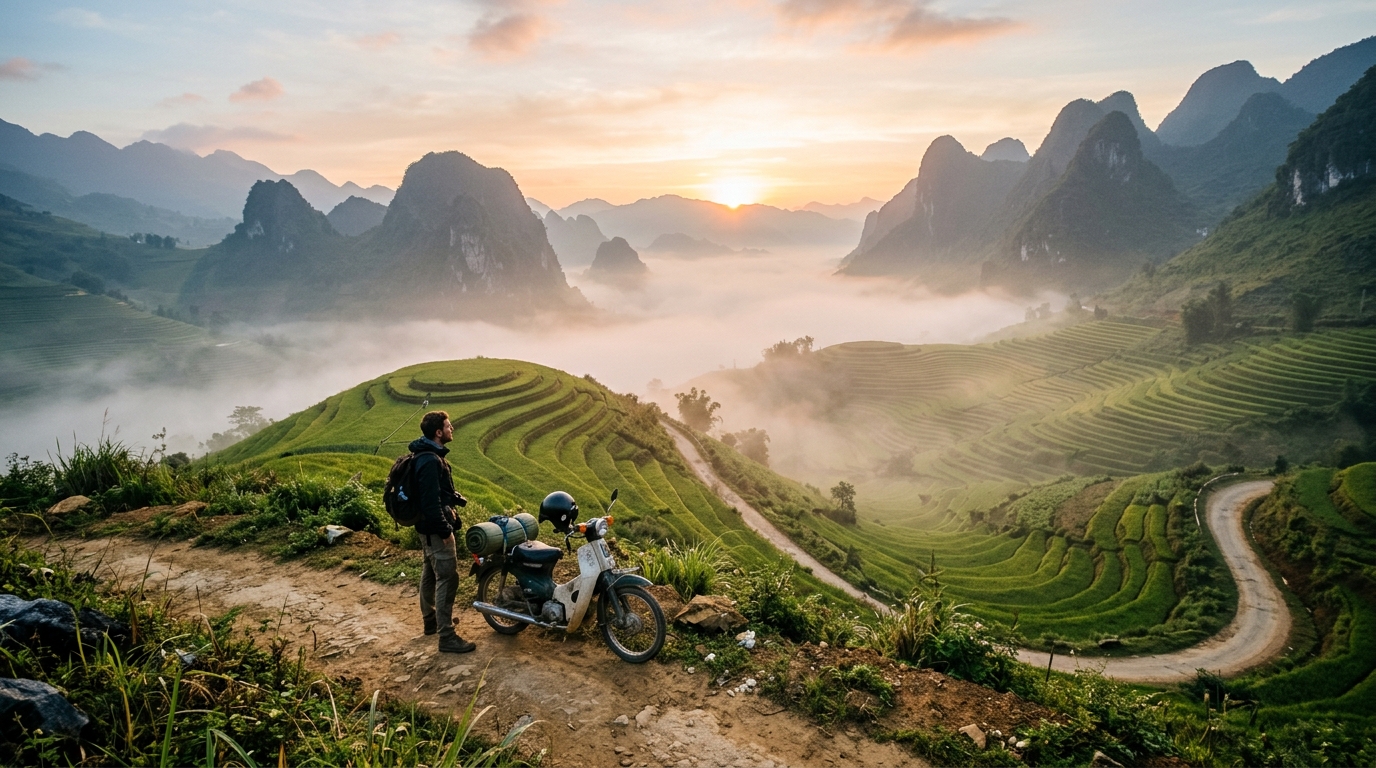

Deciding on the best places to visit in Vietnam can feel like an impossible puzzle when you first look at a map. The country stretches over 1,000 miles from the mountainous Chinese border down to the tropical Gulf of Thailand, offering three completely distinct regional climates, cultures, and culinary identities. I spent nearly a year exploring this exact route, and I quickly realized that trying to cram every province into a standard two-week vacation is a guaranteed recipe for burnout. You have to be highly strategic about where you spend your time, how you manage long transit days, and where you allocate your budget to get the most out of this massive country.
Quick Summary
Swap Ha Long for Bai Tu Long: You get the exact same iconic limestone karst scenery but without the suffocating crowds of daily tourist boats and diesel fumes.
hanoi is the culinary core: Spend at least three days sitting on low plastic stools eating Bun Cha and drinking 10,000 VND ($0.40) draft beer in the old quarter.
central Vietnam requires a scooter: Da Nang, Hoi An, and Hue are clustered together and best explored at your own pace via motorbike, provided you have the right license.
Skip the Mekong day trips: Do not attempt the Mekong Delta as a cheap day excursion from Ho Chi Minh City; book a multi-day river trip to see the authentic floating markets.
Sort your visa immediately: Most western nationalities must apply for an e-Visa online at least 10 to 14 days before departure to avoid getting denied at the check-in counter.
The Direct Answer: Where Should You Go?
If you only have 10 to 14 days, do not attempt to travel the entire length of the country. You will spend half your trip exhausted in sleeper buses or at domestic airport terminals. Instead, choose two regions.
For first-time visitors prioritizing dramatic landscapes, deep history, and culinary exploration, spend 70% of your time in Northern Vietnam (Hanoi, Bai Tu Long Bay, Ninh Binh, Ha Giang) and 30% in Central Vietnam (Hoi An and Da Nang). If you prefer warmer weather, modern coffee culture, war history, and tropical coastlines, pair Central Vietnam with Southern Vietnam (Ho Chi Minh City, the Mekong Delta, and Con Dao Island).
If you have three to four weeks, you can comfortably travel the classic North-to-South route. Fly into Hanoi (HAN), travel down the coast via the 1,726-kilometer Reunification Railway or domestic flights, and fly out of Ho Chi Minh City (SGN).
Northern Vietnam: Mountains, Bays, and Culinary Capitals
The northern region is the traditional heartbeat of the country. Be warned: the weather here features distinct seasons. If you visit between December and February, you will need a heavy jacket.
Hanoi: The 1,000-Year-Old Capital
Hanoi operates at a frantic, chaotic pace, but its food scene alone justifies the flight. The architecture is a fascinating mix of ancient pagodas and decaying French colonial facades. My first mistake here was trying to follow Google Maps rigidly; the streets are so dense you are better off just wandering.
When navigating the central districts, prioritize these culinary experiences:
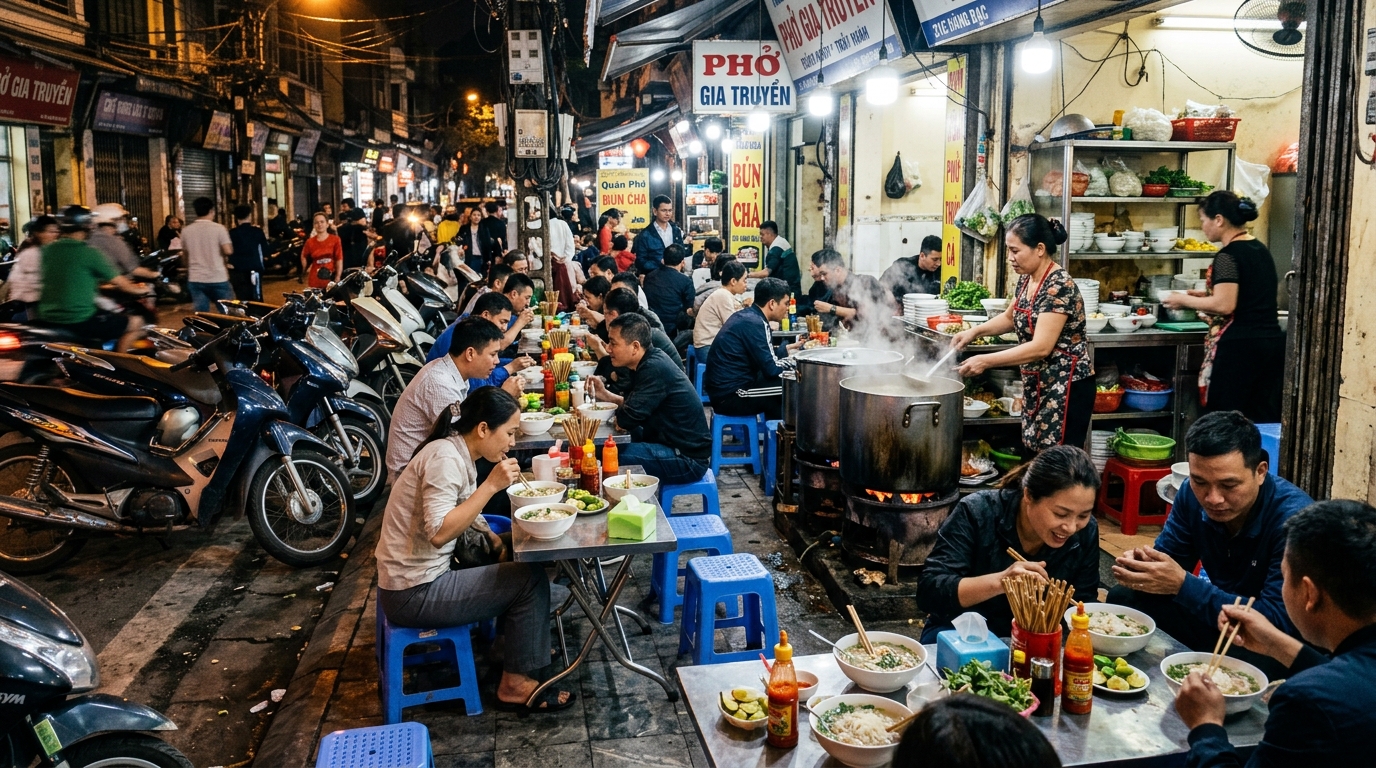
Bún Chả (Grilled Pork Noodles): You can identify these spots by the thick charcoal smoke drifting across the pavement. It features cylindrical rice noodles dipped into a warm, diluted fish-sauce broth, served with charcoal-grilled fatty pork and a massive side of fresh perilla leaves. Head to Bun Cha Hoang Lien, famous for hosting Anthony Bourdain and Barack Obama.
Cà Phê Trứng (Egg Coffee): Invented in the 1940s during a milk shortage, this intense beverage consists of strong robusta coffee topped with a thick, unctuous layer of whipped egg yolk and sweetened condensed milk. It essentially tastes like liquid cake batter.
Bia Hoi: Find a local corner selling this daily-brewed draft beer. It costs around 10,000 VND (about $0.40 USD) a glass. It is light, refreshing, and sitting on the tiny plastic stools provides the best people-watching on earth.
The Bays: Ha Long vs. Bai Tu Long vs. Lan Ha
Ha Long Bay is a UNESCO site known for thousands of towering limestone islands topped with rainforests. It is also plagued by severe over-tourism and heavily polluted waters in the main corridors.
Instead of booking a generic day trip from Hanoi, book an overnight cruise through Bai Tu Long Bay or Lan Ha Bay. They share the exact same geological formations but see a fraction of the boat traffic. I booked a cheap day ferry from the mainland once, thinking I’d save some money—turns out the choppy waters and crowded decks were miserable. Pay for a slightly upgraded 2-night cruise package. Waking up to do Tai Chi on the deck while surrounded by silent, fog-covered limestone monoliths is unmatched.
Sapa vs. The Ha Giang Loop
If you want raw nature, you have to head north to the Chinese border. Sapa is famous for its cascading rice terraces and trekking up Mount Fansipan (the tallest peak in Southeast Asia at 3,147m). However, Sapa has become heavily commercialized in recent years.
For a more authentic, rugged experience, tackle the Ha Giang Loop. This is a multi-day motorbike circuit through dizzying mountain passes, deep valleys, and indigenous homestays. If you are not a highly experienced rider, do not attempt to drive this yourself. The roads are incredibly dangerous. Hire a local “Easy Rider” guide to drive the bike while you sit on the back, drink in the scenery, and enjoy the free-flowing rice wine at the evening homestays.
Ninh Binh: The Inland Bay
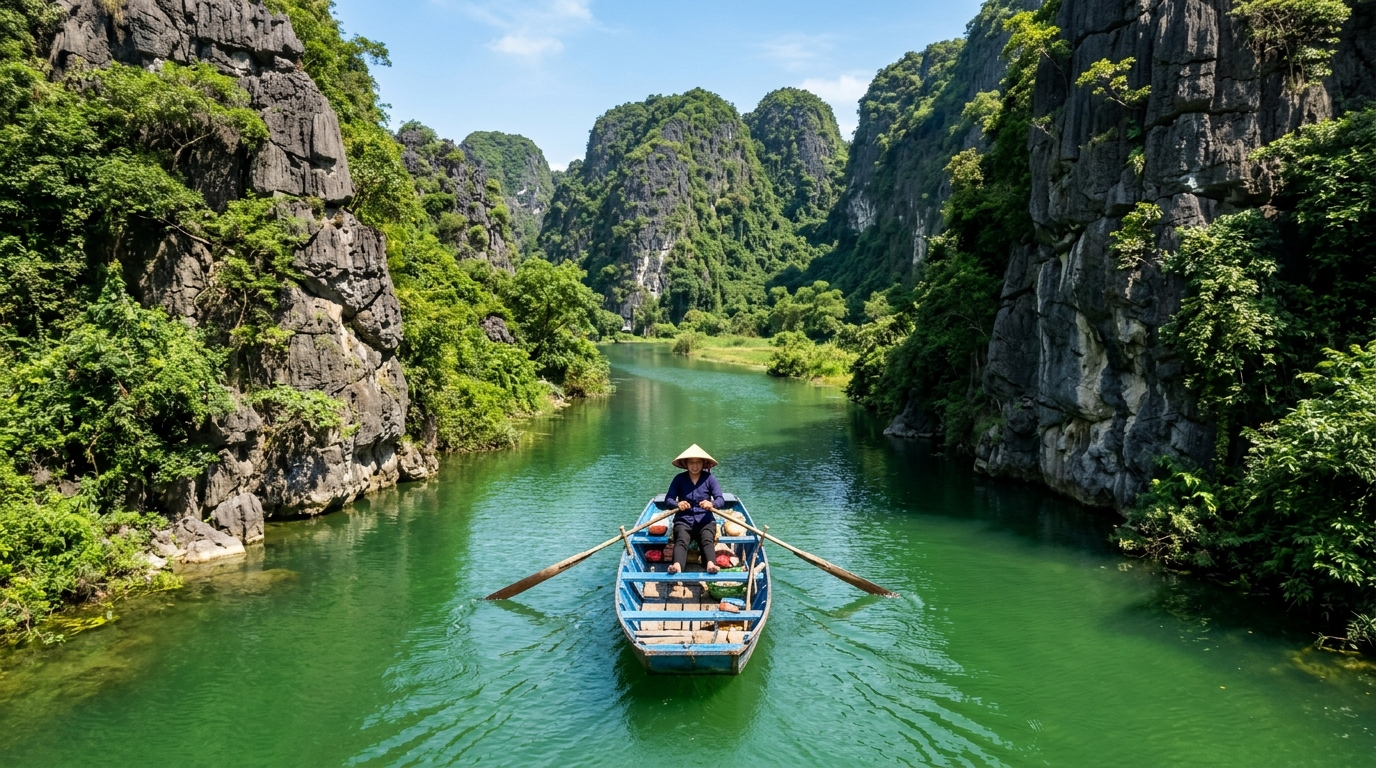
Located just two hours south of Hanoi, Ninh Binh offers the same dramatic karst landscapes as the coast, but jutting out of bright green rice paddies. Base yourself in the Tam Coc area.
The main highlight is taking a wooden rowboat tour through the Trang An cave system. The local women navigate the boats using their feet to paddle—a fascinating technique developed to prevent back strain. Afterward, tackle the 500 steep stone steps up the Hang Mua viewpoint at sunset. A massive stone dragon wraps across the top of this mountain, offering panoramic views of the valley below.
Central Vietnam: Heritage, Lanterns, and Coastlines
The central coast offers a more relaxed pace compared to the intense energy of the north and south, bridging deep imperial history with excellent beaches.
Phong Nha: The Cave Kingdom
Located in Ke Bang National Park, this area is strictly for outdoor enthusiasts. It is home to Hang Son Doong, the world’s largest cave, which is so massive it has its own localized weather system and rainforest. Touring it requires a grueling 5-day expedition that costs thousands of dollars and books up years in advance.
For the rest of us, Tu Lan Cave (famous for being a filming location for the movie Kong) and Paradise Cave offer spectacular underground rivers, stalactites, and mud-trekking for a fraction of the price and physical toll.
Hue: The Imperial City
As the former royal capital from 1802 to 1945, Hue is the gastronomical capital of the country. Over half of the nation’s estimated 3,000 local dishes originated here. Seek out a bowl of Bún Bò Huế, a spicy, lemongrass-heavy beef noodle soup that absolutely rivals traditional Phở.
Beyond the massive, moated Imperial Palace and the emperor mausoleums along the Perfume River, Hue has a bizarre modern attraction: the Abandoned Waterpark (Thuy Tien Lake). Featuring a rotting concrete dragon sitting in the middle of a lake, it is technically closed to the public, but tourists frequently slip the informal security guards a small tip to wander the eerie, post-apocalyptic grounds.
Da Nang & Hoi An
Just 45 minutes apart, these two locations serve totally different purposes. Da Nang is a modern coastal city with wide boulevards, excellent surf conditions, and a massive expat community concentrated in the An Thuong neighborhood. Take a ride up the Son Tra Peninsula to see the giant Lady Buddha and the endangered Red-shanked douc monkeys.
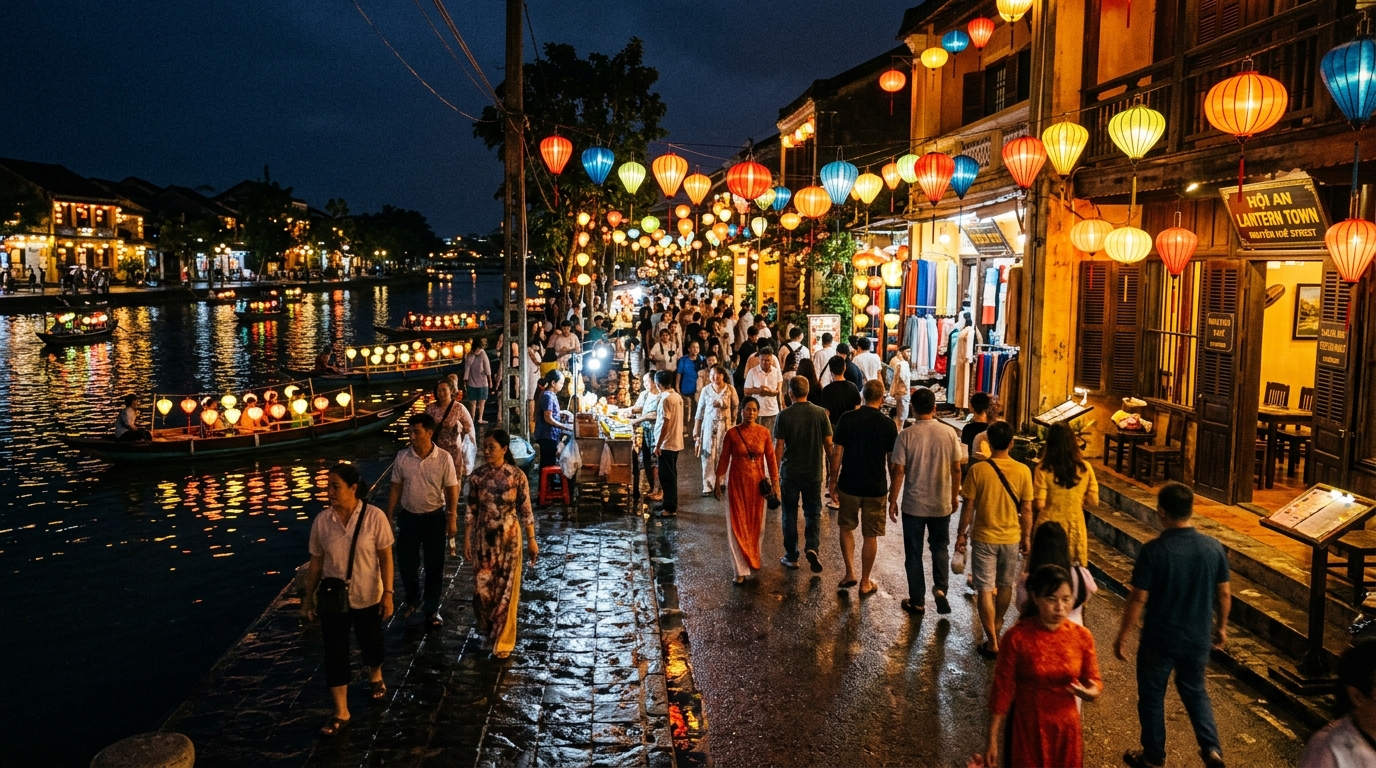
Hoi An is undeniably the most photogenic town in the country. The 15th-century Ancient Town’s yellow facades are beautifully preserved, and by night, the streets glow with thousands of colorful silk lanterns. This town is also the tailoring capital of Southeast Asia, where you can have custom suits and dresses made in under 48 hours.
The genuine downside? Hoi An gets unbearably crowded and hot between 11:00 AM and 3:00 PM. Wake up at 6:00 AM to photograph the empty streets, spend the midday heat at nearby An Bang Beach, and return to the old town for dinner.
Southern Vietnam: Deltas, Metropolises, and Islands
The southern climate is strictly tropical, meaning it is hot year-round with a distinct dry season (December to April) and wet season (May to November).
Ho Chi Minh City (Saigon)
The largest commercial hub is loud, fast, and completely blanketed by millions of motorbikes. Crossing the street here is a psychological test—you simply step off the curb, walk at a slow, predictable pace, and let the sea of scooters part around you. Never run.
Top sights include the War Remnants Museum (a heavy, highly graphic, but absolutely essential historical education), the Notre Dame Cathedral, and the Cafe Apartments at 42 Nguyen Hue. This is a nine-story mid-century apartment block where nearly every unit has been converted into an independent coffee shop or boutique.
Da Lat: The Mountain Escape
If the southern heat breaks you, take a bus up to Da Lat. Situated at 1,500 meters, this mountain town is famous for pine forests, cool weather, and coffee plantations. Visit the K’ho Coffee cooperative to see how high-altitude Arabica beans are grown and roasted.
The Mekong River Delta
South of Ho Chi Minh City lies the “rice bowl” of Southeast Asia. The Mekong Delta is a vast maze of rivers, swamps, and islands heavily relying on agriculture.
Do not try to do the Mekong Delta as a cheap, rushed day trip. By the time your bus arrives, the authentic floating markets are finished. You must spend the night in the region—I highly recommend avoiding the heavily toured Can Tho and heading to Soc Trang instead. Hiring a private small boat at 6:00 AM to watch hundreds of wooden boats trading pineapples and root vegetables over the water is phenomenal.
Phu Quoc vs. Con Dao Islands
For beach lovers, the south offers two major island choices. Phu Quoc is highly developed, featuring massive resorts, the world’s longest over-water cable car, and pristine white sand. It is perfect for families wanting resort luxury.
Con Dao, an archipelago off the southeastern coast, offers a much quieter alternative. Accessible by a small flight, it features the best scuba diving in the country. It possesses a dark history as a brutal French colonial prison for over a century, but today it serves as an incredibly peaceful, off-the-beaten-path escape.
Who Should Visit (And Who Should Skip It)
This destination is ideal for:
Culinary Explorers: If your idea of a perfect trip involves eating five times a day, trying intensely flavorful broths, and sitting on sidewalks drinking cheap local beer, you will be in heaven.
Budget-Conscious Adventurers: Your money goes incredibly far here. A great boutique hotel room often costs under $40, and a Michelin-recognized bowl of noodles costs under $3.00.
Independent Travelers: Those comfortable booking sleeper trains, riding on the back of scooters, and rolling with slight logistical hiccups will thrive here.
You might want to skip this if:
You hate humidity and heat: Central and Southern regions regularly see temperatures in the mid-90s Fahrenheit with 80%+ humidity. You will sweat constantly.
You need rigid, orderly infrastructure: Traffic rules are mere suggestions, sidewalks are used as scooter parking lots, and trains frequently run late. If chaos stresses you out, look toward Japan.
- You have severe mobility issues: Wheelchair accessibility is virtually non-existent on the streets of Hanoi and Ho Chi Minh City due to high curbs, broken pavement, and street vendors occupying walking paths.
- www.stokedtotravel.com
- jalehmichelle.com
- www.lonelyplanet.com
- travelnation.co.uk
- www.thegonegoat.com
- travelbooksfood.com
- www.findawayabroad.com
Budget Breakdown & Cost Scenarios
The local currency is the Vietnamese Dong (VND). While luxury hotels take cards, you need small bills for street vendors, taxis, and market stalls.
| Expense Category | Budget Backpacker (Per Day) | Mid-Range Traveler (Per Day) | Luxury Traveler (Per Day) |
|---|---|---|---|
| Accommodation | $5 – $15 (Hostel/Homestay) | $40 – $70 (Boutique Hotel) | $150+ (5-Star Resort) |
| Food & Drink | $5 – $10 (Street food, Bia Hoi) | $20 – $40 (Mix of street & cafes) | $80+ (High-end dining) |
| Transportation | $3 – $5 (Grab bikes, local bus) | $10 – $20 (Grab cars, scooter rental) | $50+ (Private drivers) |
| Domestic Travel | $15 – $25 (Overnight sleeper bus) | $40 – $80 (Domestic VietJet flights) | $120+ (Luxury train cabins) |
| Total Estimated | $28 – $55 USD | $110 – $210 USD | $400+ USD |
Common Mistakes to Avoid
Assuming you can get a Visa on Arrival
Many Western tourists assume they can simply show up and get a stamp at immigration. You cannot. Most nationalities, including the USA, UK, and Australia, must apply for an e-Visa online at least 10 to 14 days before departure. You will be denied boarding at your home airport without that approval letter.
Renting a motorbike without an International Driving Permit (IDP)
It is incredibly common for tourists to rent scooters. However, local police have recently cracked down heavily on foreigners driving without the proper motorcycle endorsement on an IDP. Worse, if you crash and get injured while riding illegally, your travel medical insurance will completely void your claim, leaving you with massive hospital bills.
Underestimating travel distances
Looking at a map, the distance between Hanoi and Hue doesn’t look terrible. In reality, that is a 14-hour train ride. Do not look at mileage; look at transit hours. Domestic flights are cheap and save days of wasted travel time if you are on a tight schedule.
Frequently Asked Questions
Is the tap water safe to drink?
No, you should never drink the tap water. Rely strictly on bottled water, which is incredibly cheap and available at every convenience store. When eating at reputable restaurants and cafes, the ice provided in your drinks is generally manufactured in safe, filtered factories (look for ice shaped like a hollow tube, which is the factory standard).
Is it safe for solo female travelers?
Yes, it is remarkably safe, and violent crime against tourists is extremely rare. I traveled across the country solo and never felt physically threatened. However, petty theft—specifically phone snatching by passing motorbikes in Ho Chi Minh City—is common. Never stand near the street edge holding your phone loosely.
How many days do I actually need?
A 10-day trip is the absolute minimum to comfortably see two regions (for example, the North and the Center). If you want to travel from Hanoi all the way down to the Mekong Delta without feeling completely exhausted, you need an absolute minimum of 21 days.
How do I get around the cities?
Download the Grab app (Southeast Asia’s version of Uber) before you arrive. It allows you to order both cars and scooter-taxis at fixed, upfront prices, completely eliminating the need to haggle with local taxi drivers who might refuse to use their meters.
Conclusion
Choosing the best places to visit in Vietnam ultimately comes down to your personal travel style and how much time you have. Hanoi provides unparalleled culinary depth and raw historical weight, the Central Coast offers a slower, visually stunning mix of heritage and beaches, and the South delivers high-octane city life mixed with lush agricultural deltas.
Stop trying to fit every single province into a two-week itinerary. Pick two regions, eat the charcoal-grilled street food despite your hesitations, wake up at dawn to beat the oppressive midday heat, and embrace the organized chaos of the traffic. Start your planning by securing your e-Visa right now, and then build your route around the landscapes and dishes you most want to experience.