

Finding true off the beaten path Thailand travel requires a willingness to trade air-conditioned luxury and reliable Wi-Fi for raw, unfiltered authenticity. When I first planned a four-month trip through Southeast Asia, I expected serene coastlines and quiet local markets. Instead, I found myself shoulder-to-shoulder with thousands of package tourists in Phuket and dodging aggressive tour groups in central Chiang Mai. The magic I had read about was buried under a thick layer of mass commercialization.
Realizing I was seeing an artificial, highly curated version of the country, I completely altered my itinerary. I started relying on slow cargo boats, riding rented scooters up steep, gravel mountain passes, and tracking down local guides who operated outside the mainstream travel agencies. What I found was a completely different country. Beyond the typical backpacker corridors lies a landscape of untouched marine parks, ancient Khmer temple ruins without a single tourist in sight, and remote highland villages where tribal customs dictate daily life.
Quick Summary
Prioritize border provinces: The most authentic cultural encounters happen near the Myanmar and Laos borders, specifically in Sangkhlaburi and Mae Salong, where ethnic diversity shapes the food and architecture.
Embrace linguistic isolation: Outside major hubs, English proficiency drops to zero. Be prepared to rely on translation apps, pointing, and patience.
Expect strict cash economies: Remote islands like Koh Mook lack ATMs entirely, and the few shops offering cash advances charge brutal 5% commission fees.
Seek ethical wildlife: Skip the exploitative tiger enclosures. Head to Khao Yai National Park for ethical, observation-only tracking of wild elephants and gibbons.
Time your travel carefully: Marine parks like Koh Tarutao shut down entirely between May and October due to dangerous monsoon swells.
Where to Find the Real Country Without the Crowds
If you want a direct answer on exactly where to go to escape the masses, I highly recommend stripping your itinerary of the central islands and major northern hubs entirely. Instead, route your trip through Sangkhlaburi in the far west, Nan in the deep north, and Koh Tarutao in the southern Andaman Sea.
Sangkhlaburi offers a deep dive into Burmese-Mon culture without the massive crowds of Chiang Mai. Nan provides access to ancient Lanna traditions and high-altitude mountain passes where the temperatures drop severely at night. Meanwhile, Koh Tarutao is a strictly protected former prison island with deserted shorelines, aggressive monkey populations, and absolutely zero luxury amenities.
Focusing on these three locations alone will give you a rugged, authentic look at the region that 95% of international visitors simply never see.
The Northern and Western Borders: Culture Above the Clouds
While most travelers stop at Chiang Mai or Chiang Rai, the true cultural heart of the region lies much further out, where the mountains bleed into Myanmar and Laos.
Sangkhlaburi and the Mon Bridge
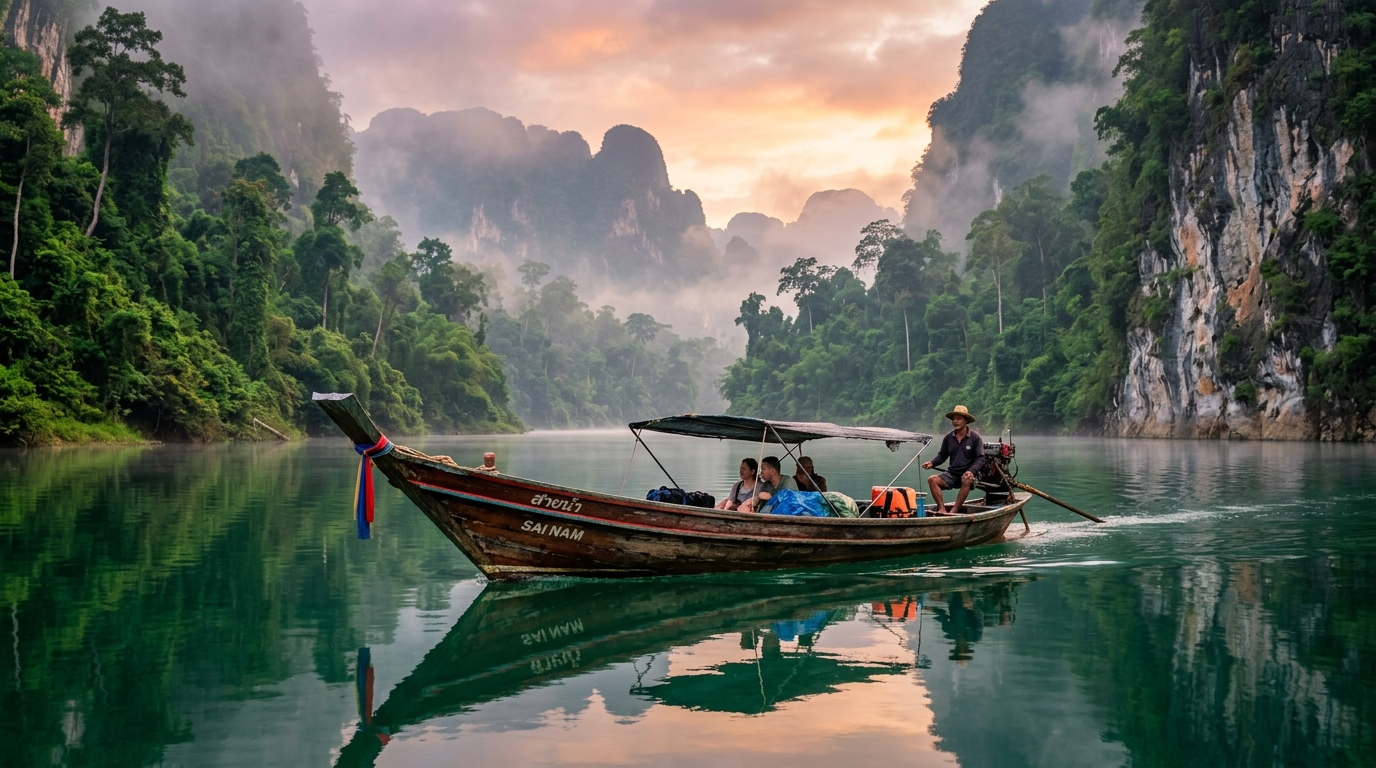
Tucked away in the western jungle a few hours from Kanchanaburi, Sangkhlaburi sits squarely on the border with Myanmar. It is home to a complex demographic of Burmese, Karen, and Mon communities living alongside Thai locals.
The town is divided by a 400-meter-long wooden bridge—the longest of its kind in the country. This structure acts as a stark cultural dividing line. The eastern side caters slightly more to domestic tourists, featuring a few ATMs, a 7-11, and the reliable P Guesthouse, which I highly recommend for its direct lake access. Cross the bridge to the western side, however, and you effectively step into Myanmar.
Locals here chew betel nuts, a natural stimulant that boosts energy but stains their teeth a dark reddish-black color. You can hire a local boatman to take you out on the lake to view the secret underwater temples, which were flooded decades ago due to dam construction. If you go during the dry season, the tops of the temple spires emerge eerily from the waterline.
Mae Salong: The Chinese Ex-Soldier Settlement
Set in the hilly, tea-plantation-rich countryside of the Chiang Rai province, Mae Salong (also known as Santikhiri) operates on an entirely different historical timeline.
The town was founded by Chinese soldiers who fled communist rule in Yunnan, China, in 1949. After being forced out of Myanmar in 1961, they settled in these northern Thai mountains. Today, their descendants maintain strict Chinese traditions, architecture, and language. You will find locals drying herbs on the roadside and serving high-altitude Oolong tea.
The area is also a central hub for the Akha and Lisu hill tribes. I happened to visit near New Year’s Day, and the local tribes performed dawn-to-dusk circle dances to monotonous, rhythmic music. The dancers periodically enter a state of deep trance—a raw, gritty reality that looks nothing like the polished cultural shows put on for tourists in Bangkok.
Chiang Dao: The City of Stars
Just an hour north of Mae Rim, Chiang Dao sits at the base of Doi Luang, a massive limestone massif. The town translates to ‘City of Stars’ due to its near-total lack of light pollution.
Most tourists visit as a quick day trip from Chiang Mai, but staying overnight is mandatory to actually experience the area. The local Buddhist traditions here are quiet and reflective. The area is home to the 300-million-year-old Chiang Dao Caves, a sprawling network of limestone chambers holding immense spiritual significance. I highly recommend hiring a local guide with a gas lantern to take you deep into the unlit sections of the cavern, where you must squeeze through damp, incredibly tight rock formations.
Historical Ruins Without the Suffocating Crowds
Thailand’s history is incredibly deep, but the most famous sites near the capital are essentially theme parks swarmed by massive tour groups armed with selfie sticks.
Sukhothai over Ayutthaya
Ayutthaya is historically fascinating, but its close proximity to Bangkok means it is constantly packed. I visited at 10 AM on a Tuesday and could barely walk down the main paths without bumping into someone.
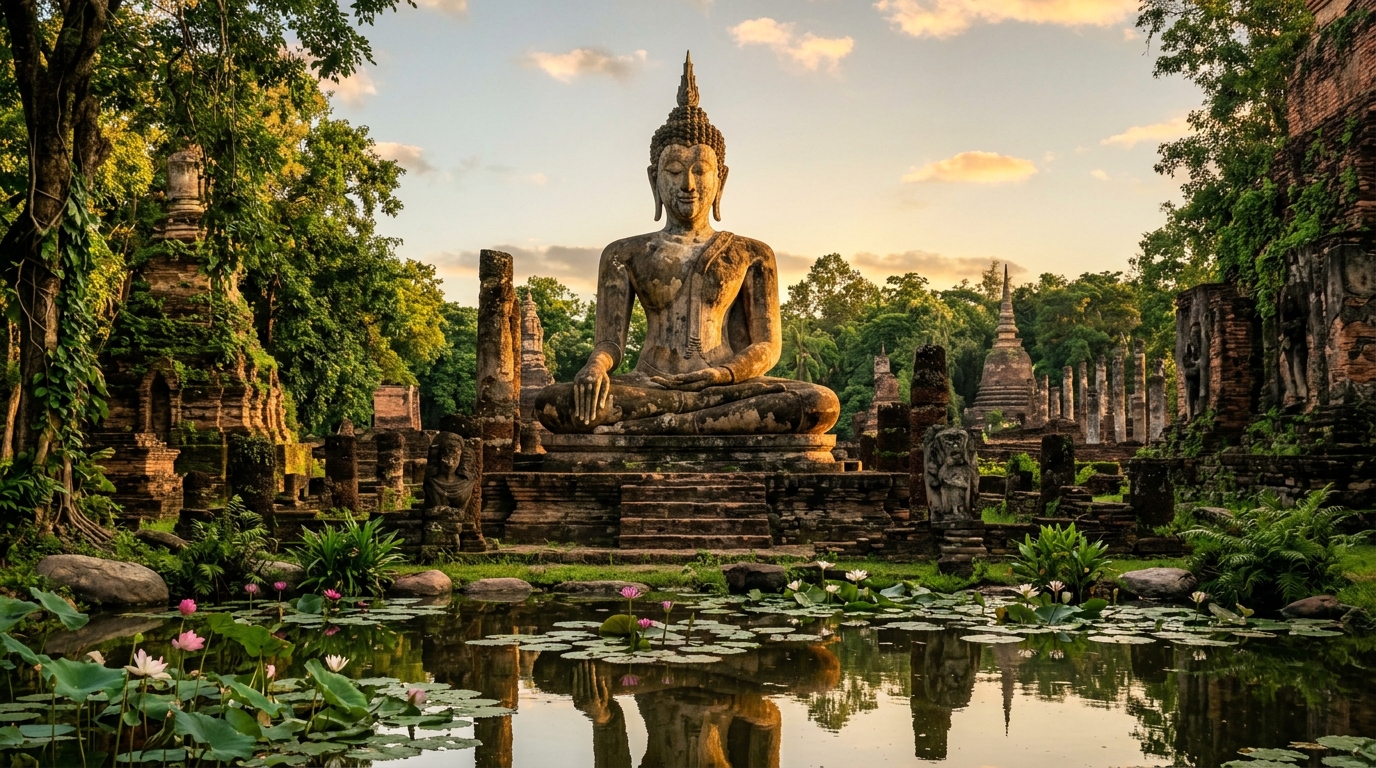
For a quieter historical exploration, take the seven-hour bus ride north to the Sukhothai Historical Park. Sukhothai was the capital of the 13th-century Sukhothai Kingdom. Because it is geographically isolated, it remains astonishingly quiet. I rented a squeaky bicycle for $2 at the entrance and spent an entire afternoon pedaling between massive, crumbling Buddha statues and lotus-filled ponds, crossing paths with maybe four other people all day.
Phimai and Phanom Rung: The Khmer Connection
Located in the central-eastern region, Prasat Hin Phimai is one of the most important Khmer temples in the country. Built between the 11th and 12th centuries, it is geographically oriented southeast, pointing directly toward Angkor Wat in Cambodia.
Nearby is Phanom Rung, set dramatically on the rim of an extinct volcano. While it cannot beat the sheer, overwhelming scale of Cambodia’s Angkor Wat, Phanom Rung wins entirely on atmosphere. You get world-class, intricately carved Khmer architecture with zero crowds. You can actually sit in the stone corridors in absolute silence, listening only to the wind whistling through the volcanic rock.
Untouched Islands: Trading Luxury for Isolation
Sticking to the heavily developed islands of the Gulf or the main Andaman coast is a massive missed opportunity if you prefer nature over beach clubs.
Koh Tarutao: The Former Prison Island
Located near the Malaysian border, Koh Tarutao is the largest marine park in the country. Let me be perfectly clear: there is zero luxury here. You will not find air conditioning, and the island’s electricity is strictly limited to a few hours a day via noisy solar generators.
The island formerly housed over 3,000 inmates, and domestic Thai tourists largely avoid it due to deep-seated superstitions regarding lingering spirits. Getting there requires flying into Hat Yai, taking a minivan to Pak Bara Pier, and boarding a ferry. Once you arrive, you can rent a bicycle and ride down dirt paths to completely empty stretches of white sand. The isolation is absolute. You will share the space primarily with local wildlife, including a highly aggressive population of macaque monkeys that will aggressively steal any food left unattended.
Note: The marine park is strictly closed during the monsoon season from May 15th to October 15th.
Koh Mook and the Rare Dugongs
Koh Mook, located in Trang province, feels like stepping back in time. The local community is primarily Muslim, so alcohol is scarce outside of a few specific guesthouses, and the call to prayer echoes across the water five times a day.
The main draw here is the Emerald Cave. To enter, you must swim through an 80-meter pitch-black limestone tunnel before it opens up into a hidden lagoon surrounded by sheer vertical cliffs. If you go at 7 AM before the daily boat tours arrive from Koh Lanta, you will have the entire lagoon to yourself. The surrounding waters are also one of the few places on earth where you might spot rare dugongs (sea cows) grazing on underwater seagrass.
Koh Chang Noi (The Western One)
Not to be confused with the massive, popular Koh Chang in the eastern Gulf, Koh Chang Noi sits on the western Andaman coast near Ranong. This island offers a total digital and commercial detox.
There is no internet, no ATM, and no cars. Reaching it involves taking a slow cargo boat from Ranong. I shared ferry space with bags of melting ice, massive rice parcels, and live chickens. Expect very few structured activities here; this destination is strictly for reading paperbacks in hammocks and eating fresh seafood grilled over coconut husks.
Deep Jungle Treks and Ethical Wildlife
Finding authentic off the beaten path Thailand means getting your boots muddy and actively avoiding exploitative tourist traps.
Khao Yai National Park: Ethical Observation
Just two hours from Bangkok via the entry village of Pak Chong, Khao Yai is one of the absolute best places to witness wild elephants ethically.
I strongly recommend staying at the Greenleaf Guesthouse just outside the park boundaries. The rooms are incredibly basic, but the proximity means you can hear wild animal calls clearly from your bed at night. Their local guides are deeply dedicated to conservation. My guide led us on an exhausting, sweaty 12-kilometer jungle trek, carrying a massive spotting scope to point out hornbills, monitor lizards, and white-handed gibbons swinging through the high canopy. They even provide heavy canvas leech socks—something I initially scoffed at until we waded through a damp, muddy ravine swarming with them.
Koh Chang’s Secret Interior Trails
If you do visit the larger Koh Chang in the east, ignore the coastal resorts and head into its dense, impenetrable tropical interior.
I tracked down a legendary local guide named Mr. Tan through a tiny outfitter called Coco de Boo Tours. For exactly 1,200 THB per person, Mr. Tan led us on the Klong Prao Trek. He personally carved this network of hidden trails with a machete over decades. Because he is the only person who knows the entry points, we did not see a single other human being all day. The trek culminated in a swim in a freezing, crystal-clear jungle river entirely closed off by the forest canopy.
Cost and Value Breakdown
Traveling away from the main tourist hubs is drastically cheaper, but the real value lies in where your money actually goes. In remote areas, your Baht supports local farming families and independent guides rather than international hotel conglomerates.
Expense Category | Mainstream Hub (e.g., Phuket) | Remote Alternative (e.g., Uthai Thani)
— | — | —
Accommodation | 2,500 – 8,000+ THB (Resort) | 400 – 900 THB (Local guesthouse)
Local Transport | 400 – 800 THB (Inflated taxi) | 250 THB (Daily scooter rental)
Attraction Entry | 1,500 THB (Commercial show) | 30 THB (Local hot springs/parks)
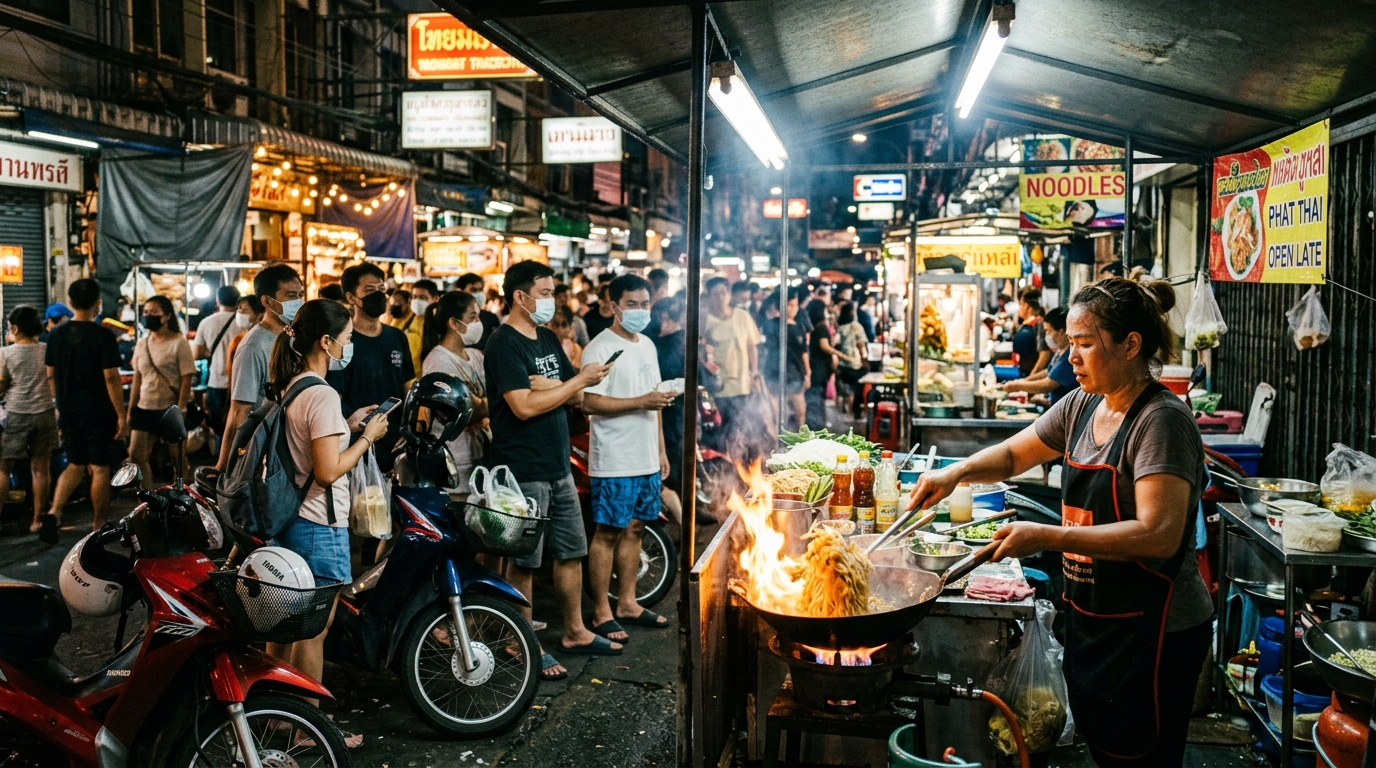
Meals | 300 – 600 THB (Westernized menu) | 40 – 80 THB (Authentic street market)
Real Transport Costs from Bangkok
Reaching these areas requires abandoning quick domestic flights for localized, slower transit. Here is a realistic look at overnight bus pricing and logistics departing from Bangkok’s main terminals (prices approximate via local operators):
| Destination | One Way Price (THB) | Travel Time / Schedule | Routing Notes |
|---|---|---|---|
| Chumphon | 800 | 19:00 pm – 03:00 am | Direct overnight bus |
| Surat Thani | 850 | 19:00 pm – 06:00 am | Direct overnight bus |
| Khao Sok | 1,150 | 19:00 pm – 10:30 am | Bus to Surat Thani + mini bus transfer |
| Koh Lanta | 1,300 | 19:00 pm – 10:30 am | Bus + mini bus + boat transfer |
| Had Yai | 1,400 | 19:00 pm – 12:30 pm | Bus to Surat Thani + mini bus transfer |
I booked the cheaper 850 THB bus to Surat Thani thinking I’d save cash, but the air conditioning was broken and the suspension felt nonexistent. Sometimes paying a slight premium for VIP buses on 12-hour hauls is absolutely worth the money to preserve your sanity.
Who Should Explore Off The Beaten Path Thailand (And Who Should Not)
Venturing away from the curated trail requires a specific, resilient mindset.
This approach is ideal for:
Travelers who prefer authentic cultural exchanges over curated resort comfort.
Confident scooter riders who can safely navigate poorly maintained, mountainous rural roads with loose gravel.
Wildlife enthusiasts committed strictly to ethical, observation-only animal encounters.
Budget-conscious backpackers willing to eat local street food and sleep on firm mattresses in fan-cooled rooms.
You might want to skip this if:
You require reliable 24/7 air conditioning, fast internet, and western-style soft mattresses to sleep well.
You have limited mobility or are traveling with small children. Reaching remote locations often involves jumping from moving boats into knee-deep surf or hiking up steep, uneven staircases.
You are on a tight one-week schedule. Rural transport is famously delayed; a broken fan belt on a minivan can cost you an entire travel day.
Common Mistakes to Avoid
If you plan to dig deeper into the country’s remote regions, there are two massive pitfalls you need to actively dodge.
1. Participating in Unethical Animal Tourism
This is the darkest side of the country’s tourism industry. Do not ride elephants, and do not pay for selfies with chained tigers. An elephant’s spine features sharp, upward-pointing bony spikes. They are anatomically incapable of carrying heavy wooden benches and human passengers without sustaining severe, lifelong spinal damage.
Furthermore, the training process involves starvation and physical abuse to break the animal’s spirit. Tiger facilities are equally horrific; adults are heavily sedated to allow tourists to pose with them. If a facility allows you to touch, ride, or handle a wild animal, it is an exploitative business, full stop. Stick to national parks for ethical observation from a distance.
2. Underestimating the Logistics and Physical Strain
Looking at a map of Southeast Asia is highly deceiving. A 100-kilometer drive in the central plains takes an hour on a paved highway. A 100-kilometer drive in the mountains of Mae Hong Son involves hundreds of terrifying, blind hairpin turns and can easily take four exhausting hours.
I have seen countless travelers ruin their vacations by booking back-to-back transit days in remote provinces without factoring in the physical toll. Between delayed minivans, five-hour long-tail boat rides on choppy, nauseating seas, and the sheer oppressive heat, you must build empty ‘buffer days’ into your itinerary.
Frequently Asked Questions
How do I communicate in remote Thai villages?
Outside of Bangkok and the major tourist islands, English proficiency drops significantly. Download the Thai language pack on Google Translate for offline use before leaving Wi-Fi. Learning basic phrases for ‘hello’ (Sawasdee) and ‘thank you’ (Khop Khun) goes a long way. In places like Nan, locals speak a Lao-infused dialect, so rely heavily on pointing, smiling, and translation apps.
Is it safe to drive a scooter in rural Thailand?
The country statistically has some of the most dangerous roads globally. You should only rent a scooter if you hold a valid international motorcycle license and possess substantial riding experience. Always wear a high-quality helmet. The mountain roads in the north feature sheer drops, loose gravel, and highly erratic local drivers passing on blind corners.
What is the best month to explore off the beaten path Thailand?
For the mountainous north (Phetchabun, Chiang Dao), November to January offers cool, misty weather (bring a jacket, it gets down to 5°C). For the southern Andaman islands (Koh Tarutao, Koh Mook), you must aim for late January to April to avoid the severe monsoon rains and dangerous sea swells that shut down ferry routes entirely.
Can I use credit cards in these remote locations?
Assume your credit card will be completely useless outside of your initial domestic flight or pre-booked city hotel. Remote islands, national park gates, local food stalls, and small guesthouses operate strictly on a cash-only basis. Always withdraw the maximum amount allowable at ATMs in major cities before heading out into the provinces.
Your Next Steps for an Authentic Journey
Stepping away from the curated tourist trail requires effort, physical endurance, and a willingness to embrace the unexpected. You will deal with severe language barriers, delayed cargo boats, and the occasional bout of food-related regret after a spicy bowl of jungle curry.
But the rewards for exploring off the beaten path Thailand are immense. Whether you are shivering in a rented tent above the clouds in Phetchabun, quietly watching wild gibbons swing through the canopy in Khao Yai, or swimming entirely alone in a 300-million-year-old limestone cave, you are experiencing the raw, unfiltered soul of the region. For your next trip, skip the crowded beaches of Phuket. Pick just one remote province or unmapped island, rent a scooter or hire a local boatman, and allow the gritty, beautiful reality of the country to reveal itself to you.