

Discovering the True Flavors of seoul
Navigating a comprehensive Seoul culinary guide is significantly more complex than simply visiting the most popular spots because the city functions as a high-speed collision of traditional roots and avant-garde innovation. When I first touched down in South Korea, I expected to simply eat my way through famous districts like Myeongdong, but I quickly realized that the city’s true pulse beats in the quiet residential alleys, the bustling financial hubs, and the serene mountain temples that dot the landscape. Understanding the capital’s food culture requires looking past the polished brochures to find where the locals actually spend their time and money. Seoul is a city that never stops moving, creating a dining landscape where chefs are constantly refining their craft to meet the demands of a population that appreciates both lightning-fast service and deep, slow-cooked traditions. Whether you are navigating the high-stakes world of fine dining in Mingles or searching for a hidden terrace cafe in a historic neighborhood, the key is to understand the rhythm of the city. My goal is to provide a framework to navigate this intense, delicious metropolis.
Quick Summary
Prioritize a Mix: Balance high-end modern Korean fine dining with hyper-specialized, functional local institutions to get the full spectrum of the city.
Use Local Tech: Download Naver Map immediately; it is essential for finding authentic, non-touristy restaurants that do not appear on Western mapping apps.
Embrace Neighborhood Hopping: Spend your time in specific districts like Seochon, Jongno, or Seongsu to experience the architectural and culinary nuances of each area.
Respect the Seasons: Korean cuisine revolves heavily around seasonal ingredients; always ask about the day’s specialties or seasonal recommendations.
Understand the ‘Messy’ Philosophy: Authentic Korean dining is communal, interactive, and often ‘messy.’ Do not expect pristine, individual plating at every stop.
Direct Answer: How to Eat Well in Seoul
If you want to experience Seoul like a culinary expert, stop looking for ‘the best’ restaurant and start looking for the right context. You should build your itinerary by alternating between two types of dining: the destination fine-dining experience and the hyper-local specialty meal. I recommend spending at least two days in modern hubs like Yeouido or Apgujeong for refined brunches and Michelin-starred tasting menus, then dedicating a full day to neighborhood hopping in areas like Seochon or Bangdong. For an authentic experience, ensure at least one meal is a dedicated temple-food visit or a raw-marinated crab experience where the focus is entirely on the ingredient, not the ambiance. Use local navigation apps like Naver Map to find places where the signage is entirely in Hangul; these are often the spots that have served the same dish for decades.
The Dual Nature of Seoul’s Dining Scene
Renowned chefs often describe Seoul as a city defined by contrast, and this is the defining feature of your culinary journey. On one end, you have the high-energy, competitive environment of the financial district, and on the other, the contemplative silence of a traditional tea house or a mountain temple. When I visited, I found that the best days were those where I started the morning in a quiet, book-filled cafe in Sajik-dong and ended the night at an intense, fast-paced Korean barbecue joint like Byeokje Galbi. This duality requires you to be adaptable. You might find yourself wearing a blazer at a sophisticated bistro for lunch and, a few hours later, sitting on a low plastic stool in a tented pojangmacha (street stall) eating spicy octopus.
Modern Korean Fine Dining: The Evolution of Taste
The transformation of Korean fine dining is best exemplified by establishments like Mingles, headed by Chef Kang Min-goo. This isn’t just about food; it’s about the evolution of a chef. Over the last decade, Chef Kang has successfully bridged the gap between traditional temple cuisine and modern Western techniques. When you sit down for the long tasting menu, pay attention to how they handle local seafood—the sea urchins, scallops, and clams are served with delicate shellfish broths that honor their origins while pushing them into new, exciting territory.
The Art of Hyper-Specialization
Unlike Western restaurants that often try to offer a bit of everything, the most memorable meals in Seoul are often found in places that do one thing and do it with obsession. Take Hwahaedang, for instance. This isn’t a place for a long, lingering conversation; it’s a place for Yangnyeom Gejang (marinated crab). The crabs are marinated alive in a proprietary blend of soy and rice vinegar, resulting in a depth of flavor that is genuinely impossible to find anywhere else. The service is functional—you eat, you appreciate the roe, and you leave. It is one of the most honest dining experiences I have ever had. My advice? Don’t go there for a romantic dinner. Go there for the absolute, singular pursuit of crab preparation excellence.
Navigating the Terrace Cafe Culture
As the seasons shift, Seoul’s residents flock to outdoor spaces. The terrace café culture here is deeply tied to the city’s architectural evolution. In areas like Jeongdong, you see cafes like Le Pool and Lagrin, which use red brick and stone walls to create a romantic, secret-garden vibe. My tip? Don’t just go for the coffee. These spots are often brand-centric; House of Wild, for example, publishes its own newspaper. These places are designed to be destinations where you can sit for an hour and observe the local fashion and lifestyle trends. For those who want the quintessential Seoul terrace photo, Stapix in Seochon is the place to be. The view of historic ginkgo trees against the backdrop of the hills is unparalleled.
Choosing Your Vibe
If you want to disappear into a book, head to the Coffee Shop in Sajik-dong. The owner provides a curated shelf of literature and art books that makes it the perfect refuge for a solo traveler. If you prefer urban sophistication, Anthracite Hannam is a classic. It’s an early pioneer of the modern café scene in Hannam-dong and offers the best people-watching benches in the city. Remember, these terrace cafes operate on a first-come, first-served basis. If you arrive at 2:00 PM on a Saturday, you will likely wait an hour. Aim for 11:00 AM to secure your spot.
The Rise of Sophisticated Brunch in Yeouido
Historically, Yeouido was the ‘Wall Street’ of Seoul—all business, fast lunches, and quick coffee. That has changed. I was genuinely surprised by the shift toward a ‘chic and cozy’ brunch culture in this financial district. Establishments like Laurus Blanc, located in the Hyundai Seoul department store, represent this shift. When I ate there, I found their signature French toast to be massive—topped with Shine Muscat grapes and torched bananas. It is a shared-plate experience that completely defies the old-school image of a quick office-worker lunch.
The Michelin-Heritage Bistro
If you prefer something with more culinary weight, Orzo Le Beau Temps in Yeouido is an expansion of an Apgujeong Michelin-starred bistro. The menu is heavily focused on technique, featuring dishes like homemade tajarin pasta with truffle and mushroom pesto. The ability to add fresh shaved truffles to a casual lunch really highlights how much the dining expectations in Seoul have elevated. This is no longer just about fueling up; it is about the experience of the meal. You are paying for the precision, the high-quality sourcing, and the atmosphere that blends professional efficiency with leisure.
The ‘Nopo’ Experience: Historic Institutions
Seoul is not just about the new; it is a city that deeply respects its history through its ‘nopo’—long-standing institutions. Imun Seolnongtang, established in 1904, is arguably the most famous example. Walking in, you feel the weight of history in the wooden floors and the consistent, milky-white broth that has been simmering for over 17 hours. This is not for everyone. The flavor is subtle, requiring you to season the soup with salt, pepper, and fresh green onions yourself at the table. It is an exercise in minimalism. When I visited, I noticed that most locals added a significant amount of the house-made kimchi to their bowl, effectively changing the profile of the dish halfway through. That is the beauty of these older spots—they give you the canvas, and you participate in the final assembly of the flavor.
The World of Street Food and Markets
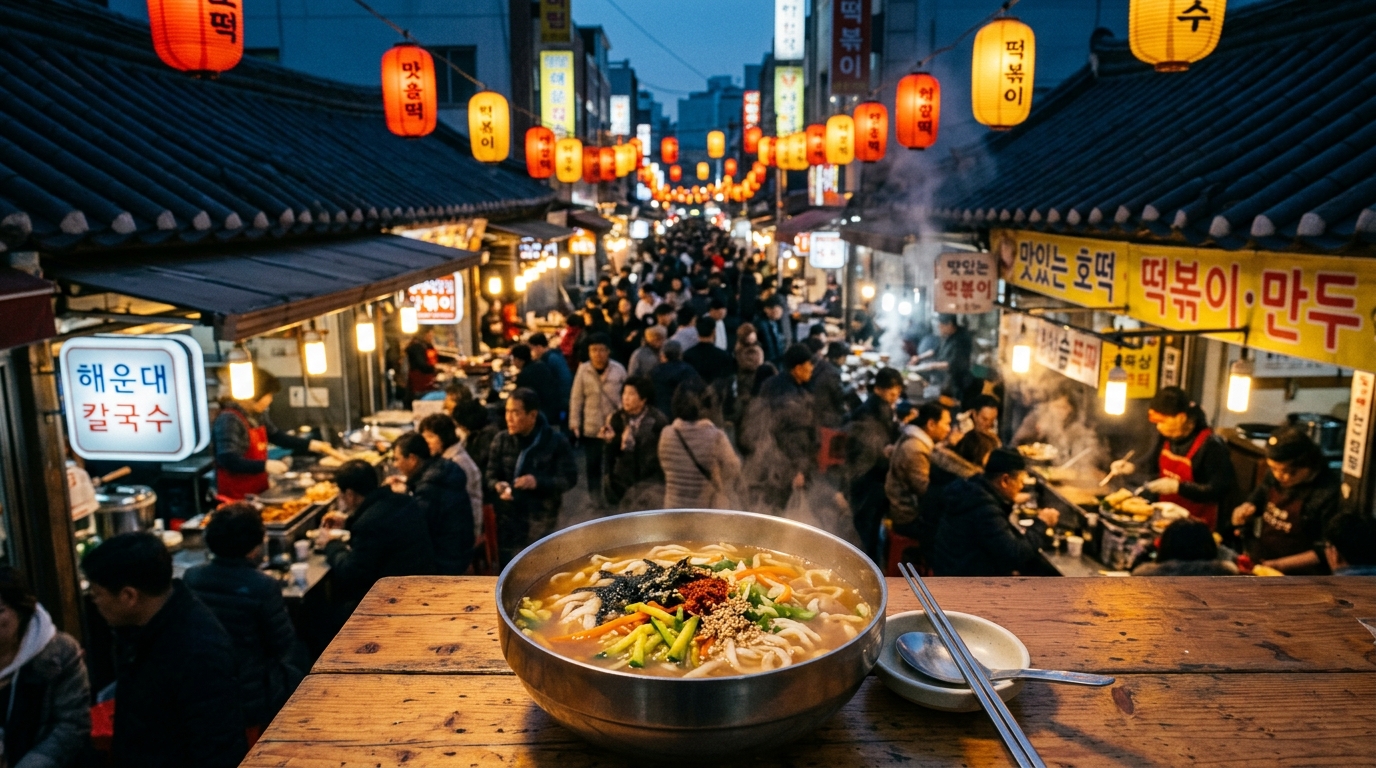
You cannot claim to have eaten in Seoul without visiting a traditional market. Gwangjang Market is the most iconic, dating back over a century. Walking through the stalls at night is an assault on the senses in the best way possible. You smell the frying of bindaetteok (mung bean pancakes), the metallic scent of the griddles, and the sweet aroma of hotteok (sugar-stuffed pancakes). My mistake the first time was trying to eat everything. It is impossible. Pick three things: the bindaetteok, some freshly sliced soondae, and a bowl of kalguksu (knife-cut noodles). Sit at the counter, watch the ajummas (older women) work with practiced, lightning-fast motions, and drink some makgeolli (rice wine) out of a metal bowl. It’s not elegant, it’s not refined, but it is deeply satisfying.
Decision Guidance: Who Should Follow This Guide?
Deciding how to spend your limited stomach capacity in Seoul is a challenge. Here is how you should think about your choices.
This is ideal for you if:
You appreciate culinary evolution and are interested in how traditional temple ingredients are influencing modern fine dining.
You are willing to travel a bit further out of the main tourist hubs to discover neighborhood gems in places like Bangdong or Sajik-dong.
You value high-quality, specialty ingredients—like fresh truffles or artisanal perilla oil—over expansive, generic menus.
You are interested in the cultural history of food and how the city’s past informs its present eating habits.
You might want to skip this if:
You are on an extremely tight budget. While affordable options like market food exist, the high-end spots mentioned carry a premium price tag that may not align with a shoestring travel budget.
You struggle with waiting times or navigating complex reservation systems. Many popular, high-end spots require booking weeks in advance, and the most authentic ‘nopo’ locations may have long queues that don’t allow for digital reservations.
You prefer a high level of hand-holding. If you are not comfortable using a translation app or potentially navigating a menu with limited English, some of these experiences might feel overwhelming.
Cost and Value Breakdown
Dining in Seoul can be surprisingly segmented by price. Understanding where you are getting value is key to managing your budget while eating like an expert.
| Experience Category | Typical Price Range (Per Person) | Value Focus |
|---|---|---|
| Casual Market Food | ₩10,000 – ₩20,000 | Speed, quantity, authentic atmosphere |
| Mid-range Bistro/Cafe | ₩25,000 – ₩45,000 | Quality ingredients, ambiance, people-watching |
| Modern Fine Dining | ₩150,000 – ₩300,000+ | Technical mastery, artistic presentation, prestige |
Modern fine dining is expensive, but it represents the cutting edge of global gastronomy. If you are a foodie, the value is in the innovation. If you are looking for simple sustenance, however, the market food offers a much higher ‘flavor-per-won’ ratio.
Common Mistakes to Avoid
- Ignoring the Seasonal Nature of Ingredients: Many travelers make the mistake of ordering whatever is ‘classic’ without looking at the season. In Seoul, the most profound experiences come from seasonal fruits and vegetables, particularly in temple cuisine. Always ask for the day’s special or seasonal recommendation; it is often where the chef’s true talent lies. If you see mountain herbs in the spring, order them. They won’t be there in the summer.
- Sticking Only to Large Districts: It is tempting to stay within the comfort zone of Myeong-dong or Gangnam. However, you will miss the soul of the city. The most authentic terrace cafes and local bistros are tucked into residential pockets where the signs might not even be in English. Use Naver Maps to find your way into these quieter neighborhoods—I promise the extra 20-minute bus ride is worth the lack of crowds. In Myeong-dong, you are often paying for convenience; in the outer neighborhoods, you are paying for quality.
Frequently Asked Questions
Do I need to speak Korean to eat at these places?
Most high-end restaurants and trendy cafes in districts like Hannam-dong or Apgujeong have English-speaking staff or English menus. However, in smaller, hyper-specialized local spots, you might face a language barrier. I always recommend using a translation app like Papago—which is much more accurate for Korean than standard tools—for the menu. Honestly, pointing at what you see others eating is a universal culinary language. In my experience, showing genuine interest in the food goes a long way with the kitchen staff, even if you can’t communicate verbally.
How far in advance should I book the popular spots?
For places like Hwahaedang or three-Michelin-starred Mingles, you should book as early as possible—often weeks, sometimes even a month in advance. If you have a specific, high-end place in mind, check their website or Instagram at least two weeks before your trip. For the terrace cafes, booking is rarely possible; they operate on a ‘first-come, first-served’ basis. My advice is to arrive at these cafes right when they open, usually around 11:00 AM, to secure the best terrace seating before the weekend crowds arrive.
Is it worth visiting a temple just for the food?
Absolutely. Visiting a place like Jinkwasa Temple is not just about the meal; it is about the complete shift in atmosphere. The contrast between the intense, loud streets of central Seoul and the silence of a mountain temple is the best way to reset your senses. The vegan temple cuisine is delicate and profound, focusing on the natural, subtle flavors of fermented vegetables and mountain roots. It is arguably one of the most authentic Korean food experiences you can have, and it provides a necessary break from the calorie-dense, meat-heavy options found in the city center.
Should I worry about tipping?
Tipping is not a part of Korean culture. In fact, it can occasionally be seen as awkward or unnecessary. The price you see on the menu is the price you pay. Service is considered a standard expectation of the dining experience, not something that requires an additional gratuity. If you attempt to tip, the staff might kindly decline. Save your extra money for a better bottle of wine or an extra round of appetizers at your next meal.
Conclusion: Your Next Steps
Seoul’s culinary scene is a moving target, constantly blending the historical with the hyper-modern. To get the most out of your visit, stop trying to ‘check off’ a list and instead start exploring by theme. Dedicate time to the refined brunch culture of Yeouido, seek out the quiet intensity of temple food, and spend your afternoons finding the hidden terrace cafes of Seochon. Remember, the best meal you have in Seoul might not be at the most expensive restaurant—it might be at a small, specialized hole-in-the-wall where the owner has perfected one single dish over thirty years. Keep your itinerary flexible, use Naver Maps to navigate away from the main streets, and don’t be afraid to wander into the older residential neighborhoods. Your palate will thank you for the effort, and you will leave with a much deeper appreciation for the soul of this city. Start your journey by picking one high-end dinner and one local market lunch for tomorrow—the rest will naturally fall into place as you explore.