
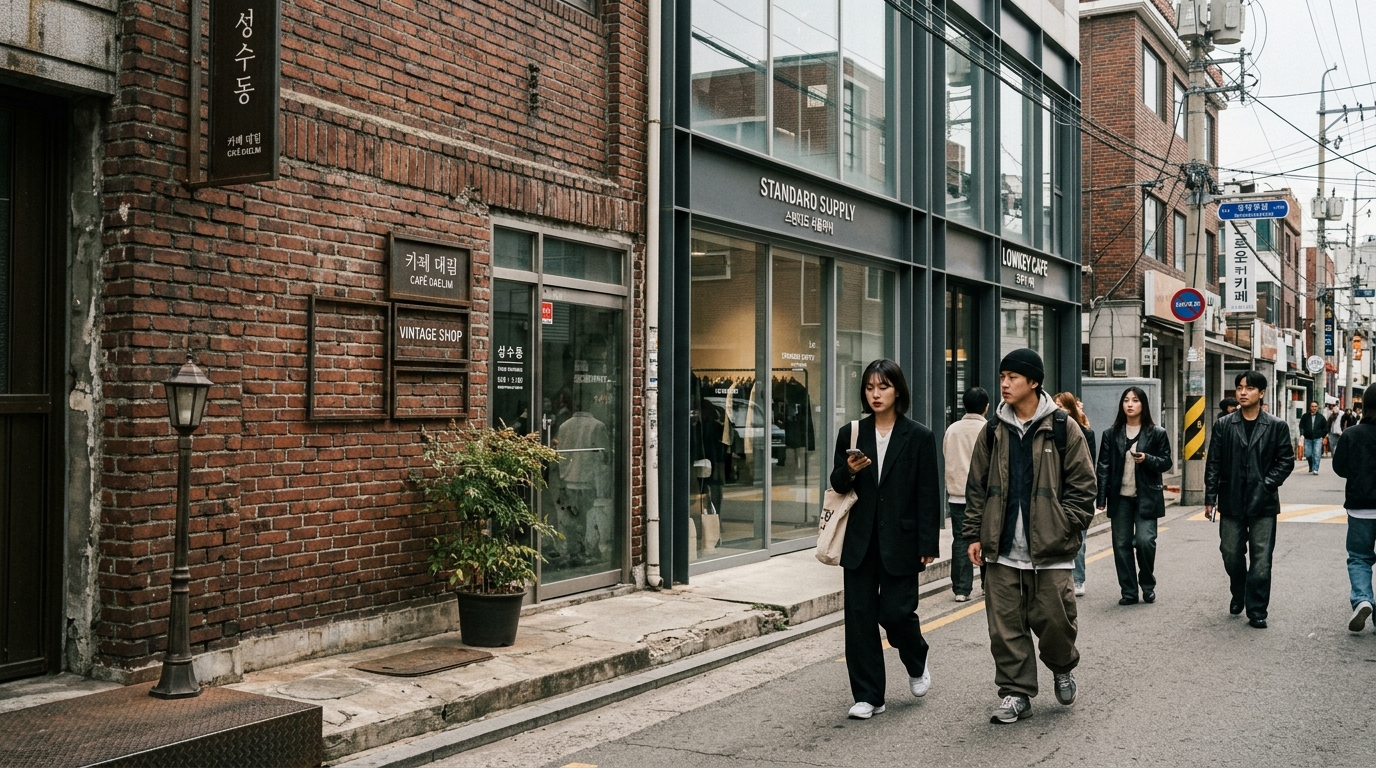

Navigating seoul‘s sprawling, fast-paced retail landscape requires a reliable Seoul fashion district guide because the city shifts its creative focus with startling speed. If you land in South Korea expecting a static shopping experience akin to a classic Western mall, you are in for a significant shock. The retail environment here is a living, breathing entity, constantly pivoting from the hyper-polished status signaling of cheongdam to the raw, industrial-turned-creative pulse of Seongsu-dong. During my initial weeks in the capital, I realized that the best way to decode the local aesthetic isn’t by browsing major international chain stores—you can do that anywhere—but by tracking how Seoul’s youth culture dictates exactly where the next wave of ‘it’ brands will emerge. This guide serves as the tactical blueprint you need to navigate the city’s complex neighborhoods like an industry insider, helping you distinguish between mass-market noise and genuine local innovation.
Quick Summary
- Seongsu-dong is the premier destination for industrial-chic architecture, experimental pop-ups, and emerging local independent labels.
- Cheongdam and Apgujeong remain the undisputed luxury anchors, featuring high-end flagship stores and exclusive, white-glove service experiences.
- Hongdae and Itaewon function as the city’s youth culture and vintage engines, ideal for those seeking indie accessories and authentic thrift finds.
- Timing is critical: Plan your trip for February or September to coincide with Seoul Fashion Week for the best retail events and street style sightings.
- Local Logistics: Ditch Google Maps in favor of Naver Map or KakaoMap, as they provide significantly more accurate data for Seoul’s narrow, winding alleys.
- The Luxury Enthusiast: If your shopping list includes iconic international heritage brands or high-end designer collaborations.
- The Epicurean: If you want your retail therapy accompanied by Michelin-starred culinary experiences like those at Mingles or Jungsik.
- The Architectural Fan: If you prioritize grand, statement-making flagship buildings designed by world-renowned architects.
- The Trendsetter: If you want to find the local Korean labels that will likely become global staples within the next two years.
- The Design-Minded Traveler: If you appreciate the aesthetic of ‘adaptive reuse’ where old industrial spaces are transformed into high-concept retail.
- The Content Creator: The visuals in this district are unmatched for photography and social media documentation, provided you have a good camera and an eye for detail.
- The Indie Spirit: If you prefer thrift finds, small-batch designers, and a high-energy, youth-centric environment.
- The Night Owl: If you want a district where the fashion scene transitions seamlessly into the nightlife scene, with clubs and late-night food stalls steps away from the boutiques.
- Budget-conscious travelers: Avoid the flagship-heavy Apgujeong area; the price points are astronomical, and the vibe is often exclusionary for casual browsers.
- Mall-fatigued shoppers: If you are tired of the typical department store experience, avoid the large underground shopping centers like those found in COEX or Myeongdong; focus exclusively on the street-level independent shops in Seongsu and Hongdae.
- Ignoring the Monday Closing Rule: Many major museums, galleries, and even several boutique concept stores in Seoul close on Mondays. I made the mistake of planning a heavy art-and-retail day on a Monday during my first visit and ended up staring at dozens of locked glass doors. Always double-check store hours on Naver Maps or the brand’s local social media pages before trekking out to a specific location.
- Over-relying on Google Maps: In South Korea, Google Maps is not the standard for local business information. The navigation features are frequently inaccurate, showing businesses that have moved or closed years ago. Download Naver Map or KakaoMap. These apps are significantly more accurate for navigating the winding, narrow alleys of Seongsu or the complex layouts of Hongdae. They will save you hours of wandering in circles, which I learned the hard way after walking 30 minutes in the wrong direction.
- www.vogue.in
- www.bbc.com
- www.cathaypacific.com
- www.wallpaper.com
- travelnoire.com
- www.timeout.com
The Direct Path to Seoul’s Best Style
If you want to understand the true heartbeat of the city’s current fashion identity, head straight to Seongsu-dong. You do not need to spend your entire trip attempting to visit every district; if you only have three or four days, prioritize the area surrounding Yeonmujang-gil. This specific stretch captures the essence of the ‘new Seoul’ better than any high-end department store ever could. It is where former 1970s factories and warehouses now house multi-brand retail spaces, independent design labels, and cafes that function as gallery spaces.
When I first stumbled into a refurbished warehouse there, I was honestly stunned to find a high-end skincare boutique integrated seamlessly into a brutalist, exposed-concrete structure. It set a new benchmark for how I perceive shopping experiences globally. The retail density here is massive, and unlike the sterile environment of a typical luxury mall, shopping in Seongsu feels like a curated treasure hunt through an artist’s workspace. If you see a long queue outside an unassuming brick building, join it—you are likely standing in line for a limited-edition drop or an art-led collaboration that you will not find anywhere else in the world.
Understanding the Seoul Fashion Hierarchy
The retail ecosystem in Seoul functions on a strictly tiered, yet highly innovative, system. At the top, you have the established luxury houses, while the bottom—which is arguably the most exciting tier—is the grassroots indie label sector. Understanding where these intersect is key to a successful, stress-free shopping trip.
The Luxury Spine: Cheongdam and Apgujeong
Cheongdam is not merely a neighborhood; it is a physical manifestation of status. When you walk down the tree-lined avenues here, you are looking at architectural feats as much as apparel. The Louis Vuitton store, designed by Frank Gehry, is a mandatory photo stop for most, but the real value lies in the surrounding, smaller boutiques like Boontheshop. Peter Marino’s design for this space provides a museum-like backdrop that emphasizes the gravity of the high-fashion items on sale. If you are looking for classic luxury, established international labels, and high-stakes service, this is your starting point.
Be prepared, however: this is where the premium price point is the absolute baseline. You aren’t just paying for the shirt; you are paying for the curated lifestyle surrounding the brand. I often find that the service in Cheongdam is exceptionally formal, which can feel intimidating for casual window shoppers. My advice is to dress with a bit of intention; the staff here are used to high-net-worth clients, and your experience often improves when you mirror the aesthetic of the neighborhood.
The Creative Frontier: Seongsu-dong
Seongsu is where the rules are consistently rewritten. Often labeled the ‘Brooklyn of Seoul,’ the neighborhood’s charm comes from its refusal to hide its gritty industrial past. You will see red-brick warehouses sitting next to glass-walled flagship stores. My favorite aspect of Seongsu is how it blends function with art. I recall visiting Daelim Changgo for a mid-day coffee; it’s a massive former rice mill that still feels like a cavernous industrial relic but hums with the electric energy of a contemporary art gallery. For fashion hunters, stores like EQL and Point of View demand your attention. This area rewards the curious traveler who doesn’t mind looking up; many of the best shops are located on the second or third floors of buildings that look abandoned from the street.
The Youth Pulse: Hongdae and Itaewon
If you want to see what the next generation is actually wearing, these are your districts. Hongdae, anchored by the creative output of Hongik University, is raw, fast-moving, and perpetually changing. You will find pop-up stores that might only exist for a single weekend, transient markets selling indie jewelry, and street performances that dictate the ‘vibe’ of the neighborhood. It can be chaotic, especially on a Friday night, but that is the point.
Itaewon, by contrast, feels more multicultural and eclectic. It is the absolute best place to find vintage collectibles, heavy-duty denim, and bespoke tailoring. The bridges near Noksapyeong Station offer a vantage point that is perfect for street photography if you want to capture the ‘nonchalant’ layering that Korean youth have perfected. The crowd here is much more international than in other parts of the city, and you will hear as much English and other languages as you will Korean. It’s a great ‘entry-level’ district if you find the intensity of Seongsu or the exclusivity of Cheongdam too overwhelming.
Who Should Focus on Each District
Choosing where to focus your limited time in Seoul can be incredibly overwhelming. Use this decision framework to determine your primary base:
Who Should Focus on Cheongdam?
Who Should Focus on Seongsu?
Who Should Focus on Hongdae?
Who Might Want to Skip Certain Areas?
Cost Comparisons and Value Analysis
Shopping in Seoul isn’t inherently ‘cheap,’ but the value propositions vary wildly. Understanding this helps you manage your budget.
| District | Price Range | Value Focus |
|---|---|---|
| Cheongdam | $$$$ | Exclusivity, Status, Service |
| Seongsu | $$$ | Quality Design, Innovation, Experience |
| Hongdae | $$ | Trends, Indie Finds, Experimental Looks |
| Itaewon | $$ – $$$ | Unique Vintage, Bespoke, Eclectic Items |
When comparing costs, keep in mind that local brands like ADERERROR or Gentle Monster offer high-fashion designs at a lower price point than European luxury houses, yet with a significantly higher level of retail ‘theatre.’ I have personally found that investing in a local, independent piece from a designer in Seongsu yields better long-term wardrobe value than a mass-produced item from an international conglomerate. You are paying for the originality of the design, which often holds more cultural cachet.
Common Mistakes to Avoid
Frequently Asked Questions
What is the best season to visit for fashion lovers?
Plan your visit for February or September. This timing aligns with Seoul Fashion Week, which brings a surge of energy, pop-up events, and exclusive collections to the city. Even if you don’t secure an invite to the runway shows, the districts are at their most vibrant, and you will catch the latest trends being worn by the city’s creative elite. The weather in September is also particularly pleasant for the massive amount of walking you will inevitably do.
Is it worth visiting the department stores like The Hyundai Seoul?
Absolutely. While I generally prefer street-level exploration, places like The Hyundai Seoul are masters of the ‘curated experience.’ They centralize the city’s best emerging labels under one roof, which is incredibly efficient if you have limited time and want to compare multiple Korean designers in one afternoon. Think of it as a high-end, highly organized ‘best-of’ edit that acts as a safety net if you didn’t manage to hit every neighborhood on your list.
How should I dress to fit in with local trends?
Seoul’s street style is currently dominated by ‘structure’ and ‘nonchalance.’ Think oversized outerwear paired with tailored trousers or structured skirts. The key is to avoid looking like you are trying too hard. If you are wearing an oversized vintage jacket, keep the rest of your look relatively minimal. Also, platform-soled footwear is very common right now; they are both a style statement and a practical necessity for the sheer amount of walking you will do on the city’s uneven pavement.
Are there tax-free benefits for tourists?
Yes. Most major retail shops and even many independent boutiques in trendy districts offer tax-refund services at the point of sale. Look for the ‘Global Blue’ or ‘Tax Free’ signage at the checkout counter. Always carry your physical passport when shopping, as you will need it to process the paperwork on-site, which provides an immediate deduction rather than waiting for a confusing, tedious refund process at the airport departure gate.
The Evolution of the Seoul Aesthetic
What makes the Seoul fashion scene feel different from Paris or New York? It comes down to the influence of music and art. In other cities, the fashion industry can feel walled off—a place for institutions and gatekeepers. In Seoul, the conversation is led by image-makers. K-pop stars and creative directors move fluidly between music videos and the front row of the runway. This isn’t just marketing; it is a fundamental shift in how clothes are consumed.
When I observe the crowds in Seongsu, I notice that the people are dressing with a specific level of intention. It isn’t just about ‘looking good’ for the day; it is about crafting a personal persona. The clothing is a record of their identity. If you approach your shopping trip with this same mindset—viewing your purchases as a curation of your own personal narrative—you will find the experience in Seoul to be profoundly rewarding. The city is a teacher; if you let it, it will change how you dress and how you view the world of design.
Planning Your Itinerary: A Strategic Approach
If I were returning to Seoul for a four-day fashion-focused trip, here is how I would distribute my time to ensure I hit the high notes without burnout.
Day 1: The Luxury Spine. Spend the morning in Cheongdam. Start at Boontheshop to see how high-end retail is treated as a museum exhibition. By the afternoon, move toward Café Dior for a mid-day coffee. The building itself, designed with a white, tulip-like structure, is a work of art.
Day 2: The Industrial Deep-Dive. Reserve this entire day for Seongsu-dong. Do not rush. Spend your morning at Daelim Changgo, then slowly work your way through the alleys along Yeonmujang-gil. This is where you will find the gems. If you see a queue for a pop-up, join it. These queues are often for limited-edition drops or art-led collaborations that you won’t find anywhere else in the world.
Day 3: The Youth and Vintage Mix. Start in Itaewon for the vintage boutiques and the chance to find artisan-crafted pieces. After lunch, take the subway to Hongdae. Use your afternoon to walk the Red Road. This is the perfect place to observe how the city’s youth are influencing global trends. Take note of the footwear—you will see a clear divide between the ‘ballet-core’ influence and the chunky, structural sneaker movement that defines much of the current Seoul street scene.
Day 4: The ‘Best-Of’ Edit. Spend your final day at The Hyundai Seoul. Use this time to fill in the gaps. If you saw a brand you liked but didn’t have time to visit, these locations are your safety net. They hold most of the key players in one place, allowing you to finalize your shopping list before you head to the airport. The food court is also an excellent place to grab a final, high-quality Korean meal before departure.
Final Thoughts: The Art of the Search
The most important thing to bring with you to Seoul is patience. The city is dense and layered. You might pass by the most interesting store in the world because it is located on the third floor of an unmarked building or hidden behind a nondescript iron gate in Seongsu.
My best discoveries in this city have always been the ones I didn’t plan. I remember stumbling upon a tiny bookstore that only sold indie design zines simply because I got lost looking for a subway entrance. That discovery ended up being the highlight of my trip. Don’t be afraid to put the phone down, tuck away the map, and just follow the aesthetic trail—the people who look like they belong in a fashion editorial are usually the ones heading toward the most interesting locations. Seoul is not a city that reveals itself to those who stay on the main road. It demands that you engage with its geography, its history, and its willingness to destroy the old to build the new. Whether you end up with a suitcase full of limited-edition pieces or just a few carefully chosen items that will last a lifetime, the true value of your visit will be the shift in your own perspective on what modern retail can be.