
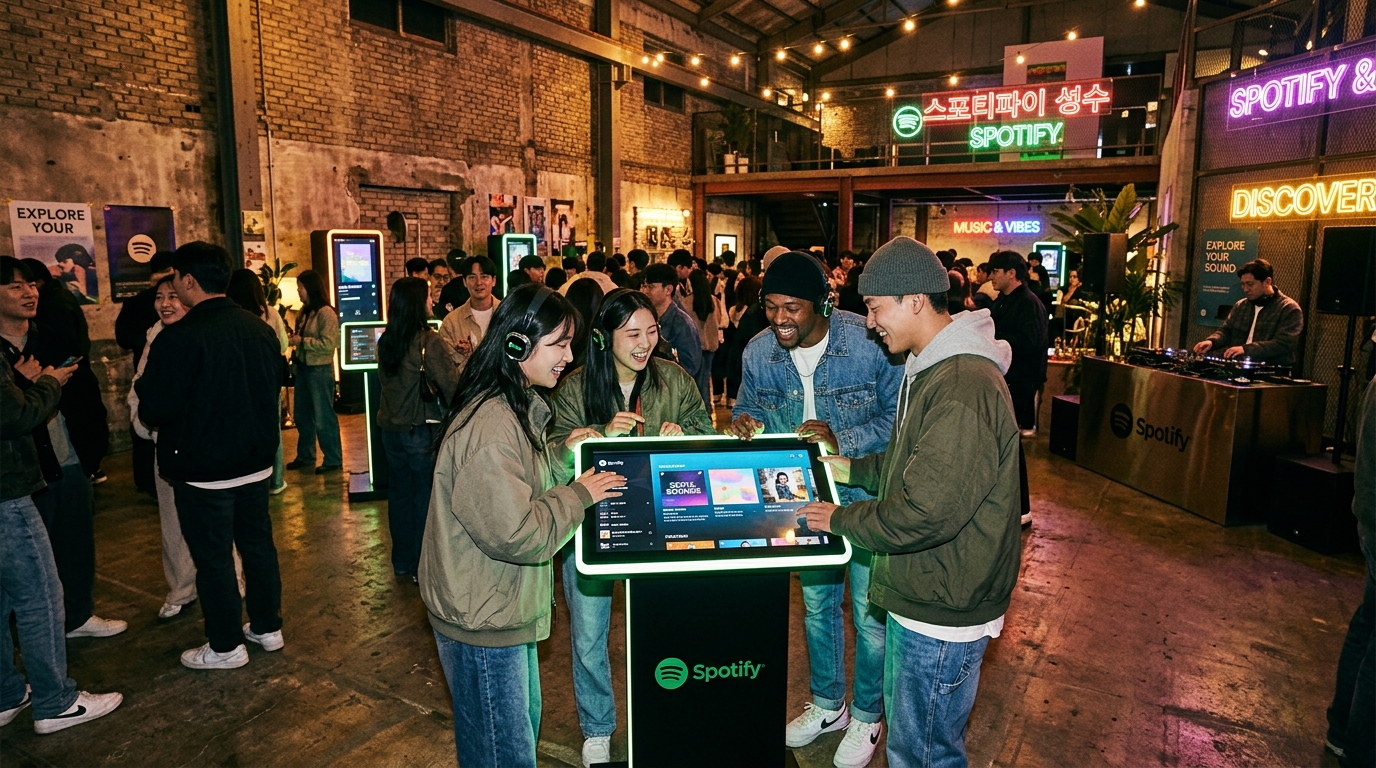

Opening the Door to Spotify House seoul
Spotify House Seoul has fundamentally redefined how a global streaming giant interacts with its local audience, moving well beyond the digital interface to create a tangible, multi-sensory brand experience that demands your attention. If you are wondering whether these massive offline activations are merely marketing spectacles or genuine efforts to bridge the gap between platforms and listeners, the answer lies in the nuanced execution of their 2025 initiatives. As I walked through the Seongsu district—a neighborhood defined by its industrial-chic architecture and raw, creative energy—I realized that this event was designed specifically for the ‘digital-first, physical-second’ generation that refuses to accept the barrier between their playlists and their daily reality.
Quick Summary
- Event Purpose: Spotify House Seoul bridges the gap between digital streaming features and tangible, real-world music culture.
- Key Zones: Interactive experiences like the Daylist Café, Connect Garage, and Create Kitchen allowed fans to test high-utility features.
- Cultural Curation: The event blended global superstars like Central Cee with local icons like Jay Park and Zico to solidify its status as a premier tastemaker.
- Strategic Location: Selecting Seongsu over traditional luxury hubs like Gangnam aligned the brand with a trend-conscious, younger demographic.
- Future Integration: The event highlights a shift toward experiential marketing where global brands act as local community hubs rather than just service providers.
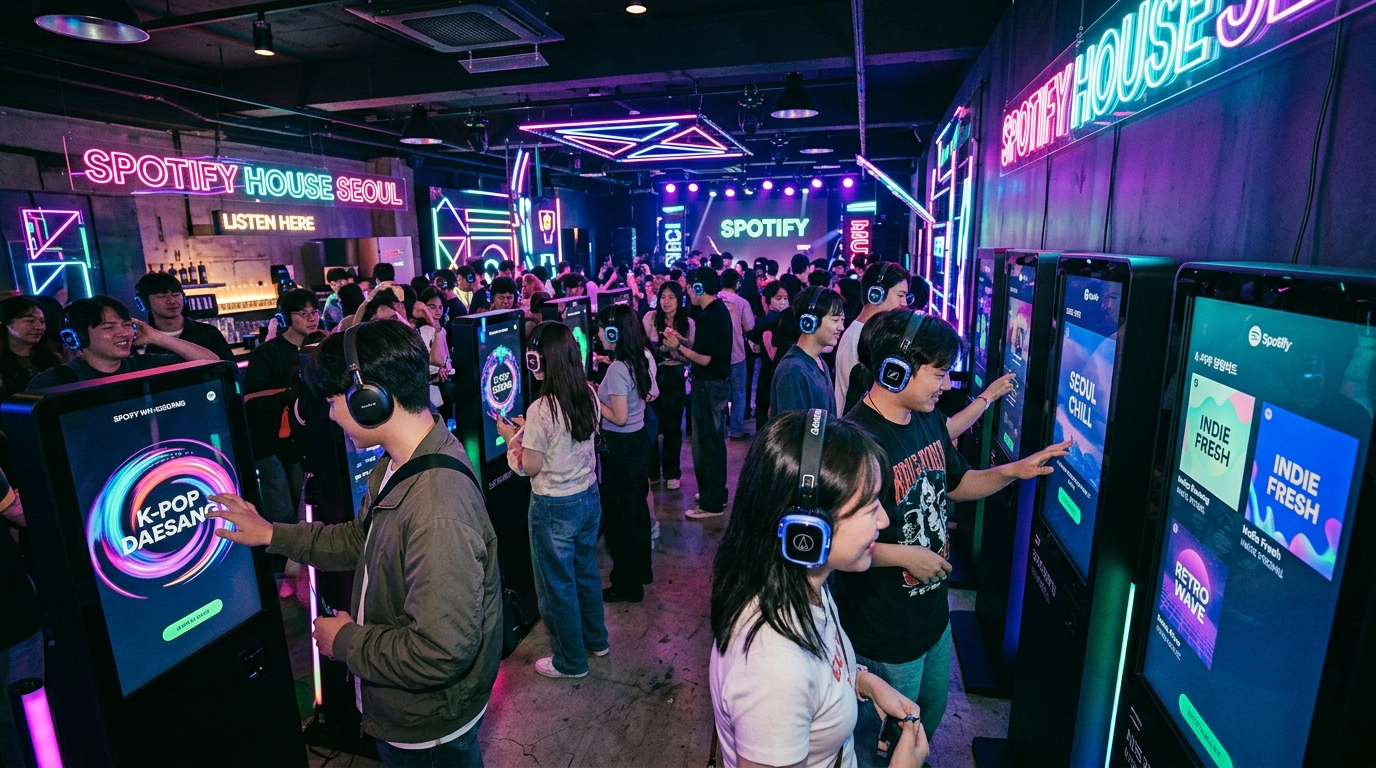
- Blend: This space was designed to facilitate social playlist mixing. I watched a group of strangers create a collaborative playlist in real-time, effectively demonstrating the social utility of the app.
- Jam: Encouraging collaborative listening, this room featured an audio setup that allowed multiple users to control the queue, a feature many casual users don’t fully leverage.
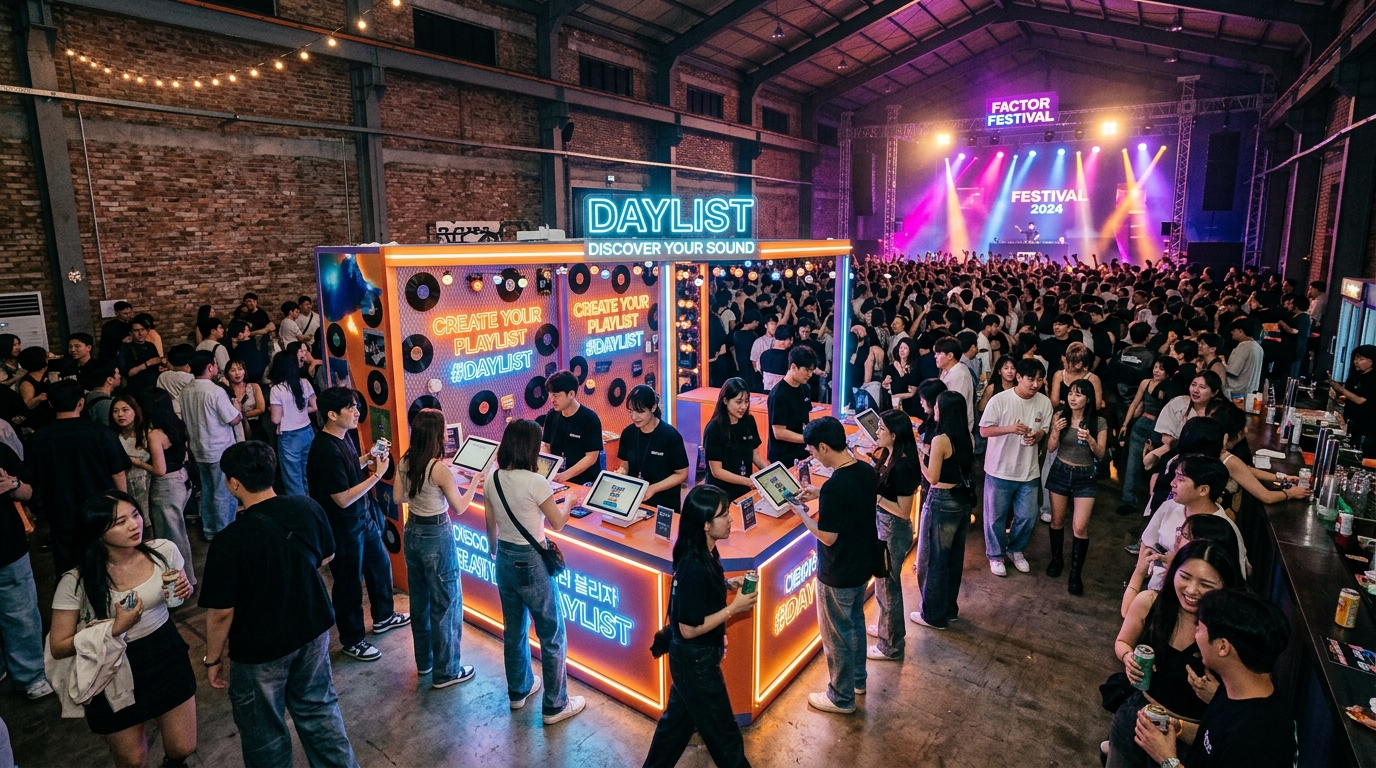
- daylist: This area showcased the brand’s algorithmic discovery capabilities, turning the app’s personalized daily playlists into a real-world, atmospheric experience.
- Lossless: This was a high-fidelity room that highlighted superior audio quality, signaling a clear shift toward catering to audiophiles and tech-savvy listeners who demand more than compressed streaming.
- Tech-Savvy Music Lovers: If you are the type of person who loves tinkering with your audio settings and wants to see how ‘lossless’ streaming feels in a professional, controlled room, these pop-ups are a playground.
- Cultural Observers: If you have a specific interest in the intersection of fashion, tech, and Korean pop culture, these venues provide a dense concentration of trends in a single, well-designed location.
- Social Connectors: If your goal is to discover new artists while being part of a community that values the same ‘insider’ music trends, you will find a lot of value in the programming and the attendee demographic.
- You Prefer Quiet Travel: These events are crowded, loud, and designed to overstimulate the senses. If your idea of a perfect Seoul vacation involves quiet temple walks and solitude, the chaos of Seongsu during a festival will likely overwhelm you.
- You Hate Queuing: Even with digital registration, these events involve waiting. If your itinerary is strictly timed down to the minute, the logistical realities of high-capacity events might disrupt your flow and cause unnecessary stress.
- newsroom.spotify.com
- www.hollywoodreporter.com
- musically.com
- www.digitalmusicnews.com
- koreajoongangdaily.joins.com
- www.mk.co.kr
- newsroom.spotify.com
The Core Mission: Why Offline Matters
When I first heard about the plans for the 2025 event, I admit I was skeptical. Why would a streaming app, which by definition lives inside a screen, need a massive, physical presence? However, standing inside the ‘Connect Garage,’ it became clear to me. The biggest pain point for modern listeners isn’t finding music—it’s managing the friction between devices. Whether it’s moving from your phone to a smart speaker, syncing playlists between friends, or managing audio quality on the go, the technological barrier is real. Spotify is using these pop-ups to educate users on their ‘Uniquity’ philosophy: that music should follow you, not just sit on your phone.
This isn’t just about showing off fancy speakers or having a photo-op. It is about humanizing the algorithm. By curating physical spaces like the ‘Daylist Café,’ the brand forces you to rethink how you consume music. Instead of passively scrolling, you are actively engaging with how your data influences your daily rhythm. It is a brilliant strategy for loyalty, especially in a market as competitive and tech-literate as South Korea.
Navigating the 2025 Cultural Landscape
To understand the gravity of these events, one must look at the broader cultural context of Seoul in 2025. The city is currently experiencing a renaissance of sorts, where major corporations and luxury brands are fighting for the attention of the ‘insider’ demographic. If you are planning a trip to Seoul to catch these kinds of activations, you must be prepared for the ‘high-low’ divide. You might find yourself at a high-end fashion runway in the afternoon and a rugged, hole-in-the-wall vinyl bar in Seongsu by night.
I have learned that the key to navigating Seoul is to focus on the details that others overlook. For instance, while thousands flock to the massive stadium concerts during the Seoul Spring Festa, the real pulse of the city is often found in the smaller, curated zones. This is exactly what the trend toward boutique, branded experiences has hinted at—the idea that the best experiences aren’t found in the generic tourist spots, but in the intentional curation of your own itinerary. The 2025 Spotify House was the perfect anchor for this; it didn’t just exist within the city; it felt like a native extension of the Seongsu aesthetic.
The Power of Local Partnerships
The collaboration between global brands and local cultural icons is not just a marketing ploy; it is a necessity. In a city as proud of its identity as Seoul, foreign brands risk appearing tone-deaf if they don’t integrate local expertise. During my time following the 2025 event cycles, I noticed that the most successful initiatives were those that didn’t try to dictate the culture but rather provided a platform for it. The inclusion of artists who bridge the gap between global trends and Korean heritage creates a sense of authenticity that is impossible to fake. When I saw how they integrated local indie talent alongside global rap stars, the strategy of ‘glocal’ music discovery became incredibly clear.
Experiential Features and Brand Installations
Beyond the headline performances, Spotify turned their Anderson C venue into a ‘hands-on wonderland’ that served as an education hub for platform features. This was not a passive observation. The venue contained dedicated spaces that felt more like a tech playground than a corporate booth.
Feature-Inspired Rooms
Who Should Attend These Events (And Who Should Not)
Deciding whether to prioritize these high-energy festivals and pop-ups depends largely on your personal goals as a traveler or music fan. These aren’t just for everyone; they are optimized for specific types of enthusiasts.
This is ideal for:
You might want to skip this if:
Common Mistakes to Avoid
One of the biggest mistakes I see visitors make is trying to do everything at once. The festival landscape in Seoul is sprawling. Between the Ttukseom Hangang Park events and the fashion activations in other districts, the distances are significant. Trying to hit multiple zones in a single day is a recipe for total burnout. I once made the mistake of trying to fit a morning ‘Stroller Run’ in a park and an evening ‘Soul Food Party’ in a different neighborhood; I ended up spending more time on the subway than actually enjoying the experiences.
Another error is neglecting the ‘fine dust’ and weather alerts. The Seoul Metropolitan Government is incredibly diligent about these, and for good reason. On a high-pollution day, the outdoor festivals feel much less like a celebration and much more like a health risk. Always check the local air quality apps before committing to a full day of outdoor programming. A simple, stylish mask can save your entire week if the air quality index spikes, which is a reality of urban life in the region.
Cost and Value Breakdown
When evaluating these events, think of them as premium, albeit often free, experiences. While the entry to some ‘Spotify House’ pop-ups might be free, the ‘hidden’ costs of convenience and logistics can add up quickly.
| Expense Item | Est. Daily Cost (USD) | Notes |
|---|---|---|
| Transportation | $15 – $25 | Includes taxis to remote venues and subway passes |
| Premium Dining | $50 – $100 | Exploring ‘insider’ food hubs near venues |
| Event Access | $0 – $30 | Most are free, some require deposits or membership apps |
| Logistics Apps | $10 | For premium transit and last-minute booking services |
I have found that the value isn’t just in the event itself but in the access it grants. For example, using a premium travel service or a curated itinerary designer can help you bypass the standard, generic queues and get you into the events that actually matter. The ‘value’ is measured in the hours saved and the unique experiences accessed that you simply wouldn’t find on a standard hotel concierge map. It is about access, not just price.
Strategic Growth and Market Shifts
Spotify’s aggressive expansion in Korea isn’t happening in a vacuum. Industry observers have noted that while domestic platforms like Melon and Flo hold massive market share, international players are gaining ground by offering a more personalized, algorithm-driven experience. The recent 168% year-over-year growth in users reflects this shift. People aren’t just looking for music catalogs; they are looking for discovery tools, and that’s where the platform’s ‘active discovery’ focus wins out.
This is mirrored in the way they curate their events. By focusing on ‘next-up’ artists rather than just top-40 names, they are building long-term loyalty with fans who want to be ‘in the know.’ I witnessed this during a set by an indie group; the crowd wasn’t just there to hear a hit; they were there to witness a growth arc. This is a much more sustainable form of community building than relying on massive pop stars alone.
The Role of Strategic Partnerships
The recent integration of Spotify into the Naver ecosystem is a masterstroke of local strategy. By allowing Naver Plus members to access Spotify content, they effectively broke down the primary barrier to entry: the need for a separate, secondary billing cycle. This kind of interoperability is the new standard. For the user, it means their navigation, their shopping, and their music are all under one digital roof.
If you are a regular visitor to Korea, you already know the power of the Naver ecosystem. If you are not yet using these local integrations, you are missing out on significant convenience and potential savings. Whether it’s map integration for your drive or direct playlist access while commuting on the subway, these small technical bridges turn the platform from a ‘nice-to-have’ into an ‘essential-to-have’ utility.
Frequently Asked Questions
How can I make sure I get into the popular pop-up events in Seoul?
Registration is almost always handled through official websites or apps. For Spotify House Seoul, they utilized their platform to notify users. My advice is to follow the official social media channels, like @spotifykr, at least two months in advance. Set notifications for when registration windows open. If you miss the primary window, watch for last-minute cancellations or ‘standby’ lines, which are common for these types of experiential events. Arriving 30 minutes before the standby line opens is often the only way to get in without a pre-booked slot.
Is it necessary to know Korean to enjoy these events?
While it is helpful, it is not strictly necessary. Most major Seoul events are designed with global audiences in mind. You will find signage in English, and many staff members are bilingual. However, knowing basic phrases for navigating taxis and ordering food will drastically improve your ‘insider’ experience. I found that just knowing ‘where is the entrance’ in Korean opened up much friendlier interactions with event staff and saved me from wandering around the wrong side of the building.
What should I bring to a high-capacity event at a place like the Seoul World Cup Stadium?
Preparation is everything. Bring a portable power bank, as you will be using your phone for everything from tickets to navigation and photography. Carry a light, foldable bag for any ‘swag’ or merch you might collect. Most importantly, bring comfortable shoes. You will likely be walking between 15,000 and 20,000 steps a day if you are doing the ‘festival circuit.’ The pavement in Seoul is unforgiving to poorly supported feet, and standing in lines for an hour in thin sneakers is a guaranteed way to ruin your day.
Does the Spotify House format change from year to year?
Yes, and that is exactly why it remains relevant. Each year, the focus shifts based on current trends and new product feature releases. For instance, while one year might focus on ‘collaborative discovery’ tools, the next might pivot entirely toward ‘high-fidelity’ or ‘audio-visual’ integration. By keeping the themes fluid, they ensure that returning visitors still have a reason to attend. If you’ve been to one, you haven’t been to them all; the programming evolves in tandem with the platform’s updates.
Conclusion: The Future of Cultural Engagement
Looking back at the trajectory of events like Spotify House Seoul and the broader cultural landscape, it is clear that we are moving toward an era where the brand and the city become synonymous. The success of these initiatives relies on their ability to offer something that cannot be found online—a moment of shared humanity. It is about the transition from ‘consumer’ to ‘participant.’
My primary recommendation for anyone planning to visit Seoul is to treat your itinerary like a personal project. Don’t just follow the crowd or the top-ten list on a travel blog. Pick one or two ‘anchor’ events that align with your specific interests—whether that is high-fidelity audio, Korean hip-hop, or street fashion—and leave plenty of space in between for the accidental discoveries that make Seoul such a fascinating place to explore. The details are where the real magic happens. Start by planning your primary stops today, and leave room for the city to surprise you. You might find that the best part of your trip isn’t the event you registered for, but the record shop you stumbled into while trying to find the entrance.