
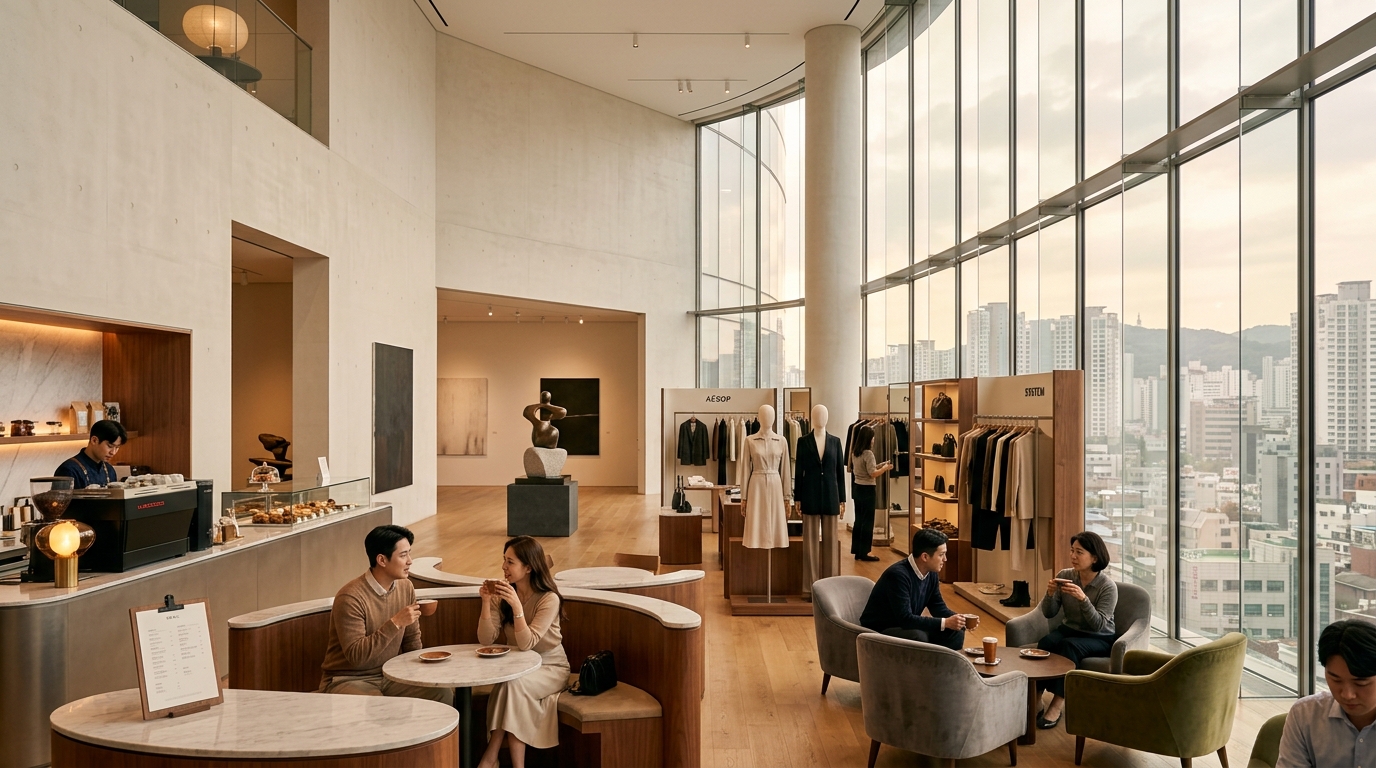

The Handsome House Seoul has officially redefined what it means to go shopping in South Korea by transforming a standard retail flagship into a comprehensive neighborhood cultural ecosystem. When I first approached this structure in the heart of the Daechi-dong district, I immediately realized that this was not a place built for the frantic, grab-and-go pace of modern commerce. Instead, the nine-story white building, with its striking curved glass architecture, serves as a deliberate anchor for a community that values both high-end fashion and lifestyle convenience. Many people assume this is just another luxury boutique, but after spending several hours observing the flow of visitors, it is clear that the brand has constructed something far more permanent: a local lifestyle hub.
Quick Summary
Location Strategy: Located in the education-heavy Daechi-dong, moving away from tourist zones to target affluent local residents.
The 50/50 Split: Approximately 47% of the building’s floor area is dedicated to non-retail experiences like cafes, beauty spas, and cultural galleries.
Strategic Demographic: The primary customer base consists of women in their 40s and 50s, often visiting with their children, accounting for 75% of sales.
Experiential Focus: Features ‘Cafe Time’ for curated brunch, ‘Oera La Maison’ for beauty services, and the ‘H Room’ for rotating art exhibitions.
Success Metrics: Within its first month, the store achieved 120% of its projected sales, proving that this ‘experience-first’ model resonates with consumers.
Should You Visit?
If you are wondering whether you should clear an afternoon to visit The Handsome House Seoul, the answer is a firm yes, provided you adjust your expectations. This is not a location designed for a quick transaction. If your goal is to buy a specific shirt and leave, you might feel like the layout is unnecessarily spacious or complex. However, if you are looking for an integrated space where high fashion, gourmet food, and artistic culture meet, this is currently the most sophisticated retail model in the country. I spent my first visit here testing out the fourth-floor cafe and browsing the collections, and I found that the lack of pressure from sales staff allowed me to actually enjoy the clothing selection. The building is designed to hold your attention, not just your money.
The Architecture of Experience
Most luxury brands talk about ‘experience’ in their marketing materials, but they rarely commit the physical footprint to back it up. Handsome took a significant risk here by dedicating roughly 907 square meters—nearly half of their total 1,927 square meter footprint—to services that have nothing to do with selling apparel. By prioritizing spaces like the ‘Cafe Time’ brunch area and the ‘Oera La Maison’ beauty spa, they have fundamentally shifted the function of the building.
I was particularly impressed by the 4th floor. In a neighborhood like Daechi-dong, which is defined by its rigorous academic culture and high-stress professional schedule, there is a distinct lack of quiet, high-end spaces for parents. By providing a premium brunch destination that stays open throughout the day, the brand has solved a localized problem. Parents waiting for their children to finish at the nearby academies now have a reason to enter the building daily. This is not just a store; it is a service provider that embeds itself into the customer’s daily routine.
Why Daechi-dong Was a Calculated Gamble
When news broke that a fashion conglomerate was placing its largest flagship in a residential district filled with cram schools, many industry observers were skeptical. Traditionally, big fashion players flock to the high-traffic zones of Apgujeong or the trendy, younger streets of Seongsu-dong. Choosing an area known for strict, utilitarian academic buildings felt like a departure from the ‘cool’ factor associated with global luxury retail.
Yet, my time in the area revealed the genius of the move. By planting roots in the backyard of the wealthy families who reside in the nearby Eunma Apartments, the company has bypassed the competition of the tourist-heavy city centers. They have created a ‘third place’—that essential social environment outside of home and the workplace. Furthermore, the inclusion of 30 dedicated parking spaces is a massive, often overlooked, quality-of-life feature that local shoppers value more than they might admit to. In a city where parking is usually a logistical nightmare, this convenience alone is enough to ensure consistent foot traffic from the target demographic.
Floor-by-Floor: Navigating the Space
Moving through the nine levels of the building feels less like shopping and more like navigating a curated gallery. The design, spearheaded by architect Cho Min-seok, utilizes curved glass and a layered block aesthetic that makes the building stand out from the gray, angular academy buildings surrounding it.
The Fashion Core (Basement to 3rd Floor)
The first few levels house the core retail operations. With over 1,500 products from labels like Time, System, and Lanvin Collection, the variety is immense. Unlike typical department stores where brand boundaries are rigid and enforced by different sales desks, the floor layout here is thematic and fluid. I found that this approach made the shopping experience feel personal. You are not just looking at a rack of clothes from one designer; you are looking at a curated edit of what works for the current season.
The Social Engine (4th Floor)
This level is undoubtedly the store’s social energy center. ‘Cafe Time’ is not just an afterthought; it is a destination. During my visit, the brown rice tiramisu and strawberry lime tarts were the highlights. It is a brilliant strategy: by offering a product that can be consumed daily—coffee and dessert—they draw people in who might otherwise not be interested in shopping. I observed families sharing a table, students doing homework, and older shoppers resting their feet, all creating a sense of ‘place’ that makes the brand feel like part of the community.
Cultural and Luxury Layers (5th to 8th Floors)
These higher levels are where the brand cements its ‘fandom.’ The 5th-floor ‘H Room’ hosts pop-ups and art exhibitions, ensuring that the store feels different every time you return. The 6th-floor spa and the 7th and 8th-floor VIP lounges provide the high-touch, exclusive service that justifies the price of the apparel on the lower floors. This tiered approach is crucial; it gives the casual visitor a fun experience while rewarding the loyal, high-spending client with true exclusivity.
The Psychology of the ‘Third Place’
What makes The Handsome House Seoul so successful is its understanding of human habits. The brand is betting on the ‘third place’ theory. By providing high-quality F&B and cultural content, they are creating a daily habit. When you visit a store to get a great cup of coffee or see a piece of art, you aren’t just a consumer; you are a patron. This subtle shift changes the brand from an ‘expense’ into a ‘lifestyle.’
I spoke with a local resident who visits the store three times a week. She doesn’t buy clothes every time, but she finds the cafe and the atmosphere on the 5th floor to be the most relaxing part of her day. This type of retention is incredibly difficult to achieve through traditional advertising or digital marketing. In an era where online shopping is king, this physical space wins by offering something that an e-commerce site cannot: the warmth of human interaction and the tactile joy of an art-filled environment.
Who Should Visit (And Who Should Not)
Deciding if this destination fits your itinerary depends largely on your goals for the day.
This is ideal for:
Local Residents: If you live in or near Gangnam, this is an excellent spot for a high-end brunch or an afternoon escape from the noise of the city. The atmosphere is quiet, polished, and very comfortable.
Fashion Enthusiasts: If you want to see how a top-tier design conglomerate constructs a brand identity, the attention to detail in the displays and the selection of clothing is genuinely impressive.
Industry Observers: For anyone working in retail or brand development, this site is a masterclass in modern spatial planning. It shows exactly how to balance profit-driven retail with non-transactional experience.
You might want to skip this if:
The Transactional Shopper: If you want to buy a pair of jeans in under five minutes, you will find the layout frustrating. The elevators, the size of the building, and the focus on ‘lingering’ mean you cannot treat this like a standard shop.
Tourists Seeking ‘Hip’ Trends: If you are chasing the underground, gritty creative scene of Seoul, you are better off in areas like Eulji-ro or Seongsu. This building is intentionally polished, professional, and upscale. It doesn’t have a ‘gritty’ edge, and it’s not trying to.
Common Mistakes to Avoid
- Expecting a Quick Experience: The most common mistake I observed was people arriving with a very short window of time. Because the elevators can get busy and the cafe frequently has a waitlist, you need to budget at least two hours if you want to see the exhibits and grab a drink. If you arrive with a rigid schedule, the building will make you feel anxious rather than relaxed.
- Ignoring the Reservation System: Many visitors assume the top-floor VIP lounges and the spa are walk-in friendly. In reality, these services often book out weeks in advance. Don’t waste your time taking the elevator to the 6th or 7th floor if you don’t have a booking, as you will likely be disappointed. Check the website or call ahead to verify availability for these specific tiers.
Cost and Value Perspective
One of the most fascinating aspects of this store is its ‘ladder of engagement.’ It manages its cost-to-value ratio by offering something for everyone. You do not need to drop thousands of dollars on a coat to participate in the experience. A student can enter the first floor for a pop-up, grab a coffee, and feel part of the culture without spending more than $15-$20. Meanwhile, the top-floor services are priced for high-net-worth individuals.
This model is essentially a funnel. The cafe and the art gallery serve as the wide end of the funnel, capturing casual foot traffic. As those people grow their careers and their disposable income, they naturally migrate from being cafe regulars to being garment purchasers. It is a long-term strategy of customer acquisition that is much more effective than the aggressive, short-term sales tactics seen in traditional department stores. While the clothing prices are undeniably at the premium end, the value comes from the fact that your ‘cost of entry’ to the building’s atmosphere is relatively low.
Frequently Asked Questions
Is the store open to the public, or do I need a membership?
The Handsome House Seoul is fully open to the public. You do not need a special membership to browse the retail floors or visit the cafe. You can walk in off the street, take the elevator to the cafe, and enjoy the art exhibitions without any gatekeeping. However, some premium services like the beauty spa and the top-floor VIP lounges are strictly for high-tier clients and require advance reservations. If you want the full ‘exclusive’ experience, check the company’s official website for booking requirements well before your trip.
Does the store carry brands outside of the Handsome portfolio?
While the core offerings are from Handsome labels like Time, System, and Lanvin Collection, the H Room on the 5th floor is designed for flexibility. It frequently hosts pop-up collaborations with external brands, independent designers, and even experimental art collectives. This ensures that the product mix remains fresh and reflects broader market trends. You might find a niche jewelry brand or a small-batch sneaker collection being featured in the H Room, which makes for a much more dynamic shopping experience than a standard mono-brand boutique.
Why does the store focus so heavily on non-retail services?
The focus on non-retail services is a direct response to the decline of traditional, transaction-only retail. In a world where you can buy almost anything online, the physical store must provide a compelling reason to exist. By dedicating nearly 50% of their space to lifestyle experiences, the brand is betting on the ‘third-place’ theory. They want their store to be a destination that you frequent because you enjoy the environment, not just because you need a specific product. This builds an emotional connection that is much harder for competitors to displace than a simple price war.
Is the space suitable for children?
Yes, and it is explicitly designed with families in mind. Because the store is located in an area with many families, they have accounted for parents who have children with them. The cafe is spacious enough for strollers, and the ground floor pop-up shops often feature apparel that appeals to a younger, trend-conscious demographic. It is a very welcoming environment for families, which is a rare quality for a luxury flagship store. Just keep in mind that the higher floors (like the spa) are generally geared toward adults, so you might want to plan accordingly if you are visiting with young ones.
Conclusion: The New Blueprint for Retail
My primary takeaway from exploring The Handsome House Seoul is that the future of fashion retail is not in the clothes alone, but in the environment where those clothes reside. By dedicating such a massive portion of their floor space to non-transactional experiences, the brand is proving that a company can become a cornerstone of a community’s daily life. I was genuinely struck by how alive the building felt—from the morning rush at the cafe to the quiet, focused energy in the art gallery.
This is a bold, expensive model, but it is one that seems to be resonating with a modern, discerning audience. If you find yourself in the Gangnam area, make the trip to Daechi-dong. Even if you don’t end up purchasing a garment, the experience itself is a unique look at how the world of high-end fashion is evolving. The next time you are planning a day out, consider putting this landmark on your list; it is a rare example of a store that understands that in the digital age, your greatest asset is the physical presence of your community.