
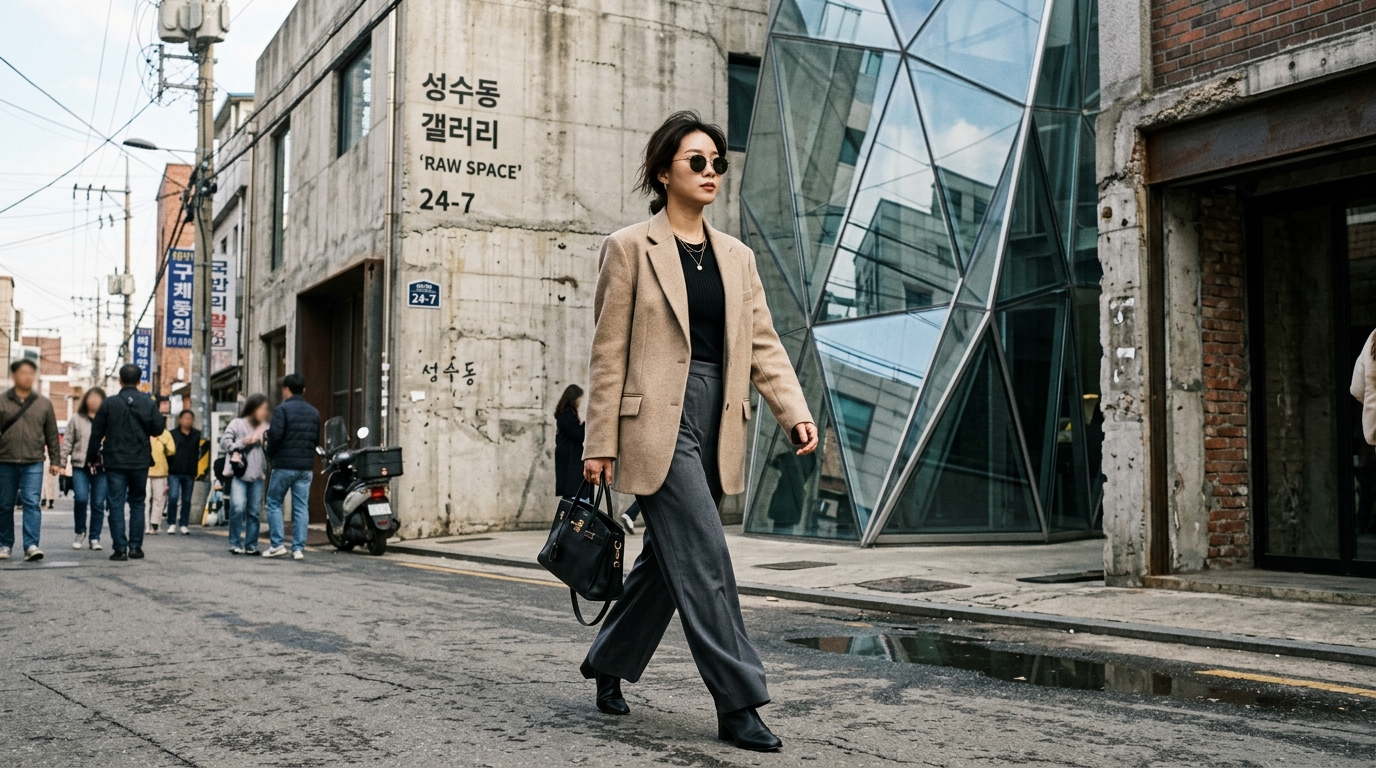

Navigating the streets of Korea’s capital using a professional seoul fashion guide requires more than just checking a map; it demands an understanding of a city that acts as the world’s fifth major fashion capital. While Paris and Milan lean on centuries of heritage, Seoul is currently writing the rulebook for modern, high-speed aesthetics. I remember my first trip to the Seongsu-dong district, expecting to see standard retail, only to find myself standing in a former warehouse that had been converted into an immersive art-and-retail hybrid featuring avant-garde silhouettes I’d never seen before. The city does not just follow trends; it orchestrates them through a mix of K-Pop influence, aggressive architectural proportions, and an appetite for controlled chaos.
Quick Summary
The Fifth Capital: Seoul has evolved into a global powerhouse, shifting from a consumer market to a trend-setting origin point.
High-Low Styling: The core of the local look involves mixing luxury investment pieces with accessible vintage finds from places like the Dongmyo market.
Experiential Retail: Stores in areas like Seongsu and Hannam prioritize immersive art and “retailtainment” over standard product displays.
The MZ Factor: Millennials and Gen Z are the primary drivers of the market, favoring identity-building over traditional logo-heavy luxury.
- Strategic Hubs: Focus your exploration on Seongsu-dong, Hannam-dong, and the more traditional Dosan Park area for the best mix of local labels.
- The ‘Tourist Trap’ Trap: Do not spend your entire trip in Myeong-dong. While it is great for street food and basic cosmetics, it is heavily commercialized. You will miss the actual pulse of the city’s creative scene if you never venture out to areas like Seongsu or Hannam. I made this mistake on my first visit and felt like I had barely scratched the surface.
- Underestimating the ‘No-Small-Talk’ Culture: You might be used to sales associates hovering and asking how your day is. In Seoul, shoppers often prefer total autonomy. If you try to strike up a long conversation, you might find the interaction feels strained. Instead, focus on building a connection through your aesthetic choices; the staff will respect your eye for design far more than your conversational skills.
- www.cntraveller.in
- www.highsnobiety.com
- www.vogue.com
- www.stylerave.com
- press.fourseasons.com
- www.nytimes.com
The Direct Answer: How to Shop Like a Local
If you are wondering where to start, prioritize Seongsu-dong for the most current, avant-garde vibes and Dosan Park for high-end flagship stores. Do not waste your time searching for “standard” mall experiences. Instead, seek out concept stores like Empty or individual ateliers that emphasize architectural tailoring. You will find that the most authentic Seoul experience occurs at the intersection of local design and experimental, non-transactional store environments. If you want to dress the part, focus on volume—think oversized bombers and trousers that pool at the ankle—and remember that accessories, particularly metallic chain-link jewelry, are the foundation of the look.
Understanding the ‘Seoul Aesthetic’
To truly master the local vibe, you must abandon the idea of ‘matching.’ The Seoul fashion guide philosophy I follow is one of ‘purposeful disruption.’ You are not looking to coordinate colors; you are looking to create visual tension. I have often paired structured, oversized blazers with loose, flowing midi skirts, a combination that initially felt ‘wrong’ but quickly became my favorite go-to. This is the city’s signature: combining pieces that theoretically should not work together.
The Architecture of Proportions
Everything in Seoul’s current fashion scene revolves around volume. You will see jackets that seem two sizes too large, paired with trousers that appear to melt into the pavement. This isn’t just about comfort; it is about establishing a sense of authority. In my experience, these pieces are surprisingly well-tailored despite their appearance. They are designed to maintain structural integrity, ensuring that you don’t look ‘sloppy,’ but rather intentional. When you visit stores like Post Archive Faction (PAF), look closely at how the garments are constructed; you will see that the excess fabric is part of a deliberate engineering process.
The Power of Color and Conflict
While black remains the city’s ‘power color’—acting as a necessary, unforgiving backdrop—the palette has shifted significantly. K-Pop music videos have pushed local brands toward high-contrast maximalism. Think electric blues clashing with deep fuchsia, or butter yellows layered under forest greens. I once tried to stick to a neutral palette in Hongdae and felt completely out of place. The lesson? Embrace pattern conflict. Wearing a leopard-print base layer under a plaid shirt isn’t a mistake here; it’s a standard styling choice that showcases your ability to navigate the city’s complex aesthetic landscape.
Strategic Neighborhoods for the Discerning Shopper
Not all of Seoul is created equal when it comes to style. As someone who has spent significant time navigating the transit lines to reach the best boutiques, I can tell you that geographic focus is your greatest asset.
Seongsu-dong: The Brooklyn of Seoul
If you only visit one neighborhood, make it this one. Formerly an industrial area, it is now the epicenter of the city’s creative pulse. The spaces here are massive, and the retail experience is often part museum, part store. You will find brands utilizing animatronic sculptures and brutalist designs to sell simple products. It is the perfect place to see how ‘experiential retail’ has become the new standard for the MZ generation.
Hannam-dong and Dosan Park
For a more refined, upscale experience, head to the areas surrounding Dosan Park. This is where the major luxury houses have built their most innovative flagships. You will find Café Dior or similar high-end brand-owned establishments that serve as a bridge for younger shoppers to engage with the brand culture before committing to a luxury purchase. It’s a softer, more polished atmosphere than the raw intensity of Seongsu, but equally essential for understanding how the global industry treats Seoul as an ‘experimental playground.’
The Rise of the ‘Newtro’ Wave
Beyond current trends, there is a fascinating obsession with the past. The vintage shopping scene in Seoul has transcended its origins as a byproduct of economic necessity to become a cornerstone of Korean youth culture. We call this the ‘newtro’ (new + retro) movement. Younger generations, specifically those in the 18–24 demographic, are reinterpreting 1970s–1990s aesthetics they never personally experienced. Shopping has become a performance of memory, where rarity and identity-building take precedence over traditional luxury logos.
Where to Find the Best Archive Pieces
If you are hunting for rare archival pieces, you need to be precise. Stores like ASYM in Itaewon offer a tightly edited archive of designers like Alaïa and Vivienne Westwood. If you prefer the avant-garde, WWTW in Seongdong is essential for fans of Demna Gvasalia-era work. Remember, these aren’t your typical thrift stores; they are curated galleries. Many operate on an appointment-only basis or have irregular hours, so always check their Instagram before heading out. I once spent an hour trying to find a shop in Mapo-gu only to realize it was closed on Tuesdays—a lesson in checking the digital footprint before the physical one.
The ‘Maker’s Touch’: Why Emerging Brands Matter
While the big flagships grab the attention, the real soul of Seoul fashion lies with independent designers. Brands like Gajiroc and Roliat represent a shift toward ‘reconsidered staples.’ These designers aren’t interested in radical, seasonal novelty. Instead, they iterate on familiar silhouettes—work jackets, wide-leg denim, and boxy shirts—using superior, sometimes deadstock, textiles. When you hold a piece from these designers, you feel the weight of the fabric. It is tactile, intentional, and slow. In a market that moves at breakneck speed, these brands choose to go against the grain, prioritizing quality over the hype cycle.
Investing in Tactility
When you engage with emerging Korean designers, look for the ‘analog’ qualities. Ask about the textile treatments. Is the silk napped? Is the wool double-faced? These details are what elevate a piece from a ‘trendy item’ to a wardrobe staple that will last for years. I recently purchased a pair of pleated trousers from a local atelier in Hannam, and the quality of the Italian wool combined with the high-rise, side-tab construction puts them on par with bespoke European tailoring that would cost three times as much back home.
Cost and Value: Navigating the Market
Shopping in Seoul offers a unique value proposition. Because the market is so competitive, local designers are constantly pushing the quality-to-price ratio.
| Item Type | Estimated Price Range (KRW) | Note |
|---|---|---|
| Independent Designer Tee | 50,000 – 150,000 | Look for high-GSM cotton |
| Local Brand Bomber Jacket | 300,000 – 800,000 | Investing in structure |
| Vintage/Thrift Finds | 10,000 – 100,000 | Dongmyo Market is the best |
| Luxury Flagship Accessory | 500,000+ | Usually limited edition |
My advice is to set aside a dedicated budget for ‘local finds’ rather than spending all your money on global luxury brands you could buy at home. The value lies in finding a garment from a designer like Amomento that you simply won’t see back in Europe or North America.
Who Should Follow This Guide (And Who Should Not)
This guide is for you if you view fashion as a form of self-expression rather than a chore. It is designed for those who enjoy the hunt for independent designers and don’t mind spending time in areas that aren’t strictly tourist-friendly. If you are a fan of architectural silhouettes and enjoy exploring urban landscapes, you will thrive here.
You should probably skip this if you are looking for traditional department store convenience or if your personal style leans heavily toward classic, understated minimalism without any edge. If you find the idea of ‘pattern conflict’ and oversized cuts stressful, the high-fashion scene here might feel overwhelming rather than inspiring. Sometimes, the raw, industrial aesthetic of Seongsu can feel a bit too ‘unfinished’ for those who prefer the pristine service of a flagship mall.
Common Mistakes to Avoid
Frequently Asked Questions
Is Seoul really cheaper for luxury fashion than Europe?
Not necessarily. While some local labels offer incredible value, international luxury brands are often priced similarly to the rest of the world due to import duties and premium retail overhead. The real value of shopping for luxury in Seoul is the availability of exclusive, Korea-only collaborations or early-access product launches that you cannot find elsewhere. Focus on the local designers for the best ‘bang for your buck.’
Can I find vintage clothing in Seoul?
Absolutely. The Dongmyo Flea Market is the legendary spot for this. However, it requires patience and a willingness to dig. It is not a curated vintage store like you might find in LA or London; it is a chaotic, authentic sprawl. If you prefer a curated experience, look for smaller, boutique vintage shops in the Hongdae or Sinchon areas where the art-student community hangs out. Always go early, especially at flea markets, as the best pieces go quickly.
Do I need to speak Korean to shop in boutiques?
Not at all. The vast majority of shop assistants in trendy neighborhoods speak enough English to handle a transaction. Because shopping is often a ‘hands-off’ experience, you can comfortably browse for an hour without saying a word. If you have a specific question about fabric or sizing, a simple translation app will suffice. Most stores are happy to assist once you have indicated interest in a specific item.
How often should I check for new collections?
Incredibly often. The ‘fast-fashion’ pace extends to high-end boutiques in Seoul. Brands are constantly cycling in new capsules to keep the MZ demographic engaged. If you see something you love, buy it. I have lost out on pieces because I waited until the next day to think about it, only to return and find the rack entirely replaced. Treat your shopping as a mission—if it fits and you love it, don’t wait for the next day.
Conclusion
Seoul has effectively shifted the center of gravity in the global fashion industry. It is a city that rejects the static, top-down trends of the past in favor of a fast-moving, identity-driven future. By focusing on the interplay of volume, texture, and ‘purposeful disruption,’ you can move beyond the tourist surface and tap into a truly unique, world-leading aesthetic. My final piece of advice? Don’t play it safe. Dress with intent, explore the industrial districts, and embrace the chaos. The city rewards the bold.