
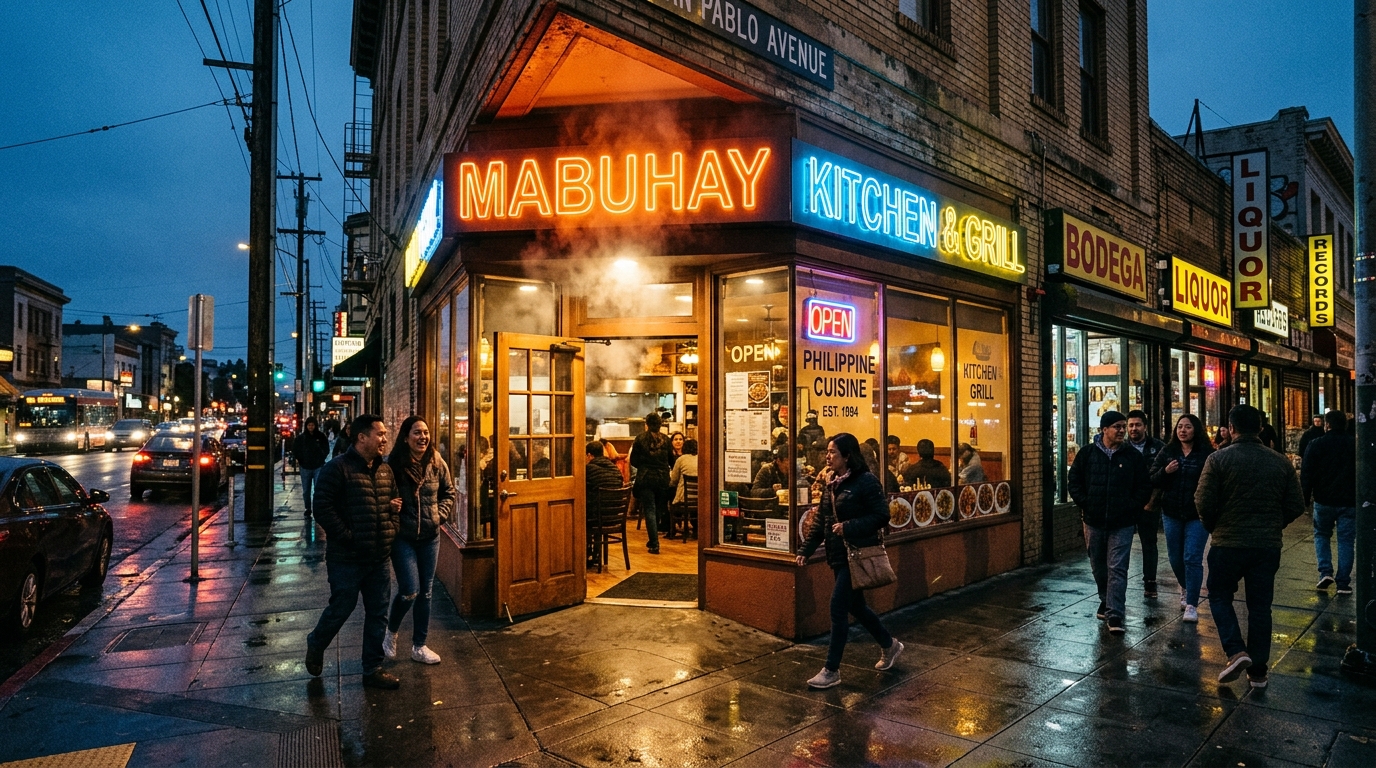

San Pablo avenue food is experiencing a remarkable evolution, turning a once-overlooked transit corridor into one of the most compelling dining destinations in the East Bay. I remember driving through this stretch years ago and seeing only shuttered windows and empty parking lots. Today, the landscape has shifted entirely, replaced by the persistent, inviting scent of charcoal-grilled meats, simmering curries, and freshly pressed masa. This isn’t the sterilized experience of a modern shopping mall; it is a raw, authentic, and deeply personal food scene that demands to be explored by anyone who values history as much as flavor.
Quick Summary
- The San Pablo Avenue corridor is becoming a high-density destination for authentic Thai cuisine and diverse comfort food.
- Family-run businesses, such as those in the Thai ‘noodle corridor,’ are anchoring the area with recipes refined over decades.
- Fusion establishments like Q’s Halal Pizza showcase the neighborhood’s unique demographic blend by successfully merging Mediterranean and American traditions.
- Community rituals, such as the tortilla production at local mills, provide a sense of place that extends beyond the plate.
- While many spots are no-frills, the high quality of ingredients and genuine hospitality make them stand out as essential, accessible, and high-value dining options.
- The Adventurous Eater: If you prioritize finding unique, family-run spots over corporate chain establishments, you will find endless rewards here.
- The Value-Seeker: The portions are consistently generous and the prices are far more accessible than what you would find in downtown premium districts.
- The History Enthusiast: If you care about the personal journey of a recipe—how a specific seasoning traveled from Apgujeong to El Sobrante—the narratives here are deeply compelling.
- You require fine dining amenities: If you are searching for plush, velvet-cushioned seating, sommelier-curated wine lists, or formal table service, you will likely be disappointed. These are ‘no-frills’ environments where the food is the only celebrity.
- You dislike waiting: During peak hours, the most popular spots, especially the tortillerías or the main Thai corridor, can have lines that require a bit of patience. If you are in a rush and need a strictly ‘grab-and-go’ experience without any friction, be prepared to time your visit carefully.
- Judging a Book by Its Cover: I see people walk past the best restaurants on this road every single day simply because the exterior signage looks weathered or the building appears ‘dated.’ Do not fall into this trap. In Richmond, the quality is almost always inversely proportional to how modern or shiny the exterior looks. If the parking lot is full, it doesn’t matter what the window looks like—walk inside.
- Sticking Only to Familiarity: At places like Q’s, the temptation is to order a plain pepperoni pizza because it’s safe. Avoid this. These kitchens are built for complexity and experimentation. When a menu offers a mix of traditions, lean into the fusion. Try the gyro-pepperoni combo or the tikka masala. These chefs have spent time perfecting that specific blend, and you miss the point if you order the standard version of a dish you can get anywhere else.
- www.theinfatuation.com
- oaklandside.org
- sf.eater.com
- oaklandside.org
- www.finedininglovers.com
- cccadvocate.com
- oaklandside.org
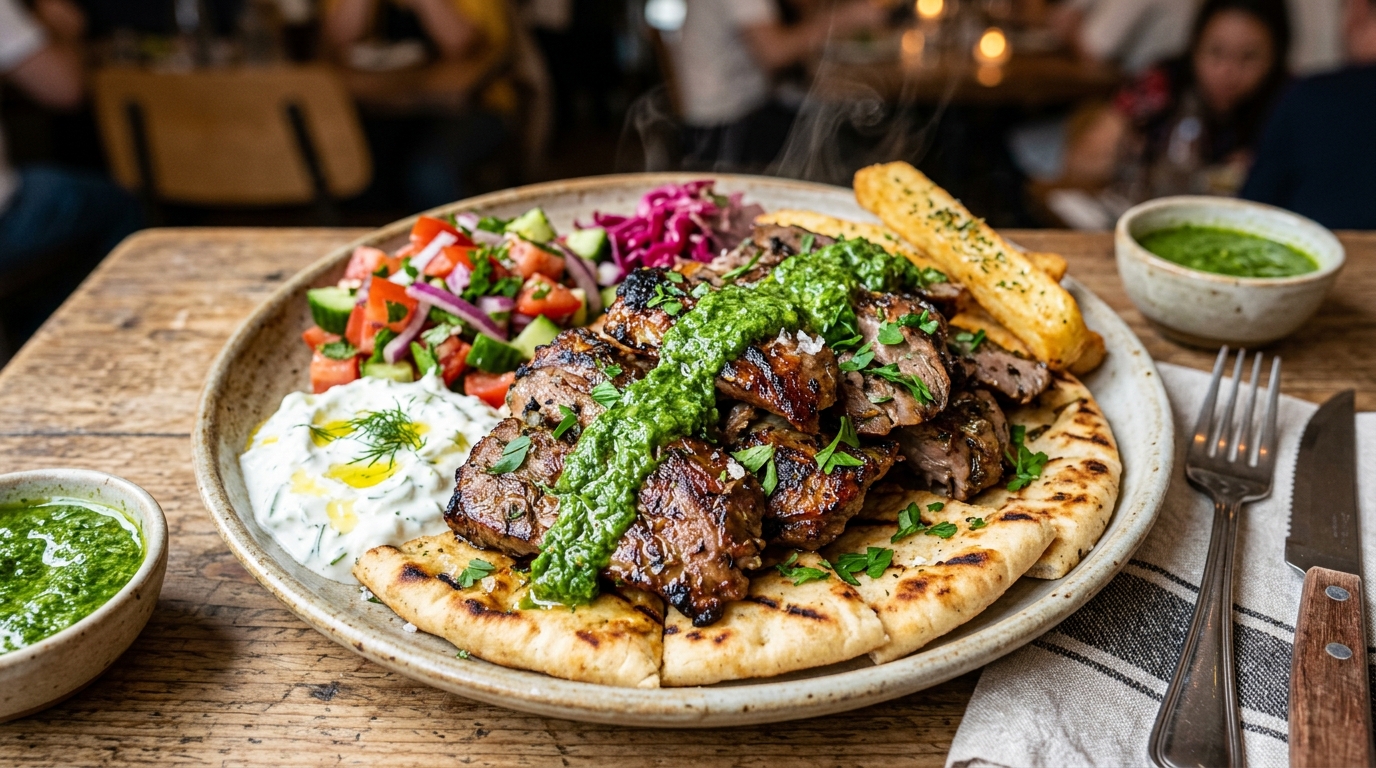
If you want to know where to eat first, look toward the stretch between 11880 and 12440 San Pablo Avenue. This concentrated cluster has become a ‘noodle corridor’ where you can test your palate against two of the most consistent Thai kitchens in the region: Pra Jam and Top Thai Cuisine. For a more eclectic, non-negotiable experience, make your way to 12847 San Pablo Avenue for Q’s Halal Pizza. I recently sat there for a lunch break and ordered the Lamb Gyro Plate; the balance of the tender, hand-formed meat against the bright, aggressive kick of their house-made coriander chutney was a masterclass in how simple, accessible food should be executed.
The Noodle Corridor Phenomenon
When I speak about the ‘noodle corridor,’ I am referring to a rare density of high-caliber Thai restaurants that have recently breathed new life into Richmond and El Cerrito. It is incredibly unusual to find this level of technical execution in such a tight geographic radius. Take Top Thai Cuisine, for example. When they opened in 2026, they didn’t just fill a vacant storefront; they brought twenty years of experience from Castro Valley. I watched them source vegetables from local farmers’ markets, and the difference is tangible in every bowl of Pad kee mao they serve. The crispness of the greens and the depth of the stir-fry sauce aren’t accidental—they are the result of a kitchen that refuses to take shortcuts.
Just a few steps away, Pra Jam offers a different, more traditionalist approach that serves as a benchmark for the area. If you want to understand what a proper red curry should taste like, this is the place. In lesser restaurants, you often get a thin, watery liquid, but here, the oil in the curry paste has been properly separated—a clear indicator of patient, slow cooking. It is these small, technical details that separate the ‘noodle corridor’ from generic fast-casual options. It is not about speed; it is about the craft that was often ignored in these storefronts for decades.
The Philosophy of Fusion at Q’s Halal Pizza
One of the most exciting aspects of the local scene is how restaurants are completely ignoring the outdated ‘one-cuisine-only’ rule. Q’s Halal Pizza acts as a perfect case study for this cultural shift. Ten years ago, the idea of a single menu featuring chicken tikka masala, lamb gyros, and pepperoni pizza would have been dismissed as an identity crisis. Today, it feels like a logical, necessary expression of the neighborhood’s identity. The kitchen operates on a simple premise: if you execute the basics with technical precision—the long-grain basmati rice cooked to a perfect fluff, the pita kept soft and pliable, the meat seasoned with intent—the labels cease to matter.
My personal strategy there is what I call the ‘two-sauce’ approach. Mixing their cool, refreshing tzatziki with that sharp, stinging coriander chutney creates a flavor profile that hits every part of your palate at once. It is unapologetically bold, much like the community it serves. The success of this model suggests that diners are moving away from restrictive categorizations and toward a model that prizes flavor complexity and accessible comfort above all else. This isn’t just ‘fusion’ for the sake of novelty; it is a genuine synthesis of traditions that works because the kitchen understands how to balance spice and fat.
The Ritual of the Local Mill
Sometimes, the best culinary experiences on San Pablo Avenue aren’t found in a dining room with seating. They happen in a parking lot, waiting for your name to be called. Take Tortillerías La Numero Uno on 23rd Street. Visiting here has become a community ritual that I find myself participating in at least once a month. Standing in that line, you are surrounded by a cross-section of the city: construction workers grabbing a quick lunch, parents picking up masa for a weekend family gathering, and students looking for a high-quality, low-cost snack. Watching the staff operate the tortilla-making machine is mesmerizing; it’s a rhythmic, mechanical ballet that produces results no store-bought bag could ever replicate.
When they hand you that warm, steaming sample tortilla while you wait, it is a small, quiet act of trust that makes the entire wait worthwhile. It reminds me that food is, at its core, about community. These businesses don’t just sell products; they provide a ‘third place’—a space that is neither home nor work, where you can simply stand, catch your breath, and interact with your neighbors. This atmosphere of connection is exactly why the recent economic revitalization of these storefronts is so significant for Richmond. It’s not just about vacancies decreasing; it’s about the streets feeling more human, more lived-in.
Why This Matters for Richmond’s Future
We are currently witnessing a transformation that goes far beyond the menu. When a vacant building is converted into an active kitchen, it changes the entire geometry of the street. It changes how people walk, how they linger, and how they perceive their own neighborhood. When you see local community leaders and candidates for office talking about the struggles of renters and workers, they are talking about the exact same people standing in these lines. The food scene here has become the physical manifestation of those conversations. It is an economic anchor, proving that you don’t need high-end, polished, or overpriced dining concepts to create a thriving, vibrant business district.
Who Should Explore the San Pablo Avenue Scene (And Who Should Not)
It is essential to be realistic about what you are walking into. This isn’t a glossy food court with marble countertops; it is a working-class corridor that values substance over show.
This is ideal for:
You might want to skip this if:
Common Mistakes to Avoid
Cost and Value Breakdown
One of the most refreshing aspects of dining along this stretch of San Pablo Avenue is the relative consistency in value. You generally know exactly what you are paying for, and the quality rarely dips. Here is a breakdown of what you can expect when budgeting for a typical outing:
| Item / Destination | Price Range | Value Assessment |
|---|---|---|
| Tortillerías La Numero Uno (1lb) | $3.00 | Exceptional; high craft, very low cost. |
| Q’s Halal Pizza (Gyro Plate) | $20.00 | High; filling, multi-component meal. |
| Casper’s Hot Dog (Cheese Dog) | $7.29 | Legacy pricing; nostalgic and highly reliable. |
| Top Thai / Pra Jam (Entree) | $15–$22 | Standard; fresh ingredients justify the cost. |
Frequently Asked Questions
Is the San Pablo Avenue food scene walkable?
While the specific block between 11880 and 12440 San Pablo Avenue is quite walkable once you are parked, the entire corridor is far too long to navigate on foot. I typically recommend driving between the different clusters. Once you find a reliable parking spot in a specific hub, you can easily walk between three or four restaurants, but don’t attempt to walk from El Cerrito into the northern parts of Richmond. It’s a long road, and your energy is better spent eating than walking between sites.
Do I need reservations for these restaurants?
No, none of the establishments mentioned here—including the food trailers and the Thai corridor spots—take reservations. They operate on a purely first-come, first-served basis. This lack of formality is a significant part of their charm. It makes the entire dining experience feel more casual, spontaneous, and community-focused. If you encounter a line, treat it as a natural part of the local ritual. It’s the perfect time to chat with the person next to you; that interaction is often just as valuable as the meal itself.
Are these restaurants open late at night?
Most of these spots, particularly the smaller family-run kitchens like Pra Jam, tend to close in the mid-to-late evening, typically around 8:30 PM. They are oriented toward lunch and early-dinner crowds. If you are looking for a late-night meal, you might find your options very limited. It is always a smart move to check their specific hours on social media or their website before you make the drive, as small operations often adjust their hours based on ingredient availability or staff schedules.
What if I have specific dietary restrictions?
Because many of these places are cooking from scratch using fresh, whole ingredients, they are generally quite accommodating. At the Thai restaurants, you can easily request dishes to be made vegetarian or to omit certain proteins without any fuss. At Q’s, the menu is broad enough that almost anyone can find something, from vegans who can opt for falafel bowls to meat-eaters who want a gyro. Just communicate clearly with the staff; they are typically the ones working the front of the house and they know their inventory better than any printed menu can tell you.
Conclusion: A Living Culinary Map
The evolution of the San Pablo Avenue food scene is one of the most encouraging trends I have followed as a journalist. It isn’t just about the food—though the food is spectacular—it is about the return of human-scale business to our streets. Whether you are grabbing a bag of fresh tortillas on a Tuesday or settling into a booth for a bowl of budae jjigae on a Wednesday, you are participating in something that feels genuinely rooted in the place it serves.
My final recommendation: Don’t try to conquer the whole avenue in a single day. Pick one corridor, walk into the place that looks the most inviting, and order what the person at the next table is having. That is how you find the real gems. If you start with a classic hot dog at Casper’s for the history, a red curry at Pra Jam for the technical precision, and a pound of masa from the tortillería for the soul, you will understand exactly why this road has become the most interesting place to eat in the region.