
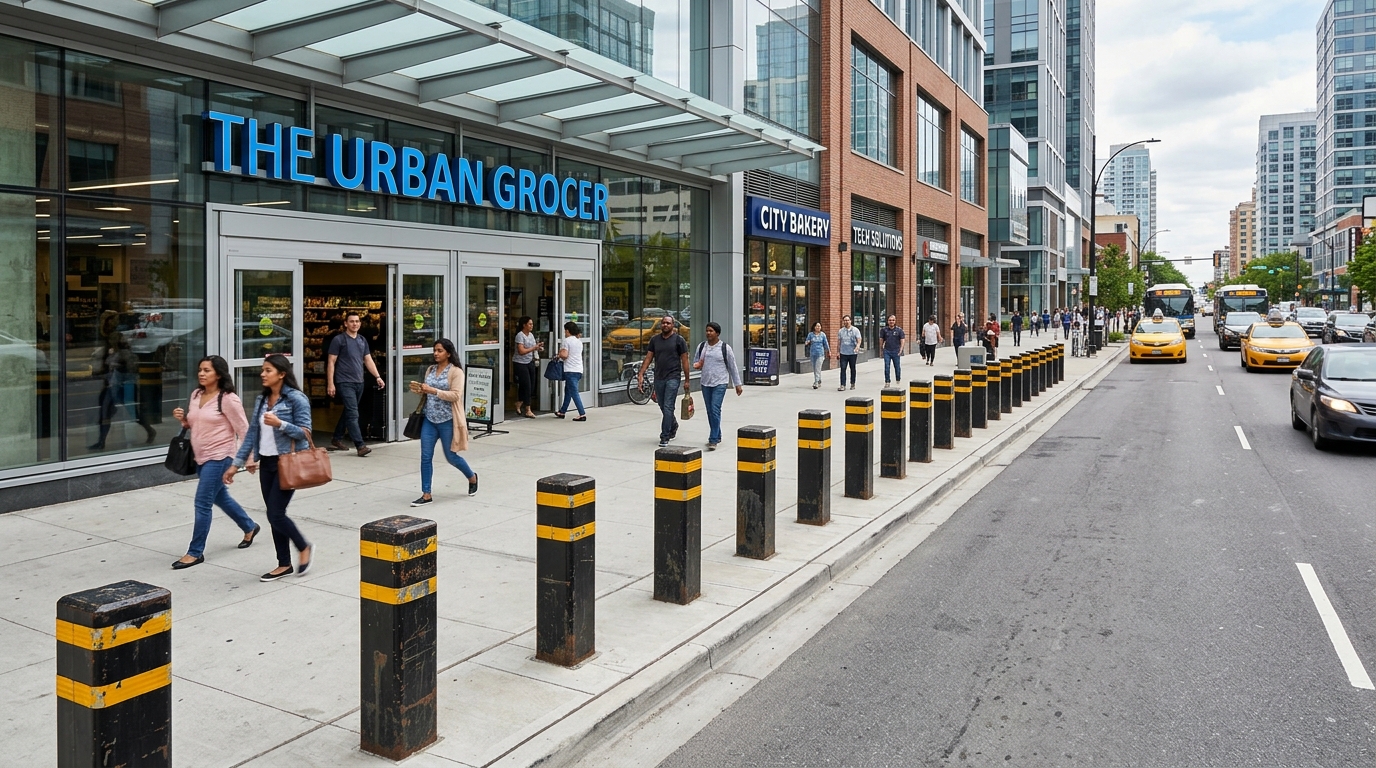

Preventing vehicle-building collisions is a critical safety challenge that requires immediate, proactive intervention from business owners, city planners, and individual pedestrians alike. Every day, thousands of storefronts, restaurants, and public gathering spaces are struck by vehicles, turning peaceful environments into disaster zones in mere seconds. Whether these events are caused by intoxicated driving, medical emergencies, or simple pedal error, the physical and psychological consequences are devastating. I have spent years analyzing traffic safety data in high-density metropolitan hubs, and the vulnerability of our public infrastructure is a problem we can no longer afford to ignore.
Quick Summary
Install Crash-Rated Barriers: Use steel bollards with deep concrete foundations to physically stop vehicles.
Audit Traffic Flow: Regularly inspect parking lot exits and intersections for blind spots and high-risk conflict points.
Design for Pedestrians: Prioritize site layouts that keep foot traffic away from active vehicle lanes and entranceways.
Stay Situational: Avoid sitting or standing near storefront windows that face busy, uncontrolled parking lots.
Report Hazards: Immediately alert authorities to erratic driving or poor traffic signage before an incident occurs.
Direct Answer: How to Stay Safe
If you want to immediately reduce the risk of being involved in a vehicle-into-building collision, you must move beyond reliance on curbs, signs, or driver caution. The single most effective action for business owners is the installation of crash-rated steel bollards. For pedestrians, the best practice is to maintain a ‘defensive walking’ mindset: treat every storefront as a potential crash zone. Avoid lingering directly in front of large glass windows that face active, high-traffic parking lots. If I am visiting a new cafe or restaurant, my first move is to scan the entrance layout. If there are no physical barriers protecting the seating area from the parking lot, I choose an interior table. It might seem like an overreaction, but in a world where pedal error is a daily occurrence, it is a life-saving habit.
Understanding the Anatomy of a Crash
We often view traffic accidents as singular, isolated events, but data shows they are frequently part of a complex chain reaction. An initial collision—perhaps a fender bender between two cars or a strike with a cyclist—can cause a driver to panic. In that moment of distress, they often stomp on the accelerator instead of the brake. This kinetic energy, often measured in thousands of pounds of force, is then directed straight toward the nearest structure. Standard storefront construction, typically composed of glass and thin aluminum framing, offers zero resistance to this force.
I recall observing a scenario at a local shopping center where a minor parking lot bump triggered a massive, unintended acceleration. The driver lost control, hopped a six-inch curb, and smashed through the front wall of a small bakery. The curb, which we assume is a protective element, did absolutely nothing to slow the vehicle down. Curbs are for directing tires, not for stopping two-ton SUVs. Understanding that your environment is not physically engineered to stop a vehicle is the first step toward genuine safety.
Infrastructure: The First Line of Defense
Infrastructure is the only reliable barrier between a pedestrian and a two-ton vehicle. When I review municipal safety standards, I look specifically for the use of deep-seated, concrete-filled steel bollards. These are not just aesthetic additions; they are engineered to transfer the kinetic energy of an impact into the ground rather than the building. If your favorite local coffee shop or restaurant lacks these, the facility is essentially a sitting duck for any distracted, impaired, or panicked driver.
While developers often complain about the cost or the look of these barriers, the price of a single lawsuit, or the far more tragic loss of human life, dwarfs the installation cost. I have seen cities that mandate bollard installation in high-density zones report a massive reduction in casualty rates during vehicle incursions. If we are serious about safety, we must view bollards not as a choice, but as a mandatory utility for any building where pedestrians are expected to sit or stand in proximity to road traffic.
Identifying High-Risk Zones
Not all commercial spaces carry the same level of risk. Your environment dictates your safety level. A building situated at the end of a long, straight road leading into a parking lot is at a significantly higher risk of a ‘straight-line’ collision. Similarly, stores located near busy, chaotic intersections where drivers often feel rushed are high-risk zones. I always tell people to look for specific ‘collision markers’ when entering a building.
Are there parking spaces directly facing a storefront entrance? Is there a total lack of physical barriers between the sidewalk and the street? Are the entryways poorly lit, which could confuse a driver at night? Are there high-volume, high-speed micro-mobility corridors nearby? If you find yourself in a space with these characteristics, make a conscious decision to shift your location. Choosing an interior seat rather than one near the front window is a minor change that provides a massive safety buffer.
Who Should Prioritize Site Safety (And Who Should Not)
This is a decision-based framework for facility owners and city planners. If you are a business owner operating in a high-density urban area, protecting your space from vehicle impacts is not an optional aesthetic choice—it is a mandatory duty of care.
This is ideal for:
Restaurant Owners: Your customers are often distracted by their meals and conversation, making them vulnerable.
Community Centers: Institutions serving elderly populations or children require extra vigilance.
City Planners: Updating zoning laws to prioritize storefront protection in downtown districts is a modern necessity.
You might want to skip this if:
You operate in a low-density, gated facility with no direct road access to your building facade.
Your building has extreme, natural setbacks, such as 50 feet of dense landscaping or heavy-duty stone walls that make vehicle access physically impossible.
The Role of Alcohol and Medical Emergencies
We must confront the hard truth that human error is the primary driver of these incidents. Whether it is an intoxicated individual or an elderly driver experiencing a medical emergency, the result is the same: a weaponized vehicle. We cannot control the behavior of every driver on the road, but we can control the hardness of our defenses. In many cases, the suspect is arrested after fleeing, but that does little to repair the structural damage or heal the victims. The trauma experienced by staff—who are often the first targets in these crashes—is significant. The psychological impact on a community can take years to fade, which is why prevention is far superior to any post-incident recovery plan.
Common Mistakes to Avoid
- Assuming the Curb is Enough: Many people mistakenly believe a standard 6-inch curb will stop a modern SUV. It will not. Curbing is a guide for tires, not a barrier against heavy vehicles. Relying on curbs as safety measures is a dangerous misconception that has led to many preventable injuries.
- Relying on Signage Alone: Placing a ‘Stop’ or ‘Caution’ sign near a dangerous intersection is insufficient. You need physical deterrents, not just visual ones, because drivers in a state of panic or intoxication will not process signage. Do not assume that a sign creates a safe environment.
Cost and Investment Analysis
The cost of implementing safety measures varies depending on your city and the specific contractor, but the math is straightforward. A professional installation of three to four heavy-duty, crash-tested bollards typically ranges from $5,000 to $15,000, depending on the subsurface foundation work required. Now, compare that to the average cost of a storefront repair. A single vehicle strike can easily result in $20,000 to $50,000 in structural repairs, loss of business income during a closure, and potential legal liability. Beyond the ledger, the human cost is infinite. Investing in these barriers is not a ‘business expense’ in the traditional sense; it is a long-term insurance policy against a catastrophic event. I once spoke with a business owner who hesitated to install barriers due to the initial $8,000 quote. Six months later, a car drove through his window. The repair bill for the wall and the lost revenue during the month-long rebuild cost him over $65,000. He learned his lesson the hard way.
Frequently Asked Questions
How effective are bollards at stopping a vehicle?
Bollards that are properly anchored to deep concrete foundations are highly effective. While a standard decorative bollard won’t do much, a crash-rated steel post can safely arrest the momentum of a passenger vehicle moving at moderate speeds. They are designed to transfer the impact energy into the ground rather than the building.
What should I do if I see a driver acting erratically in a parking lot?
Prioritize your own safety first. Move away from the line of sight of the vehicle immediately. If you are a bystander, call the non-emergency or emergency line to report the vehicle description and behavior. Do not try to intervene personally; a vehicle is an unpredictable force, and you could easily be caught in the path of a sudden acceleration.
Are storefronts required to have protection by law?
In many jurisdictions, local codes regarding storefront protection are surprisingly loose. While newer developments often face stricter planning requirements, older buildings are frequently ‘grandfathered in’ under older, less stringent safety codes. It is up to the business owner or property manager to decide whether to upgrade these protections voluntarily.
What do I do if I am caught in a building that has been hit?
Follow standard emergency protocols. Evacuate if the structural integrity is compromised—look for signs like bowing walls, cracking glass, or ceiling shifts. If you are uninjured, help others stay calm and move to a clear, safe distance from the debris. Do not go back inside for personal belongings until emergency services have cleared the building as safe for entry.
Conclusion: Moving Toward Proactive Safety
Preventing vehicle-building collisions requires a fundamental shift in how we view urban infrastructure. We have spent too long designing for the comfort of the driver and ignoring the safety of the pedestrian and the shop-goer. By installing physical barriers, auditing our high-risk zones, and maintaining a high level of situational awareness, we can turn the tide. If you own a business, take a walk outside your front door today. Look at the traffic, look at your existing barriers, and ask yourself: ‘Is this enough to stop a two-ton SUV?’ If the answer is no, you have a clear path forward for action. Proactive safety is an investment that pays for itself in peace of mind and, most importantly, in human lives saved.