
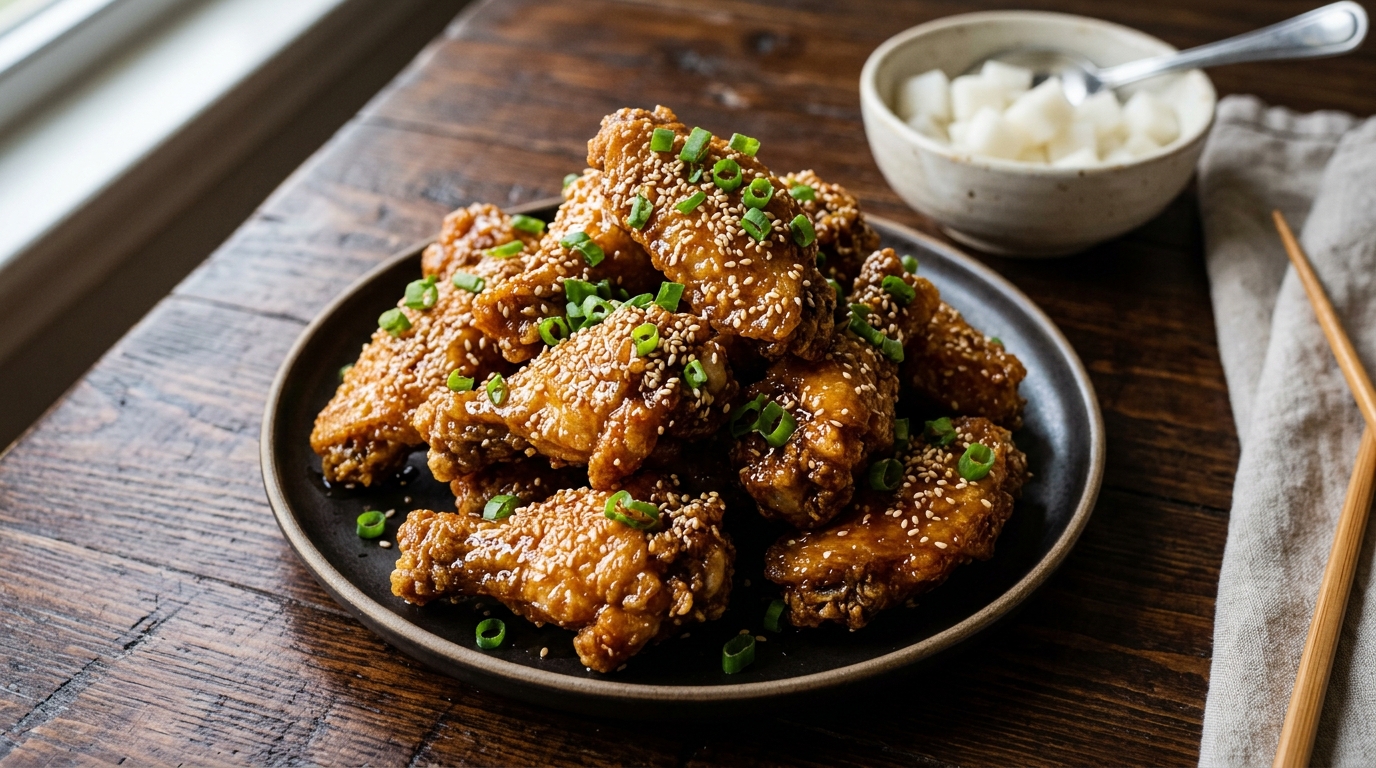

Korean Fried chicken: The Ultimate Guide to the crunch
Korean fried chicken has evolved from a simple street snack into a global culinary obsession that commands attention from food critics and late-night diners alike. When I first bit into a wing at a dedicated spot, the immediate, audible ‘shatter’ of the crust proved that this was not merely fried poultry; it was an exercise in precise culinary engineering. Unlike the heavy, breaded versions common in many Western kitchens, this style relies on a fundamental shift in physics and chemistry, utilizing starch-based coatings and a rigorous double-frying process to achieve a texture that defies the sogginess typically associated with sauced meats. If you have been searching for that elusive, paper-thin, crackling crust, you have come to the right place.
Quick Summary
The Double-Fry Secret: Two-stage frying is essential; the first fry cooks the meat, and the second flash-fry dehydrates the skin to create a permanent crunch.
Starch is King: Authentic versions use potato or corn starch instead of wheat flour, resulting in a glass-like, shatter-thin coating.
The ‘Chi-Myeon’ Connection: The dining experience is incomplete without side dishes, specifically pickled radishes (mu) that act as a palate cleanser against the rich, sweet-savory glazes.
Order of Operations: Avoid delivery whenever possible, as steam is the enemy of the crust. If you must order out, look for ventilated packaging or ask for sauce on the side.
Cultural Markers: Authentic spots often provide plastic gloves; they are not a gimmick, but a functional tool to handle the sticky, delicious sauces without losing your grip.
The Direct Answer: Why the Texture Matters
If you want the short version of why this dish has taken over the world, it comes down to a simple trade-off: you are paying for moisture control. Most standard fried chicken uses a wheat flour dredge that creates a soft, bread-like barrier. While comforting, that barrier absorbs sauce like a sponge. Korean-style establishments solve this by using potato starch, which creates a non-porous, hydrophobic shell. When this shell meets the double-fry technique—where the chicken is cooked through at a lower temperature and then shocked at a higher temperature to blast away surface moisture—the result is a crust that remains crisp for up to an hour even when lacquered in heavy yangnyeom (spicy) or soy-garlic glazes. If your chicken goes soft within five minutes, it hasn’t been properly double-fried. This is a dish for those who prioritize structural integrity as much as flavor.
The Science of the ‘Whisper-Thin’ Crunch
I have spent enough time in professional kitchens to know that the difference between an average batch and a world-class one is entirely in the starch management. When you walk into a place like Bonchon or a local, high-performing independent kitchen, look at the coating. It should appear translucent, almost like a thin glass varnish rather than a cakey, golden-brown crust.
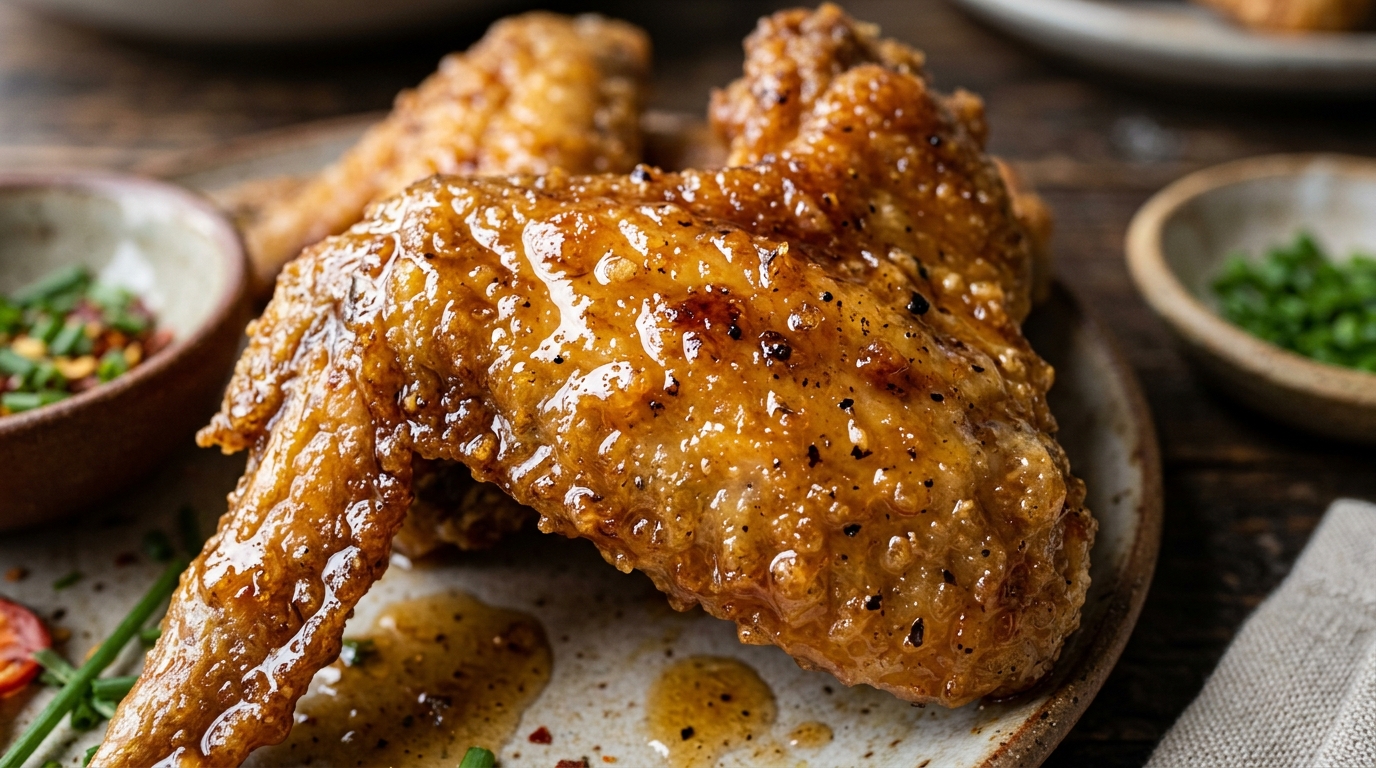
This is achieved because starch gelatinizes differently than flour. Wheat flour contains gluten, which provides chew. Starch, conversely, provides crunch. By using a potato starch slurry, the cook creates a moisture-wicking barrier that holds firm against the weight of a thick, syrupy glaze. My first real experience with this was a revelation: I was served a plate of soy-garlic wings that were literally dripping in sauce, yet they maintained a crystalline snap with every single bite. The science behind this is basic thermodynamics—by rendering the fat out of the skin during the first fry and then locking the surface with the second, high-heat burst, the skin becomes essentially a dehydrated layer of crispiness.
Navigating the ‘K-Food’ Identity
It is vital to understand that Korean fried chicken is not ‘traditional’ in the sense of a recipe passed down for centuries. As scholars like Professor Joo Young-ha have noted, this is modern ‘K-food’—a product of post-war adaptation, international exchange, and rapid urban growth in South Korea during the 1970s and 80s. When you order a bucket today, you are consuming a fusion of American frying techniques and local flavor profiles.
This history explains why the dish feels so ‘approachable’ to a global audience. It doesn’t require a high barrier to entry like fermented kimchi or doenjang (soybean paste) stew. It taps into the familiar DNA of fried chicken, which is universal, but elevates it through the specific flavor profile of gochujang (fermented chili paste), soy, and garlic. It is, quite simply, the ultimate gateway drug for international diners to explore more complex elements of the cuisine.
The Business Model: Why Quality Varies
Why does a bucket of wings at one place cost $15, while another charges $30? The answer lies in the ‘labor-to-crunch’ ratio. A reputable establishment is not just tossing chicken in oil; they are performing a highly disciplined sequence of events. First, the chicken is cleaned and brined. Then, it is dredged, fried at 325°F (160°C), allowed to rest so the juices redistribute, and finally fried at 375°F (190°C) to crisp.
I have walked into many establishments that claim to serve ‘authentic’ wings but are clearly cutting corners by skipping the rest period or using a single-fry method. This is why you should look for the ‘green flag’ wait time. If a menu tells you the chicken will be ready in 10 minutes, be wary. True double-fried chicken takes time. If you see a quoted wait time of 20 to 25 minutes, you are almost certainly looking at a kitchen that is cooking your order from scratch rather than keeping batches under a heat lamp.
Who Should Eat This (And Who Should Not)
This style of dining is not for everyone. It is an aggressive, indulgent, and unapologetically tactile experience.
This is ideal for:
The Texture Obsessive: If you are the type of person who judges a meal by the ‘crunch-to-chew’ ratio, this is your gold standard.
The Social Eater: This is not a ‘solo box’ meal. It is designed for large groups, communal platters, and long nights paired with beer, embodying the chimaek (chicken and beer) culture.
The Flavor Explorer: You enjoy the interplay between sweet, spicy, and savory. If you love a complex glaze that sticks to your fingers, you will be in heaven.
You might want to skip this if:
You Are a ‘Crispy-Only’ Purist: If you despise sauces and only want the dry, seasoned crunch of Nashville hot or Southern fried chicken, the inherent sweetness of the yangnyeom glazes might be too much for you.
You Are Counting Macros: This is a sugar-heavy, deep-fried indulgence. The glaze is often a reduction of syrup, ketchup, and chili paste. It is a cheat-meal king, not a balanced dinner.
You Dislike Getting Messy: There is no dainty way to eat these. If you are on a first date and aren’t comfortable with sticky fingers and using plastic gloves, opt for a different cuisine.
The Cost vs. Value Equation
When you see a price tag of $25 to $40 for a full portion, it is important to remember what you are actually buying. You are paying for the labor of a two-step cooking process and the high quality of the starch-based coating ingredients.
| Item Type | Price Range | Value Assessment |
|---|---|---|
| 6-8 Piece Wing Set | $15 – $22 | Good for lunch or solo snack |
| Half-Chicken Portion | $18 – $28 | The sweet spot for 1-2 people |
| Full Chicken/Combo | $35 – $50+ | Best value for groups/beer pairings |
My take? The value is found in the consistency. If you pay a premium at an established brand, you are paying for the guarantee that the skin will not be soggy. If you try to find a ‘bargain’ version, you will almost inevitably end up with something that feels more like wet, oily breading than the crisp experience you crave. Don’t cheap out on the first visit.
Common Mistakes to Avoid
1. The ‘Delivery Trap’
Physics is the enemy of the crunch. I once made the mistake of ordering a massive party tray for a home movie night. By the time it reached my house—just 25 minutes later—the steam trapped in the cardboard box had turned the starch coating into a rubbery, sad disappointment. If you are ordering delivery, specifically ask the restaurant if they can provide ventilated packaging or place the sauce on the side. If they refuse, you are almost better off picking it up yourself or choosing to eat in.
2. Skipping the Palate Cleansers
If you order a full bucket of yangnyeom chicken and skip the pickled radish (mu), you are missing half the point of the meal. The Korean dining philosophy regarding fried chicken is all about balance. The chicken is heavy, sweet, and fatty; the radish is acidic, cold, and clean. Without the radish, your palate becomes saturated with sugar and fat after the third bite, and the remaining wings lose their appeal. Always order the sides.
Frequently Asked Questions
Why do they serve pickled radishes with the chicken?
It is a functional requirement. Because the chicken is double-fried and coated in a rich, syrupy glaze, your taste buds get fatigued by the fat and sugar very quickly. The cold, crisp, tangy pickled radish acts as a reset button. Each bite of radish cleanses the palate, making the next piece of chicken taste as vibrant and crunchy as the first. Think of it as a mandatory pairing, not just a garnish.
Is Korean fried chicken always spicy?
Not at all. In fact, the ‘soy-garlic’ profile is just as, if not more, popular than the fiery yangnyeom* red sauce. Many establishments now allow you to order a ‘half-and-half’, giving you the best of both worlds. Don’t feel pressured to test your heat tolerance if you prefer a savory, umami-rich profile. Both versions rely on the same fundamental double-fry technique, so you don’t sacrifice texture by choosing the milder option.
Why do some restaurants use gloves while others don’t?
It is a cultural marker of authenticity. In South Korea, using disposable plastic gloves is a practical solution to the ‘sticky-finger’ problem. It keeps your hands clean so you can return to your drink or your phone without leaving a mess. When a restaurant offers these, it is a nod to the fact that this food is meant to be handled with your hands, and they are providing the tool to make that possible. It is not a gimmick; it is an acknowledgment of how you should be eating.
Can I make this at home effectively?
Yes, but it is a project. You cannot simply ‘fry’ chicken at home; you need to manage the oil temperature precisely. The real challenge is the disposal of the oil and the sheer amount of cleaning required after a double-fry session. If you have the patience to monitor temperatures at 325°F and 375°F, you can achieve a decent result, but for 90% of people, the restaurant experience remains the superior choice due to the equipment overhead.
Conclusion: The Final Crunch
Korean fried chicken represents a shift in how we perceive comfort food. It is not just a greasy calorie bomb; it is a calculated, technique-driven dish that celebrates the beauty of texture. If you have never experienced it, make your first trip to an authentic, well-regarded spot. Start with a half-and-half order of soy-garlic and mild spicy, and ensure you have that side of pickled radish waiting. Pay attention to that first bite—the way the coating shatters before the steam releases from the meat. That brief moment of culinary perfection is why the obsession continues to grow. Don’t overthink the logistics: find a friend, grab a drink, and enjoy the experience for what it is—a masterclass in the science of the crunch.