
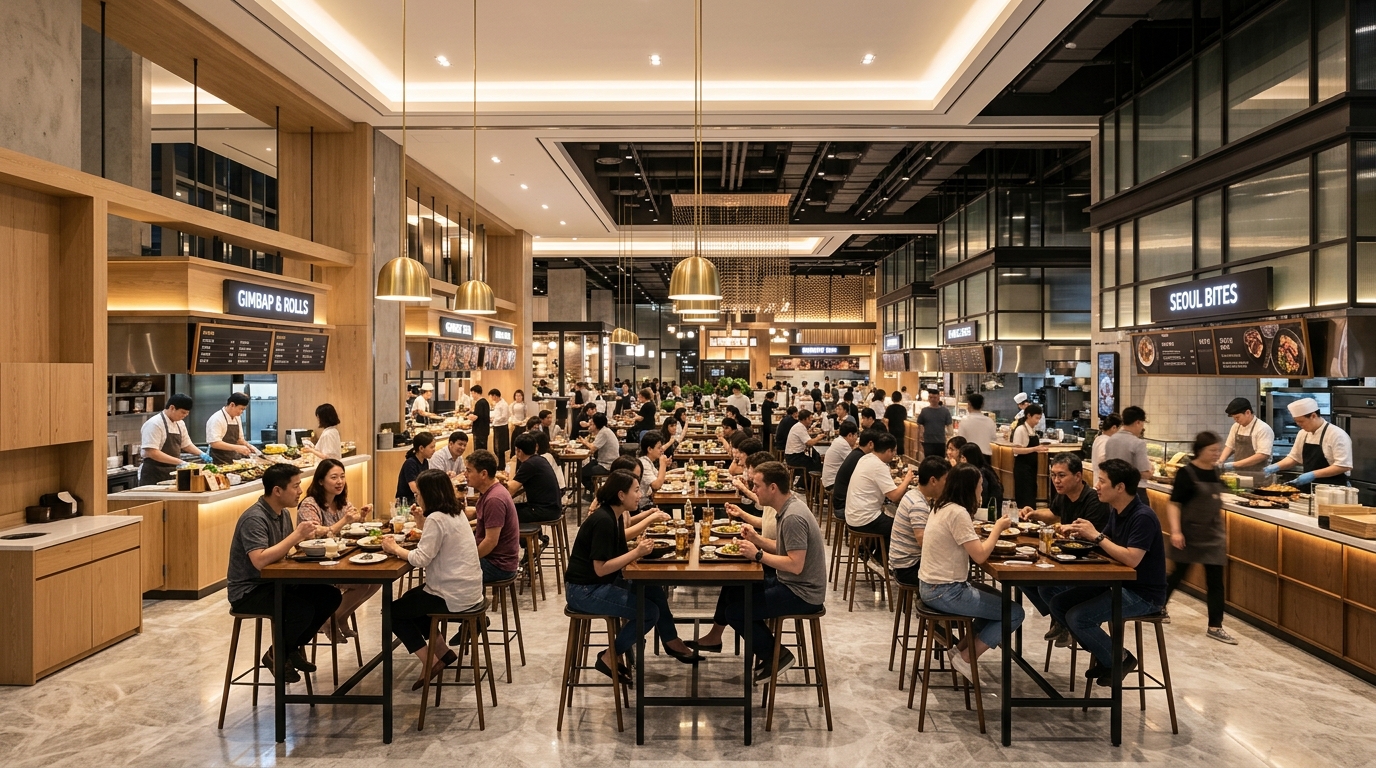

Exploring premium food halls in Seoul reveals a massive transformation in the South Korean retail landscape, turning mundane department store basements into high-stakes culinary theaters. If you have visited a flagship department store in the city recently, you know the atmosphere has shifted entirely. It is no longer just about picking up a few items and leaving; it is about immersing yourself in a highly curated, sensory-rich environment that blends fine dining with modern retail convenience. This trend is not merely a fad, but a strategic survival mechanism for massive retail conglomerates fighting to remain relevant in an era dominated by e-commerce.
Quick Summary
Premium food halls serve as critical “anchor” attractions designed to pull shoppers away from their screens and into physical retail spaces.
Successful models, such as The Hyundai Seoul and Shinsegae Gangnam, prioritize exclusive, chef-driven concepts over generic chains.
these spaces leverage the “experience economy,” offering low-barrier-to-entry luxury through artisanal food and Instagrammable interiors.
Technology, including mobile ordering and AI-powered management, ensures operational flow even during peak hours.
The “halo effect” from these food hubs draws consistent foot traffic, boosting sales across the entire department store.
The Direct Answer: Are They Worth It?
If you want the most concise answer: visit these venues if you value culinary discovery, convenience, and variety. You should avoid them if you are seeking a quiet, slow-paced meal or a budget-friendly lunch. These spaces are designed for high-intensity, high-quality exploration. They are not traditional food courts; they are, in effect, boutique indoor festivals of flavor where you can sample dozens of distinct brands under one roof. Whether you are a local or a visitor, prioritizing one of these halls during a weekday is a definitive upgrade over the average city cafe experience.
The Evolution of the Retail Anchor
I remember the department store landscape of Seoul nearly fifteen years ago. It was a utilitarian affair, focused on floor after floor of clothing, perfume, and home goods, with a dimly lit cafeteria tucked away in the corner as an afterthought. Today, that hierarchy has flipped. Walking through the basement level of the newly renovated Shinsegae Gangnam branch, the first thing that hits you is not the retail, but the smell. It is a mix of freshly roasted coffee, high-quality beef searing on iron, and delicate pastry dough. The scent acts as a gravitational pull.
Retailers have realized that people can buy clothes anywhere, and usually for a cheaper price online. However, people cannot digitally replicate the experience of sitting in a well-designed, bustling, and vibrant culinary hub. This realization drove the massive investment we see today. It is a classic move in the ‘experience economy’: providing the consumer with a memory rather than just a product. When I took a group of friends to the Gastro Table at Hyundai recently, we spent three hours there without ever feeling the need to visit the fashion floors above. The food itself was the destination.
Technology Behind the Taste
One of the most impressive, yet often overlooked, aspects of these premium food halls is the invisible layer of technology. I’ve personally used the table ordering systems that are now standard, and the efficiency is genuinely impressive. You scan a QR code at your seat, the app recognizes your specific table location, and you can order from three different vendors simultaneously. This eliminates the frantic search for a seat while holding a tray of food, a problem that plagued the food courts of my youth.
Beyond consumer-facing tech, the backend is a masterclass in logistics. In spaces like Lotte’s new L’Épicerie in Nowon, AI-driven inventory management ensures that stock levels are optimized to reduce food waste. These systems are essential because the margins on gourmet goods are razor-thin, and spoilage is the enemy of profitability. Furthermore, the push toward unmanned retail in smaller sections of these halls indicates a future where the human staff can focus entirely on high-touch service and culinary consulting, rather than menial transactional tasks. This is not just about cost-cutting; it is about scaling quality in an environment where volume is massive.
Strategic Differentiation and Exclusivity
If you see the same ten chains at every subway station, the food hall fails. The true winners in this market understand that exclusivity is the only real currency. I have watched the evolution of these spaces with genuine interest as they compete for “first-to-market” status. For instance, when a hall secures a partnership with a trending, long-waitlist bakery or a Michelin-honored chef’s casual concept, they effectively own the weekend foot traffic for their district.
This competition has created a fascinating “race to the top” among Korea’s giants. Shinsegae, for example, has significantly increased its gourmet content in the Gangnam branch to maintain its dominance. Meanwhile, the Hyundai Department Store’s collaboration with global brands like Le Bon Marché showcases a shift toward importing international prestige to bolster domestic relevance. By providing brands that are otherwise unavailable, these retailers turn their floor space into an exclusive gallery of trends that consumers feel compelled to visit before the next big thing arrives.
The “Wellness” Shift: A New Era of Grocery
It is not just about the dining. I noticed a distinct change in the grocery sections of these halls, specifically at the recently opened ‘House of Shinsegae’ in Cheongdam. The shift is toward ‘wellness-focused’ shopping. Instead of thousands of SKUs cluttering the shelves, they have reduced the count by over 60%, focusing only on high-quality, health-conscious items. When I walked through their ‘pantry’ zone, I didn’t see mass-produced snacks. I saw probiotic-enriched chips, artisanal olive oils, and carefully curated grains.
This approach solves the ‘choice fatigue’ that plagues traditional supermarkets. By having a merchandiser curate the selection, the retailer builds a massive amount of trust. They also implement ‘showcase’ displays, where a single, perfect head of lettuce or a specific fruit is presented on a stand rather than in a pile. It feels less like a grocery store and more like a high-end produce exhibit. The goal is to make the act of buying ingredients feel as premium as the act of eating a meal in their restaurant section.
Who Should Visit Premium Food Halls (And Who Should Not)
This decision framework is based on my frequent visits and the specific operational models of the major Seoul venues.
This is ideal for:
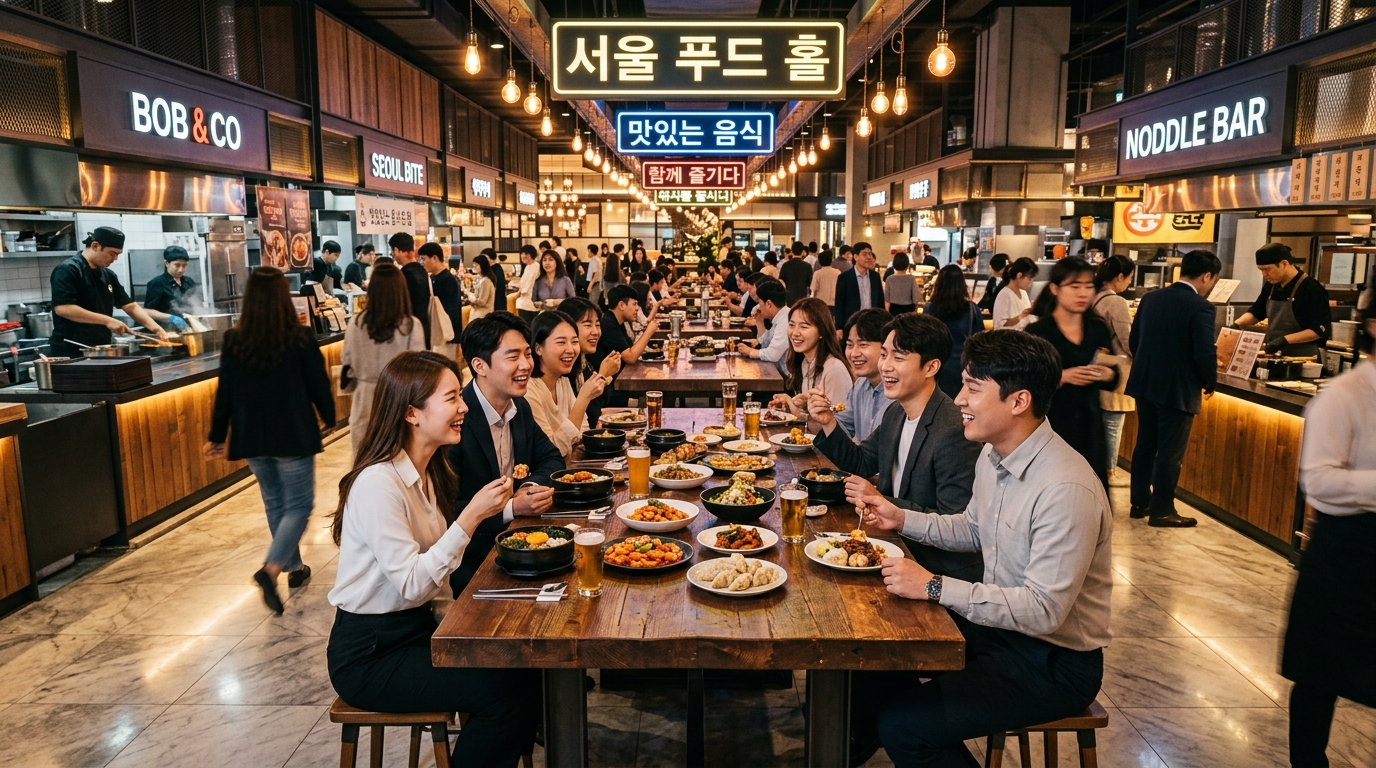
Social Groups: People who want to dine together but cannot agree on a specific cuisine. The variety allows one person to get a burger, another to grab sushi, and a third to pick up Korean beef, all while sitting together.
Food Enthusiasts: Anyone who wants a snapshot of the current Seoul food scene without spending two weeks traveling to every corner of the city. These halls are perfect for spotting trends.
Design Lovers: If you care about architecture and interior design, the transformation of these basement levels is a sight to behold. The aesthetics are often world-class.
Weekend Explorers: If you have a free Saturday and want an all-in-one location for shopping, coffee, and dinner, this is the most convenient urban setup you will find.
You might want to skip this if:
You value deep quiet: These are loud, energetic, and crowded environments. If you want a romantic, whisper-quiet dinner, you will find these spaces overwhelming and stressful.
You are on a strict budget: These are premium spaces. You are paying for the location, the curation, and the high-end ingredients. If you expect the $5 street food price, you will be disappointed.
You expect full service: Despite the gourmet food, this is still a cafeteria model at its heart. Do not go expecting someone to refill your water or clear your table while you chat for hours.
Common Mistakes to Avoid
- Visiting at the Absolute Peak: I have made the mistake of heading to the Yeouido or Gangnam branches on a Saturday at 1:00 PM. It is a mistake. The crowds are suffocating, queues for the best stalls can be 45 minutes long, and the noise is deafening. If you want a pleasant experience, go on a Tuesday or Wednesday evening, or hit the venue right when it opens at 10:30 or 11:00 AM.
- Expecting Traditional Pricing: I once overheard a tourist complaining about a 35,000 KRW set meal. They were comparing it to the local neighborhood ‘bunsik’ shop. These halls are not aimed at that demographic. If you arrive with the mindset that you are going to get ‘cheap’ food, you will feel cheated. Approach it as you would a boutique experience, and you will understand the value proposition.
Cost and Value Breakdown
To understand the value, look at the math. A typical ‘fast-casual’ meal in a standard Seoul business district might cost 12,000 KRW. At a premium food hall, you are looking at 25,000 to 45,000 KRW for a lunch set at a name-brand stall.
The Premium Choice: You are essentially paying a 50-70% markup. However, you are buying into a 100% increase in environmental quality, variety, and the “novelty” of the brands.
The Dwell Time Factor: If you visit a standard restaurant, your time investment is about 45 minutes. If you spend 30,000 KRW in a food hall, you are also effectively paying for two hours of entertainment, air conditioning, and a curated atmosphere. When you calculate the ‘hourly cost’ of your afternoon, it becomes much more reasonable.
Frequently Asked Questions
Are these premium food halls just fancy food courts?
Yes and no. They function as food courts because they house multiple vendors in one space, but the similarity ends there. The quality of food is essentially restaurant-grade, and the design is closer to a gallery than a transit terminal. You are getting chef-led cuisine, not reheated fast food. Think of it as a vertical food festival.
Do I need to make a reservation?
For most vendors, no. The entire model is based on walk-in traffic. However, in the newer ‘House of Shinsegae’ types, there are specific, ultra-exclusive dining rooms like ‘Monologue’ that operate on a strict, single-reservation-per-day basis. Check the store website if you are aiming for one of those high-end, private venues within the larger hall.
Are they really better than local restaurants?
It depends on your goal. If you want a quiet, authentic, and cozy neighborhood experience, a local street-side restaurant is almost always better. If you want to see what is trending, want a variety of options for a large group, or need a clean, temperature-controlled environment during a humid summer day, the food hall wins every time. They serve different psychological needs.
How is the service during peak hours?
It is intense. Even with the mobile ordering tech, the sheer volume of people can cause service to lag. When I visited on a rainy Sunday, I saw the kitchen staff visibly struggling to keep up with the queue. They manage it well, but it is never going to be the same speed as a quiet, standalone restaurant. Patience is a requirement during peak hours.
Conclusion
The rise of premium food halls in Seoul is a masterclass in retail adaptation. By effectively re-engineering the department store into a social destination, these retailers have proven that the physical shopping experience is not dead; it just needed to become more delicious. I have watched this shift with interest, and it is clear that for the modern Seoul consumer, the experience is the product. Whether you are hunting for the latest viral bakery item or just want a high-quality meal in a beautiful setting, these halls are essential stops on any itinerary.
My final piece of advice? Don’t rush. Treat these spaces as a place to explore. Spend time walking through the pantry section, look at the dry-aged fish, and watch the people. The beauty of the premium food hall is that it rewards curiosity. If you are in Seoul, block out two hours, go on a weekday, and let yourself get lost in the stalls. You might just find your new favorite culinary spot in the city.”,
“imagegenerationprompt”: “A wide-angle, high-resolution interior photograph of a modern, premium food hall in Seoul. The design features elegant marble floors, warm gold and soft recessed lighting, and a mix of minimalist wooden accents and industrial chic details. In the foreground, people are casually eating at stylish, communal high-top tables. In the background, there are various upscale, brightly lit food stalls with visible chefs preparing high-end dishes