
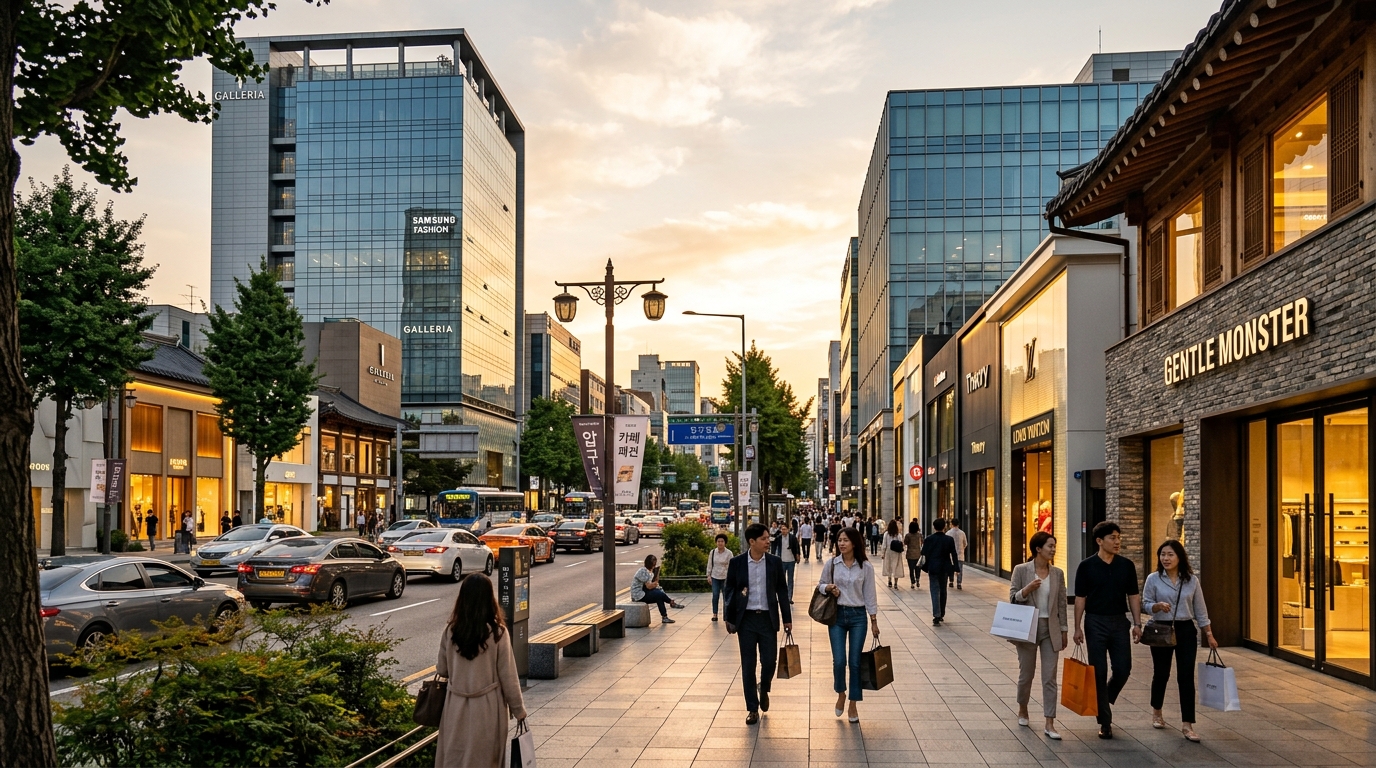

Apgujeong Rodeo investment represents a fascinating case study in urban resilience and the power of community-led commercial development. When I first stepped onto the streets of this district in the early 2010s, the atmosphere felt stagnant, with many storefronts sitting vacant as large franchises pulled out, leaving behind a hollowed-out retail landscape. Yet, witnessing its transformation into the current commercial powerhouse has been a masterclass in how neighborhoods can pivot from decline to record-breaking appreciation. If you are exploring the Seoul real estate market, Apgujeong is no longer a hidden secret; it is a mature, competitive, and highly strategic environment that rewards the calculated investor over the casual speculator.
Quick Summary
- Rapid Growth: Commercial property values have surged from 70-160 million KRW per 3.3㎡ in 2021 to 250-450 million KRW today.
- Low Vacancy: The district currently maintains a 2.79% vacancy rate, significantly outperforming the broader Gangnam (8.76%) and Seoul (8.66%) averages.
- Strategic Zoning: Apgujeong is divided into distinct zones—the high-traffic L-shaped strip, the quiet office/gallery corridor, and the luxury-focused Dosan Park area.
- Community Governance: Local building owners formed a committee to regulate rent, preventing the homogenization that often kills commercial districts.
- structural Focus: Success in this market is tied to building ‘bones,’ such as high floor-area ratios and the flexibility for vertical expansion.
- You have significant capital: You have at least 3-5 billion KRW in liquid capital to leverage for commercial-grade assets.
- You are a long-term thinker: You can hold a property for 5-10 years to ride out market cycles and allow for long-term lease structures.
- You seek a ‘trophy’ asset: You are looking for a property that serves as both a wealth store and a status symbol in the heart of Seoul.
- You have management capacity: You have the capability or a team to handle institutional-grade building management, including high-end tenant relations.
- You want quick profits: You are looking for short-term flipping gains. This is a mature market where the ‘easy’ money has already been made.
- You are a first-time investor: You have limited experience in commercial, multi-tenant lease structures. The complexity of managing these buildings can be overwhelming for a novice.
- You prefer simplicity: You prefer high-yield, passive-growth residential assets. Apgujeong is a commercial heavy-hitter that demands active, professional management.
- Ignoring Transit Evolution: Do not fall into the trap of buying a building just because it is popular today. The most successful investors in Seoul track upcoming transit station developments. I’ve seen investors pay a 20% premium for a location that is currently a 10-minute walk from a station, missing the fact that a new line expansion will cut that to 5 minutes within three years. That delta is where your profit margin hides. If you ignore the urban planning maps, you are effectively gambling rather than investing.
- The ‘Restaurant Trap’: While the ‘Black and White Chef’ phenomenon shows that celebrity chefs can drive traffic to a district, don’t over-rely on a single F&B tenant. When I’ve seen investors get into trouble, it’s usually because they filled their building with high-turnover restaurants that struggled to pay rent once the initial ‘media hype’ died down. These tenants often require expensive interior fit-outs that you, the owner, may end up subsidizing. Always prioritize professional, non-food tenants for the upper floors to ensure a baseline of income that is independent of viral trends.
- www.chase.com
- www.luxuo.com
- www.timeout.com
The Reality of Apgujeong Rodeo Investment
If you are searching for a direct answer regarding whether you should commit capital to this district, the response is clear: you should proceed only if you have the patience for a long-term hold and the capacity to manage institutional-grade assets. This is not a market for ‘easy’ flipping or quick, speculative gains. The barrier to entry is high, often requiring 3-5 billion KRW in liquid capital to secure a meaningful position. Investors should focus on physical asset efficiency—such as structural layout and legal zoning potential—rather than chasing the latest viral social media trend. By prioritizing these fundamentals, you can differentiate your returns from the market average and build a sustainable, income-generating portfolio.
The Three Pillars of the Apgujeong Landscape
Navigating this neighborhood requires an understanding of its micro-geography. I have found that lumping the entire district into one category is the quickest way to misallocate capital. Each zone serves a specific commercial function, and the investment logic for one rarely applies to another.
1. The L-Shaped Street: The High-Traffic Engine
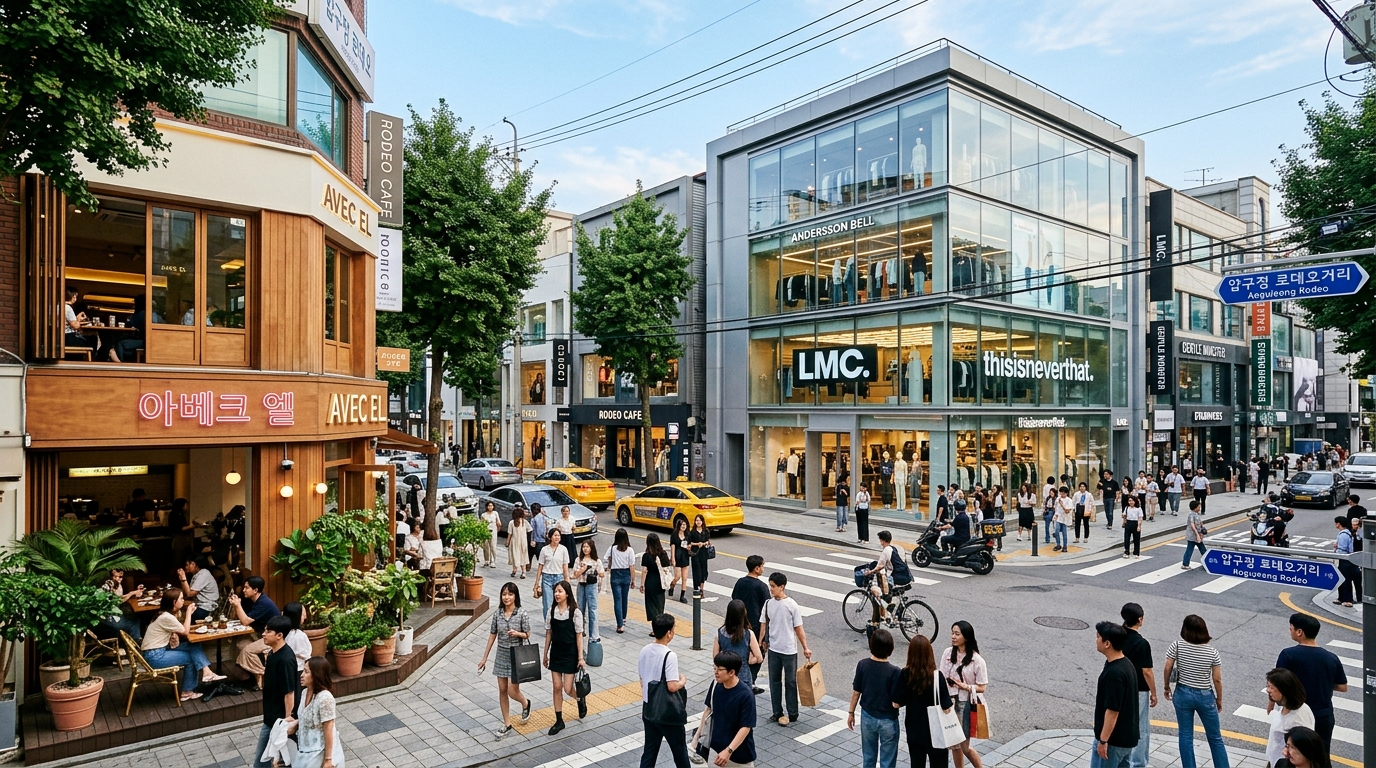
This is the district’s social core. It is the destination for the ‘next big thing’ in retail and food. If your strategy involves high turnover and betting on viral social media trends, this is where you look. However, I must warn you: this zone is inherently volatile. You are paying a massive premium for foot traffic, which means your rent levels are high, and your tenant base is susceptible to the ‘media hype’ cycle. If a restaurant goes viral today, it might be gone in eighteen months. You are effectively betting on the location’s enduring popularity, which requires significant management of your tenant mix to prevent decline.
2. The Office and Gallery Zone: The Stability Anchor
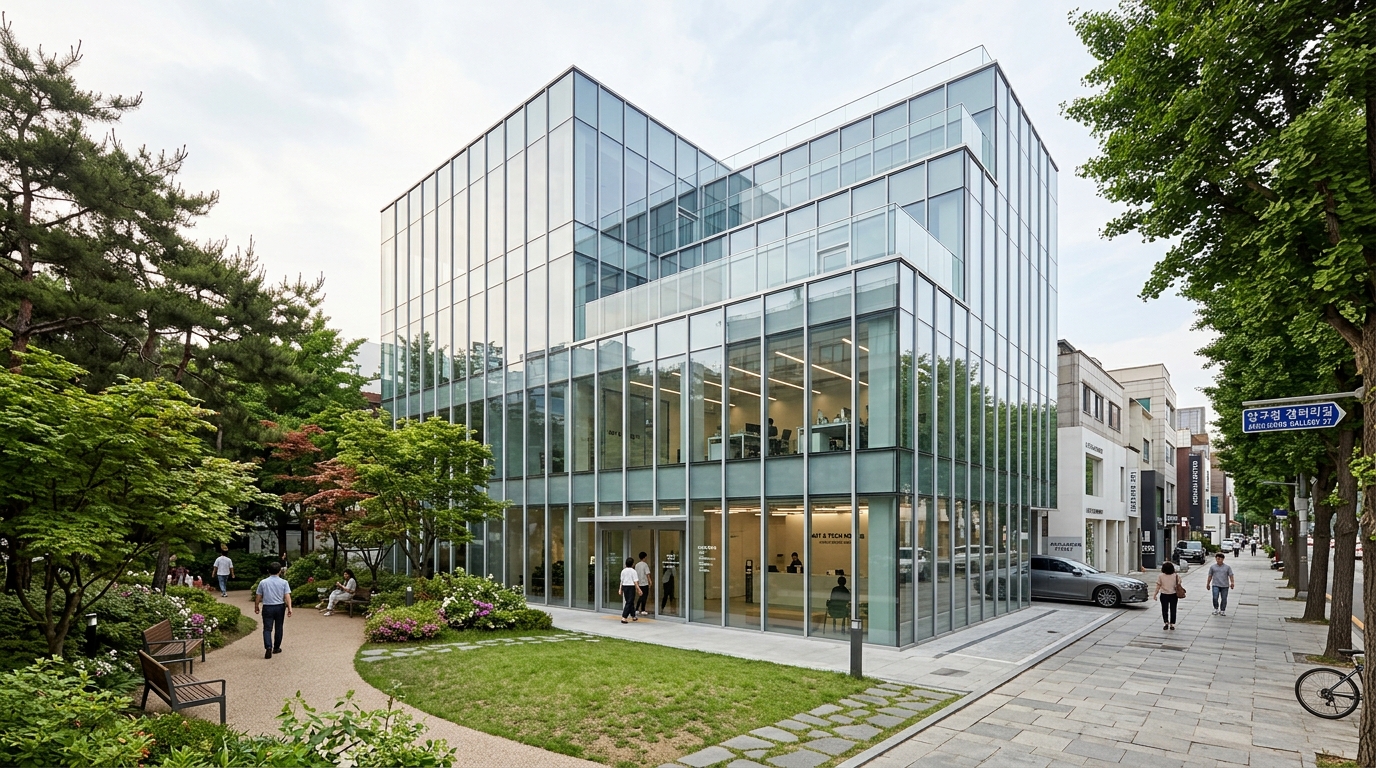
This is where my personal preference lies for long-term stability. Tucked away from the chaotic noise of the main strip, these streets offer a more refined atmosphere. The values are slightly more accessible than the L-shaped strip, generally trading in the high 100-million KRW range per 3.3㎡. The tenant profile here is fundamentally different: think architecture firms, software startups, and private galleries. These tenants provide a predictable, consistent rental income that is not tethered to the whims of the fickle F&B scene. For an investor looking for a defensive asset that will likely hold value through a downturn, this zone is far superior.
3. The Dosan Park Zone: The Luxury Flagship
This area is the crown jewel of Apgujeong. It is less about retail turnover and more about brand prestige. Here, you are not leasing space; you are providing a venue for a luxury experience. Think of this as the Omotesando of Tokyo. High-end designers and global lifestyle brands dominate the landscape, and the economics are driven by the brand’s need for a flagship identity rather than simple revenue per square meter. The hurdle for entry here is immense, but the prestige and long-term appreciation potential of these assets are unmatched in Seoul.
Understanding the Economic Turnaround
Why did this district recover so dramatically? It wasn’t magic, and it certainly wasn’t the government. The turning point was a deliberate, community-led intervention. When the ‘dark years’ hit in the early 2010s, building owners realized that letting big-box franchises dictate the district’s character would lead to their own demise. They began implementing self-regulated rent controls and curated the tenant mix to encourage unique, concept-driven businesses.
I recall talking to a local consultant who explained that the goal was never to maximize rent in the short term, but to ensure the district remained ‘interesting.’ By freezing or reducing rents for 5–10 year terms, they allowed risky, ‘Instagrammable’ concepts like the London Bagel Museum or boutique specialty retailers to take root. This strategy anchored the district’s identity and kept foot traffic high. This is a masterclass in retaining cultural capital to ensure financial capital follows. As an investor, you must respect this history; the district thrives because it is a destination, not just a commodity.
The Structural Advantage: Why Some Buildings Win
One common mistake I see new investors make is over-focusing on the ‘vibe’ while ignoring the ‘bones’ of the building. In 2022, I observed a sale of a mid-sized office building that saw a 300% gain over seven years. The profit wasn’t just because the area was ‘cool.’ The building had structural flexibility that allowed it to be retrofitted for modern, high-utility usage. If you buy a building that is already structured to support higher utility or future vertical expansion, your renovation costs drop significantly.
Always examine the legal history of the Floor Area Ratio (FAR). Some buildings, due to when they were permitted, have a massive advantage over their neighbors. They can effectively utilize more space on the same footprint. A building that can grow upwards is inherently more valuable than one that is legally capped by older, more restrictive codes. You are buying the right to adapt the space, not just the square footage. Ask yourself: can this building support a rooftop expansion? Does it have the infrastructure to handle the power requirements of a high-end tech firm or a high-end kitchen? If the answer is no, your CAPEX (capital expenditure) will eventually erode your margins.
Celebrity Case Study: Following the Money
If you want to see the blueprint in action, consider the real estate moves made by public figures like Im Yoon-ah. In 2018, she purchased a building for roughly 10 billion KRW. By 2024, that same asset was valued at over 25 billion KRW. Her success provides a clear lesson in leverage and foresight. She did not just buy a piece of real estate; she acquired a well-maintained, modern asset located near critical transit infrastructure.
Crucially, she utilized significant leverage, using roughly 7.2 billion KRW in bonds against her own capital. This approach allowed her to control a 25 billion KRW asset while only deploying a portion of that in liquid cash. This is a common strategy among high-net-worth investors in Korea: using the stability of commercial rental income—often from professional firms like software developers or luxury retailers—to service the debt while the asset value climbs. It requires a high risk tolerance and a clear exit strategy, but it is the most effective way to scale in a mature market like Apgujeong.
Who Should Invest (And Who Should Not)
Investment in Apgujeong Rodeo is not for everyone. You need a clear understanding of your own risk profile and capital structure before signing any contracts.
This is ideal for you if:
You might want to skip this if:
Common Mistakes to Avoid
Comparing Commercial Districts: What’s the Value?
| Feature | Dosan-daero (Luxury) | Sookdae (Rising) | Apgujeong Rodeo (Established) |
|---|---|---|---|
| Rental Rates | Mid-High | Low (Undervalued) | High (Premium) |
| Tenancy | Luxury/Flagships | Young/Black Spoon | Mixed-Use/Corporate |
| Investment Goal | Long-term appreciation | Growth/Upside potential | Stability/Prestige |
Frequently Asked Questions
Q: Is the media hype impact on real estate permanent?
A: While the viral media cycles—like those surrounding the ‘Black and White Chef’ series—are temporary, the infrastructure improvements that follow them are not. These events drive traffic that forces landlords and local governments to improve lighting, security, and street accessibility. This creates a lasting improvement in property value that persists long after the original hype has died down. Focus on the infrastructure, not the show.
Q: How much liquidity do I really need to start in Apgujeong?
A: You shouldn’t expect to enter the high-end commercial market here with less than 3–5 billion KRW in liquid capital. While it is possible to use high leverage (bonds/loans), the high interest rates and the sheer scale of these buildings mean you need a significant cash buffer to manage property tax, maintenance, and potential vacancy periods. It is definitely not an entry-level market, and attempting to force your way in with undercapitalized assets is a recipe for disaster.
Q: Does it matter if I buy a residential vs. commercial building?
A: In this district, commercial is king. Residential zoning here is often legacy and lacks the floor-area utilization that modern commercial buildings enjoy. Furthermore, the rental yield on commercial office space is much more predictable and easier to manage than residential tenants. Stick to commercial assets if your goal is long-term appreciation and professional tenant management.
Q: Is it too late to get into the Apgujeong market?
A: It is too late for ‘cheap’ deals, but it is not too late for ‘smart’ deals. The market has shifted from a period of massive speculative growth to one of institutional stabilization. If you have the expertise to find a building with a favorable structural footprint that hasn’t been renovated to its full potential, there is still plenty of room for value-add investment. Don’t look for the bargain; look for the potential.
Conclusion: The Path Forward
The story of Apgujeong Rodeo is one of the most successful urban turnarounds in recent history. It serves as a stark reminder that a district’s survival is not guaranteed by its history, but by the ability of its community to adapt, curate, and maintain a competitive edge. For the prospective investor, the lessons are clear: prioritize structural efficiency, keep a close eye on urban transit development, and avoid the trap of chasing trendy tenants at the expense of long-term commercial stability.
My advice for anyone seriously considering an entry into this market is to start by walking the gallery zone. It is quieter, more refined, and offers a more realistic window into the actual property dynamics than the loud, neon-lit main strip. Focus on the ‘bones’—the floor area ratios, the structural reinforcement, and the legal potential of the land—and you will find that even in a ‘saturated’ market, there is always value for the investor who knows where to look. Success here is not about being the loudest; it is about being the most prepared. When you identify the right structural opportunity that aligns with the district’s long-term growth, you secure more than just real estate; you secure a legacy asset in one of the world’s most dynamic urban cores.