
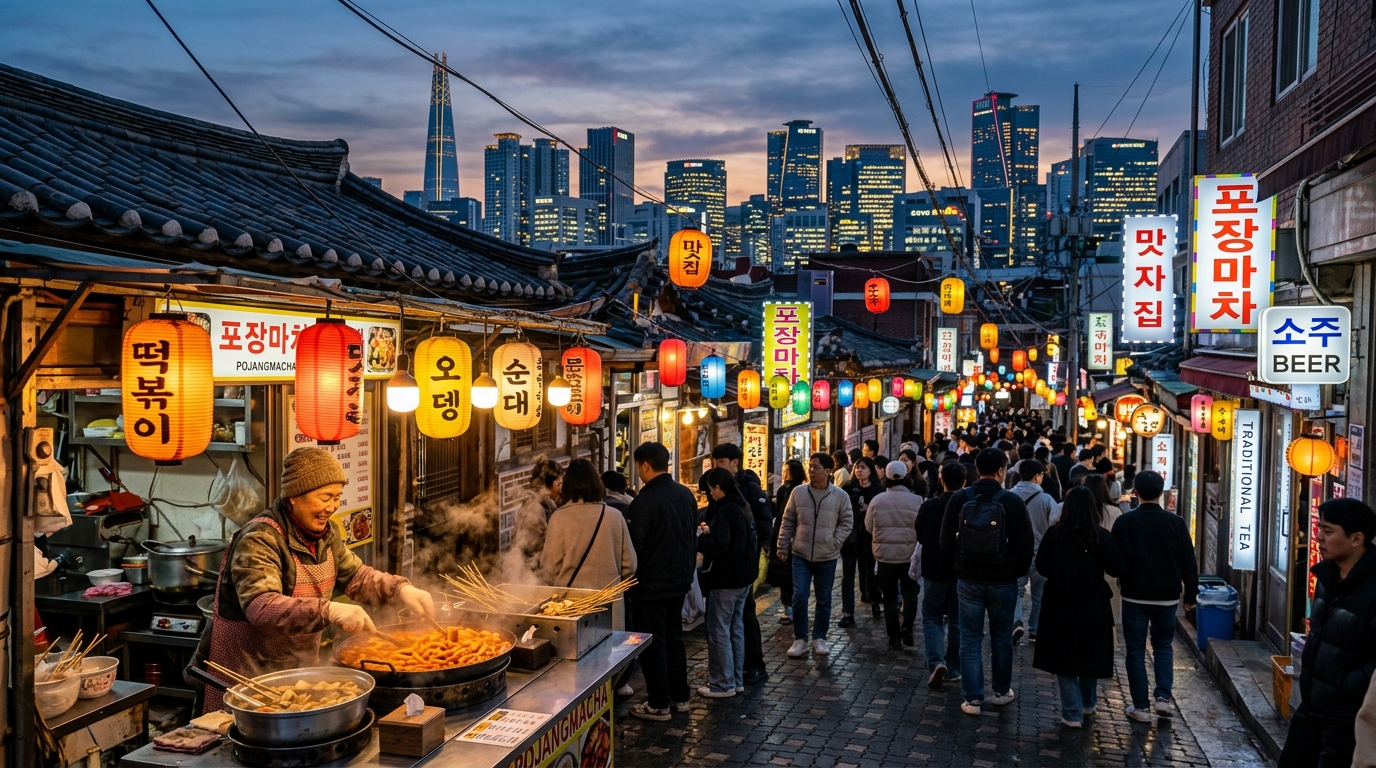

Finding affordable experiences in seoul is not just a clever financial strategy; it is the most effective way to peel back the layers of this hyper-modern metropolis and witness its authentic, daily rhythm. When I first landed in the Korean capital, I made the amateur mistake of flocking to the high-gloss, heavily advertised tourist zones that promised an Instagram-perfect vision of the city but delivered little more than inflated prices and sterilized cultural interactions. Realizing that I was missing the actual soul of the neighborhood, I shifted my strategy entirely toward the ground-level reality of local life. I quickly learned that the most profound moments in this city—the ones that stick with you for years—rarely require a premium ticket. Instead, they happen in the quiet spaces between the skyscrapers, in the bustling markets where steam rises from iron bowls, and on the expansive network of public transit that keeps this city breathing.
Quick Summary
Prioritize Public Transit: Skip taxis entirely; use the T-money card on subways and buses to save significant costs and avoid traffic.
Target Bib Gourmand: Focus your dining efforts on Michelin’s Bib Gourmand list for high-quality, authentic meals at a set, reasonable price point.
Embrace Free History: Explore UNESCO heritage sites and temple complexes like Bongeunsa that charge minimal to no entrance fees.
Eat Like a Local: Seek out shops with limited menus; they generally focus on perfecting one or two items, ensuring better quality for your money.
- Strategic Stays: Staying near major transit hubs in central areas saves hours of travel time compared to staying on the cheaper, outer fringes.
The Direct Answer: How to Manage Your Budget
If your goal is to stretch your budget without compromising on the quality of your trip, the direct answer is simple: stop hunting for “tourist-friendly” amenities and start living in the gaps between them. You can comfortably explore the city for under $40 USD a day if you commit to eating at local kimbap shops or market stalls, utilizing the impeccably clean and efficient Seoul subway, and filling your afternoons with free public parks, historical shrines, and free museum exhibits. Avoid the international chains and the high-end “concept” cafes that charge double for mediocre coffee. Instead, look for the establishments where the menu is written strictly in Korean and the patrons are mostly local office workers or retirees. If you see a line of locals at 12:30 PM, you have found the best meal of your trip.
Unlocking the Gangnam Value Proposition
Many travelers are intimidated by the reputation of Gangnam, assuming that its glass-and-steel architecture mandates a luxury budget. This is a significant misconception. While the area is indeed home to high-end flagship stores, it is also a massive, accessible transit hub. When I stayed near Eonju Station, I realized that I wasn’t paying for luxury—I was paying for time. By being centrally located, I cut my commute to the historic northern districts from an hour to twenty minutes. That reclaimed time is the most valuable currency you have in a city this large.
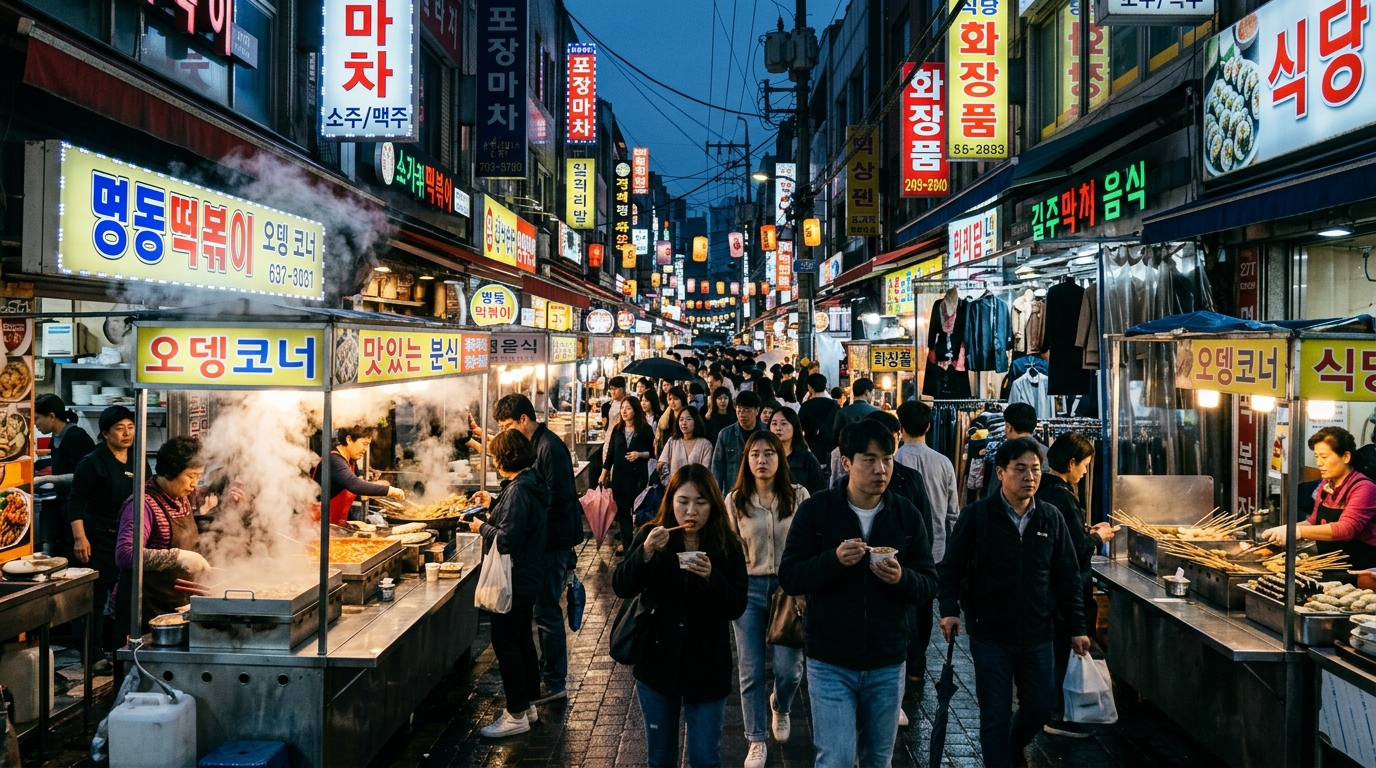
Once you are in Gangnam, the trick is to bypass the department store food courts. Head instead to the underground malls at Gangnam Station. Yes, they are chaotic, loud, and can be overwhelming, but they offer fashion, accessories, and quick snacks that are priced for the city’s youth and local workers. You won’t find the polished service of a luxury hotel, but you will find the real, kinetic energy of Seoul. It is a place where you can observe how the city actually operates, rather than how it is curated for international magazines.
Deep Dive: The Gastronomy of Simplicity
One of the most persistent myths about dining in Seoul is that “cheap” means “low quality.” In Korea, the exact opposite is true. The most respected restaurants are often those that have spent decades refining a single dish. When I visited a dumpling shop near Apgujeong, I was served a meal that cost less than a standard cup of coffee in a major Western city, yet the consistency of the dough and the richness of the filling were superior to any high-end fusion restaurant I had previously visited.
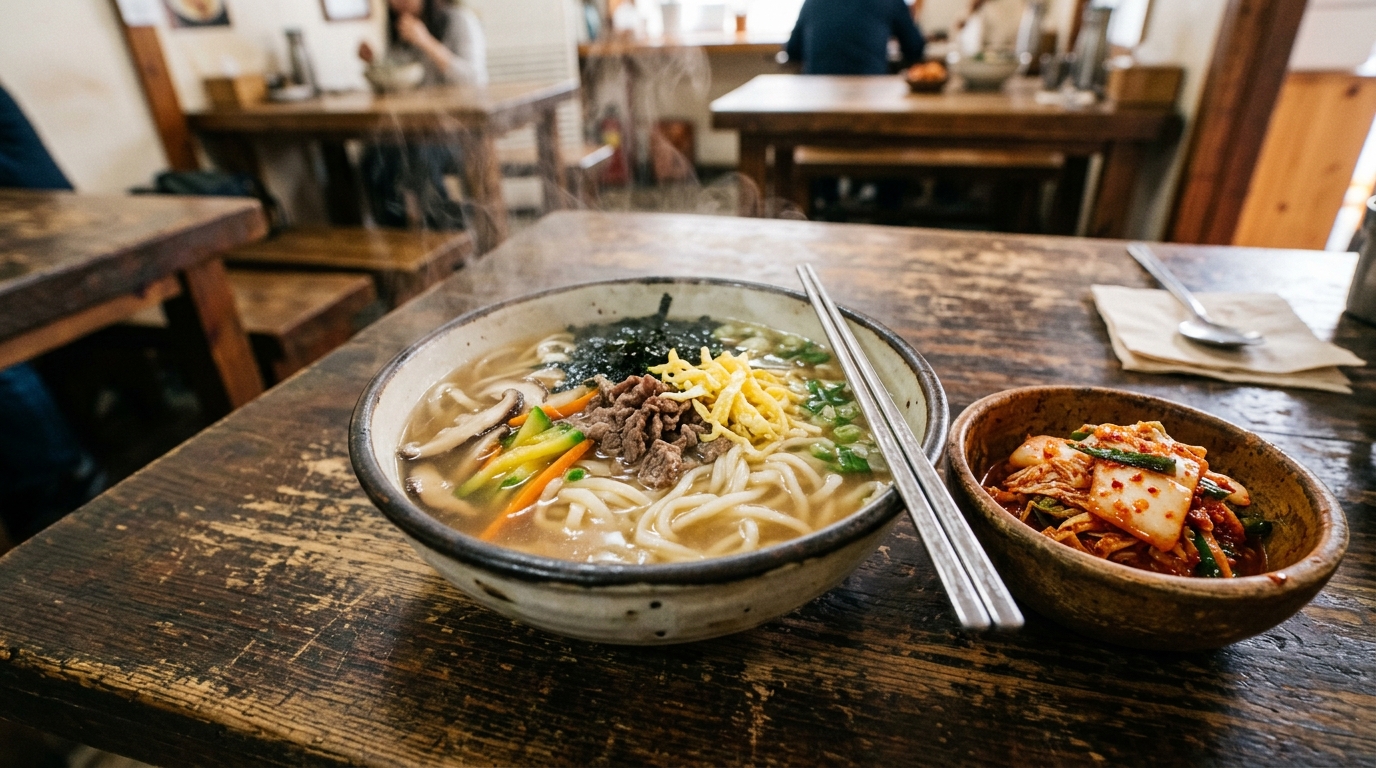
Take, for instance, the practice of seeking out restaurants that specialize in grilled pork or slow-cooked broth. By focusing on a single protein, these shops minimize waste and maximize flavor, which keeps the price point low. You don’t need a massive menu to have a world-class meal. When you see a restaurant with a wall-mounted menu listing only three items, walk in. They have mastered those three things to an obsessive degree. Use the MICHELIN Guide’s Bib Gourmand selections as your baseline, but then go one step further by looking for the neighborhood spots that don’t even have a presence on English-language review sites. If you are struggling to communicate, simply point at what the person at the next table is eating. It is a universal language that works every time.
Historical Immersion on a Budget
Seoul is a city of layers, where 14th-century palace walls often sit directly across the street from glass skyscrapers. You do not need to pay for expensive guided tours to experience this. The Bongeunsa Temple is a prime example of accessible, free heritage. Walking into that temple complex, you are hit with a wave of incense and the sound of rhythmic chanting. It is a profound, meditative experience that costs absolutely nothing. I found that visiting around 5:00 PM, when the evening prayers begin, provided the most moving experience of my time in the city.
Similarly, the royal tombs of the Joseon Dynasty—such as those at Seonjeongneung—offer a tranquil escape into nature. The entry fee is so nominal that it is practically symbolic. These sites are maintained with incredible care, and they serve as the city’s lungs. I recommend visiting these locations early on a Tuesday or Wednesday. Because you are avoiding the weekend crowds, you can wander the wooded paths in complete silence, which is a rare and precious thing in a city of nearly ten million people. It is in these quiet, historical pockets that you truly understand the scale of Seoul’s history.
The Logic of Modern Transit
If you want to save money in Seoul, your relationship with the subway system must be efficient. I often see tourists wasting money on taxi rides simply because they fear the perceived complexity of the underground network. Let me be clear: the Seoul subway is one of the most logically designed and user-friendly systems in the world. Every platform has clear, bilingual signage. If you use a transit app like Naver Map, the system tells you which door of the train to board to ensure you are the closest to your specific exit escalator.
I once made the mistake of taking a taxi during a sudden thunderstorm because I was worried about navigating the stairs in the rain. I ended up sitting in gridlock for forty-five minutes while the meter ticked up to nearly $30. I could have taken the subway in fifteen minutes for under $1.50. That experience was a harsh lesson in understanding the city’s geography. Always opt for the subway, not just for the cost savings, but for the reliability. The subway doesn’t care about traffic, weather, or road closures. It is the backbone of the city, and once you master it, you stop being a tourist and start being an explorer.
Who Should Choose This Approach (And Who Should Not)
This low-cost, high-authenticity approach is ideal for the independent, curious traveler. If you find joy in the process of discovery—if you don’t mind not knowing exactly what you are ordering, or if you enjoy the feeling of getting lost in a labyrinthine alleyway—then this is for you. This style of travel is meant for people who value a genuine, unvarnished connection to a culture over the comfort of a pre-packaged, westernized itinerary. If you are willing to walk five or six miles a day and navigate public transit, you will find that Seoul is one of the most rewarding cities on the planet.
Conversely, you should skip this approach if your primary goal is relaxation or physical comfort. Seoul is an incredibly hilly city, and its terrain can be demanding. If you are traveling with very young children in strollers, or if you have mobility issues, the hilly streets and the significant stairways in the older subway stations will present a major challenge. Furthermore, if you require a high level of English-speaking service, private chauffeured transport, or a resort-style environment, you will find the “local” approach frustrating. The best, most authentic places in Seoul are not designed to be “comfortable” in the Western sense; they are designed to be functional, efficient, and delicious.
Common Mistakes to Avoid
Mistake 1: The Taxi Trap
As mentioned previously, relying on taxis is the single fastest way to drain your travel budget. Many travelers are accustomed to using ride-sharing apps back home, but in Seoul, this is entirely unnecessary. The taxi infrastructure is expensive during peak hours, and given the density of the city, you are almost always faster underground. I watched many fellow travelers get caught in the same gridlock during my trip, wasting hours of their limited vacation time. Avoid the temptation of the street-level door-to-door service.
Mistake 2: Chasing “Instagram-Famous” Food
Another common mistake is spending your time chasing down cafes and restaurants that are popular on social media. These spots often charge a premium for the aesthetic rather than the quality of the ingredients. You will end up paying triple for a waffle or a coffee that isn’t half as good as the traditional snacks you can find at a local market for a fraction of the cost. The best rule of thumb? If the queue consists entirely of influencers with professional lighting equipment, keep walking. If the queue consists of local grandmothers and office workers, join the line immediately.
Realistic Budget Breakdown
To give you a clearer sense of how this works in practice, consider a typical day of budget-conscious travel.
| Item | Estimated Cost (USD) |
|---|---|
| Breakfast (Local kimbap/egg toast) | $3 – $5 |
| Public Transit (Unlimited usage) | $3 – $4 |
| Lunch (Noodle shop/bibimbap) | $6 – $9 |
| Temple/Heritage Site Entry | $0 – $2 |
| Dinner (Grilled pork/street food) | $8 – $12 |
| Snacks/Coffee/Drinks | $5 – $7 |
| Total Estimated Daily Cost | $25 – $39 |
This breakdown assumes you are staying in a central neighborhood and utilizing public transport. By avoiding the late-night, alcohol-heavy districts, you save significantly on both food and taxi surcharges. This allows you to allocate your resources toward unique cultural experiences or small, meaningful souvenirs rather than expensive, forgettable meals.
Frequently Asked Questions
Is the language barrier a major issue for a budget traveler?
It is far less of an issue than you might expect. While English is not spoken everywhere, the simplicity of local dining menus makes it easy to manage. Most of the best restaurants specialize in one or two items, meaning you don’t need to parse a massive, complex menu. If you are worried, simple pointing or using a translation app for dietary restrictions works perfectly fine. The people working at these local spots are usually very patient; just show them respect, be polite, and don’t be afraid to try whatever the shop is known for.
Can I truly find high-quality food for under $10 per meal?
Yes, and in many cases, the most authentic food is the cheapest. Iconic Korean staples like cold buckwheat noodles, hearty soups, and rice dishes are priced to be accessible to everyone. By sticking to local ingredients and avoiding imported, trendy items, you can eat like a king on a very modest budget. I found that the “house special” at a local, busy shop was consistently better and significantly cheaper than any of the “international” food I saw in the more tourist-heavy districts.
Do I need to book my attractions in advance?
For the vast majority of the experiences that offer true value—temples, public parks, walking tours of historic districts, and markets—you do not need to book anything. In fact, booking is often impossible or unnecessary. Seoul is a very open city for those who are willing to walk and explore. The best approach is to keep your schedule flexible. If you see a particularly interesting gate, park, or narrow alleyway, head toward it. The spontaneity of having no agenda is one of the greatest benefits of the low-budget approach.
Conclusion: The Art of the Neighborhood
Ultimately, the secret to experiencing Seoul is to stop seeing it as a series of destinations and start seeing it as a series of neighborhoods. When you prioritize affordability, you are forced to step away from the polished, tourist-facing surface and into the daily life of the city. You start to recognize the pattern of the morning commute, the rhythm of the lunch rush, and the way the city quietens down as the street lamps flicker on at dusk.
My recommendation is to keep your schedule loose. Pick a neighborhood, take the subway to its station, and simply start walking. You don’t need a map of “hidden gems” because the entire city is a gem if you are willing to look. Embrace the local pace, eat where the locals eat, and don’t be afraid to step off the beaten path. If you follow these guidelines, you will find that your money stretches further than you imagined, and your memories of the city will be far deeper than those of the travelers who never left the tourist zones. The real magic of Seoul isn’t hidden—it’s just waiting in the next alleyway, ready for you to walk through.