
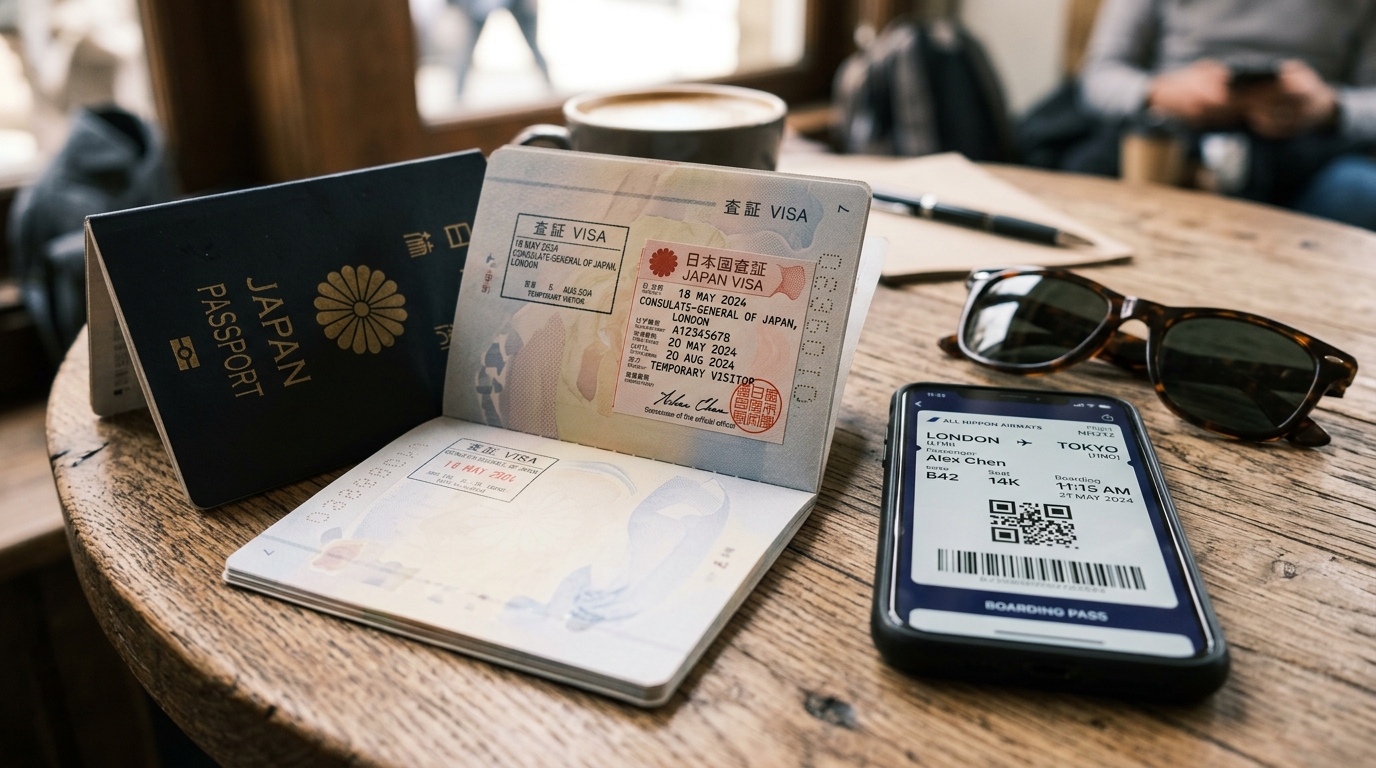

Possessing a japan visa is more than just an entry pass for the Land of the Rising Sun; for many Indian passport holders, it acts as a strategic gateway to simplified travel across several international borders. While my own initial application for a Japanese eVISA was primarily to visit the neon-lit districts of Shinjuku and the quiet temples of Kyoto, I soon discovered that the bureaucratic trust established by the Japanese government often resonates with immigration authorities elsewhere. This “visa-piggybacking” effect can save you significant time, money, and paperwork, effectively expanding your travel horizon without the need for additional complex applications.
Why Your Japan Visa Functions as a Travel Asset
When you secure a visa from a country with rigorous vetting processes, other nations often view your document as a form of pre-clearance. In my experience, showing a valid Japanese entry permit at secondary immigration desks has repeatedly smoothed my passage. This is essentially a trust signal. Countries like Georgia or Taiwan recognize that if Japan has already performed their background check, the risk profile of your entry is significantly lower.
However, this strategy is not a golden ticket to every border on the planet. I learned the hard way during a transit in Singapore that failing to have a printed copy of the visa can cause a 45-minute delay at the check-in counter while staff verify the digital file. Always keep physical documentation ready. Immigration rules are not static; they shift with diplomatic winds, and what worked last month might face a policy review tomorrow.
5 Destinations Accessible via Your Japan Visa
1. Georgia (90 Days visa-free)
For those craving rugged terrain and ancient history, Georgia is an incredible choice. If you have a valid, used Japan visa, you are eligible for entry without a separate Georgian visa for 90 days within any 180-day window. I spent a week in the mountains near Stepantsminda, where the air smells of pine and woodsmoke. Pro tip: while the policy is generous, I once had an official ask to see my return ticket before clearing me, so never arrive empty-handed.
2. Taiwan (ROC Travel Authorization)
Taiwan offers a streamlined process for those holding a valid or expired (within 10 years) Japanese visa. You can apply for the ROC Travel Authorization Certificate online. It is essentially free and processed in minutes. Taipei is a loud, energetic hub; I found the night markets in Raohe to be overwhelming but worth every minute. Just be aware that the certificate is only valid for 14 days, and you must adhere strictly to those dates to avoid fines.
3. The Philippines (14 Days Visa-Free)
If you hold a multiple-entry Japan visa, the Philippines allows 14 days of visa-free access. This is a massive perk for beach lovers. My trip to Palawan was transformative, though I did encounter a downside: cash is king here. I found many ATMs in remote areas were either out of service or limited to tiny withdrawal amounts, so carry enough currency from Manila.
4. Singapore (96-Hour Transit Facility)
Singapore’s Visa-Free Transit Facility (VFTF) is perfect for long-haul stopovers. If you have a Japanese visa and an onward flight ticket, you can enter for up to 96 hours. I used this to break up a flight to Australia, spending two days eating my way through Maxwell Food Centre. Remember: this is for transit only. You cannot use this for a round trip that keeps you in Singapore while you explore neighboring countries.
5. Mexico (180 Days Visa-Free)
Perhaps the most surprising entry is Mexico. Holders of a valid, multiple-entry Japanese visa can enter Mexico visa-free for up to 180 days for tourism. It is a fantastic option for a long sabbatical, though navigating the Mexico City metro during rush hour can be a logistical nightmare for a newcomer. The sheer density of people and the pace of the city required a full day just for me to adjust.
Navigating the Current Global Mobility Landscape
It is important to acknowledge that the Indian passport is evolving, though the journey is complex. The 2026 Henley Passport Index placed India at 80th, showing improvement but also revealing a dip in direct visa-free count to 55 nations. While we wait for larger diplomatic breakthroughs, these “visa-piggyback” arrangements are essential.
I personally monitor the VisaHQ portal and official consulate websites before booking any secondary legs of a trip. Relying on outdated travel blogs is a mistake; always look for the most recent updates on official government portals. For corporate travelers, this is even more critical. Many companies are now centralizing these checks to avoid the costly delays associated with missing travel documentation, especially as international rules regarding H-1B holders and other visa categories become more restrictive globally.
Frequently Asked Questions
Does a Japan visa guarantee entry to these secondary countries?
No. A Japanese visa qualifies you for the application or the exemption, but the final decision always rests with the immigration officer at the destination. Always carry your accommodation bookings, proof of funds (bank statements), and your onward travel itinerary to prove you are a genuine tourist.
What if my Japan visa expires while I am abroad?
In most cases, the visa must be valid at the exact moment of your arrival in the secondary country. For example, the Singapore VFTF requires the Japan visa to have at least one month of validity remaining. If your visa is nearing its end, do not risk it; you will likely be turned away at the airline check-in counter before you even board.
Are there any major downsides to this strategy?
Yes, the biggest downside is the lack of standardization. Each country has different, rigid rules regarding whether your Japan visa must be ‘used’ (stamped) or just ‘valid’. The biggest failure point I see is travelers assuming one rule applies to all countries. Always check the specific bilateral agreement for the exact country you are visiting, as these can change without notice.
Conclusion
Leveraging your Japan visa is a clever way to expand your travel footprint while waiting for broader diplomatic progress. By understanding the specific requirements for Georgia, Taiwan, the Philippines, Singapore, and Mexico, you can turn a single permit into a multi-country adventure. Start by auditing your current documents, verifying the entry rules for your specific itinerary, and ensuring you have both digital and physical copies of your permits. Safe travels and keep your plans flexible.