
Planning your trip for the 2026 Japan sakura season requires more than a simple calendar check; it demands a strategic approach to hit the shifting bloom window. Every spring, Japan undergoes a transformation as cherry blossoms, or sakura, sweep across the islands, creating a delicate pink landscape that draws millions of visitors. When I first attempted to chase the blossoms in kyoto, I made the mistake of booking flights based on historical averages only to find the trees had reached peak bloom three days before I arrived. That disappointment taught me the value of buffer zones and real-time data.
Why Strategic Timing Matters
Sakura season is notoriously fleeting. In any given location, the mankai (full bloom) period typically lasts just five to seven days. This window remains sensitive to climate volatility, such as late-season frosts or heavy spring rains that can strip branches bare overnight. For 2026, experts anticipate that the bloom will move from south to north, starting in mid-March and concluding in Hokkaido by early May.
I recommend treating official forecasts as fluid targets rather than set dates. Build a buffer of at least three days on either side of your predicted window to account for the erratic nature of the weather. Furthermore, you should avoid Golden Week, which runs from April 29 to May 6 in 2026. Traveling during this national holiday triggers extreme domestic travel surges, inflated pricing, and near-impossible booking conditions for regional transport.
Predicted 2026 Bloom Windows
| Location | Estimated Peak Bloom |
|---|---|
| Tokyo | March 30 |
| Hiroshima | April 2 |
| Osaka | April 4 |
| Kyoto | April 5 |
| Hokkaido | April 28 |
Top Locations for Your Itinerary
Tokyo and Surrounds
Tokyo offers a blend of high-energy urban aesthetics and serene nature. Chidorigafuchi Moat remains a personal favorite; renting a small boat allows you to drift under a canopy of blossoms reflecting on the water. For a more social atmosphere, Ueno Park is the classic choice, though prepare for massive crowds of locals picnicking. If you prefer a modern, cinematic vibe, the Meguro River path features thousands of trees illuminated by lanterns, creating a distinct, moody atmosphere after sunset.
The Spirit of Kyoto
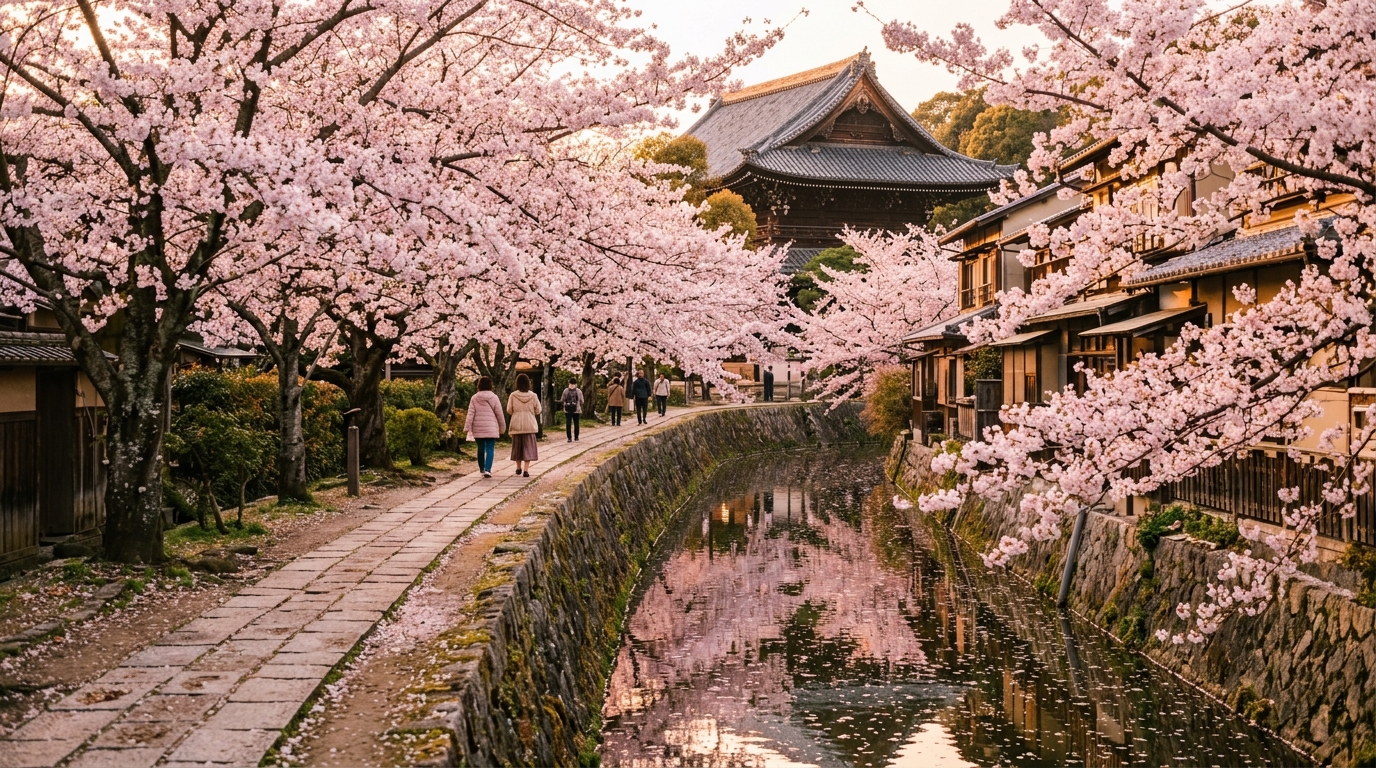
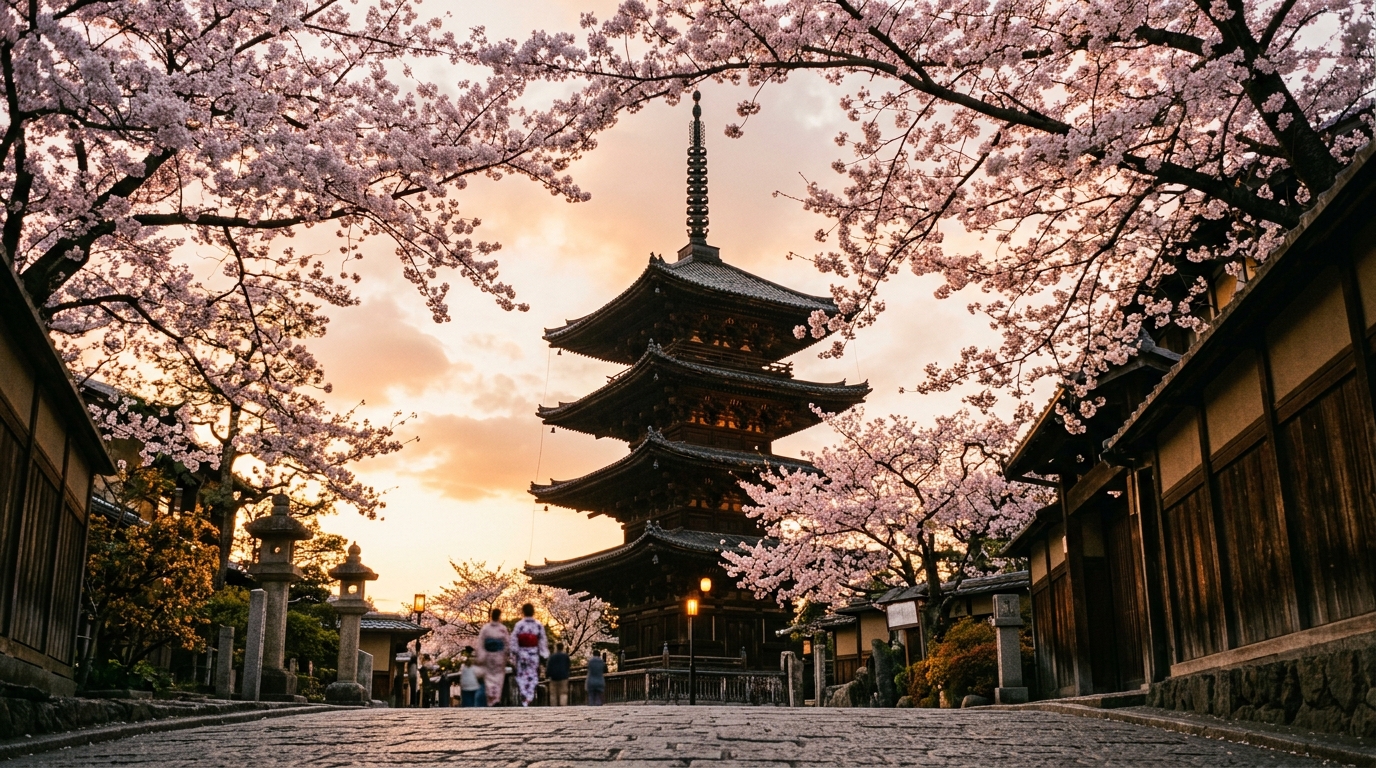
Kyoto captures the traditional side of hanami. The Philosopher’s Path is a narrow stone walkway alongside a canal; while it gets packed with pedestrians, the quietude of the neighboring temples makes the walk rewarding. I once spent an entire morning at Kiyomizu-dera, where the wooden terrace provides a view over a massive sea of petals. If you want to avoid fighting for elbow room, arriving before 7:00 AM is the only realistic way to experience these sites in peace.
Experience the Heian Shrine Sakura Otoyo
For a curated experience, consider the Heian Shrine Sakura Otoyo event in Kyoto. Scheduled for early April 2026, this event highlights the shrine’s Benishidarezakura (weeping cherry trees). The Shinen Garden is a masterpiece of Meiji-era design, featuring four sections connected by stone bridges and ponds that capture stunning reflections. The nighttime illumination, running from April 1 to April 5 between 6:15 pm and 9:00 pm, is particularly special. Entry requires a fee of ¥2,000, but the contrast between the pink petals and the vermillion-lacquered pillars makes it worth the cost.
Packing and On-the-Ground Logistics
Spring temperatures in Japan are deceptive. While the afternoon sun can feel warm, mornings and evenings often drop to near-chilly levels, especially near water. My go-to strategy involves layering: a thermal base layer, a light sweater, and a versatile windbreaker. You will also walk significantly more than you anticipate. I once tracked 22,000 steps in a single day in Osaka, so leave the fashion boots at home and bring reliable, broken-in sneakers.
Regarding costs, keep in mind that inflation has impacted local food prices. Small staples like rice balls and convenience store drinks have seen consistent price hikes. I suggest allocating about 15-20% more for your daily food budget compared to trips taken just a few years ago. Using local rail systems remains the most efficient way to travel, but check the Japan Rail Pass viability against individual ticket prices, as recent nationwide price increases have significantly altered the cost-benefit analysis for most travelers.
Frequently Asked Questions
Q: How can I find cheaper airfare during peak bloom?
A: Avoid flying on the exact start or end dates of the projected peak. Airlines often raise prices for weekends during the prime two-week window. If you fly into a secondary airport like Osaka or Fukuoka and take the Shinkansen to Tokyo, you may find better value. Look into low-cost carriers or check for seasonal promotions from major hubs to save on your base fare.
Q: Are there alternatives to the crowded ‘hanami’ spots?
A: Absolutely. While popular parks offer a social experience, they are often sensory overload. I suggest looking for local cemeteries, university campuses, or smaller neighborhood parks in the suburbs. These spots often yield the same beauty without the tourists. Always check local city blogs in the week leading up to your trip for ‘hidden’ locations that reach peak bloom slightly earlier or later than the major tourist hubs.
Q: What should I bring for night-time viewing (yozakura)?
A: Night-time viewing is common, but it is much colder than you expect. Bring a heavy scarf and a warm jacket, as the wind chill along rivers or open parks is significant. Most people forget how quickly the temperature drops once the sun disappears behind the horizon. Also, carry a portable power bank, as low temperatures and heavy camera usage will drain your phone battery much faster than in a tropical climate.
Final Thoughts
Chasing the sakura is a lesson in patience and flexibility. You might arrive to find the trees in full force, or you might find yourself catching the ‘sakura fubuki’—when the petals fall like snow. Both are beautiful. Do not let the pressure to photograph every angle stop you from sitting on a mat with a local snack, watching the petals drift on the wind. Enjoy the fleeting nature of the season.”,
“imagegenerationprompt”: “A high-resolution, professional travel photograph of the Kyoto Philosopher’s Path during peak sakura season. A stone canal path is lined with full-bloom cherry blossom trees, their pink petals creating a soft canopy overhead. In the background, a traditional Japanese temple roof is visible. The lighting is golden hour, casting a warm, soft glow on the petals and reflecting them into the water of the canal