
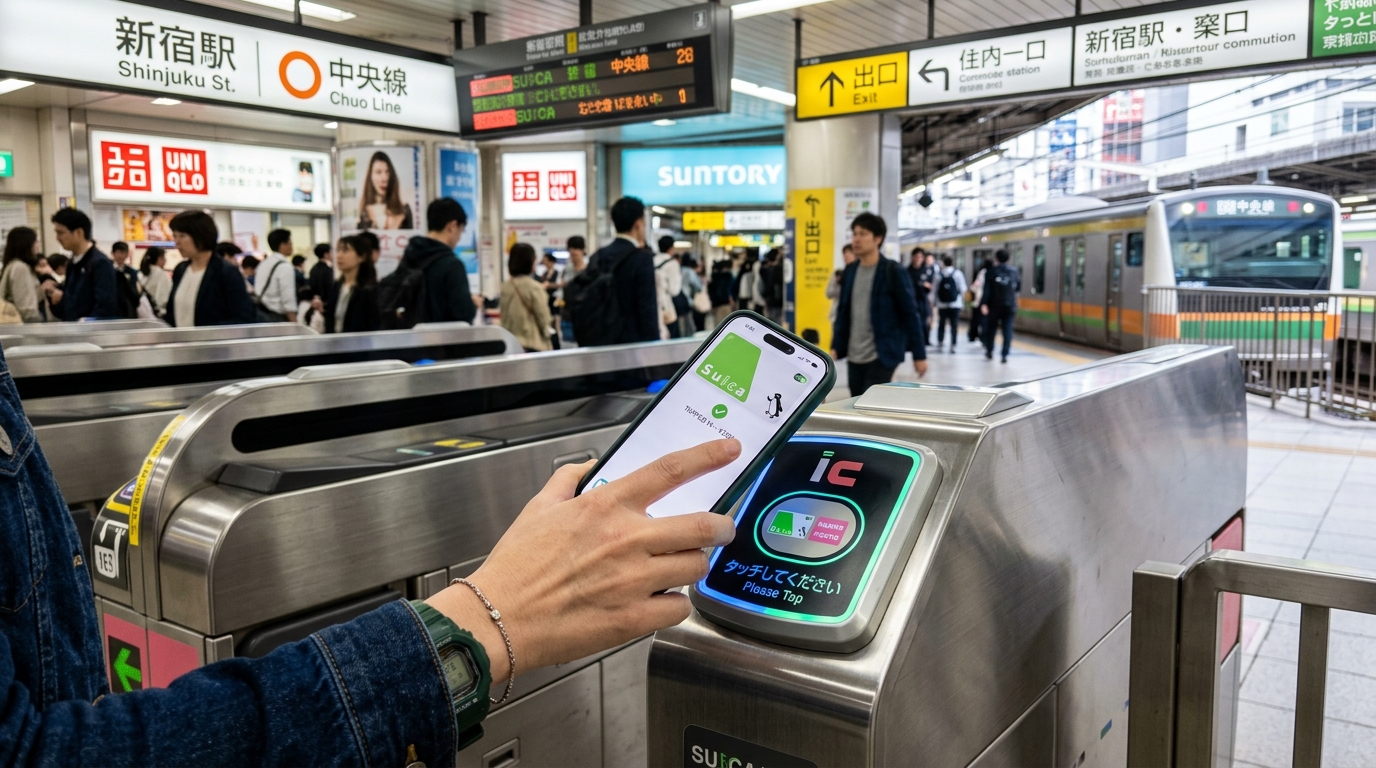

Master Japan Transit with digital Suica Cards
Using a digital Suica card on your smartphone is the smartest way to navigate Japan’s intricate public transportation network without needing a pocketful of small coins. Whether you are sprinting to catch a train at Shibuya Station or grabbing a quick snack at a 7-Eleven, these IC cards are essential tools for any traveler. During my first solo trip to Tokyo, I wasted nearly forty minutes standing in a queue at a ticket machine, struggling to calculate the exact fare for a simple cross-town subway trip. As soon as I added a digital card to my Apple Wallet, my travel experience transformed from stressful to seamless overnight.
Quick Summary for Travelers
Universal Use: Suica, Pasmo, and ICOCA are interchangeable across almost all Japanese train lines and buses.
Digital Convenience: Skip the ticket office; add a balance using Apple Pay on your iPhone (8 or newer).
Versatility: These cards function as digital wallets at vending machines, convenience stores, and many quick-service restaurants.
Battery Safety: Apple’s Express Mode allows you to use your card for transit even if your phone battery dies.
The IC Card Ecosystem Explained
You might feel confused by the different names you see, such as Suica, Pasmo, or ICOCA. Essentially, they are all the same thing: rechargeable smart cards powered by FeliCa technology. While they are issued by different entities—JR East for Suica, private operators for Pasmo, and JR West for ICOCA—they are fully interoperable. If you purchase a Pasmo in Tokyo, it will work perfectly for your train ride to Osaka or at a grocery store in Hokkaido. They act as your universal key for movement across the entire country.
Why Digital Cards Beat Physical Plastic
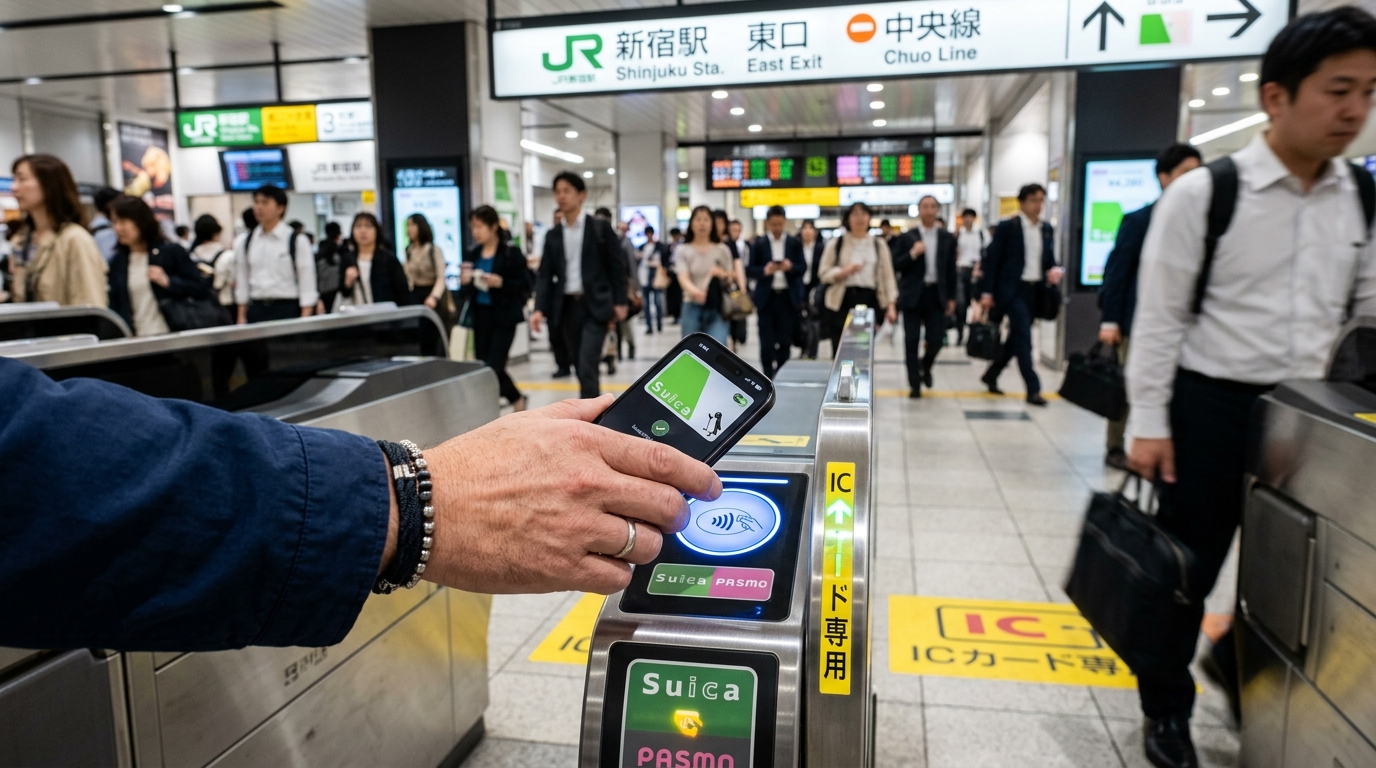
In 2023, a significant semiconductor shortage forced JR East to halt the sale of physical cards. While some limited supplies have returned, the mobile experience remains vastly superior for international visitors. If you carry an iPhone 8 or newer, you can add a digital card directly to your Apple Wallet. This removes the anxiety of losing a physical card or dealing with broken ticket machines during the morning rush.
One massive advantage is the ability to top up your balance using your registered credit card through Apple Pay. During my trip last autumn, I was standing on a platform in Kyoto with only 40 yen left—barely enough to exit the station. Instead of hunting for an ATM, I simply opened my wallet, tapped the ‘Add Money’ button, and refreshed my balance in under ten seconds.
Setting Up Your Digital Transit Pass
Setting up your card is simple, though it is currently an iOS-exclusive feature for foreigners. If you are an Android user with a phone purchased outside of Japan, you unfortunately lack the specific hardware required for these systems. For iPhone users, follow these steps:
- Open your Wallet app and tap the ‘+’ icon.
- Select ‘Transit Card’ and search for ‘Suica’ or ‘Pasmo’.
- Follow the prompts to load an initial balance (usually at least 1,000 yen).
- If you have a physical card, select ‘Transfer an existing card’ to move your balance.
Real-World Limitations and Common Pitfalls
While the technology is brilliant, it is not without flaws. I once made the mistake of using an excessively thick, metal-backed phone case that interfered with the NFC reader at the gate. I had to peel the case off while a line of impatient commuters waited behind me, which was a humiliating way to start my day. I strongly recommend using a thin, minimalist case if you plan to rely on your phone for daily transit.
Another caveat involves the ‘dematerialization’ of physical cards. If you transfer your physical plastic card to your phone, that plastic card is rendered void and cannot be reused. Additionally, if you are planning to visit regional areas, check if your specific route supports IC payments; while 95% of urban transit is covered, some long-distance express services require separate, dedicated reservations that an IC card cannot handle alone.
Strategic Uses Beyond Trains
You are not just using this for transport. These cards are accepted at almost every konbini (convenience store) in the country, including 7-Eleven, Lawson, and FamilyMart. You can also pay at thousands of vending machines. I often use my digital card to pay for a cold bottle of green tea when I am too tired to fumble with loose change.
| Feature | Physical Card | Digital Card (Mobile) |
|---|---|---|
| Availability | Limited supply | Instant via App Store |
| Top-up | Cash at stations | Apple Pay / Credit Card |
| Balance Check | Machine at station | Direct on iPhone screen |
| Convenience | Easy to lose | Always on your device |
Frequently Asked Questions
Can I use my digital Suica to ride the Shinkansen?
Technically, you can use a mobile IC card for the base fare of a Shinkansen trip, but you must still purchase a separate limited express ticket. Recent updates to the app allow for ticketless Shinkansen reservations on specific JR East lines, which is a massive upgrade for efficiency. Always confirm if your specific route supports touch-to-board, as the Tōkaidō line (Tokyo to Osaka) often requires extra digital booking steps before you tap.
What should I do if my phone battery dies?
If you have a newer iPhone, you are in luck. Thanks to Apple’s Express Mode, your phone reserves a small amount of power specifically for NFC operations. Your card will continue to function for a limited time even after the device hits 0% and shuts down. Do not test this intentionally, as I have seen tourists get stuck at a fare gate because they waited too long to find a charger; it requires a tedious manual reset by station staff.
Is the digital card only for the Tokyo area?
Not at all. While the Suica originates from JR East, it is accepted nationwide. Whether you are traveling through Kyoto, Osaka, Fukuoka, or Sapporo, your digital card works on the vast majority of local trains, buses, and subways. The beauty of the system is this national interoperability, which saves you from needing to carry a bulky collection of different regional transit passes.
Conclusion
Navigating Japan does not have to be a source of stress or confusion. By embracing the digital Suica card, you simplify your daily transit, remove your reliance on physical cash, and gain a versatile tool that works for travel, snacks, and retail shopping. Remember to keep your phone charged, check your NFC settings before you head out, and always keep a few thousand yen in cash as a backup for remote areas. With a bit of preparation, your journey across this fascinating country will be as smooth as the Shinkansen itself.