
Avoiding common tourist mistakes in japan starts with understanding that your personal conduct directly impacts the social harmony of the local environment. When I landed in Tokyo for my first trip, I assumed my travel habits from home would suffice, but I quickly realized that Japan operates on a different frequency of communal respect. Whether you are navigating a subway or visiting a traditional bath, your behavior signals how much you value the culture hosting you.
Master Public Transit Etiquette
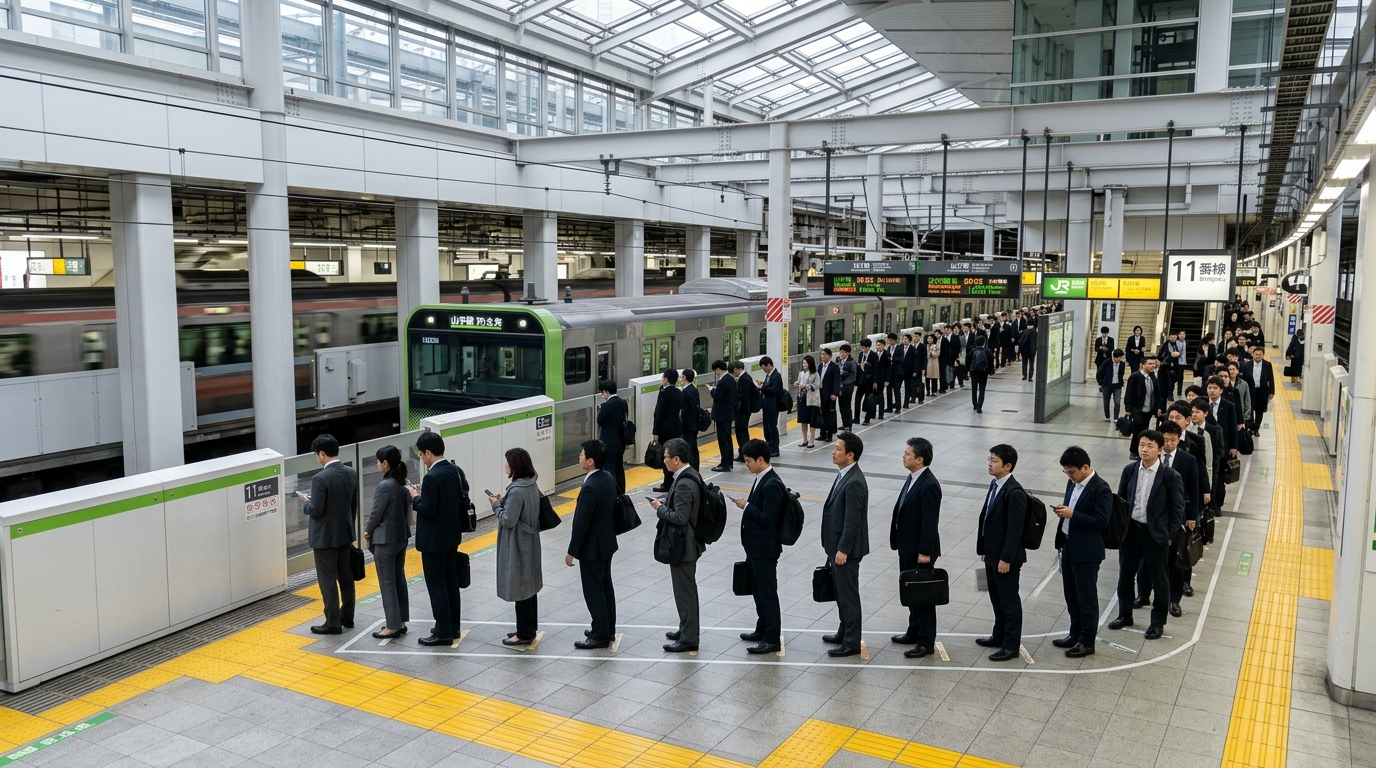
Japan’s train network is an engineering marvel that carries millions of passengers daily with near-perfect precision. My biggest error early on was assuming that standard train noise was acceptable. It is not. You are expected to maintain near-total silence while on board.
Keep your voice down: If you must speak, keep it to a whisper.
Silence your devices: Toggle your phone to silent mode before you even pass the ticket gate.
Avoid phone calls: Never talk on your phone while seated. Walk to the vestibule area between carriages if an urgent call arises, but keep it brief.
Control sound leakage: If you use noise-canceling headphones, ensure your music volume isn’t leaking into the quiet carriage.
The Precision of Japanese Punctuality
In Japan, arriving at the exact minute of departure is effectively being late. Because trains operate on such tight, efficient windows, walking onto the platform at the scheduled time means you have likely missed your chance to board safely. I learned to arrive at major hubs like Shinjuku or Osaka Station at least 20 minutes before my scheduled departure. This buffer allowed me to navigate the complex corridors without breaking into a sweat or colliding with local commuters who move with a singular, fast-paced purpose.
The Onsen Experience: What to Expect
Traditional Japanese onsen (hot springs) often cause anxiety for first-time visitors, largely due to misconceptions. Many tourists assume swimwear is allowed or that spaces are mixed-gender; neither is standard. In almost all traditional settings, you are expected to be completely naked.
I admit that stripping down in front of strangers felt daunting at first. However, once I realized that nobody was looking at me—everyone was there to relax and clean themselves—the vulnerability faded. Remember to wash yourself thoroughly at the provided shower stations before entering the communal pool. If the prospect of communal nudity is a dealbreaker, look for a kashikiri or private bath rental. These are available at many ryokans for an extra fee, though they must usually be booked well in advance.
| Location | Common Misconception | Expert Tip |
|---|---|---|
| Japan | Public transit is casual | Keep silence, use silent mode |
| Onsen | Swimwear is permitted | Nakedness is the norm for hygiene |
| Cities | Spontaneity is best | Research transit cards like Pasmo/Suica |
Logistics and Digital Connectivity
Many travelers stumble when they rely on physical cards or outdated maps. During my trip, I watched a fellow traveler struggle for ten minutes at a turnstile because their physical transit card ran out of credit, blocking the flow of commuters. Using a digital transit card in your Apple or Google Wallet is the superior method. It allows you to top up your balance instantly.
Furthermore, stop relying on free public Wi-Fi. It is notoriously unreliable in Japan. I highly recommend installing an eSIM from reputable providers like Airalo or Ubigi before you depart. Having consistent data ensures you can use mapping apps to find local eateries, which are consistently better than the tourist-trap restaurants near famous landmarks.
Frequently Asked Questions
Is it really that offensive to talk on the phone while on a train in Japan?
Yes, it is widely considered one of the most discourteous behaviors a traveler can exhibit. Japanese trains are treated as shared quiet spaces. Talking on the phone forces your private conversation on dozens of other passengers. If you absolutely must handle an urgent call, step into the vestibule area between the train cars where sound is insulated. Even then, keep your voice low and the call under two minutes.
What should I do if I feel uncomfortable being naked in an onsen?
It is completely normal to feel initial hesitation, but remember that the practice is rooted in ancient hygiene rituals rather than exhibitionism. If you truly cannot overcome the discomfort, look for a ‘kashikiri’ or private bath rental. Many ryokans offer these for an extra fee, allowing you to enjoy the water in complete privacy. Never force yourself into a public bath if it will prevent you from enjoying the experience.
Are there any apps or resources I should use for better planning?
Instead of relying solely on social media algorithms, use official guidebooks or established sites like Japan Guide. For navigation, Google Maps is incredibly accurate for train schedules, but always cross-reference with official station signage. Having a local SIM or an eSIM is mandatory; relying on public Wi-Fi is a recipe for frustration when you are trying to navigate a dense city like Tokyo or Kyoto during peak hours.
Conclusion
Being a respectful guest in Japan is about recognizing that your presence affects the community around you. I have made my share of mistakes—from missing trains to being the loudest person in a quiet carriage—but learning from these errors made me a more conscious traveler. Move past the superficial tourist experience by observing the locals, following their lead, and prioritizing local norms over your own convenience. Your trip will be far more rewarding when you blend in rather than stand out for the wrong reasons.
References
- www.businessinsider.com
- www.businessinsider.com
- creators.yahoo.com
- <a href="https://www.huffpost.com/entry/mistakes-solo-female-travelersl68a4e474e4b028ce7754836b”>www.huffpost.com
- www.buzzfeed.com