
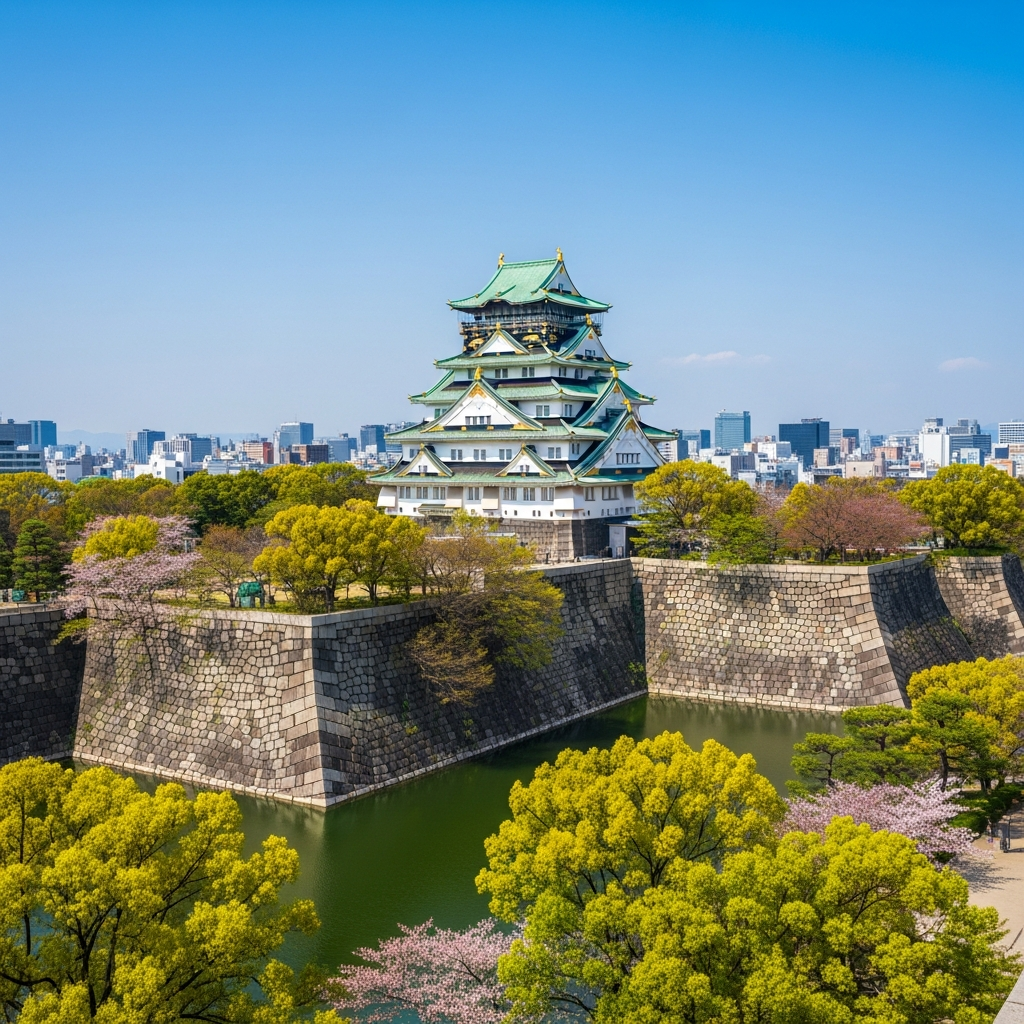

Planning a visit to Osaka castle can feel surprisingly complicated at first glance. Despite its iconic status as one of Japan’s most recognizable landmarks, it presents a unique challenge: navigating its expansive grounds and understanding its modern museum within a reconstructed shell. Having explored its depths myself, I understand how easily a first-time visitor might get disoriented, but with the right strategy, you can unlock its true majesty and historical significance.
Quick-Start Tips for Your Osaka Castle Adventure
Smart Entry: Don’t just follow the name! Aim for Tanimachi 4-chome Station (谷町四丁目駅) for the shortest walk to the main Otemon Gate, saving you precious energy and easily cutting your journey to the castle tower by half.
Beat the Crowds: Arrive at the castle tower by 8:45 AM for a significant advantage, particularly avoiding those famously long queues inside.
Reverse Flow Strategy: Once inside the main tower, take the elevator straight to the 8th-floor observation deck. Then, descend by stairs through the exhibits. This avoids congestion and offers a more relaxed viewing experience.
Iconic Photos: For that postcard-perfect shot of the castle with its moat and the city skyline, head to the 10th-floor observation deck of the adjacent Osaka Museum of History.
Embrace the Dual Nature: Appreciate that Osaka Castle is a modern museum within a historical reconstruction. Its value lies in the detailed exhibits and panoramic views, rather than seeking purely original medieval architecture.
Osaka Castle Essentials at a Glance
| Detail | Information |
| :————– | :—————————————————————————- |
| Address | 1-1 Osakajo, Chuo Ward, Osaka, 540-0002, Japan (1-1 大阪城, 中央区, 大阪市, 〒540-0002, 日本) |
| Admission | Main tower: ¥1,200 (adults), ¥600 (high school/college), Free (15 & under) |
| | Nishinomaru Garden: ¥200 (additional) |
| Hours | 9:00 AM – 6:00 PM (Park grounds accessible from sunrise) |
| Key Features| 8-floor concrete reconstruction, Nishinomaru Garden (600 cherry trees), “Octopus Stone” |
Unveiling Osaka Castle’s Enduring Legacy
At first glance, Osaka Castle captivates with its imposing presence and majestic five-story exterior (which, surprisingly, contains eight floors inside!). Yet, its story goes far deeper than its current concrete structure. Historically, it’s intrinsically linked to Toyotomi Hideyoshi, the legendary warlord who initiated its construction in the late 16th century. This marked a pivotal moment in Japan’s unification after decades of civil war. It stands today as a powerful symbol of his legacy and Japan’s feudal era.
Today, the castle’s approximately 106 hectares of grounds serve as both an urban park and a comprehensive museum. This creates intriguing layers of history and modern utility. This evolution from a defensive stronghold to a public space often confuses visitors who expect a perfectly preserved relic. Instead, prepare for a captivating journey through both ancient legends and contemporary interpretations.
Mastering Your Arrival and Navigation
One of the most common pitfalls I’ve observed, and almost fell into myself, when planning an Osaka Castle visit is choosing the wrong train station. It sounds simple, but a smart choice here can save you a significant amount of walking and energy.
The Savvy Way to Enter
While Osakajokoen Station (大阪城公園駅) on the JR Osaka Loop Line might seem like the obvious choice due to its name, it actually drops you at the outer southwestern edge of the park. From there, you’re looking at a 15-20 minute walk to reach the main entrance, the Otemon Gate. This longer route can be tiring, especially on a hot summer day, and I quickly learned there was a better way.
For a far more efficient approach, use Tanimachi 4-chome Station (谷町四丁目駅) on the Tanimachi and Chuo subway lines. Taking Exit 1B leads you almost directly to the castle’s southeastern corner, conveniently near the Otemon Gate. This effectively cuts your walking distance by half, making your journey much more pleasant, particularly if you have mobility concerns or are visiting during peak heat.
Exploring the Expansive Grounds and Ancient Defenses
Osaka Castle’s formidable defensive design is evident in its multiple moats, walls, and gardens. These features, while beautiful, can make a first-time experience a bit disorienting. The intricate moat system and various bridge checkpoints (like the Gokurakubashi Bridge spanning the inner moat) are stunning but can create bottlenecks during peak times.
My advice? Don’t rush directly to the tower. After entering through Otemon Gate, take some time to explore the outer bailey area first. The Osaka Castle Nishinomaru Garden to the west is a prime example, boasting over 600 cherry trees. It offers spectacular views of the main keep, especially during spring.
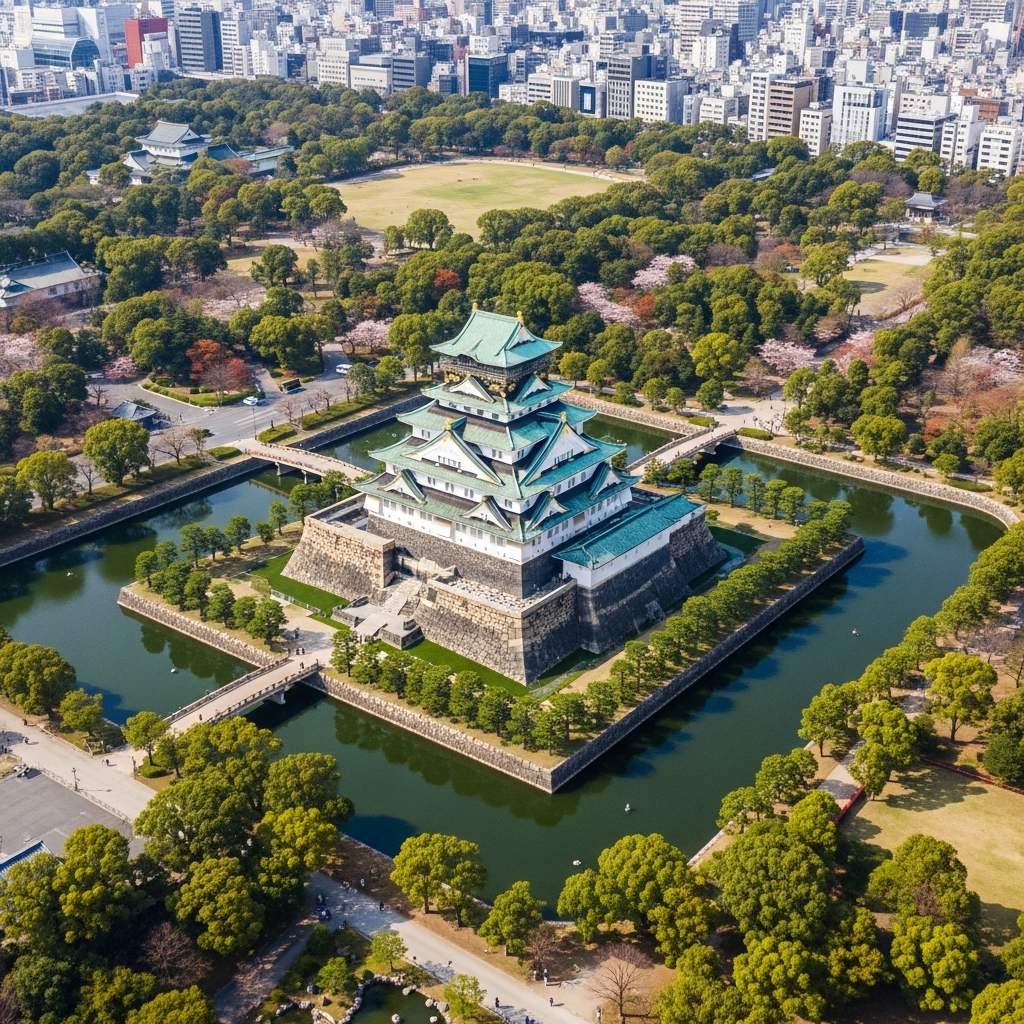
As you wander, keep an eye out for the colossal megaliths that form part of the castle’s foundation. The “Octopus Stone” (Tako-ishi (タコ石)) and “Tiger Stone” (Tora-ishi (トラ石)) are particularly impressive, found along the path to the main keep. These enormous blocks, some weighing over 100 tons, were transported from quarries over 60km away for the original construction. The Tako-ishi, measuring approximately 5.5 × 11.7 metres and featuring a carved family crest, offers a rare, authentic glimpse into original Toyotomi-period elements.
Beating the Crowds and Timing Your Visit
Receiving over 2.5 million visitors annually, Osaka Castle’s atmosphere varies dramatically with the seasons. Planning your timing can significantly impact your overall experience and how much you enjoy the site.
The Opening Hour Advantage
The castle tower officially opens at 9:00 AM, but the surrounding park grounds are accessible from sunrise. I’ve found that arriving at the castle tower entrance by 8:45 AM puts you at the front of the line. This simple trick can literally save you hours by letting you bypass the cascading queues that quickly form later in the morning. On my first visit, I arrived closer to 9:30 AM and was immediately in a long queue, realizing the value of that early start.
Seasonal Crowd Patterns
Cherry Blossom Season (late March – early April): Expect extreme crowds, primarily focused on the outer grounds for sakura viewing rather than the castle interior. While beautiful, be prepared for photo-ops to be challenging.
Golden Week (early May): The castle interior becomes incredibly congested as domestic tourism peaks. This is a time to reconsider your visit if you dislike crowds.
August: The intense summer heat often reduces overall visitor numbers, especially during midday. This can make it a potentially quieter time if you can brave the warmth, though navigating the unshaded paths can be tough.
Mid-January: The post-New Year period typically sees the lowest visitor numbers, offering a more serene experience with clear winter views of the city.
Inside the Castle Tower: A Modern Museum Experience
Many first-time visitors, myself included, are surprised to find that the interior of Osaka Castle is a modern, eight-floor concrete building complete with elevators and air conditioning. It functions as a comprehensive museum rather than a preserved medieval structure. This is an honest downside for those expecting authentic historical immersion; for that, nearby Himeji Castle is a superior choice. However, Osaka Castle’s museum excels in making history accessible.
The Smart Viewing Strategy: Reverse Flow
The typical visitor flow — starting at the first floor, viewing exhibits sequentially, and ending at the observation deck — often leads to heavy congestion. I highly recommend implementing the “reverse flow” approach: immediately upon entering, take the elevator directly to the 8th-floor observation deck. Enjoy the panoramic city views with fewer people, then leisurely walk down the stairs, viewing the exhibits in reverse order. This ensures a more relaxed and enjoyable exploration, letting you soak in the history at your own pace.
Interactive and Static Exhibits
The museum’s exhibits are thoughtfully distributed across its floors:
7th Floor: Features impressive dioramas depicting the Summer War of Osaka.
5th Floor: Displays a fascinating collection of armor and weapons.
4th Floor: Offers the most interactive elements, including the Samurai Daisho Armour Experience (侍大小甲冑体験), where you can take a commemorative photo wearing samurai armor (for ¥1,000). This was a fun, unexpected highlight for me, offering a unique souvenir.
Understanding this distribution helps you prioritize your time. If medieval armor is your primary interest, focus your descent on the 4th and 5th floors. If battle scenes captivate you, spend more time on the 6th and 7th floors.
Crafting Your Day: A Mini Itinerary for Osaka Castle
The Castle-Museum-River Route
This popular itinerary efficiently combines Osaka Castle with the Osaka Museum of History and a scenic river cruise, offering a well-rounded experience:
- Early Morning (9:00–11:00 AM): Visit Osaka Castle, utilizing the reverse flow strategy to beat the crowds.
- Late Morning (11:30 AM–1:00 PM): Walk 10 minutes southwest to the Osaka Museum of History. Beyond its own compelling exhibits, its 10th-floor observation deck offers unparalleled castle views (more on this below!).
- Afternoon: Take an Osaka River Cruise from the nearby Osakajo Pier (大阪城ピア). This offers a unique perspective of the castle from the water and conveniently connects you to the lively Dotonbori entertainment district without retracing your steps.
Strategic Stays: Where to Base Your Osaka Adventure
Choosing your accommodation wisely can significantly enhance your Osaka Castle experience and overall trip. While staying directly next to the castle offers unique advantages, it’s worth considering your broader itinerary.
For those prioritizing easy castle access and a luxurious experience, hotels bordering the park are ideal. The Hotel New Otani Osaka and DoubleTree by Hilton Osaka Castle offer direct proximity and stunning views. For an even more immersive luxury stay, the Patina Osaka is a standout, located directly across from the castle. Many of its rooms and public spaces, like its plant-based restaurant P72 or Basque-Japanese Inaki, offer unparalleled castle views. Its design even subtly echoes the castle with washi paper headboards resembling castle boulders and a Setouchi stone wall. Similarly, the upcoming Four Seasons Hotel Osaka (opening July 2024) will feature design elements explicitly paying homage to Osaka Castle, creating an entrance with textured stone pillars and shimmering water pools that evoke the moat-encircled fortress.
However, for travelers keen to explore more of Osaka’s dining, nightlife, and other attractions, staying in the Umeda area might be a better strategic choice. Hotels like Hotel Granvia Osaka place you at a major transport hub with direct train access to the castle, while keeping you connected to a wider array of evening activities. This “Golden Route” approach, often suggested for first-time visitors to Japan, balances iconic historical sites with modern urban exploration. While Umeda might mean a slightly longer journey to the castle, it offers greater flexibility for experiencing Osaka beyond its historic heart.
Capturing Unforgettable Views: Photography Beyond the Obvious
Commemorating your visit with memorable photos is a must, and knowing the best spots can make all the difference, especially to avoid the usual crowded shots.
The Secret Viewing Platform
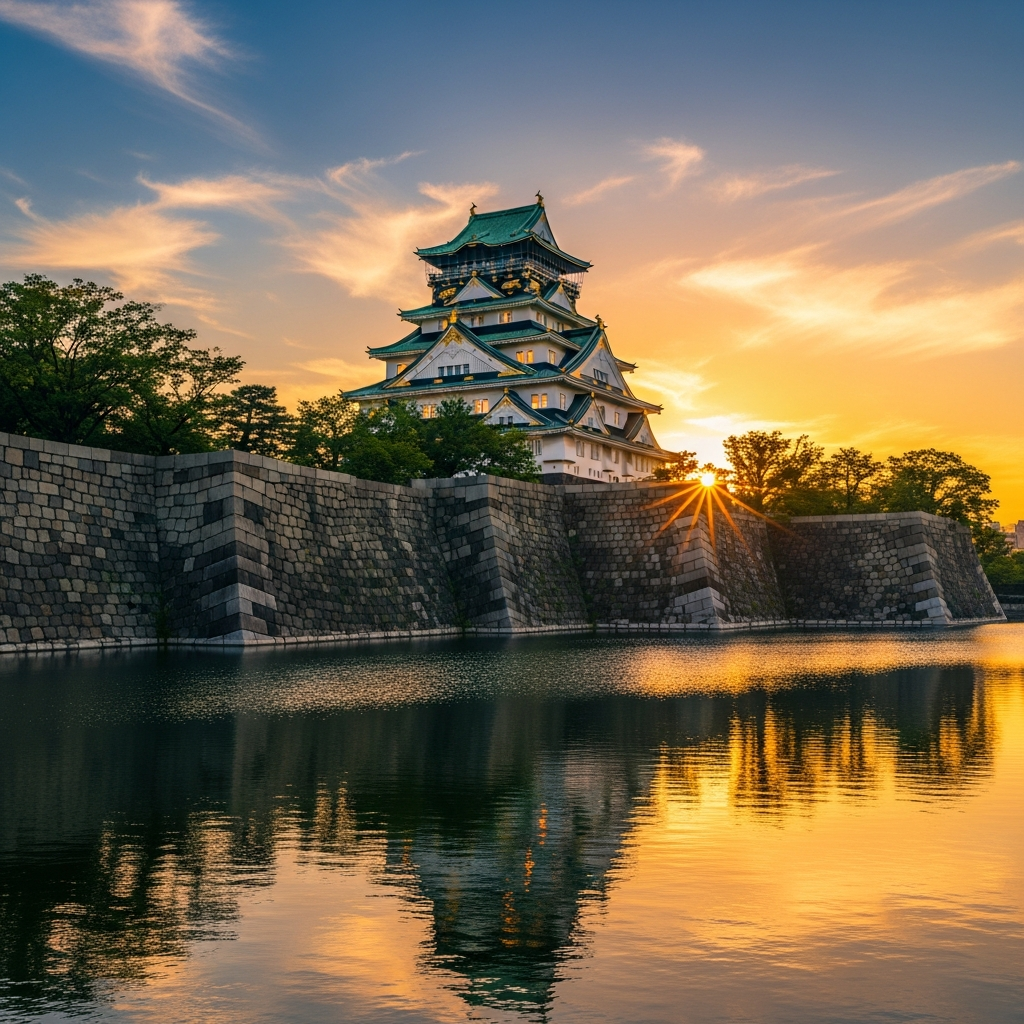
Rather than jostling for unobstructed photos within the crowded castle grounds, here’s a tip I wish I’d known on my first visit: head to the 10th-floor observation deck of the adjacent Osaka Museum of History (大阪市立歴史博物館). This spot offers the iconic “Castle + Moat + Skyline” composition that’s simply impossible to capture from within the park itself. The elevated vantage point looking directly at the castle across the outer moat is favored by professional photographers, especially for stunning sunset shots when the castle’s white walls glow with golden hues.
Seasonal Photography Planning
Cherry Blossom Season (late March to early April): The castle transforms into a premier sakura viewing spot, especially the Nishinomaru Garden. For fewer crowds, explore the less-visited eastern side along the inner moat for equally beautiful compositions.
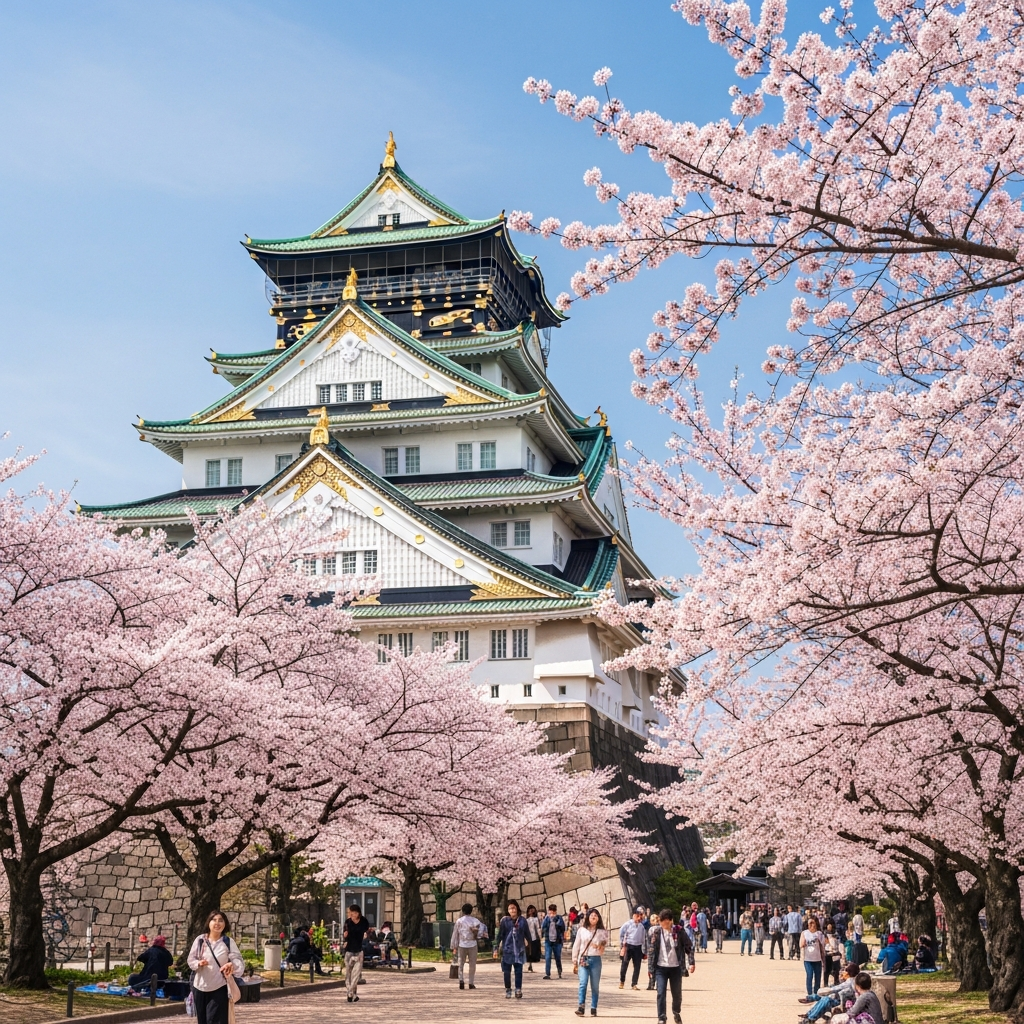
Winter Illuminations (December–February): The Osaka Castle Illuminage (大阪城イルミネージョン) event bathes the outer grounds in enchanting light installations, perfect for unique night photography, offering a distinctly different mood.
Frequently Asked Questions
Is Osaka Castle worth visiting even if it’s a reconstruction?
Absolutely. While the main keep is a modern concrete reconstruction, its value lies in its comprehensive, multi-floor museum that brings Japan’s feudal history, particularly the story of Toyotomi Hideyoshi, to life through engaging exhibits, artifacts, and dioramas. It also offers incredible panoramic city views from its observation deck and is surrounded by a vast, beautiful park, making it a worthwhile cultural experience that makes history accessible to everyone.
How much time should I allocate for a visit to Osaka Castle?
To adequately explore the castle grounds, visit the Nishinomaru Garden, and thoroughly tour the museum inside the main tower using the recommended “reverse flow” strategy, I would suggest allocating 2.5 to 3 hours. If you plan to add the Osaka Museum of History or a river cruise to your itinerary, extend your total time accordingly, possibly adding another 1.5 to 2 hours.
What makes Osaka Castle different from other Japanese castles like Himeji Castle?
Osaka Castle stands out due to its unique blend of historical legacy and modern accessibility. Unlike Himeji Castle, which is an original, authentically preserved medieval structure, Osaka Castle is a reconstruction housing a contemporary museum. This means visitors experience history through interactive exhibits and a comfortable, air-conditioned environment, rather than a purely architectural immersion. It serves as Japan’s way of making its rich past accessible and relevant to contemporary visitors, especially those new to Japanese history.
Final Words
Visiting Osaka Castle requires a slight adjustment of expectations. It’s not about finding a perfectly preserved medieval relic, though its history is deeply rooted in that era. Instead, it’s about appreciating a modern museum housed within a magnificent historical reconstruction. The castle’s true value emerges when you embrace its dual nature: a treasure trove of historical exhibits, offering breathtaking panoramic views, all set within a beautifully maintained urban park. The reconstructed exterior, a powerful symbol of Osaka’s past glory, continues to celebrate Toyotomi Hideyoshi’s enduring legacy as Japan’s great unifier, inviting you to connect with its story in a unique and engaging way.
“,
“imagegenerationprompt”: “A majestic and iconic view of Osaka Castle in Japan, featuring its grand white walls and green roofs with golden accents, surrounded by a wide, reflective moat