
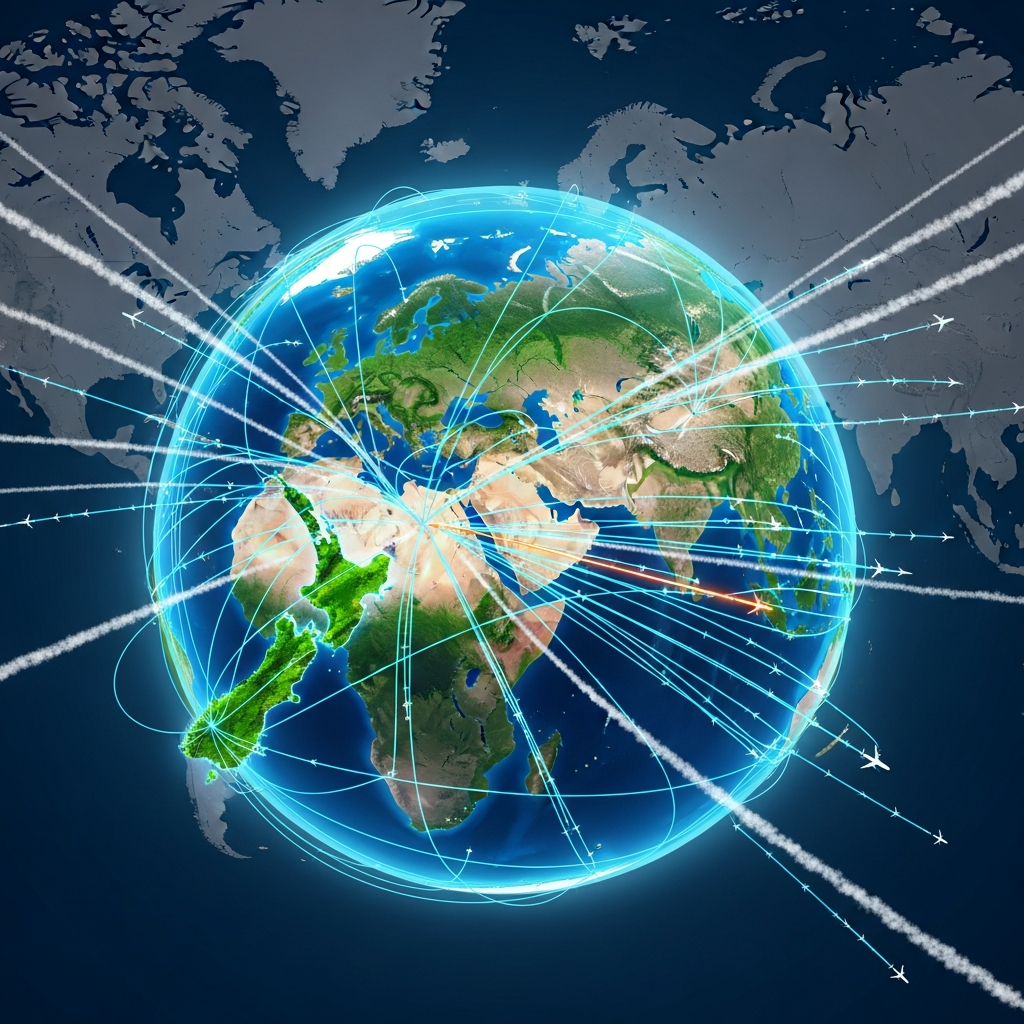

Unprecedented global travel disruptions have cast a shadow over flights to New Zealand, directly impacting thousands of travelers. Escalating geopolitical tensions in the Middle East have triggered widespread airspace closures and rerouting, creating significant challenges for airlines and passengers alike. This comprehensive guide synthesizes the latest information, exploring the root causes, immediate impacts on New Zealand’s vital tourism sector, and crucial advice for those navigating this complex situation. Learn what you need to know about your rights, alternative travel options, and the outlook for a return to normal air travel.
Unprecedented Airspace Crisis Shakes New Zealand Travel
The global aviation industry is currently grappling with severe instability, directly affecting long-haul routes to nations like New Zealand. Since mid-March 2026, major international carriers have initiated widespread flight suspensions and rerouting, citing heightened security risks stemming from the Middle East conflict. This decisive action has impacted over 47,000 passengers with bookings to New Zealand, marking a significant setback for connectivity to the South Pacific.
Leading European airlines, including British Airways, Lufthansa, Air France, KLM, and Swiss International Air Lines, are at the forefront of these disruptions. British Airways and Lufthansa have halted flights connecting London Gatwick (LGW) and Frankfurt (FRA) to Auckland (AKL). Air France temporarily suspended its Paris Charles de Gaulle (CDG) to Wellington (WLG) route, while Swiss International Air Lines also ceased its Zurich to Auckland service. These measures underscore the increasing pressure on airlines facing rapidly evolving geopolitical situations, creating substantial hurdles for global travel plans.
Major Carriers Reroute or Suspend Key Routes
The security situation in the Middle East has rendered traditional airspace routes untenable for many airlines. This has forced carriers to seek significantly longer alternative paths, adding up to 14 hours to journey times. Virgin Atlantic and KLM, for instance, have announced new routes through Asian hubs like Singapore and and Bangkok. However, these alternatives come with substantial layovers and often higher costs, further complicating travel plans and increasing the burden on affected passengers. The UK Foreign, Commonwealth & Development Office (FCDO) has issued urgent warnings, advising British travelers about potential cancellations and delays that extend far beyond the immediate conflict zone.
The High Cost of Rerouting: Longer Journeys, Higher Fares
Beyond just extended travel times, the geopolitical crisis in the Middle East is driving up operational costs for airlines worldwide. The Strait of Hormuz, a critical maritime choke point, has faced blockades, sending global oil prices soaring. Jet fuel prices, for example, have reportedly surged from $90 to as much as $200 per barrel. This drastic increase, coupled with potential fuel shortages, poses a severe challenge for airlines striving to maintain service.
Many carriers are already feeling the financial squeeze. Air New Zealand is cutting flights over the next two months, while Scandinavian Airlines System (SAS) has cancelled thousands of flights. Qantas and Air New Zealand have reportedly increased ticket prices to offset these rising costs. Airlines face a difficult choice: absorb significant losses, pass costs onto consumers, or reduce operations. The economic fallout means passengers are now contending with not only longer journeys but also considerably more expensive tickets, especially for long-haul New Zealand flights.
Economic Pressures on Airlines and Travelers
The necessity of rerouting away from Middle Eastern airspace means flights now traverse less direct paths, consuming more fuel and requiring additional crew hours. This operational strain contributes to reduced flight availability across the board. For travelers, this translates into fewer direct options, higher fares, and the potential for increased congestion at alternative transit hubs. The global aviation network is under unprecedented stress, making planning international travel a complex undertaking for the foreseeable future.
Ripple Effect: New Zealand’s Tourism Sector Under Pressure
The ongoing flight disruptions have sent shockwaves through New Zealand’s tourism sector, marking one of its most significant setbacks in over a decade. Since mid-March, the country has observed a concerning 34% increase in booking cancellations. The absence of a clear recovery timeline creates deep uncertainty for businesses reliant on international visitors.
Key New Zealand destinations such as Auckland, Rotorua, and Queenstown are reporting a surge in cancellations. Some major hotels have seen reservation drops of up to 45%. The economic strain extends beyond accommodation, severely impacting tour operators, especially those catering to European visitors. Adventure tourism businesses, along with scenic flight services in popular areas like Milford Sound, have made staffing adjustments and canceled services well into April 2026.
Resilience and Shifting Focus in Tourism
Despite these significant challenges, New Zealand’s domestic tourism market and traffic from Asian markets have shown greater stability. Airlines continue to offer services through East Asian hubs, albeit with extended travel times and higher fares due to rerouted flights. This segment provides some much-needed relief to the overall tourism landscape, demonstrating a partial shift in market focus. Industry experts are exploring targeted campaigns to attract Asian and Australian tourists during this turbulent period, showcasing the sector’s adaptability and resilience.
Geopolitical Tensions: The Root of Global Travel Disruption
The global travel disruptions impacting New Zealand are intrinsically linked to the broader Strait of Hormuz crisis and escalating geopolitical tensions in the Middle East. On March 19, 2026, a joint statement from numerous world leaders, including the UK, France, Germany, Italy, the Netherlands, and Japan, unequivocally condemned Iran’s aggressive actions in the Gulf. This international condemnation highlights the gravity of the situation.
The statement specifically detailed attacks on unarmed commercial vessels, deliberate assaults on civilian infrastructure, and the de facto closure of the Strait of Hormuz by Iranian forces. This critical maritime chokepoint is vital for global energy supply chains, impacting everything from fuel prices to economic stability. New Zealand, through Prime Minister Christopher Luxon, joined this international condemnation, expressing “deep concern” and directly linking Iran’s actions to rising domestic fuel prices for Kiwis. The collective demand is for Iran to immediately cease all hostile activities and adhere to UN Security Council Resolution 2817.
Ensuring Freedom of Navigation and Economic Stability
The signatory nations firmly reiterate the fundamental principle of freedom of navigation, a core tenet of international law. They warn of global adverse effects, particularly on vulnerable populations, due to interference with international shipping. To mitigate economic fallout, the International Energy Agency authorized a coordinated release of strategic petroleum reserves. New Zealand’s involvement underscores its commitment to collaborating with international partners to ensure the uninterrupted flow of global trade and secure supply lines, acknowledging the far-reaching economic implications of regional conflict.
Navigating the Uncertainty: Essential Advice for New Zealand Travelers
For passengers with bookings to New Zealand, immediate and proactive steps are crucial to minimize disruptions. Staying informed and understanding your airline passenger rights are paramount during this volatile period. The FCDO and other official bodies strongly advise travelers to take precautions.
Essential Steps for Affected Passengers
Track Your Flights: Utilize reliable flight-tracking platforms for real-time updates on rerouting and scheduled departures. Changes can occur with very short notice.
Enable Notifications: Set up alerts via airline apps or email to receive immediate updates on cancellations or delays directly from the carrier.
Contact Your Airline Directly: Rely on official customer service channels, such as dedicated hotlines, rather than social media for accurate and reliable information. Many carriers have extended customer service hours.
Document Everything: Keep a meticulous record of all communications, rebooking confirmations, and cancellation notices. These records are vital for potential compensation claims or insurance queries.
- Review Travel Insurance: Carefully check your travel insurance policy to understand what is covered regarding delays, cancellations, or rerouted flights due to force majeure events like airspace closures from military activity. Not all policies cover conflict-related disruptions.
- www.travelandtourworld.com
- www.standard.co.uk
- www.cntraveler.com
- www.travelandtourworld.com
- www.nomadlawyer.org
Understanding Your Passenger Rights and Compensation
Under EU Regulation 261/2004 and similar UK regulations, passengers are generally entitled to compensation for cancellations or delays exceeding three hours if the airline is at fault. However, for “extraordinary circumstances” like airspace closures due to military activity or geopolitical conflict, airlines may be exempt from direct financial compensation. Nonetheless, carriers are still obligated to offer rebooking on alternative flights or provide a full refund within 14 days. Passengers traveling in premium cabins are also typically entitled to additional benefits, including meal vouchers, accommodation, and ground transportation during rebooking delays. If disputes arise, it is advisable to file formal complaints with relevant aviation authorities within prescribed timeframes.
Alternative Travel Options
With New Zealand’s direct routes disrupted, many travelers are redirecting their plans to other South Pacific destinations. Australia, Fiji, and Samoa have seen a significant surge in bookings, indicating a transfer of canceled New Zealand trips to these competing locations. Industry reports confirm a notable rise in bookings for flights to Sydney and Melbourne between March and May 2026, as travelers seek viable alternatives. While not a direct substitute, these options provide an escape for those determined to travel to the region.
Road to Recovery: Outlook for New Zealand Tourism
The outlook for New Zealand’s tourism sector is heavily dependent on the resolution of the Middle East security situation. Airlines cautiously project a partial service resumption by May or June 2026, contingent on evolving geopolitical conditions. Industry experts anticipate a gradual return to normal operations.
Despite immediate challenges, industry leaders in New Zealand remain confident in the country’s long-term market stabilization. Rerouted flights via Asian hubs are expected to sustain interest in the region, bridging the gap until direct routes can safely resume. Ongoing discussions between New Zealand aviation authorities and industry groups focus on adjusting flight schedules and managing passenger flow to minimize long-term disruption. Many long-haul tour operators are adjusting itineraries to later dates in 2026, anticipating a normalization of flight schedules by the summer season.
Industry Optimism and Stabilization Efforts
Once services are fully restored, the industry anticipates a gradual recovery. While airlines can resume operations relatively quickly after security stabilization, industry insiders predict it will take approximately 4-6 months for the tourism sector to fully bounce back and for traveler confidence to return entirely. New Zealand continues to stand out for its breathtaking natural landscapes and unwavering commitment to eco-friendly tourism, leading in sustainable travel initiatives. This dedication ensures its enduring appeal as a premier destination for conscious travelers, contributing to its long-term market stability despite temporary hurdles.
Frequently Asked Questions
Why are flights to New Zealand currently disrupted, and what is the Strait of Hormuz crisis?
Flights to New Zealand are primarily disrupted due to escalating security concerns stemming from the Middle East conflict, particularly the Strait of Hormuz crisis. This vital maritime chokepoint, through which a significant portion of global oil passes, has faced blockades and aggressive actions by Iranian forces. This has led to widespread airspace closures, making traditional flight paths through the Middle East unsafe for commercial aviation. Major airlines have responded by either suspending services or rerouting flights via much longer Asian hubs, increasing travel times by up to 14 hours and driving up operational costs and ticket prices.
What immediate steps should affected passengers take, and what are their rights?
If your flight to New Zealand is canceled or severely delayed, immediately contact your airline’s customer service via official channels (hotlines, apps) for real-time updates and assistance. Track your flight status continuously and document all communications. While compensation for “extraordinary circumstances” like military airspace closures might be exempt under EU/UK passenger rights, airlines are still obligated to offer rebooking on an alternative flight or a full refund within 14 days. It is also crucial to review your travel insurance policy, as coverage for conflict-related disruptions can vary.
When are New Zealand flights expected to normalize, and what are alternative travel options?
Airlines are cautiously projecting a partial resumption of New Zealand flights by May or June 2026, contingent on the stabilization of the Middle East security situation. Industry experts anticipate a full recovery for New Zealand’s tourism sector within 4-6 months once services are fully restored and traveler confidence returns. In the meantime, travelers can explore rerouted flights via East Asian hubs like Singapore and Bangkok, though these will involve longer travel times and potentially higher fares. Neighboring South Pacific destinations such as Australia, Fiji, and Samoa have also seen a surge in bookings as temporary alternatives.
Conclusion
The current New Zealand flight suspensions vividly highlight the far-reaching impact of geopolitical events on global travel disruptions and the tourism industry. While the immediate future presents significant challenges for New Zealand’s tourism sector and affected passengers, the industry demonstrates remarkable resilience. With a commitment to rerouted services, proactive passenger support, and New Zealand’s enduring appeal as a sustainable destination, a gradual recovery is anticipated. Travelers are encouraged to stay informed, understand their rights, and plan with flexibility as the global aviation landscape adapts to these complex changes.
“,
“imagegenerationprompt”: “A digital illustration showing a globe with flight paths highlighted, some are disrupted or rerouted over the Middle East. Focus on New Zealand and Europe. The scene should convey a sense of global connectivity under strain. Include subtle imagery of airplane contrails diverging, perhaps a subdued background hint of geopolitical tension like a faint map overlay