
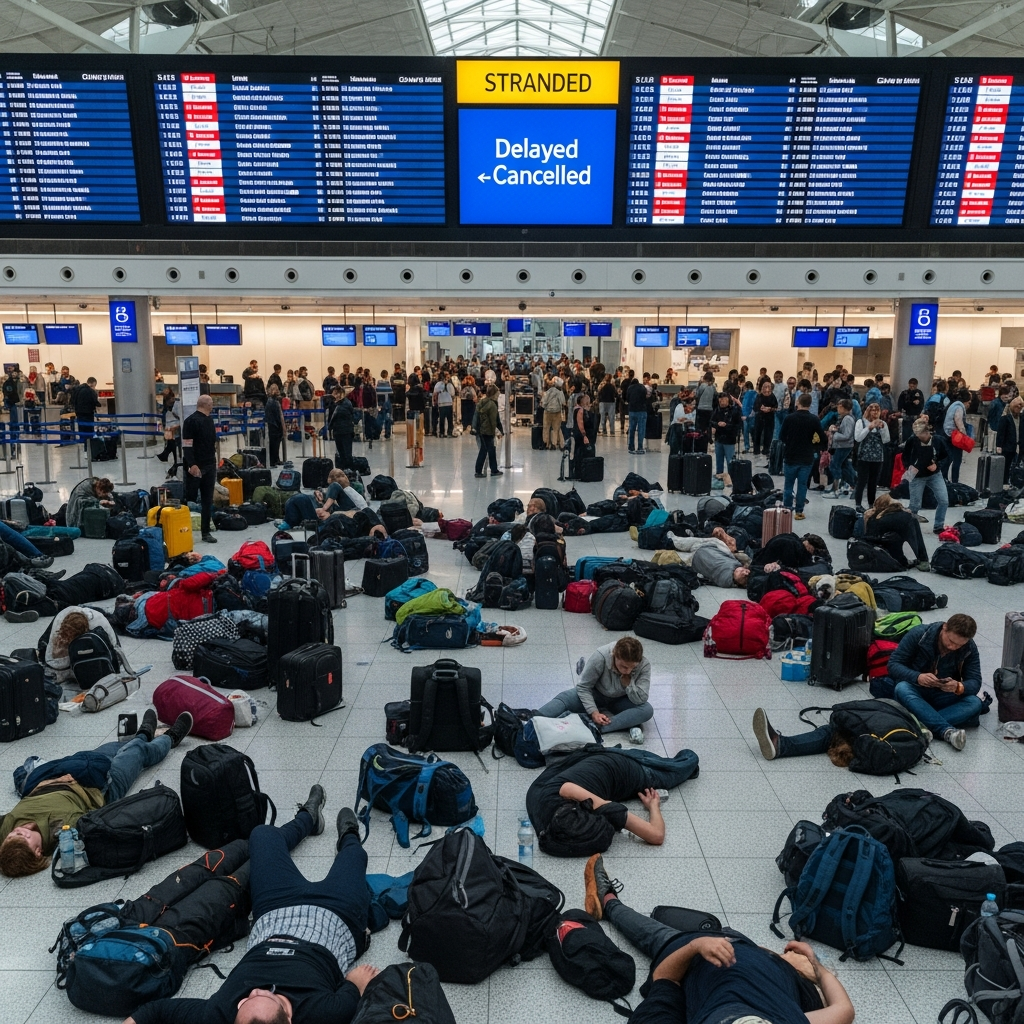

Europe’s skies have become a complex maze for travelers, with widespread flight disruptions, cancellations, and extensive delays increasingly common. This persistent instability, fueled by a perfect storm of systemic issues and global events, severely impacts major airlines and airports across the continent. From the busy hubs of the UK and Germany to the vital corridors stretching into Southern Europe, navigating this challenging environment requires both foresight and an understanding of your rights. This essential guide uncovers the root causes behind Europe’s air travel chaos, details the hardest-hit carriers and airports, and provides crucial, actionable advice for minimizing stress and understanding your entitlements.
The Unraveling Skies: Europe’s Persistent Air Travel Turmoil
Recent years have seen European air travel plagued by alarming patterns of disruption. For instance, a highly impactful period in early March 2026, stemming from a 48-hour Lufthansa pilot strike coupled with Middle East airspace closures, saw 815 flights canceled and 2,433 delayed across Europe. This single event, affecting an estimated half-million passengers, vividly illustrates the fragility of the system. While not every day reaches this extreme, similar waves of chaos, like previous instances of 102 cancellations and 1,901 delays, or 108 cancellations and 1,360 delays, paint a stark picture: hundreds of flights grounded and thousands delayed over short spans. This widespread instability disproportionately strains critical aviation hubs and major carriers, creating logistical nightmares and profound frustration for travelers across Germany, the UK, France, Norway, Switzerland, Sweden, Spain, Italy, and Ireland.
Decoding the Drivers: Why European Air Travel Faces Constant Strain
The ongoing European flight disruptions are rarely due to a single fault. Instead, they arise from a complex interplay of converging challenges that expose the inherent fragility of the continent’s air travel infrastructure. Understanding these underlying causes is key to grasping the scale of the problem.
Persistent Staffing Shortfalls & Systemic Overload
The post-pandemic recovery has been severely hampered by critical staffing shortages. Many airlines and airports continue to struggle with recruiting, training, and retaining essential personnel. These critical roles include:
Ground staff: Vital for baggage handling and swift aircraft turnarounds.
Air traffic controllers (ATCs): Whose numbers directly dictate airspace capacity and flow.
Flight crews: Encompassing pilots and cabin staff, crucial for every operation.
These chronic shortages create severe bottlenecks, particularly during peak travel periods, leading to slower operations and cascading airline delays Europe.
Air Traffic Control (ATC) Bottlenecks & Congestion
Europe’s airspace is among the busiest globally. When air traffic control systems face operational difficulties, technical glitches, or are understaffed, congestion inevitably intensifies. Such conditions often necessitate restrictions on the number of flights that can be handled concurrently, leading to significant delays and diversions. This directly impacts the overall efficiency of European airport operations and the continent’s ability to manage its vast flight volume.
Unpredictable Weather & Operational Headaches
While often underestimated, unsettled weather across Northern and Central Europe plays a significant role in European flight disruptions. Conditions like high winds, dense fog, heavy rain, or even moderate thunderstorms can drastically reduce runway capacity and demand increased safety protocols. This forces airlines to adjust schedules, leading to delays and cancellations that quickly create a domino effect, impacting connected flights across the entire continent.
Geopolitical Storms: The Middle East Ripple Effect
Beyond internal operational challenges, external geopolitical events now exert a profound and increasingly common influence on global air travel. Recent conflicts, particularly in the Middle East, have triggered widespread airspace shutdowns, effectively creating vast “no-go zones” for civilian aircraft. Nations including Iran, Israel, Iraq, Qatar, Bahrain, Kuwait, and the UAE have all implemented airspace closures or severe restrictions. Dubai International (DXB), the world’s busiest international airport and a critical connecting hub between Asia, Europe, Africa, and the Middle East, has repeatedly suspended operations. This closure, alongside Doha and Abu Dhabi, forms a massive “choke point” for East-West travel. Flights that traditionally routed through these Gulf hubs are now either canceled, forced to undertake thousands of miles of detours, or rerouted, adding two or more hours to flight times and substantially increasing fuel consumption. Some North American flights to India have even required unscheduled refueling stops in European cities. These incidents, such as the Iranian drone strike temporarily closing DXB, highlight the extreme vulnerability of interconnected global flight paths and the potential for air travel instability far beyond the immediate conflict zone. The European Union Aviation Safety Agency (EASA) has issued high-risk alerts for the entire region, warning of potential misidentification of civilian aircraft and serious spillover risks from ongoing military activity.
Airlines on the Frontline: Who Bears the Brunt?
The recent surge in airline cancellations Europe has broadly affected both major flag carriers and low-cost operators. While some airlines reported higher cancellation rates, others grappled with extensive delays, reflecting immense operational strain.
easyJet: Frequently recorded astonishing numbers of delays, with incidents tallying 391 and 353 delays, indicating stretched operational capacity despite lower cancellation rates.
British Airways (BA): Faced significant disruptions, logging 219 delays and 11 cancellations in one period, followed by another 11 cancellations and 192 delays, particularly impacting its vital UK connections.
SAS: Topped cancellation lists in some instances with 17 cancellations, alongside 25 delays, although its overall delay figures were moderate.
Lufthansa: Was severely impacted during the March 2026 pilot strike, suffering 435 cancellations and 39 delays. Even outside direct strike action, it registered substantial numbers, including 82 delays and 3 cancellations, due to Europe’s interconnected flight schedules.
Air France: Experienced 7 cancellations and 62 delays, largely centered around its Paris Charles de Gaulle hub, and 224 pure delays during the March 2026 crisis, suggesting internal operational strain.
Swiss International: Also logged heavy delay counts, particularly due to its Star Alliance partnership with Lufthansa.
Icelandair & Air Iceland Connect: Faced severe issues, with Icelandair experiencing 50% flight cancellations and Air Iceland Connect reporting a 100% cancellation rate during specific disruption periods.
KLM, Wizz Air, Finnair, Norwegian Air Sweden, and Pegasus were also among the carriers contending with significant operational challenges and major airport delays Europe.
Airport Epicenters: Where Disruption Hits Hardest
The impact of widespread air travel disruption is felt most acutely at Europe’s busiest gateways. UK airports often emerge as epicenters of Europe flight chaos.
London Heathrow (LHR): As the UK’s busiest airport, Heathrow was severely affected, reporting 19 cancellations and a staggering 330 delays in one incident, and another period showing 11% delays. During the March 2026 crisis, it saw 41 cancellations, partly due to connections through German hubs.
London Gatwick (LGW): Another major UK hub, Gatwick experienced 5 cancellations and 193 delays during periods of intense pressure.
Frankfurt International (FRA): As Europe’s fourth busiest airport and Lufthansa’s primary long-haul gateway, Frankfurt suffered immensely. During the March 2026 Lufthansa strike, it recorded 323 cancellations (28% of daily operations) and also saw 5 cancellations and 137 delays in another incident, creating a domino effect across the continent.
Munich Airport (MUC): Lufthansa’s second hub, Munich, recorded 141 cancellations (18% of daily operations) during the March 2026 strike.
Paris Charles de Gaulle (CDG): Saw 12 cancellations and 123 delays, with overall delays impacting 18-23% of flights during various crises. In the March 2026 crisis, it had 18 cancellations.
Copenhagen Airport (CPH): Faced sustained delays, with 42% of its flights delayed in one reported incident.
Manchester Airport (MAN): Reported delays for 39% of its flights during a peak disruption period.
Amsterdam Schiphol (AMS): Experienced 3 cancellations and 83 delays, and 26 cancellations during the March 2026 crisis, contending with substantial delays overall.
Istanbul Airport (IST): Also faced significant issues with 2 cancellations and 150 delays.
Keflavik International Airport (KEF): In Iceland, KEF reported the highest percentage of cancellations, with 42% of its flights grounded during one specific disruption.
Other key airports like Zurich (ZRH), Athens (ATH), Berlin-Brandenburg (BER), Oslo (OSL), and Stockholm-Arlanda (ARN) also experienced notable operational problems and persistent delays, underscoring the pervasive nature of the system’s strain.
Beyond Borders: The Global Impact on Travelers
While the immediate focus is on European hubs, global incidents, particularly the Middle East airspace closures, reverberate strongly across continents. The profound disruption created by geopolitical tensions has created significant challenges, soaring costs, and logistical nightmares for travelers worldwide, especially those from Australia, Ireland, and the UK. Flights that traditionally connected through vital Gulf hubs are now routinely grounded, leaving countless individuals stranded and compelled to seek alternative routes, often at exorbitant prices. This situation transforms routine international journeys into complex, stressful ordeals.
The financial burden on affected passengers is immense. Travelers whose original flights through the Middle East were canceled often encounter prohibitive prices for rerouting. A traveler flying from Australia to Manchester, for example, could find the cheapest viable alternative via Los Angeles priced at over $11,000 for a one-way economy ticket, with some routes through San Francisco approaching $16,000. These costs are often unattainable, especially as refunds from canceled flights typically cover only a fraction of new ticket prices. Beyond monetary impact, the disruption carries a substantial emotional and practical toll. Working holidaymakers and expatriates risk visa expiry, while many travelers miss critical family events. Incidents like Emirates flights from UK airports caught mid-air, forced to turn back towards their origin during a DXB shutdown (e.g., Emirates flight EK24 from Edinburgh spending 11 hours airborne before returning), vividly illustrate these global ripple effects.
Empowering Your Journey: Rights & Strategies for European Air Travel
For travelers caught in the midst of air travel chaos, proactive measures and a clear understanding of airline passenger rights Europe are crucial for minimizing stress and navigating disruptions effectively.
Before You Depart
Confirm Flight Status Diligently: Always check your airline’s official website or app for real-time updates right before heading to the airport. This is the most reliable source for information on delays or cancellations.
Allow Generous Extra Time: With ongoing airport disruption, lengthy queues for check-in and security are common. Arrive well in advance of your scheduled departure to avoid last-minute panic.
Pack Essential Comforts: Be prepared for potential long waits. Carry snacks, water, entertainment (books, loaded devices), and portable chargers for your electronics. Consider travel insurance that explicitly covers geopolitical events and airspace closures.
Navigating In-Flight Chaos
Contact Your Airline Strategically: Utilize online channels such as the airline’s app, website chat, or social media for potentially faster responses before attempting phone calls, which often have extremely long wait times. Clearly inquire about rebooking options, including potential alternatives with partner airlines.
Explore Alternative Routes: If your flight is canceled, actively ask about alternative routes, possibly through less affected airports or even via train for shorter distances within Europe.
Document Everything Thoroughly: Keep meticulous records of your flight numbers, original and new departure times, and any communication with the airline, including screenshots of app notifications or email exchanges. This documentation is vital for potential compensation claims.
Your Rights Under EU Regulation (EC) 261/2004
Under EU Regulation (EC) 261/2004, passengers may be entitled to significant protections and compensation for long delays or cancellations for flights:
Originating from an EU/EEA airport (irrespective of the airline’s nationality).
Arriving at an EU/EEA airport from outside the EU/EEA, provided the flight is operated by an EU/EEA airline.
These critical rights can include:
Compensation: For delays exceeding three hours upon arrival or cancellations announced less than 14 days prior to departure. Importantly, a strike by an airline’s own staff is not considered an “extraordinary circumstance,” making the airline liable for compensation in such cases. However, truly extraordinary events like severe weather or unforeseen geopolitical airspace closures might exempt airlines from compensation.
Right to Care: This includes complimentary meals, refreshments, and accommodation if an overnight stay is required, along with transportation to and from the accommodation.
Re-routing or Refund: The airline must offer you the choice of re-routing to your final destination as soon as possible (even if this means booking you on another airline or different mode of transport) or a full refund for the unused parts of your ticket.
Important Note: Passenger rights rules do not apply for flights starting outside Europe when traveling with non-UK/EU airlines (like Emirates for long-haul routes from Asia/Australia), creating a disparity in protection for some international travelers.
The Path Forward: Building Resilience in European Aviation
The recurring patterns of European flight disruptions and the systemic strains seen recently underscore the ongoing fragility of the continent’s post-pandemic aviation infrastructure. Even historically efficient major hubs struggle under operational pressure. This situation impacts travelers, airlines, and airports alike, highlighting the critical necessity for enhanced coordination, more robust communication strategies, and highly efficient crisis management protocols across the entire industry. Investments like Ryanair’s new €25 million maintenance facility in Madrid, designed to improve operational resilience and reduce aircraft downtime, represent steps towards a more robust future. As air travel continues to rebound and face new global challenges, investing in resilient systems and better preparing for unforeseen disruptions will be paramount to ensuring smoother and more reliable journeys for all.
Frequently Asked Questions
Why are European flights frequently disrupted recently?
European flight disruptions have become common due to a combination of factors. Persistent staff shortages across ground crews, air traffic control, and flight crews remain a significant issue following pandemic layoffs. This is exacerbated by increasing air traffic congestion in Europe’s already busy airspace. Unpredictable weather conditions also contribute, causing cascading delays. Furthermore, external geopolitical events, such as Middle East airspace closures from conflicts and even airline-specific strikes (like the March 2026 Lufthansa pilot strike), add immense pressure, revealing systemic vulnerabilities that lead to frequent delays and cancellations.
What immediate steps should European travelers take during a flight disruption?
If your flight is affected by Europe flight chaos, immediate action can significantly reduce stress. First, always confirm your flight status directly with your airline via their official app or website before traveling. If a disruption occurs, contact your airline’s customer service using online chat or social media for potentially faster responses regarding rebooking options. Be prepared for long waits at the airport by carrying essentials like snacks and chargers. Most importantly, document all communication and details of your original and new flight plans, as this is crucial for potential compensation claims under EU Regulation 261/2004.
Am I entitled to compensation for European flight delays or cancellations?
Yes, under EU Regulation (EC) 261/2004, you may be entitled to compensation for European flight delays or cancellations. This applies if your flight is delayed by three hours or more, or if it’s canceled less than 14 days before departure. Crucially, the disruption must be within the airline’s control; for example, an airline’s own staff strike is not considered an “extraordinary circumstance,” making compensation applicable. The regulation also guarantees a “right to care,” including meals, refreshments, and accommodation if an overnight stay is necessary. Always check the specific conditions, as rights for flights originating outside the EU/UK on non-EU/UK airlines may differ.
“,
“imagegenerationprompt”: “A powerful, photo-realistic image depicting the chaotic atmosphere of a major European airport during widespread flight disruptions. Show frustrated travelers sitting on floors, long lines at service desks, and digital departure boards displaying numerous ‘Delayed’ and ‘Cancelled’ statuses. The scene should convey a sense of uncertainty and stress, with a subtle blend of cool blues and grays, perhaps a hint of orange/red from the screens