
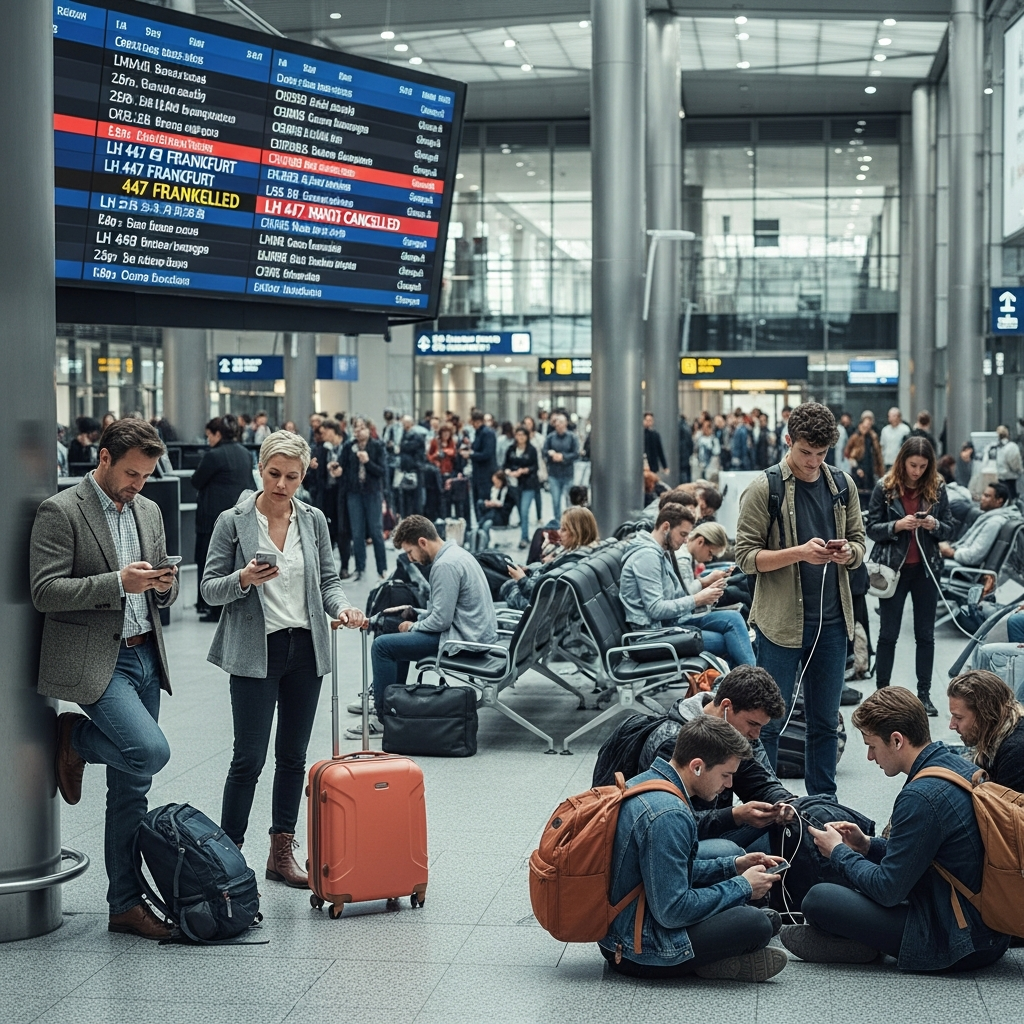

Europe’s skies are currently a complex mosaic of record-breaking passenger traffic and persistent operational challenges. While the continent’s airports celebrated an unprecedented 2.6 billion passengers in 2025, signaling a full post-pandemic recovery, this growth has also exposed deep-seated vulnerabilities. A widespread European air travel disruption is causing significant headaches, leaving travelers stranded and major hubs like London, Frankfurt, and Paris under immense pressure. This report delves into the intricate web of airline delays across Europe, fewer but impactful cancellations, and the systemic issues pushing the continent’s aviation network to its limits. We will equip travelers with crucial insights for navigating these ongoing airport operational challenges and understanding the broader implications for the global travel industry.
Navigating Europe’s Turbulent Skies: A Deep Dive into Current Disruptions
The European aviation network is grappling with extensive operational issues. Airlines such as Air France, KLM, British Airways, Lufthansa, and SAS have recently reported a staggering 945 delays and 91 cancellations. This widespread chaos particularly impacts major cities including Frankfurt, London, Berlin, Brussels, and Paris. Thousands of travelers face significant uncertainty, reflecting a system under constant strain where minor interruptions quickly escalate.
The Troubling Reality: Why Delays Overtake Cancellations
A striking aspect of the current disruption is the imbalance between delays and outright cancellations. Airlines are strategically opting for delays due to operational economics. Cancellations trigger mandatory compensation requirements under EU 261/2004, severely disrupt passenger itineraries, and directly reduce revenue. By contrast, delays, while frustrating for travelers, allow airlines to maintain some semblance of network continuity and mitigate direct financial penalties.
However, this strategic choice undeniably shifts the burden onto passengers. Travelers endure extended waiting periods, struggle with rebooking missed connections, and navigate overcrowded terminals. This challenging experience is unfortunately becoming a new norm for European travel, highlighting significant customer experience challenges within the impact on travel industry.
Unpacking the Multifaceted Causes of European Flight Delays
The primary drivers of this extensive disruption are deeply rooted and interconnected operational challenges. These issues reflect a system operating at near-maximum capacity with minimal buffers, further exacerbated by external factors.
Air Traffic Congestion
European airspace is increasingly stretched due to high flight volumes, often exceeding optimal handling capacity, especially over Western Europe. Air traffic controllers manage dense traffic flows with limited flexibility, which significantly increases the likelihood of delays. This constant pressure leaves little room for error and contributes heavily to European air travel disruption.
Aircraft Rotation Inefficiencies
Airlines operate tightly scheduled fleets, meaning a single flight delay automatically affects subsequent legs. This creates a powerful cascading effect across multiple routes and airports. The interconnected nature of modern aviation ensures a minor hiccup can quickly ripple across the entire network, impacting numerous daily operations.
Crew Availability Constraints
Personnel shortages, particularly among flight crews, limit recovery speed. Delays can push crews beyond their regulated duty hours, forcing airlines to delay or even reassign flights. Finding available, rested crew members quickly is a constant battle, adding immense complexity to already strained operations.
Ground Handling Bottlenecks
Major airports struggle with critical ground handling bottlenecks. Issues like gate availability, baggage handling, and refuelling processes are under severe pressure. Hubs such as London Heathrow, Amsterdam Schiphol, and Frankfurt are particularly affected, leading to slower aircraft turnaround times and contributing to wider delays. These infrastructure limitations are a significant factor in airport operational challenges.
Strikes and Labor Unrest
Beyond routine operational hurdles, labor actions can trigger widespread disruption. For instance, in March 2026, Brussels Airport (BRU) experienced a complete 24-hour shutdown of all departing flights due to a nationwide general strike in Belgium. This was driven by the unavailability of crucial personnel like security staff and baggage handlers. While passengers are protected by EU 261/2004 rights for refunds or rebooking, such strikes are typically categorized as “extraordinary circumstances,” meaning travelers are not entitled to additional compensation for consequential damages, such as missed connections.
Extreme Weather Events
Severe weather conditions also play a critical role in flight cancellations Europe. In January 2026, icy conditions, freezing rain, and heavy snow forced the temporary closure or significant restrictions at airports in Budapest, Vienna, Bratislava, and Prague. A separate incident saw thousands of tourists stranded at Kittilä Airport in northern Finland due to extreme cold. Such events demonstrate the vulnerability of air travel infrastructure to intense meteorological phenomena, leading to diversions, delays, and broader disruptions to ground transportation.
Regulatory Headwinds and Infrastructure Strain
ACI Europe’s Full Year 2025 Airport Traffic Report, released in February 2026, highlighted that while passenger numbers recovered, regions like the UK, France, and Germany notably underperformed. This was attributed, in part, to “punitive taxation regimes.” The report also raised concerns about the anticipated full rollout of the European Entry/Exit System (EES) by April 2026, suggesting it could pose significant new operational challenges for the industry. Policymakers often “fail to connect the dots,” not recognizing aviation as a strategic asset, further exacerbating underlying infrastructure strain.
European Hotspots: Where the Strain is Most Concentrated
The disruption is not evenly distributed across the continent; specific pressure points within the European network demonstrate concentrated operational stress.
London Heathrow (LHR): Stands out as an epicenter with 189 delays and 18 cancellations reported. Its role as a major global hub means delays here quickly propagate across international routes, impacting worldwide connectivity.
Istanbul Airport (IST): Recorded 100 delays, underscoring its critical function as a bridge between Europe, Asia, and the Middle East. Disruptions at Istanbul directly impact intercontinental travel.
Amsterdam Schiphol (AMS) and Paris Charles de Gaulle (CDG): Each reported 68 delays, highlighting significant strain on Western Europe’s busiest transit corridors, affecting millions of travelers annually.
London Gatwick (LGW): With 70 delays, it demonstrates spillover effects from Heathrow, indicating a broader regional congestion issue rather than isolated incidents at a single airport.
This data confirms that the most severe European air travel disruption is heavily concentrated in Western and Central European hubs, where air traffic density is at its highest, compounding the existing airport operational challenges.
Global Ripples: How Geopolitics Reshapes Air Travel
While Europe faces specific operational hurdles, the broader global aviation system is inherently vulnerable to various shocks. Recent events in the Middle East offer a stark reminder of how quickly international air travel can collapse under external pressures. In March 2026, widespread air travel chaos gripped the Middle East following military attacks. This geopolitical conflict led to the immediate shutdown of major international aviation hubs and airspaces across a vast region.
Key connecting points like Dubai, Abu Dhabi, and Doha, vital for flights between Europe, Africa, and Asia, were directly impacted and subsequently closed for days. Over 20,000 flights were canceled within days across the region, stranding hundreds of thousands of travelers. The ripple effect extended globally, causing dozens of cancellations in cities as far as London, Mumbai, Delhi, Bangkok, and Paris. This severe disruption underscores the fragile nature of global aviation strain.
Skyrocketing Airfares and Rerouted Flights
The Middle East crisis has led to a radical transformation of Asia-Europe routes. With major Gulf hubs unavailable due to safety concerns, airlines are significantly increasing direct Asia-Europe flights, rerouting through alternative corridors like Central Asia, Eastern Europe, or North Africa. The Lufthansa Group, Air India, Thai Airways, Singapore Airlines, Cathay Pacific, Qantas, and Turkish Airlines have all expanded direct services, absorbing traffic previously routed through the Gulf.
This shift has caused airfares between Southeast Asia and Europe to skyrocket, with some increases reported up to 900%. Flights between Singapore and London, once costing around $500, are now reaching $4,000. These soaring prices reflect higher operational costs due to longer flight times, increased fuel consumption, and the complexities of navigating new airspaces. Gulf carriers like Qatar Airways, Emirates, and Etihad have been severely impacted, facing profound challenges to their historical dominance in long-haul connections.
The Wider Economic Fallout and Future Resilience
The current European air travel disruption extends far beyond immediate flight schedules, carrying significant financial and economic consequences for various sectors.
Financial Implications for Airlines and Airports
Airlines incur substantial additional costs due to delays, including increased fuel consumption, crew overtime pay, and potential passenger compensation. Similarly, airports face heightened operational demands, requiring extra staffing and resource allocation, which drives up their expenses. The global context, particularly with the Middle East crisis, also points to soaring jet fuel prices as a major threat to profitability, especially for airlines with reduced fuel hedging.
Impact on Tourism and Trade
The broader travel and tourism sector feels a direct impact. Delayed arrivals affect hotel occupancy rates, disrupt tour schedules, and reduce local transport demand, creating a chain reaction across the entire travel economy. Furthermore, disruptions to key air cargo routes, especially from major global hubs, can severely impact international trade and global supply chains, leading to billions in losses, as demonstrated by the Middle East’s economic fallout. This stresses the importance of understanding the impact on travel industry sectors globally.
Structural Issues and Future Resilience
Ongoing challenges highlight a deeper structural issue within European aviation: demand has steadily outgrown infrastructure. Runways, terminals, and airspace capacity constantly operate at their limits, leaving virtually no margin for error. Even minor disruptions can quickly escalate into widespread delays and flight cancellations Europe.
In the short term, while disruption levels might stabilize, they are unlikely to disappear entirely. Travelers should continue to anticipate delays, particularly when flying through major hubs. Flexible travel planning, booking flights with longer connection times, and arriving early at the airport remain essential strategies for mitigating personal impact. For the long term, addressing these persistent airport operational challenges will require significant, coordinated investment in infrastructure, technology, and improved air traffic management systems across Europe. Building greater operational resilience is not merely an option but a critical necessity for the future of European air travel.
Strategies for Travelers: Navigating Europe’s Air Travel Landscape
With ongoing European air travel disruption, proactive planning is essential for a smoother journey. Travelers can adopt several strategies to minimize the impact of potential delays or cancellations.
Monitor Flight Status Constantly: Always check your flight status directly with your airline via their app or website, as information can change rapidly. Subscribe to airline alerts if available.
Allow Generous Connection Times: Book flights with longer layovers, ideally 3-4 hours for international connections, to account for potential delays and reduce the risk of missed onward travel.
Arrive Early at the Airport: Increased passenger numbers and staffing issues mean longer queues at check-in, security, and baggage drop-off. Arriving well in advance can help manage unforeseen delays at the airport.
Consider Travel Insurance: Invest in comprehensive travel insurance that covers delays, cancellations, and lost luggage. Understand its terms, especially regarding “extraordinary circumstances” which may limit compensation.
Know Your Passenger Rights: Familiarize yourself with EU Regulation EC 261/2004. This regulation outlines your rights to assistance (meals, accommodation) and potential compensation for significant delays (typically 3 hours or more on arrival) or cancellations, provided they are within the airline’s control. Keep all booking confirmations and communications.
Explore Alternative Hubs: If flying from an area experiencing specific issues like a strike, consider rerouting through unaffected nearby major European hubs such as Amsterdam Schiphol, Paris Charles de Gaulle, or Frankfurt Airport, if your airline offers flexibility.
Frequently Asked Questions
What are the primary factors contributing to recent European flight disruptions?
The recent European air travel disruption stems from a complex interplay of factors. Key contributors include severe air traffic congestion, especially over Western Europe, which strains air traffic control capacity. Tight aircraft rotation schedules create cascading delays across the network. Personnel shortages, particularly among flight crews, limit recovery speed, while ground handling bottlenecks at major hubs slow down essential turnaround processes. Furthermore, external events like nationwide labor strikes (e.g., Brussels Airport in March 2026) and extreme winter weather (e.g., Central Europe in January 2026) significantly exacerbate these airport operational challenges.
How can I effectively mitigate risks when planning European air travel?
To navigate the ongoing airline delays Europe, flexible travel planning is crucial. Always check your flight status regularly with your airline, ideally through their app or website. Consider booking flights with longer layovers to account for potential delays and reduce the risk of missed connections. Arriving at the airport earlier than usual can also help manage unforeseen queues. Investing in travel insurance that covers delays and cancellations, and familiarizing yourself with your passenger rights under EU 261/2004, are highly advisable. For specific regional issues like strikes, consider asking your airline about rerouting through alternative, unaffected hubs.
Has the Middle East crisis affected airfares and routes for Asia-Europe travel?
Yes, the geopolitical crisis in the Middle East has dramatically impacted airfares and routes for Asia-Europe travel, significantly contributing to global aviation strain. The closure of major Gulf hubs like Dubai and Doha has forced airlines to reroute flights, often via longer paths over Central Asia or North Africa. This has led to skyrocketing airfares, with some routes seeing increases of up to 900%, due to higher fuel consumption and operational costs. Many airlines, including Lufthansa, Air India, Thai Airways, and Singapore Airlines, have increased direct flights between Asia and Europe to bypass the affected region, fundamentally reshaping traditional travel corridors.
Conclusion: Building Resilience in European Air Travel
The current state of European air travel disruption underscores a fundamental challenge: a system operating at its maximum limits, constantly battling operational strain. From congested airspaces and stretched resources to the ripple effects of global events like geopolitical conflicts, strikes, and severe weather, the interconnectedness of aviation means challenges are rarely isolated. While airlines strategically manage delays to maintain continuity, the ultimate burden often falls upon the passenger. Addressing these issues demands more than short-term fixes; it requires sustained investment in infrastructure, technology, and robust air traffic management. For travelers, vigilance, flexible planning, and an awareness of passenger rights are paramount in navigating Europe’s increasingly turbulent skies.
“,
“imagegenerationprompt”: “A highly detailed, cinematic image showing a bustling, slightly chaotic European airport terminal during a period of disruption. Passengers are visible, some looking at departure boards with delayed/cancelled flights, others on phones, a few with tired expressions. Include subtle visual cues of modern technology, perhaps a digital flight info screen with a “delayed” status prominently displayed. The mood should be one of mild tension and bustling activity, with natural lighting. Focus on the interplay of people and the airport environment, avoiding overt sadness, aiming for a realistic depiction of travel challenges