
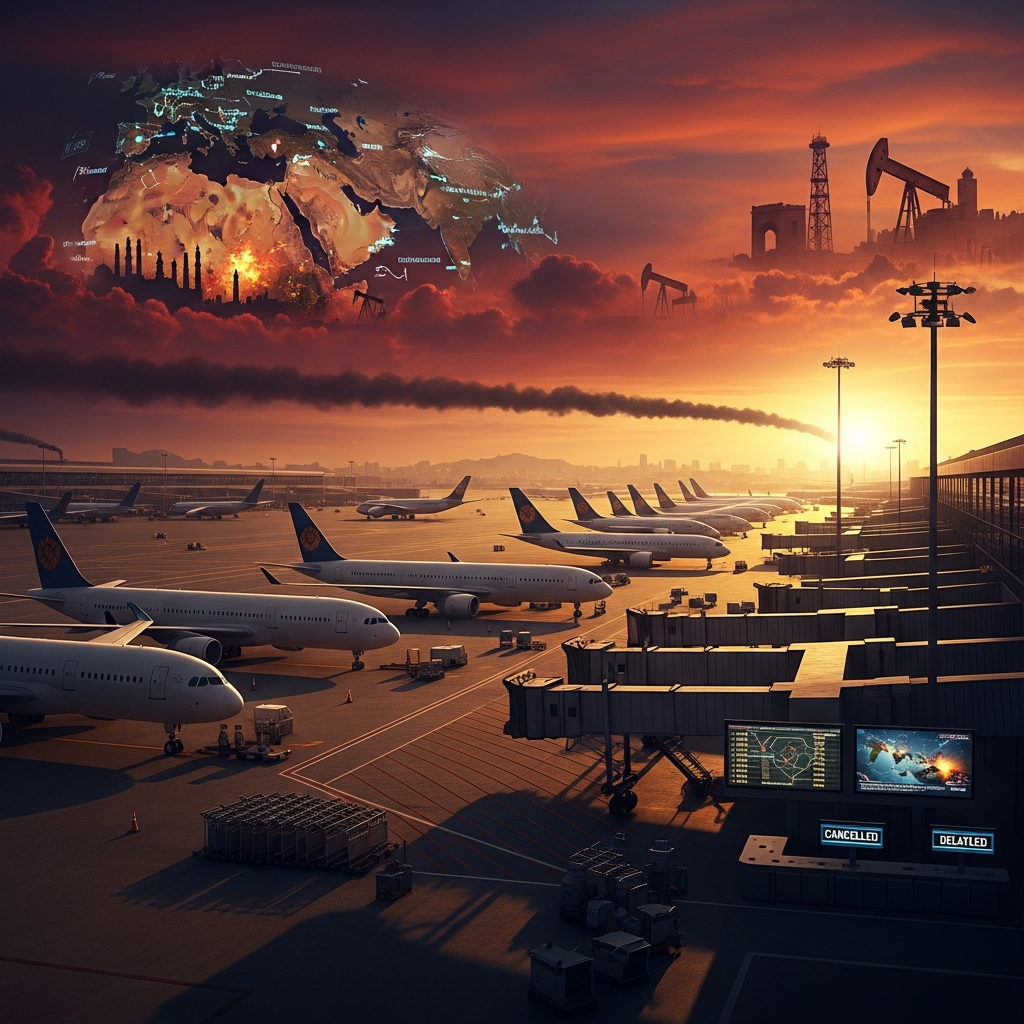

The global airline industry faces an unprecedented challenge: a severe jet fuel crisis. Escalating geopolitical tensions in the Middle East, particularly the Iran War, have ignited this emergency. This situation is causing widespread flight disruptions and rapidly rising airfares. Travelers planning international trips, especially to regions like Southeast Asia, must prepare for potential flight cancellations and schedule changes. Major carriers are already adjusting operations, making informed travel decisions more critical than ever. This guide unpacks the roots of the crisis, its global impact, and essential advice for navigating the turbulent skies ahead.
The Unfolding Crisis: Geopolitical Tensions & Fuel Bottlenecks
The current jet fuel shortage stems directly from the escalating Iran War. This conflict has profoundly disrupted global energy markets. Oil futures have surged past $95 per barrel. Critical oil production from Gulf countries plummeted by 10 million barrels per day (bpd) compared to March 2025 levels. Targeted strikes on vital facilities, such as Saudi Arabia’s Ras Tanura refinery, have severely curtailed supply.
Compounding this, Iran’s blockade of the crucial Strait of Hormuz has dramatically reduced oil flow. The volume of oil passing through this chokepoint now stands at less than 10 percent of pre-war levels. This creates a severe bottleneck impacting the global energy supply chain. It directly affects aviation fuel availability worldwide.
The Unique Vulnerability of Jet Fuel Supply
The impact on jet fuel is particularly acute. The Strait of Hormuz previously handled about 24% of global jet fuel exports. This vital route now faces a systematic breakdown in distribution. Global jet fuel exports have contracted by over 60% since early March 2026. This marks one of the most severe supply contractions in modern commodity history, as highlighted by DiscoveryAlert.
Jet fuel production inherently faces constraints. Only 3-4 gallons of jet fuel are yielded from one barrel of crude oil. In contrast, gasoline yields 19-20 gallons. Refineries cannot easily re-prioritize jet fuel production, even if crude oil is available. This structural issue exacerbates supply challenges, leading to drastic price surges and regional disparities.
Regional Epicenters: Asia’s Acute Vulnerability & Beyond
Asia finds itself acutely exposed to this energy crisis. The region relies heavily on Middle Eastern oil and gas. In 2024, an overwhelming 84% of all oil and 83% of liquefied natural gas (LNG) shipped through the Strait of Hormuz was destined for Asian markets. This profound dependence has ignited widespread energy panic.
Major Asian economies are almost entirely dependent on foreign oil. China, Japan, Singapore, Taiwan, South Korea, India, and Thailand are particularly vulnerable. While Malaysia and Brunei are producers, and Japan and China hold substantial strategic reserves, most nations face immediate and drastic challenges. The Philippines adopted a four-day workweek. Vietnam encourages remote work. Thailand’s prime minister urges officials to avoid elevators – all desperate measures to conserve fuel.
Cuba’s Crisis: A Parallel of Fuel Shortages
The crisis extends beyond the direct impact of the Iran War. Cuba’s vital tourism sector, for example, faces a severe national fuel shortage. This has led to widespread disruptions across the Caribbean island. Acute jet fuel shortages compelled major carriers like Air Canada to suspend services. Some travelers were repatriated on “empty jets” chartered for this purpose. This highlights a broader global vulnerability to fuel shortages, regardless of immediate geopolitical cause.
European carriers flying to Cuba may soon require technical stops for refueling elsewhere. The UK FCDO advises against all but essential travel to Cuba. They urge visitors to ensure comprehensive travel insurance covering emergency costs. This shows how localized fuel issues can quickly cascade into major international travel advisories and operational hurdles.
Airline Strategies: Navigating Soaring Costs & Route Changes
The immediate fallout of the jet fuel shortage is creating a challenging environment for airlines. Kerosene prices surged by an alarming 94% on the annual average, according to Iata’s jet fuel monitor. Carriers like Air France-KLM, IAG, Lufthansa, Ryanair, and EasyJet are grappling with severe financial strain. Even airlines with partially hedged fuel costs cannot indefinitely absorb these expenses.
Rising airfares are becoming an inevitable consequence, passed on to consumers. Flight cancellations are also an unavoidable reality. Airlines are reassessing routes based on fuel efficiency and availability. Long-haul services between Europe, Asia, and North America are expected to bear the brunt. Some airlines are scaling back to conserve fuel. Cathay Pacific, for instance, doubled its surcharges.
Strategic Shifts for European Carriers Amidst Disruptions
Amidst the widespread flight disruptions, a peculiar strategic shift is emerging. Gulf carriers’ hubs are either shut down or operating at reduced capacity due to the conflict. This presents an opportunity for European airlines to reassert their global presence. Lufthansa added 40 flights to Asia. Air France-KLM is boosting capacity to both Asia and Africa. British Airways announced direct flights to Melbourne, extending services via Kuala Lumpur. They are also increasing flights to destinations like the Caribbean. This strategy explicitly bypasses congested Middle Eastern airspace. This could be a “silver lining” for European long-haul carriers, despite broader tourism sector headwinds.
Governments’ Tightrope Walk: Subsidies, Reserves, and Demand Management
Asian governments are engaged in continuous energy triage. They implement drastic short-term measures to conserve fuel. Many nations ration supplies. Limited fuel is directed to essential services like hospitals. Strategic reserves are being released. Japan, for example, initiated the release of 80 million barrels from its emergency stockpiles. This unilateral action aligns with the IEA’s coordinated effort to release 400 million barrels globally.
To cushion consumers from skyrocketing fuel prices, government subsidies are common. India absorbed over half of fuel price increases. Thailand subsidizes diesel. Vietnam utilizes state fuel reserves. Singapore offers consumer rebates. Taiwan caps price hikes and provides targeted industry subsidies. Indonesia pledged to maintain pre-war fuel prices, anticipating massive subsidy costs. However, these subsidies are largely unsustainable, particularly for less affluent states. Indonesia’s commitment could push its budget deficit above legal limits, undermining investor confidence.
IEA Recommendations for Demand-Side Management
The International Energy Agency (IEA) issued comprehensive demand-side actions. These aim to mitigate the escalating energy crisis. Recommendations include encouraging remote work to reduce commuting. Lowering highway speed limits by at least 10 km/h can cut fuel consumption. Promoting public transport and car-sharing initiatives are also vital. Governments are urged to lead by example. They should ensure support mechanisms are targeted and effective, avoiding broad-based, unsustainable subsidies. Reducing non-essential air travel is also a key recommendation.
Risk of Social and Political Instability
The crisis also carries a high risk of political instability. Analysts draw parallels to Indonesia’s 1998 popular uprising, partly sparked by soaring fuel prices. Indonesia itself witnessed violent protests over fuel prices in September 2025. India, with its history of large-scale fuel-related protests, is experiencing a resurgence of nationwide unrest. Bangladesh closed universities and placed the military in charge of oil depots. Yet, it still faces a high probability of street protests. Even in less volatile countries, fuel shortages, rationing, and long queues have ignited violent incidents among citizens.
Essential Travel Planning in Turbulent Times
For travelers hoping to navigate the current climate of flight disruptions and rising airfares, proactive planning and flexibility are paramount. Tourists planning holidays in destinations like Vietnam, Thailand, or Indonesia may face increased ticket prices. There could be fewer direct flight options, longer layovers, and extended travel times. This is especially true when relying on connecting flights through major international hubs.
Here’s how to mitigate the impact:
Stay Informed: Continuously check your airline’s official channels and government travel advisories for the latest updates on flight status and potential changes.
Book Early: Airlines are advising passengers to book flights well in advance as fuel hedges unwind and prices increase.
Consider Travel Insurance: Purchase comprehensive travel insurance to protect against unexpected cancellations, delays, or itinerary changes. Look for policies that specifically cover disruptions due to geopolitical events or fuel crises.
Adjust Itineraries: Be flexible with your travel dates and destinations. Opting for shorter flights within your destination region might reduce the impact of long-haul disruptions.
- Explore Alternatives: If your preferred international route is impacted, consider alternative destinations. Some regions may be less reliant on affected fuel supplies. They might also have more stable flight options.
- www.itij.com
- www.aljazeera.com
- discoveryalert.com.au
- www.lokmattimes.com
- www.townsvillebulletin.com.au
Paving the Way Forward: Sustainability & Fuel Security
While the aviation industry faces a period of volatility, there is hope for recovery and transformation. Airlines are revisiting fuel-efficient technologies and fleet management practices. Some are considering changes to their route networks, prioritizing short-haul options. The push for greater sustainability is also intensifying.
The Push for Sustainable Aviation Fuel (SAF)
Governments and industry are looking to Sustainable Aviation Fuel (SAF). Australia, for example, sees a federal mandate on domestic SAF production as critical. This addresses the nation’s dangerous over-reliance on imported fuel. Townsville, leveraging its sugar cane farming regions, is positioning itself as an investment-ready location for SAF production. A mandate would secure demand and unlock this critical new industry, creating national security and economic benefits, as highlighted by Townsville Enterprise CEO Claudia Brumme.
However, the path to SAF is not without debate. European airline group A4E urged leaders to cut “green taxes.” They argue EU airlines are losing competitive ground. They also called for postponing the EU’s mandated 0.7% eSAF blending target by 2030, citing a lack of availability. The EU’s transport commissioner emphasizes the industry’s responsibility to invest in these fuels. This debate highlights the tension between immediate economic pressures and long-term environmental goals. It signals a potential shift towards more sustainable and fuel-efficient air travel in the future. The crisis reveals fundamental structural weaknesses. These require systematic addressing through private investment and coordinated policy responses.
Frequently Asked Questions
How does the Strait of Hormuz conflict specifically impact global jet fuel supply, beyond general oil prices?
The Strait of Hormuz conflict profoundly impacts global jet fuel supply due to its role as a critical choke point for refined product distribution, not just crude oil. Historically, 24% of global jet fuel exports transited this Strait. The ongoing disruptions have seen global jet fuel exports contract by over 60%. This is further compounded by jet fuel’s low yield from crude oil refining—only 3-4 gallons per barrel compared to other fuels. Even if crude oil is available, refineries cannot quickly shift production to meet the sudden deficit. This leads to disproportionately higher jet fuel price surges and severe regional shortages.
What immediate actions can governments take to mitigate the current jet fuel crisis, according to the IEA?
According to the International Energy Agency (IEA), governments can implement several immediate demand-side actions. These include encouraging remote work and lowering highway speed limits by at least 10 km/h to reduce road transport fuel use. Promoting public transport, car-sharing, and more efficient driving practices are also recommended. For aviation, reducing non-essential air travel can lower jet fuel demand. Governments are urged to lead by example in public sector energy conservation and ensure that consumer support mechanisms, like subsidies, are precisely targeted and fiscally sustainable rather than broad-based.
Should travelers invest in comprehensive travel insurance now, given the geopolitical risks and rising airfares?
Yes, given the ongoing jet fuel shortage, rising airfares, and significant travel disruptions stemming from Middle East conflicts, purchasing comprehensive travel insurance is highly advisable for any international trip. Policies can protect against financial losses from flight cancellations, delays, missed connections, and unexpected itinerary changes. Look for insurance that explicitly covers disruptions due to geopolitical events or unforeseen crises impacting airlines. While it won’t prevent delays, it can significantly mitigate financial stress and provide alternative arrangements, offering crucial peace of mind during this period of heightened travel uncertainty. Review policy details carefully for adequate coverage.
Conclusion: Navigating Uncertain Skies
The jet fuel crisis, fueled by Middle Eastern conflicts, has plunged the global airline industry into a period of profound volatility. While the short-term outlook suggests continued flight disruptions, rising airfares, and economic strain, particularly for tourism-dependent regions, the crisis also serves as a catalyst for long-term change. Airlines are compelled to innovate in fuel efficiency, and the industry’s commitment to sustainable aviation fuel (SAF) is under renewed scrutiny. For travelers, remaining flexible, proactive, and informed is key. The landscape of international air travel is transforming, demanding adaptability from both the industry and its passengers