
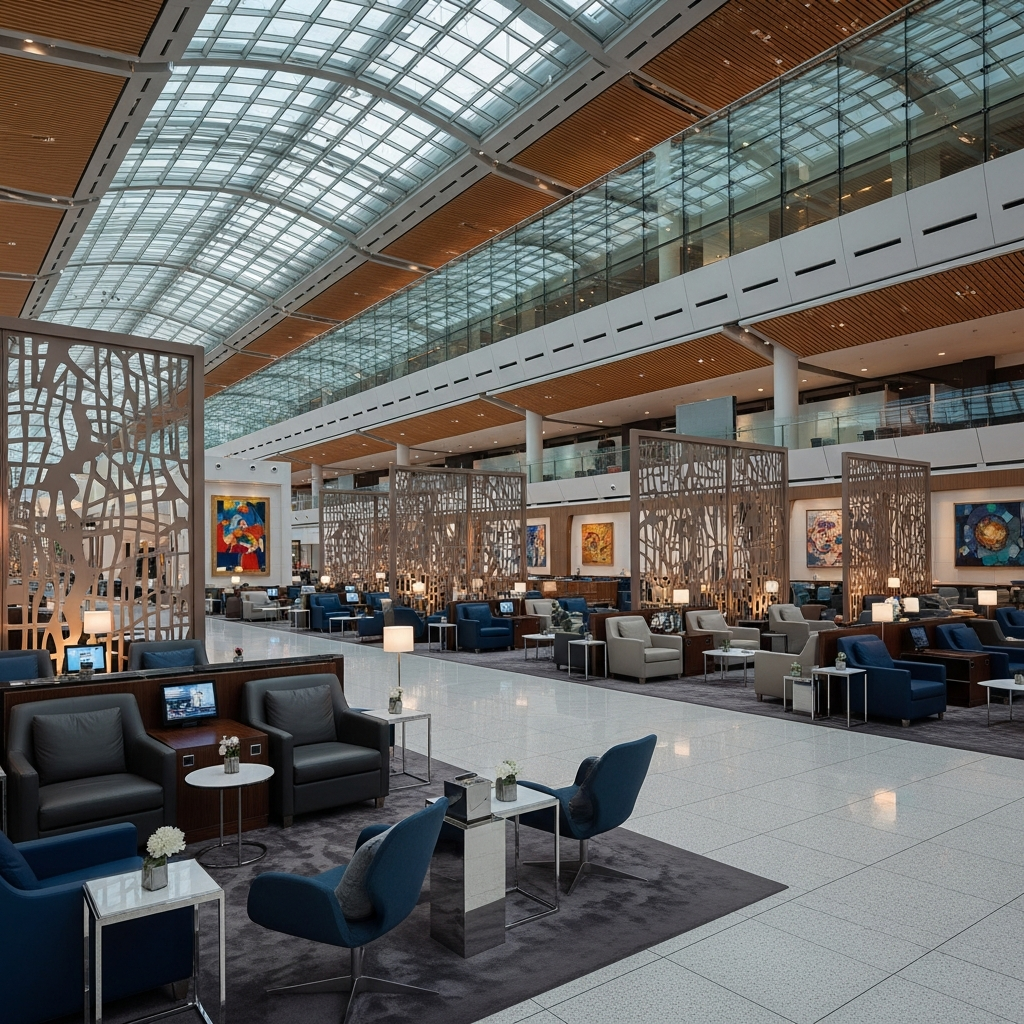

Get ready for smoother journeys! The definitive rankings of the World’s Best Airports 2026 are out, revealing the aviation hubs setting new benchmarks for passenger experience. Singapore Changi Airport continues its reign as the undisputed champion, while Asian powerhouses dominate the top spots. However, several European airports have made significant strides, cementing their status as global leaders. This year’s Skytrax World Airport Awards, often called the ‘Oscars of Aviation,’ provide essential insights for travelers seeking unparalleled comfort, efficiency, and innovative services. We’ll also uncover the airlines elevating your flight experience and pinpoint Europe’s most unique — and notoriously challenging — runways.
Singapore Changi: The Global Standard of Excellence
For an incredible 14th time, Singapore Changi Airport (SIN) stands as the world’s best. This prestigious title, awarded at the Skytrax World Airport Awards 2026, solidifies its reputation for consistent excellence. Serving nearly 70 million passengers last year, Changi didn’t just meet but exceeded its pre-pandemic highs, demonstrating remarkable recovery and operational prowess. Its success isn’t just about efficiency; it’s a commitment to transformative travel.
Changi captivates travelers with breathtaking amenities. Imagine strolling through a mesmerizing ‘forest valley’ or witnessing the grandeur of the world’s tallest indoor waterfall during a layover. These unique features transform mere transit into an unforgettable experience. Beyond aesthetics, Changi also earned accolades for the world’s best airport dining experience and immigration service. Passengers benefit from seamless biometric authentication and automated check-in counters, streamlining their journey from start to finish. Despite facing minor issues like baggage handling complaints in the past year, Changi’s proactive response and commitment to continuous improvement underscore its dedication to world-class service.
Asia’s Unrivaled Dominance in Aviation Excellence
The Skytrax World Airport Awards derive their authority from extensive global traveler surveys. Conducted between August 2025 and February 2026, these surveys gather insights from over 100 nationalities. The comprehensive assessment covers every facet of the airport experience, from staff friendliness and terminal cleanliness to entertainment options and the simple availability of luggage trolleys. Over 575 airports worldwide are meticulously evaluated, ensuring a truly representative global ranking.
This year’s results unequivocally showcase Asia’s enduring leadership in global aviation. The region’s consistent investment in cutting-edge infrastructure and superior passenger services means Asian airports firmly occupy the majority of the top five positions, delivering exceptional traveler satisfaction. These hubs exemplify the future of air travel.
The Top Tier: Asia’s Leading Aviation Hubs
Beyond Changi, other Asian powerhouses set global benchmarks:
Seoul Incheon International Airport (ICN): Rising to second place from fourth in 2025, Seoul Incheon handled an impressive 74 million passengers. It was deservedly celebrated as the world’s most family-friendly airport, offering comprehensive facilities for travelers with children.
Tokyo Haneda Airport (HND): Holding steady at third, Haneda, with 91 million annual passengers, secured multiple accolades. It was recognized as the world’s cleanest major airport, best domestic airport, and received praise for its outstanding accessible facilities.
Hong Kong International Airport (HKG): Moving up to fourth, Hong Kong served 61 million passengers. The airport received specific awards for the world’s best airport washrooms and highly efficient security processing.
Tokyo Narita International Airport (NRT): Retaining its fifth position, Narita, serving 42.3 million passengers, was distinguished for having the world’s best airport staff, highlighting its commitment to human-centered service.
Notably, Doha Hamad International Airport, last year’s second-place winner, was absent from these 2026 rankings. The airport voluntarily withdrew from all industry conferences, awards, and events due to the ongoing Middle East conflict, providing important context for its previous high standing.
Europe’s Elite: Surprising Strongholds on the Global Stage
While Asian airports dominated the very top, European hubs delivered a powerful performance. Four European airports impressively secured spots within the prestigious global top ten. These hubs are lauded for their operational excellence, exceptional passenger amenities, and often earn specific regional distinctions for their outstanding service and infrastructure. Their rise underscores a continent committed to elevating the travel experience.
Leading the Continent: Europe’s Top Global Performers
Europe’s highest-ranking airports on the world stage include:
Paris Charles de Gaulle Airport (CDG): Climbing to sixth place globally from seventh in 2025, CDG handled 72 million passengers. It was named the Best Airport in Europe for an impressive fourth consecutive year, a testament to its consistent quality.
Rome Fiumicino Airport (FCO): Holding its seventh global ranking (the original article had FCO at 8th and Istanbul at 14th, but the external sources consistently place FCO at 7th and Istanbul at 8th), Fiumicino, with 51 million passengers, also received the distinct award for Europe’s cleanest airport.
Istanbul Airport (IST): A significant new entry to the global top 10, Istanbul jumped from 14th to eighth place in 2025. Handling 84.5 million passengers, it notably introduced therapy dogs in 2025 to enhance traveler well-being, showcasing innovative approaches to passenger comfort.
Munich Airport (MUC): Retaining its ninth position, Munich, serving 43.4 million passengers, was recognized for having the best airport staff in Europe, a critical factor in passenger satisfaction.
Beyond the global top ten, other European airports also earned recognition in the global top 20. These included Helsinki-Vantaa Airport (eleventh), Vienna International Airport (fifteenth), London Heathrow Airport (sixteenth), Amsterdam Schiphol Airport (seventeenth), and Zürich Airport (nineteenth). London Heathrow also received a special award for World’s Best Airport Shopping. Additionally, Budapest Airport was specifically named the Best Airport in Eastern Europe, highlighting regional excellence.
It’s also worth noting that Vancouver International Airport (YVR) made a strong entrance into the global top ten, moving to tenth place from 13th in 2025. This secured its well-deserved spot as the best airport in North America, demonstrating robust performance outside of Asia and Europe.
Beyond Rankings: Skytrax’s Special Category Awards
Skytrax also recognizes airports across a diverse range of specific categories, celebrating excellence in distinct aspects of the travel journey. These awards highlight how airports innovate and specialize to enhance the passenger experience:
World’s Cleanest Airports: Tokyo Haneda Airport topped this list, setting the standard for hygiene and facility maintenance.
Best Airport Art: Houston Airport received gold for its impressive and engaging art installations, enriching the passenger environment.
Most Family-Friendly Airport: Seoul Incheon was lauded for its comprehensive, thoughtful, and high-quality family-focused facilities.
Best Airport Dining Experience & Immigration Service: These coveted awards went to Singapore Changi, reinforcing its all-around excellence in passenger comfort and operational efficiency.
Navigating the Edge: Europe’s Most Challenging Airports
While Skytrax celebrates operational excellence, some European airports are renowned for their unique, often demanding, operational complexities. These “challenging” airports, identified by the European Union Aviation Safety Agency (EASA), necessitate specialist pilot training. They often feature demanding terrain, unpredictable weather patterns, or unusual structural elements. Despite these inherent difficulties, stringent safety protocols and mandatory advanced training ensure they operate safely for all travelers, making these breathtaking destinations accessible.
Europe’s Most Challenging Airports:
Innsbruck Airport, Austria: Nestled deep within the Austrian Alps, Innsbruck grapples with complex low-level wind patterns and limited options for a missed approach. Only highly experienced captains are permitted to fly into this visually stunning yet operationally demanding airport.
Gibraltar International Airport, Gibraltar: Its single runway is famously intersected by Winston Churchill Avenue, a main public road that closes for every flight. The imposing Rock of Gibraltar causes abnormal wind effects and significant turbulence, often leading to diversions or “go-arounds” for safe landings.
Cristiano Ronaldo Airport, Madeira, Portugal: Site of a past fatal accident, this airport features an iconic runway extension partially built over the sea, supported by pillars. Pilots require special training to navigate the mountainous terrain, exposed coastlines, and strong, gusty winds for precise alignment with its relatively narrow runway.
Courchevel Airport, France: Situated at a breathtaking 6,588 feet, it boasts Europe’s highest tarmacked runway. Its exceptionally short 1,762-foot length, combined with a steep gradient, limits operations to small aircraft and helicopters during daylight hours, as it lacks a lighting system and faces extreme weather conditions.
From Tarmac to Takeoff: The Best Airlines of 2026
Alongside airport accolades, AirlineRatings.com also revealed its World’s Best Airline Awards for 2026, offering a holistic view of aviation excellence. Qatar Airways was crowned the World’s Best Full-Service Airline, succeeding the 2025 winner, Korean Air. This recognition highlights Qatar Airways’ commitment to exceptional passenger service and luxury.
Leading European Airlines:
Full-Service Carriers:
Turkish Airlines: Globally 7th, the highest-ranked European full-service carrier.
Virgin Atlantic: Global 13th.
KLM: Global 18th.
Air France: Global 19th.
LOT Polish Airlines: Global 25th.
Low-Cost Carriers (Top European Performers):
AirBaltic: Top in Europe, 4th overall globally in the low-cost category.
easyJet: Global 8th.
Wizz Air: Global 9th.
Ryanair: Global 11th.
Jet2: Global 12th.
TUI Group: Global 13th.
Norwegian: Global 16th.
Vueling: Global 19th.
Hybrid Airlines (Innovative Service Models):
Lufthansa: Crowned top-ranked globally, praised for its effective dual strategy. Lufthansa masterfully combines a low-cost model for short-haul European routes (featuring amenities like buy-on-board catering and in-flight entertainment via Wi-Fi) with a comprehensive full-service luxury experience on medium to long-haul flights, highlighted by its award-winning Allegris seat and efficient hub connections. Other highly-ranked European hybrid airlines include SWISS (7th), Finnair (8th), British Airways (9th), TAP Portugal (10th), Iberia (11th), Air Europa (15th), SAS (16th), Austrian Airlines (18th), and ITA Airways (20th).
A Missed Opportunity: The Absence of U.S. Airports
A striking detail from the 2026 rankings is the complete absence of any U.S. airport from the global top 20. This trend underscores a perceived gap in passenger satisfaction compared to their international counterparts, particularly those in Asia and Europe. It highlights a significant area for improvement in infrastructure, innovation, and service standards as perceived by global travelers, suggesting a need for substantial investment to catch up with global leaders in passenger experience.
For the Savvy Traveler: Making Informed Choices
The Skytrax World Airport Awards and airline rankings offer invaluable guidance for planning future trips. Opting for top-ranked airports can significantly enhance your travel experience, ensuring better facilities, cleaner environments, and more efficient, human-centered services. Understanding the unique challenges of airports like those nestled in the Alps or bordering the Rock of Gibraltar can help set realistic expectations, but remember that stringent safety measures make these destinations accessible and safe. These insights empower you to make more informed travel decisions, prioritizing comfort, efficiency, and overall satisfaction on your next adventure.
Frequently Asked Questions
How are the Skytrax World Airport Awards determined for 2026?
The Skytrax World Airport Awards for 2026 are determined through a comprehensive global survey of travelers. Conducted between August 2025 and February 2026, the survey collected feedback from passengers of over 100 nationalities. It meticulously assesses various aspects of the airport journey, including staff friendliness, terminal cleanliness, retail and dining options, entertainment, accessibility, and the availability of luggage trolleys. Over 575 airports were evaluated to formulate these highly anticipated rankings, making it one of the most authoritative awards in the aviation industry.
Which European airports were recognized in the 2026 global top ten, and what makes them stand out?
Four European airports secured spots in the global top ten for 2026. Paris Charles de Gaulle (6th globally) was named Europe’s best airport for the fourth consecutive year, recognized for its overall excellence and consistent passenger satisfaction. Rome Fiumicino (7th globally) earned the title of Europe’s cleanest airport, highlighting its superior hygiene standards. Istanbul Airport (8th globally) notably jumped into the top tier, distinguished by its rapid growth and innovative features like therapy dogs. Munich Airport (9th globally) was praised for having the best airport staff in Europe, a crucial element for a positive travel experience. These hubs exemplify a commitment to operational excellence and passenger-focused amenities.
What distinguishes “challenging” European airports, and are they safe for travelers?
“Challenging” European airports, categorized by the European Union Aviation Safety Agency (EASA), are distinguished by unique geographical, meteorological, or structural complexities. Examples include Innsbruck (mountainous winds), Gibraltar (runway crossing a public road), Cristiano Ronaldo Airport (sea-built extension, gusty winds), and Courchevel (short, high-altitude runway). These airports require specialist pilot training due to demanding approaches and conditions. Despite their operational complexities, stringent safety protocols, advanced navigation systems, and mandatory advanced pilot training ensure that flights to these destinations remain safe for holidaymakers, allowing access to stunning and unique locations.
Conclusion
The 2026 Skytrax World Airport Awards and parallel airline rankings provide a definitive guide to the global aviation landscape. While Asian airports continue to set the benchmark for passenger experience, European hubs are making significant strides, demonstrating a blend of innovative services and efficient operations. The consistent focus on factors like cleanliness, staff friendliness, and seamless processes, as highlighted by these awards, underscores a global commitment to elevating air travel