
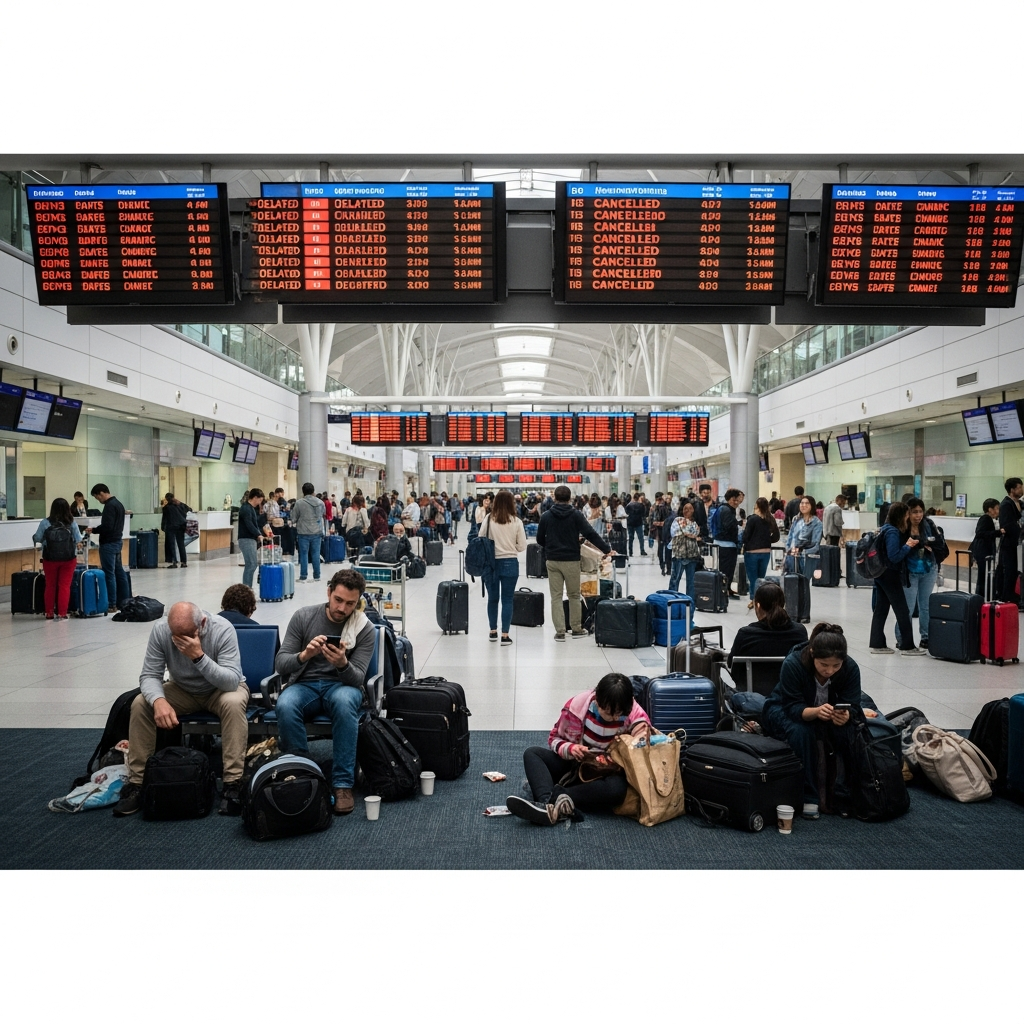

Thousands of travelers across Europe recently faced unprecedented air travel disruption, experiencing widespread flight delays and cancellations that impacted major airports and airlines. This turbulent period underscores the ongoing pressures on the continent’s aviation network. A complex mix of factors contributed to the chaos, from operational hurdles and severe weather to staffing challenges and even cyber-attacks. Passengers found themselves navigating long waits, missed connections, and the scramble for alternative travel plans. Understanding these Europe flight disruptions is crucial for future travel, empowering you to better prepare and protect your journey.
Unpacking Europe’s Air Travel Challenges: A Comprehensive Overview
Recent data reveals a persistent pattern of flight disruptions across Europe. On particularly challenging days, hundreds of flights were cancelled and thousands more faced significant delays continent-wide. This isn’t merely a series of isolated incidents; it points to systemic issues within the European air travel network. The sheer volume of affected flights highlights the severity, with delays consistently outnumbering cancellations across most major airports, signaling operational slowdowns rather than mass groundings. Thousands of passengers across multiple nations have been left stranded, facing unexpected hurdles.
Major Airlines Grappling with Operational Strain
Key carriers bore the brunt of these widespread disruptions. British Airways, Lufthansa, Swiss, Ryanair, and easyJet were among those severely impacted. For example, specific incidents in March 2026 showed Lufthansa recording dozens of cancellations and nearly a hundred delays, particularly affecting its hubs in Frankfurt and Munich. Ryanair, a major low-cost carrier, also reported numerous cancellations and delays, with a high concentration in cities like Berlin. EasyJet faced similar challenges, impacting key European hubs such as Berlin, Paris, and Zurich. Even international airlines like Delta Air Lines, Emirates, and Qatar Airways reported significant delays on routes connecting to European gateways. These figures collectively underscore the pervasive nature of the problem, affecting a broad spectrum of travelers and routes.
Key European Hubs Under Immense Pressure
The chaotic conditions were most acutely felt at Europe’s busiest airports. Several critical hubs experienced substantial operational challenges, leading to extensive queues and overcrowded terminals. Major cities like Paris, London, Munich, and Amsterdam were among the hardest hit, impacting countless connecting passengers and holidaymakers alike.
Top affected airports included:
Berlin-Brandenburg (BER): This airport was a significant outlier, reporting over 200 cancellations against minimal delays on one occasion, leading to near-total operational shutdowns.
Zurich Airport (ZRH): Experienced a high volume of delays, influencing Swiss operations and overall connectivity.
Frankfurt International (FRA): Recorded numerous delays, significantly impacting long-haul connections to Asia and other continents.
Paris Charles de Gaulle (CDG): Faced dozens of cancellations and many delays, complicating intercontinental journeys.
London Heathrow (LHR): Logged significant delays and cancellations across various incidents, particularly due to severe weather and operational challenges in March 2026. This vital hub, for instance, saw 177 flight delays and 26 cancellations on a single day, profoundly affecting major international carriers like British Airways and Qatar Airways.
Amsterdam Schiphol (AMS): Struggled with numerous cancellations and delays, causing distress for connecting passengers.
Copenhagen Airport (CPH): Also reported notable flight disruptions.
Manchester (MAN): Was severely affected, with nearly 40% of its flights impacted by delays on specific dates.
Dublin (DUB): Reported significant delays, impacting travel to and from Ireland.
Iceland’s Keflavík (KEF): Faced a staggering 42% of flights cancelled on one particularly bad day, illustrating extreme weather impacts.
Decoding the ‘Perfect Storm’: Why European Flights are Failing
The recent surge in Europe flight disruptions stems from a confluence of complex factors, creating a “perfect storm” of internal and external pressures. Understanding these root causes is vital for travelers and for future mitigation efforts within the aviation sector. These issues often combine to create cascading effects across the network.
Air Traffic Control & Operational Bottlenecks
Air traffic control (ATC) issues remain a primary culprit. Europe’s airspace frequently struggles to manage overwhelming flight volumes. Congestion, coupled with operational challenges like staffing shortages among controllers, often leads to significant slowdowns. This directly translates to substantial delays, even if outright cancellations are avoided. Furthermore, airlines’ tight scheduling and aircraft rotations mean that a delay in one location can quickly ripple across the entire network, impacting multiple subsequent flights.
Weather Woes and Persistent Staffing Shortages
Severe weather conditions regularly complicate European air travel. Storms, dense fog, and high winds force re-routing or grounding of flights, particularly affecting major hubs like London, Amsterdam, and Helsinki, as seen in February 2026. Simultaneously, ongoing staffing shortages, especially among ground crews, baggage handlers, and air traffic controllers, continue to exacerbate the problem. Airports and airlines struggle to cope with unexpected demands without adequate personnel, leading to prolonged waits and service interruptions.
Geopolitical Instability and Rerouting Challenges
Geopolitical events also play a significant role. Regional conflicts necessitate rerouting long-haul flights to avoid closed airspace. This adds considerable flight time, fuel costs, and places immense strain on aircraft and crew availability, creating a ripple effect across the network. Such diversions consume valuable resources and reduce flexibility for airlines facing other operational challenges.
The Emerging Threat of Cyber-Attacks
A critical, and relatively newer, factor contributing to Europe flight disruptions is the threat of cyber-attacks. In September 2025, several European airports, including London Heathrow, Brussels, Berlin Brandenburg, Dublin, and Cork, experienced significant disruption due to a cyber-attack targeting an electronic check-in and baggage system. This attack on the “Muse” software, developed by Collins Aerospace, led to widespread delays and forced the implementation of manual processing. While some airlines, like British Airways, could utilize backup systems, others faced multi-hour delays, lengthy queues, and missed connections. This incident highlighted the fragility of modern aviation’s reliance on interconnected digital systems and how even a localized attack can trigger cascading problems across the continent.
The Ripple Effect: Passenger Impact Beyond the Runway
The consequences of these disruptions extend far beyond delayed schedules. Travelers face a cascade of problems, impacting their finances, mental well-being, and overall journey experience. The emotional toll of uncertainty and frustration is often significant, particularly for families or business travelers with critical appointments.
Missed Connections and Mounting Costs
Thousands of passengers endured unplanned stops and missed connections. This often led to additional costs for alternative flights, accommodation, and ground transportation. The uncertainty forced many to rearrange their entire travel itineraries, leading to significant financial and logistical burdens. Even in the US, similar disruptions at hubs like Tampa and Houston demonstrate the global impact of such operational failures, with passengers facing rebooking challenges and the need to adjust extensive travel plans.
Communication Gaps and Terminal Overcrowding
Many travelers reported inadequate and inconsistent communication from airlines and airports. This lack of clear, timely information contributed to immense frustration. Long queues, confusion, and severe overcrowding became common sights at terminals like London Heathrow, Paris Charles de Gaulle, and Zurich. The disruptions also placed additional strain on alternative transport like trains and buses as travelers sought other options to continue their journeys.
Navigating the Turbulence: Essential Advice for Travelers
With ongoing volatility projected to persist, especially during peak seasons, travelers need a robust strategy to minimize the impact of potential Europe flight disruptions. Preparation and informed decision-making are paramount for a smoother journey.
Before You Fly: Preparation is Key
Check Flight Status Religiously: Always verify your flight status before leaving for the airport. Many airlines offer real-time updates via apps or websites.
Consider Travel Insurance: A comprehensive travel insurance policy can cover costs associated with cancellations, delays, and lost baggage, offering vital financial protection.
Pack Smart: Keep essential items, medications, and a change of clothes in your carry-on in case of long waits or re-routed luggage. This minimizes discomfort during unexpected overnight stays.
Allow Extra Time: Arrive at the airport earlier than usual, especially during peak travel periods. This buffer can be invaluable if you encounter long queues or unexpected checks.
At the Airport: Staying Informed and Agile
Maintain Airline Contact: Have airline customer service numbers readily available. Be prepared to contact them promptly for alternative arrangements.
Monitor Notifications: Keep a close eye on airport screens and airline announcements for any changes to your flight. Sign up for text or app alerts.
Explore Alternatives: If your flight is severely delayed or cancelled, research alternative routes or modes of transport like trains or buses. Sometimes, a nearby airport might offer better options.
Stay Patient: Airport and airline staff are often dealing with high-stress situations. Patience and clear communication can help expedite solutions, even during chaotic moments.
Post-Disruption: Understanding Your Rights
Familiarize yourself with passenger rights under EU regulations (EC 261/2004) regarding compensation for delays and cancellations. This knowledge is invaluable if you face significant disruption and need to claim entitlements. Under these regulations, passengers may be eligible for compensation, re-routing, or assistance such as meals and accommodation, depending on the delay duration and cause.
Frequently Asked Questions
What are the primary causes of the recent surge in European flight disruptions?
The recent surge in European flight disruptions, affecting thousands of passengers in March 2026 and other periods, stems from a complex mix of factors. Key causes include significant air traffic control (ATC) issues leading to airspace congestion and operational slowdowns across busy hubs. Severe weather conditions, such as storms and high winds, frequently force flights to be grounded or rerouted. Persistent staffing shortages among airport ground crews and air traffic controllers exacerbate these problems. Crucially, geopolitical instability requiring extensive flight reroutes adds strain, and a growing concern is cyber-attacks targeting critical aviation IT systems, as seen in September 2025 affecting check-in processes at airports like London Heathrow and Brussels.
Which European airports and airlines have been most impacted by recent delays and cancellations?
Major European travel hubs have experienced substantial chaos. Berlin-Brandenburg (BER) was a significant outlier with over 200 cancellations on one day, while Zurich (ZRH) and Frankfurt (FRA) faced extensive delays. Paris Charles de Gaulle (CDG), London Heathrow (LHR), and Amsterdam Schiphol (AMS) also consistently reported high numbers of both delays and cancellations due to various factors including weather and operational issues. Among airlines, Lufthansa, Ryanair, easyJet, and Swiss recorded the highest volumes of disrupted flights, with British Airways and Air France also significantly affected. The impact was widespread, disrupting both holidaymakers and business travelers across the continent.
What practical steps can travelers take to mitigate the impact of European flight chaos?
To minimize disruption from European flight chaos, travelers should proactively check their flight status using airline apps or websites before heading to the airport. It is highly advisable to carry essential items, medications, and a change of clothes in a carry-on bag for unforeseen delays or lost luggage. Considering comprehensive travel insurance can provide crucial financial protection against cancellations and rebooking costs. At the airport, maintain immediate contact with your airline for updates and explore alternative routes or modes of transport like trains if necessary. Finally, understanding your passenger rights under EU regulations (EC 261/2004) is crucial for seeking compensation or assistance. By staying informed and prepared, travelers can better navigate the ongoing volatility in Europe’s air travel network.
The Future of European Air Travel: Navigating Persistent Challenges
The recent wave of flight cancellations and delays across Europe serves as a stark reminder of the aviation industry’s current fragility. From the bustling terminals of London Heathrow to the critical connections at Paris Charles de Gaulle and Zurich, the operational strain is evident. While airlines like British Airways and Lufthansa work to manage the fallout, the underlying issues—including air traffic control challenges, staffing shortages, geopolitical factors, and the emerging threat of cyber-attacks—are complex and ongoing. The financial and emotional toll on passengers remains significant, reinforcing the need for greater resilience.
As Europe’s airspace continues to navigate these turbulent times, enhanced coordination, transparent communication, and efficient crisis management are paramount. For now, travelers are urged to remain patient, stay informed, and equip themselves with practical advice to mitigate potential disruptions. The current volatility is expected to persist, making proactive planning an essential tool for all European journeys