
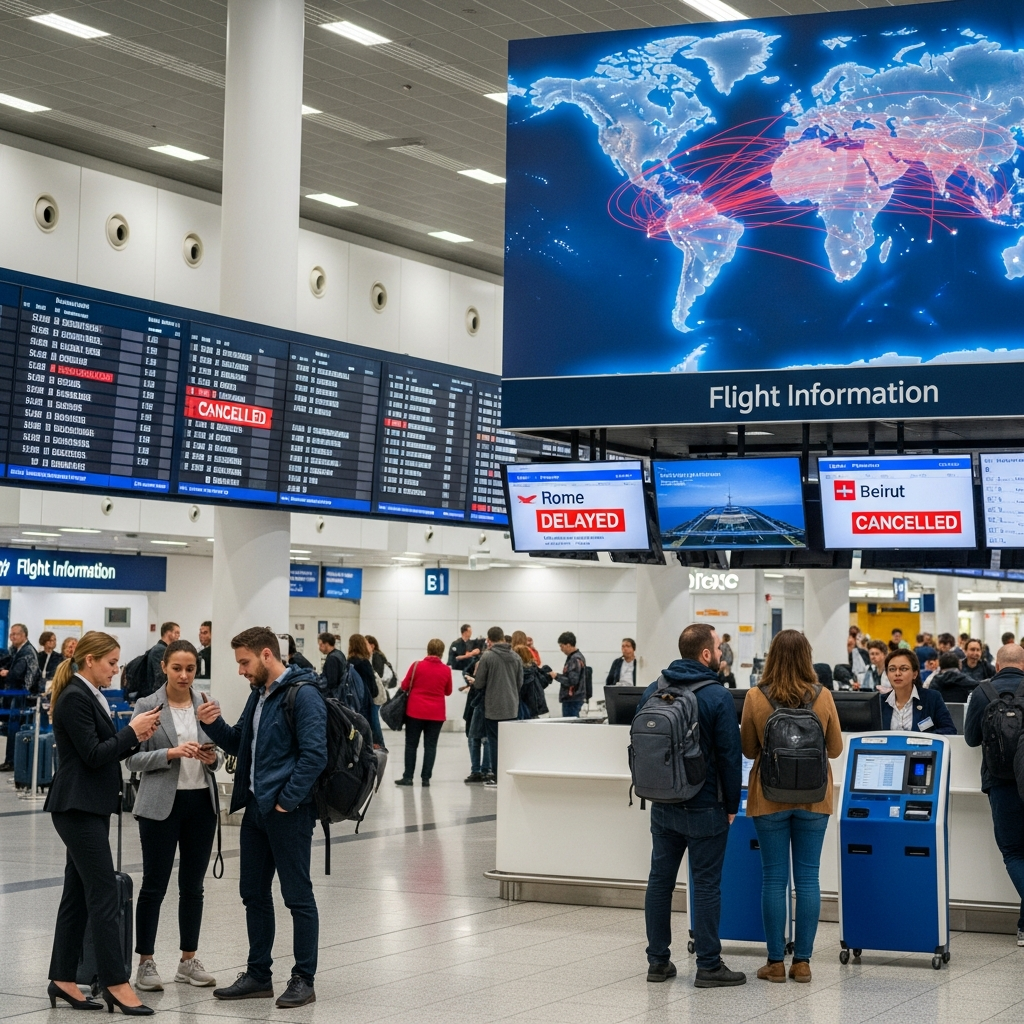

The skies over Europe have plunged into a period of unprecedented air travel chaos, leaving thousands of passengers stranded and disrupting plans continent-wide. This turmoil, particularly prominent in March 2026, isn’t a simple issue. It’s a complex web of geopolitical tensions, widespread labor disputes, severe weather patterns, and intense airspace congestion. Travelers are now navigating a landscape of uncertainty, desperately seeking clarity on their rights and viable alternative travel solutions.
This in-depth guide aims to cut through the confusion. We’ll explore the root causes of these significant disruptions, highlight the most affected airports and airlines, and provide crucial, actionable advice for anyone caught in the current Europe flight chaos. Understanding the situation is the first step toward reclaiming control of your journey.
Unprecedented Turmoil Grips European Air Travel
Europe’s aviation sector is experiencing one of its most challenging periods since the pandemic. Cumulative reports from March 2026 paint a stark picture: well over 2,000 flight delays and hundreds of outright cancellations have impacted travelers across the region. Key nations like the United Kingdom, Germany, France, Denmark, Netherlands, Iceland, Spain, and Italy are grappling with the fallout.
Recent data, including specific incidents on March 18 and 19, 2026, confirms this scale of disruption. Thousands of passengers found themselves grounded, facing immense inconvenience. A peculiar pattern has emerged: mainland European hubs battle extensive delays, signaling severe network strain. In stark contrast, Icelandic airports are seeing a disproportionately high number of cancellations, pointing to localized operational shutdowns. This comprehensive overview will clarify these patterns, shedding light on their underlying causes.
Why European Skies Are So Turbulent: A Confluence of Crises
The current wave of flight delays Europe and cancellations isn’t due to one single event. Instead, it’s a perfect storm of interconnected global and regional challenges. From distant conflicts to local strikes, these factors combine to create a highly volatile environment for air travel.
Geopolitical Tensions & the Middle East Ripple Effect
The most significant and far-reaching cause for current global and European air travel issues stems from the escalating US-Israel conflict with Iran, which intensified in late February and early March 2026. This conflict initiated a severe global air travel crisis, considered the worst since the Covid-19 pandemic. Major Middle Eastern air hubs, including Dubai International Airport (DXB) – the world’s busiest international hub – and Abu Dhabi, were forced to suspend normal operations for extended periods. Airspace over critical regions like Iran, Iraq, Kuwait, Israel, Bahrain, the UAE, and Qatar was virtually emptied of commercial traffic.
This Middle East airspace shutdown directly impacts Europe through several channels:
Global Rerouting: Flights connecting Europe with Asia and other regions must take significantly longer detours, adding hours to journeys and increasing fuel consumption. This strains aircraft and crew availability.
Airline Network Pressure: European carriers operating routes through or near the Middle East have faced extensive rerouting or cancellations. British Airways, Air France, and Air India, for example, were forced to modify or suspend services to the Gulf, Israel, and other affected areas, impacting thousands of passengers and adding pressure to their broader European operations.
Increased Operational Costs: Surging oil prices, a direct consequence of the geopolitical instability, translate to higher fuel costs for airlines. This economic pressure can force difficult decisions, sometimes contributing to flight cancellations.
Scattered Crews & Aircraft: The widespread groundings and reroutes in the Middle East have left airline crews and aircraft out of position globally, impeding a swift resumption of normal flight schedules even after airspaces reopen.
These global events feed directly into the operational fragility experienced across Europe, turning what might be routine delays into widespread airline cancellations Europe.
Operational Strain: Airspace Congestion & Staffing Shortages
Even without geopolitical crises, Europe’s skies are notoriously busy. High traffic volumes across major flight corridors and insufficient ground staff or equipment at key hubs regularly lead to bottlenecks. These issues are particularly noticeable during peak travel seasons, creating a domino effect of delays across the network.
Labor Strikes Cripple Operations
Industrial action is another major contributor to the current air travel disruptions. Air traffic controller (ATC) strikes in various European countries, notably France, have repeatedly led to significant airspace closures and cascading delays. Beyond ATC, broader labor disputes, such as the Verdi service workers’ strike at Berlin Brandenburg Airport on March 18, 2026, caused a massive 445 flight cancellations. Lufthansa also faced similar challenges from a two-day strike earlier in March.
The Unpredictable Hand of Weather
Mother Nature always plays a role. Unpredictable weather events like storms, dense fog, or strong winds across the continent frequently necessitate flight delays, diversions, or cancellations. Safety is paramount, and adverse conditions force airlines to adjust schedules accordingly.
Europe’s Major Hubs Grapple with Gridlock
The continent’s busiest airports are struggling under immense operational pressure. Delays are the dominant form of disruption, showcasing the severe congestion and strain on infrastructure and personnel.
Copenhagen Airport (CPH) recorded some of the highest disruption levels on one day, with 265 delays and 13 cancellations. This was primarily driven by SAS and regional carriers, indicating significant hub congestion.
Frankfurt International (FRA) saw 199 delays and 3 cancellations, with Lufthansa alone contributing 90 delays. Broader reports from March 19, 2026, indicate Lufthansa faced even larger numbers with 116 delays and 26 cancellations across its network.
Manchester Airport (MAN) reported 189 delays and 8 cancellations, heavily impacting low-cost carriers like easyJet, Ryanair, and Jet2.
Amsterdam Schiphol (AMS) recorded 172 delays and 6 cancellations, with KLM leading the disruptions.
Paris Charles de Gaulle (CDG) experienced 168 delays and 4 cancellations from Air France flights on a particularly challenging day. External reports from March 19, 2026, cited a staggering 1,011 delays and 12 cancellations for CDG.
London Heathrow (LHR) faced 130 delays and 15 cancellations, with British Airways as a key contributor. Other reports for March 19, 2026, indicated 1,019 delays and 12 cancellations at LHR.
Other major airports like Munich, Vienna, Zurich, Brussels, Madrid-Barajas, and Barcelona also recorded significant delays and cancellations. Zurich, for instance, saw 125 delays on one day, showcasing operational slowdowns even with fewer cancellations.
Iceland’s Unique Challenge: Widespread Cancellations
In stark contrast to the mainland, Iceland’s airports faced a cancellation-heavy scenario. Keflavík International Airport (KEF) reported 55 cancellations and only 10 delays, making it the most cancellation-affected airport in the dataset. Reykjavik Airport (RKV) saw 20 cancellations with no delays, reflecting complete operational shutdowns for specific airlines. Akureyri Airport (AEY) mirrored this with 9 cancellations and zero delays. Air Iceland Connect accounted for 29 cancellations, representing a complete halt in their operations within these regions.
Airlines Grapple with Mounting Operational Strain
Major European airlines are at the heart of these widespread European flight disruptions, struggling to maintain schedules amid challenging conditions. Their meticulously planned networks are under immense stress, leading to significant challenges for both carriers and passengers.
SAS recorded 101 delays and 3 cancellations, mainly impacting its Copenhagen hub.
Lufthansa reported 90 delays at Frankfurt, though other data from March 19, 2026, showed 116 delays and 26 cancellations across its broader network.
KLM experienced 68 delays and 4 cancellations, reflecting pressure at Amsterdam Schiphol, with additional reports citing 57 delays and 10 cancellations.
British Airways saw 44 delays and 6 cancellations, contributing significantly to London Heathrow’s disruptions, with other incidents adding 50 delays and 14 cancellations.
EasyJet faced widespread issues with 60 delays and 2 cancellations at Manchester, alongside 38 delays in Amsterdam and 18 in Paris CDG. More broadly, EasyJet encountered 156 delays and 35 cancellations on March 18, 2026.
Ryanair reported 38 delays affecting Manchester operations but contended with 132 delays and 40 cancellations across its wider European network on the same date, making it a heavily impacted low-cost carrier.
Air France contributed 59 delays and 1 cancellation at Paris CDG, with 89 delays and 22 cancellations reported more broadly.
Other significant carriers, including Jet2 (23 delays in Manchester), Air India (17 delays, heavily impacted by Middle East reroutes), Delta Air Lines, Qatar Airways, Emirates, Swiss Air (11 cancellations, 89 delays reported), Vueling, Iberia, and Air Europa, have also been navigating this complex and unpredictable operational environment. These statistics highlight the immense, widespread strain on the entire aviation ecosystem.
The Human Cost: Stranded, Stressed, and Seeking Solutions
The most profound impact of these extensive European flight disruptions is felt by travelers. Thousands find themselves stranded, facing the daunting task of navigating missed connections, rebooking flights, and finding alternative transport. This often incurs significant additional costs, considerable emotional stress, and palpable frustration.
A recurring complaint among affected passengers is the critical lack of timely and clear communication from airlines and airports. Many are left without crucial updates or guidance, exacerbating their uncertainty. Overcrowding at major terminals, particularly at London Heathrow, Paris Charles de Gaulle, and Zurich, has heightened tensions as airport staff struggle to manage the escalating number of frustrated travelers. The crisis creates a wider “ripple effect” too, with rerouted flights inadvertently increasing congestion at less affected airports and a surge in demand for trains and buses straining these alternative services.
Your Essential Guide: Navigating Europe’s Air Travel Crisis
For those caught in the midst of these airline cancellations Europe and delays, being proactive and well-informed is paramount. Taking immediate steps can significantly ease the stress and logistical challenges.
Stay Informed & Proactive
Regularly check your flight status using airline apps, official airport websites, or real-time flight tracking services. Always sign up for SMS or email alerts from your carrier.
Know Your Rights: EC Regulation 261/2004
Familiarize yourself with European Union regulations, specifically EC Regulation 261/2004. This directive outlines your entitlements for compensation in cases of long delays or cancellations, covering rebooking on the next available flight, refunds, and sometimes accommodation or meals.
Direct Airline Communication
For affected passengers, immediate communication with your airline through official channels (customer service hotlines, social media, or airport desks) is vital for rebooking or exploring alternatives.
Pack Smartly for Delays
Prepare for potential long waits. Always carry snacks, water, any necessary medications, a portable power bank for your devices, and entertainment to pass the time.
Patience & Flexibility
Airport and airline staff are often doing their best to manage large-scale crises. Maintaining a calm and flexible attitude can help navigate stressful situations more effectively.
Invest in Robust Travel Insurance
For future journeys, especially during volatile periods, robust travel insurance can offer crucial protection against unforeseen cancellations, missed connections, and additional costs.
Explore Alternative Transport
For shorter routes, research alternative transport options like trains or buses. These might offer more reliable direct connections, particularly if your flight is significantly delayed or canceled.
Frequently Asked Questions
What are the primary reasons for the widespread European flight disruptions in March 2026?
The significant European flight disruptions in March 2026 are multifaceted. Key causes include escalating geopolitical tensions, particularly the US-Israel conflict with Iran, which has severely impacted Middle Eastern airspace and global flight routes, causing knock-on effects in Europe. Additionally, pervasive airspace congestion, widespread air traffic controller (ATC) strikes, and localized labor disputes, such as the Verdi service workers’ strike at Berlin Brandenburg Airport, have led to mass cancellations. Severe weather conditions across the continent have also contributed to numerous flight delays and cancellations, creating a complex and volatile operating environment.
How can passengers claim compensation for flight disruptions in Europe?
Passengers experiencing significant flight delays or cancellations in Europe may be entitled to compensation under EC Regulation 261/2004. This EU law protects passenger rights, offering options like rebooking on the next available flight, a full refund, and potentially monetary compensation based on the delay duration and flight distance. To initiate a claim, first contact your airline directly via their official customer service channels, providing all booking details. If your airline rejects the claim or fails to respond adequately, you can escalate the matter to the relevant national enforcement body for aviation passenger rights in the country where the incident occurred or where your flight originated.
Which airports and airlines were most affected by recent European flight chaos?
The recent Europe air travel chaos severely impacted numerous major airports and airlines. Among the most affected airports were Copenhagen (CPH), Frankfurt (FRA), Manchester (MAN), Amsterdam Schiphol (AMS), Paris Charles de Gaulle (CDG), and London Heathrow (LHR), all reporting hundreds of delays and dozens of cancellations. Icelandic airports like Keflavík (KEF) and Reykjavik (RKV) saw particularly high cancellation rates. Leading airlines grappling with these disruptions included SAS, Lufthansa, KLM, British Airways, EasyJet, Ryanair, and Air France, all experiencing significant operational strain across their European networks, with thousands of passengers affected.
Looking Ahead: A Volatile Landscape for European Aviation
The ongoing period of Europe air travel chaos profoundly underscores the inherent fragility of global air travel. Especially during peak operational challenges and periods of heightened geopolitical instability, the interconnectedness of the aviation system means disruption in one region can quickly cascade. With thousands of passengers continually being impacted and major airlines and airports working tirelessly to mitigate these unprecedented challenges, widespread flight delays and cancellations across Europe are expected to remain a significant factor for the foreseeable future. Travelers must prioritize preparedness, stay agile with their plans, and utilize available resources to ensure the smoothest possible journey through this turbulent environment.
“,
“imagegenerationprompt”: “A bustling yet slightly stressed scene at a major European airport terminal. Travelers look at illuminated departure boards displaying a mix of delays and cancellations. A subtle world map overlay or holographic element shows disrupted flight paths over Europe and the Middle East. The mood is a blend of urgency and uncertainty, with clear, bright lighting contrasting with the somber news on screens. Emphasize human interaction and the digital nature of flight information