
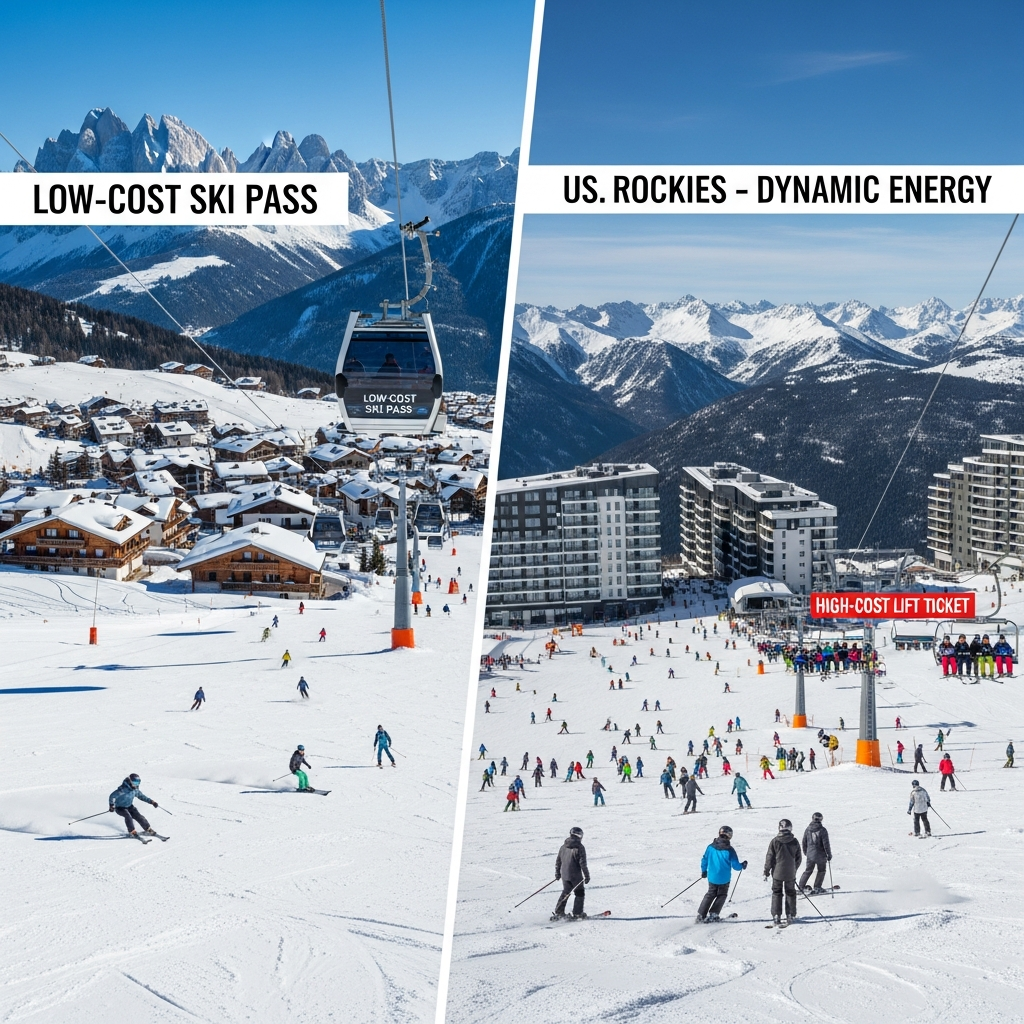

Many American skiers envision the pristine European Alps as a distant, expensive dream. Yet, an increasing number of winter sports fans are discovering a surprising reality: skiing in Europe can be more affordable than tackling equivalent US resorts, even when factoring in transatlantic flights. This comprehensive guide delves into the true cost of ski trips, offering expert insights and practical strategies. We’ll show you how strategic planning can lead to exceptional value, challenging the common belief that domestic slopes are always the most budget-friendly choice. You’ll learn how to transform your European ski adventure from a fantasy into a stunning reality without breaking the bank.
The Shifting Slopes: Is European Skiing Truly Cheaper?
The long-held belief that a European ski vacation is prohibitively expensive compared to a trip to the US Rockies or Northeast is rapidly changing. While many assume domestic travel is simpler and cheaper, a closer look at the numbers often reveals a surprising cost advantage for Europe. For instance, a day pass at a luxury US resort like Vail can easily exceed $300. In stark contrast, one could ski six full days in world-renowned areas like Zermatt and Breuil-Cervinia for double that amount, or roughly $640. This significant difference is prompting more US skiers to explore options across the Atlantic.
Why US Skiing Costs Are Soaring
The escalating costs of skiing in the United States are largely attributed to increasing market consolidation. Major pass systems like Epic and Ikon have concentrated demand at a limited number of resorts. This market power inflates prices for nearly everything, from lift tickets and accommodations to dining and even flights to these popular destinations. Consequently, what once seemed like an easy domestic option has become increasingly costly. While US resorts offer early bird season passes (like Tamarack’s $499 adult pass or Blue Mountain’s $699 All-Access pass) with perks, these are strategies to mitigate already high base prices, rather than representing inherently lower costs.
Deep Dive: Europe vs. US Ski Trip Cost Comparisons
To truly understand if skiing in Europe is cheaper than the US, a comprehensive analysis is essential. A recent study compared costs for a US-based skier planning five days of peak-season skiing, six nights of four-star accommodation, and rented equipment. The findings present a nuanced picture, challenging universal assumptions.
The analysis considered round-trip airfare from New York’s JFK, lodging, on-the-ground transportation, five-day adult lift tickets, and performance ski equipment rentals. Food and drink were intentionally excluded due to their high variability.
Where Europe Wins on Value
Let’s examine some key head-to-head comparisons where Europe proved more economical:
Vail Ski Resort, Colorado (U.S.) vs. Courchevel (3 Vallées), France: Courchevel emerged as the more affordable option. Despite higher airfare to Geneva ($767 vs. $342 to Eagle County), Courchevel’s significantly lower lift ticket ($478 vs. $857) and equipment rental ($208 vs. $400) costs, combined with slightly cheaper lodging, made the European trip more economical overall ($6,644 vs. $6,895).
Deer Valley, Utah (U.S.) vs. Verbier (4 Vallées), Switzerland: Verbier was marginally cheaper. Although US airfare was less ($410 vs. $767), Verbier’s much lower lift ticket ($384 vs. $1,270) and rentals ($242 vs. $475) offset its slightly higher lodging costs. The total came to $8,447 for Verbier versus $8,832 for Deer Valley.
These examples clearly demonstrate that while European lift ticket prices vs. US equivalents are often lower, overall cost depends heavily on airfare and accommodation. The blanket statement that Europe is always cheaper doesn’t hold true, but strategic choices can significantly tip the scales.
When US Skiing Offers Better Value
However, Europe isn’t always the outright winner. In some comparisons, the US proved more economical:
Jackson Hole Mountain Resort, Wyoming (U.S.) vs. Andermatt–Sedrun-Disentis, Switzerland: Jackson Hole was cheaper. Lower US lodging ($2,046 vs. $3,324) and rentals ($281 vs. $340) outweighed Jackson Hole’s higher lift ticket ($1,001 vs. $404), leading to a lower overall US cost ($4,094 vs. $4,747).
Palisades Tahoe, California (U.S.) vs. St. Anton am Arlberg, Austria: Palisades Tahoe was the cheaper choice due to considerably lower airfare to Reno-Tahoe ($429 vs. $640 to Zurich) and lodging ($1,398 vs. $4,020). The total for Palisades Tahoe was $3,239 versus $5,457.
Killington, Vermont (U.S.) vs. Laax, Switzerland: Killington offered more value with cheaper airfare ($356 vs. $640 to Zurich) and significantly less expensive lodging ($1,452 vs. $2,814), resulting in a total of $3,339 vs. $4,427 for Laax.
These outcomes emphasize that meticulous planning and specific resort choices are key to finding affordable European skiing. High airfare or premium accommodation can quickly negate savings on lift tickets.
The Hidden Gems of European Skiing
Beyond the most famous Alpine resorts, Europe offers a wealth of truly budget-friendly options, particularly in Eastern Europe and lesser-known regions. These destinations provide world-class skiing without the premium price tag. Here are a few examples where a one-day lift pass is typically under $71 USD and accommodation is under $177 USD per night:
Bansko, Bulgaria: Located in the Pirin Mountains, Bansko boasts 46.6 miles of slopes and a day pass around $70. Multi-day passes offer even better value. Beyond skiing, enjoy thermal baths and vibrant nightlife.
Bohinj, Slovenia: A budget-friendly alternative in the Julian Alps, offering access to Vogel Ski Resort (day pass: ~$35 USD) and Soriška Planina (day pass: ~$35.60 USD). Hostels start around $70 per night, with hotels under $150.
Klínovec, Czech Republic: The largest interconnected resort in the Czech Republic offers 19.6 miles of slopes. An adult day pass is about $53, with full ski rental packages around $24 per day.
Innsbruck, Austria: This two-time Winter Olympics host is surrounded by 12 ski resorts, many offering day passes around $59 USD (e.g., Glungezer Bahn). A free ski bus connects resorts, and affordable hotels are common.
Poiana Brașov, Romania: Romania’s most modern ski resort provides over 15 miles of slopes. Lift tickets are noted as 40% cheaper than other European options, with a full-day pass costing about $38 USD. Four-star hotels start around $148 per night.
These destinations prove that high-quality, memorable ski experiences are accessible across diverse European landscapes for the budget-conscious traveler.
Unlock Significant Savings: Strategies for Your European Ski Adventure
Achieving an affordable European ski trip cost of around $3,500–$4,000 for a seven-day adventure (including flights, hotels, rentals, train tickets, and food) is entirely feasible. With strategic use of airline points, this can drop by another $1,000, as detailed by The Points Guy. Here’s how to maximize your savings without compromising on quality.
Timing Your Trip for Maximum Value
One of the most effective ways to reduce costs and avoid crowds is to travel during Europe’s low season. The sweet spot for both cheaper flights and fewer skiers is typically mid-January, specifically the two-week period following the December holidays and before the February school break. For those who enjoy spring conditions, high-altitude resorts above 6,500 feet, such as Saas-Fee and Zermatt, often retain excellent snow well into April, allowing travelers to capitalize on early spring flight deals.
Smart Transportation: Embrace European Public Transit
Europe boasts incredibly efficient and affordable public transportation networks. Embrace them!
Trains: Booking second-class train tickets is highly recommended, as first-class is primarily for tourists and significantly more expensive. Switzerland’s SBB railway, for example, offers one-way tickets averaging around $30, with public transport frequently serving even small villages. For the French Alps, consider the Eurostar’s “Snow Train,” which allows passengers to bring ski gear at no extra cost.
Buses: Many ski villages, including Zermatt, are car-free, meaning a short walk from the train station to your hotel is often part of the experience. For more remote mountains like Val-d’Isère, regional buses (e.g., Alpine Fleet, Flixbus) are essential and cost-effective, with round-trip tickets around $120.
Airport Choices: Choose your arrival airport wisely. Zurich (ZRH) is excellent for the Swiss Alps, Geneva (GVA) or Lyon (LYS) for the French Alps, Milan Malpensa (MXP) for the Italian Alps, and Munich (MUC) or Innsbruck (INN) for Austrian resorts. Researching ground transport from these hubs is crucial.
Lodging Smart: Beyond the Luxury Chalet
Forget the ultra-luxury chalets if you’re on a budget. Focus on two- and three-star hotels, or creatively reimagined four-star options, in resorts known for accessibility and good value. Experts recommend destinations like St. Anton am Arlberg, Val d’Isère, Zermatt, and Saas-Fee. Look for bed-and-breakfasts or properties offering food-inclusive packages to manage dining costs effectively. Examples include:
Hotel Garni in St. Anton: A unique hotel with a pool and spa, formerly a doctor’s office.
Eriro in Tyrol: Offers a cozy, authentic experience.
Les 5 Frères in Val d’Isère: Provides excellent value in a popular area.
For additional savings, savvy travelers can leverage points and miles for accommodation. Properties like the W Verbier or Six Senses Crans-Montana can be redeemed for significant point values, offering luxury at a fraction of the cash price. More budget-friendly options exist too, like the Me and All Hotel Flims (World of Hyatt Category 5) or Hilton Garden Inn Davos, often available for modest point totals. Staying slightly off-mountain and utilizing shuttle services, as suggested for US trips, can also cut costs considerably.
Gear Up Affordably: Rent vs. Own
Generally, renting gear in European resorts is cheaper and more convenient than transporting your own equipment internationally. A seven-day rental for skis, boots, and poles averages approximately $230. The hassle and potential cost of airline baggage fees often outweigh the benefits of bringing your own. The only exception might be if you’re flying with airlines like Swiss or United, which sometimes allow ski equipment to be checked for free. For US trips, attending ski swaps or renting from a local shop in your hometown before traveling can be a smart move.
Maximizing Ski Passes & Strategic Splurges
While saving is key, a strategic splurge can enhance the overall experience. Consider an extra night at a five-star hotel in your departure city, like Storchen Zurich, to relax before your flight home. This “transfer-night hotel” can feel like a luxurious reward after a budget-conscious week on the slopes.
Regarding popular US ski passes, Epic and Ikon Passes do offer access to several European resorts. However, many affiliated destinations are among the most expensive on the continent. The savings from the pass itself can often be negated by the high costs associated with these premium locations, even with an affordable hotel. If you use a pass, research budget-friendly hotels near pass-friendly resorts, such as Hotel Bellerive and Europe Hotel & Spa in Zermatt for Ikon Pass holders, or Ours Blanc and Apartments Crown for Epic Pass holders.
Frequently Asked Questions
Why are European ski lift tickets often significantly cheaper than those in the US, despite varying overall trip costs?
European lift tickets are generally more affordable due to different market structures, often without the same level of monopolization seen in the US by Epic and Ikon Passes. This means less market concentration and more competitive pricing for daily access. However, the overall trip cost to Europe isn’t always cheaper because international airfare and, in many cases, lodging in popular European resorts can be significantly more expensive than their US counterparts. This balance means that while you save at the ticket window, those savings might be absorbed by the transatlantic flight and higher hotel rates, depending on your specific destination and travel choices.
Which specific European ski destinations are recommended for a truly affordable ski trip experience?
For genuinely affordable European skiing, look beyond the most famous resorts to hidden gems, particularly in Eastern Europe or lesser-known Alpine areas. Recommended destinations include Bansko (Bulgaria), Bohinj (Slovenia), Klínovec (Czech Republic), Innsbruck (Austria), and Poiana Brașov (Romania). These locations often feature adult day passes under $71 USD and accommodation options for less than $177 USD per night, providing world-class skiing without the premium price tag. Utilizing public transportation and choosing local guesthouses further enhances savings in these areas.
When is the best time to plan a European ski trip to maximize savings and avoid crowds, and what budget strategies are most effective?
The most economical time for an affordable European skiing trip with fewer crowds is typically mid-January. This two-week period follows the December holiday rush but precedes the busy February school breaks across Europe. To maximize savings, consider these effective budget strategies: travel during this low season, utilize Europe’s efficient public transportation (trains, buses), book two- and three-star hotels or food-inclusive bed-and-breakfasts, and rent ski equipment directly at the resort. Additionally, leveraging airline or hotel points for flights and accommodation can dramatically reduce overall expenses, sometimes by over $1,000 for a seven-day trip.
The Final Slope: Value Beyond the Price Tag
The compelling question of whether skiing in Europe is cheaper than the US doesn’t have a simple yes or no answer. It’s a nuanced balance where European lift tickets frequently offer superior value, but international airfare and specific accommodation choices can quickly tip the scales. The real takeaway is that an incredibly high-quality, unforgettable European ski experience is absolutely attainable on a budget. Often, it provides better overall value than many premium US destinations. Through smart planning, flexible travel dates, and an embrace of local transport and lodging, your dream European ski trip can become a surprisingly affordable reality, offering not just skiing, but a rich cultural experience.