
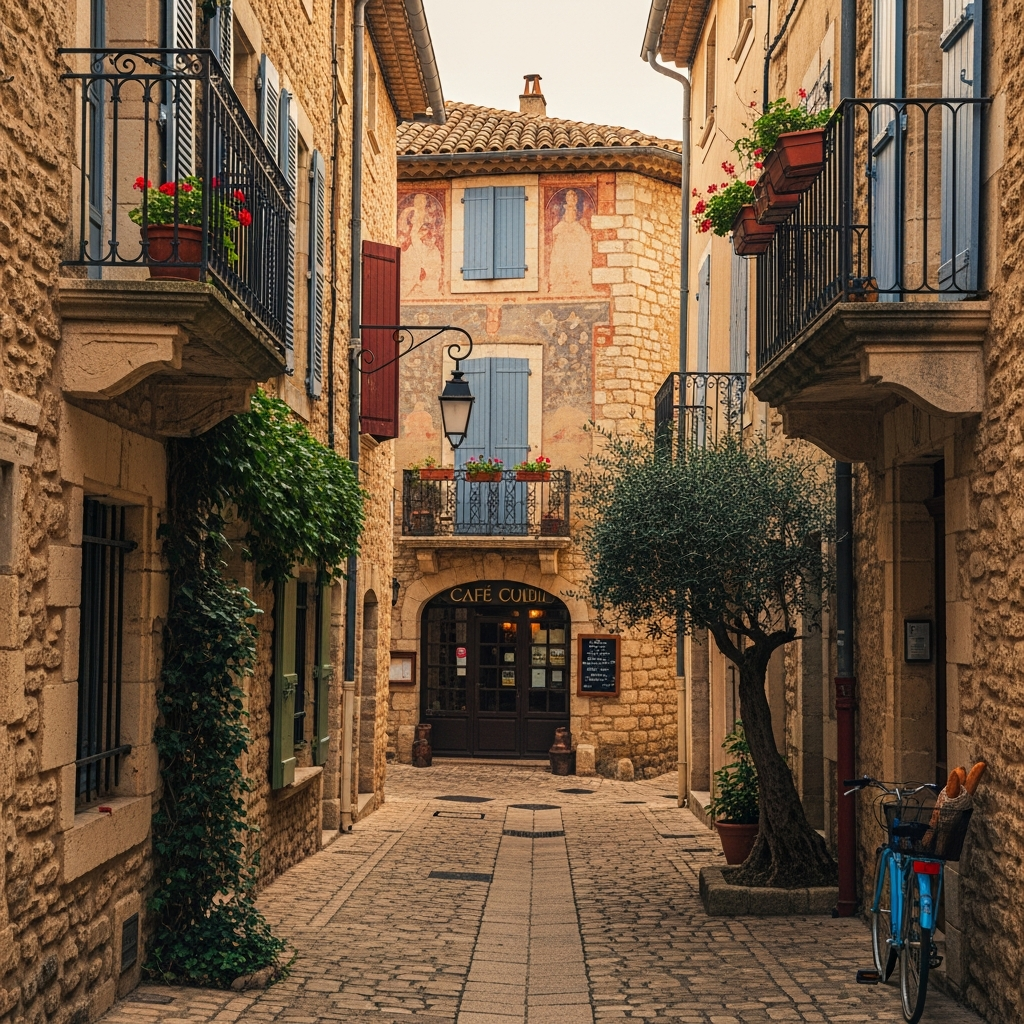

Dreaming of genuine French experiences? Beyond the well-trodden paths and iconic landmarks, a more authentic, less-explored France awaits. This comprehensive guide helps you uncover France’s hidden gems, offering practical tips for immersive travel and local living. From mastering Parisian small space design to understanding nuanced French etiquette and navigating administrative tasks, we reveal the secrets to truly experiencing the real France.
Beyond Postcards: Discovering Authentic France
France consistently captivates visitors, yet its true enchantment often lies far from the bustling tourist hubs. Many travelers now seek out under-the-radar places in France that promise an authentic taste of local life and culture. Imagine strolling through sun-drenched villages, unwinding on secluded stretches of coastline, or discovering underrated city breaks rich in history. These unique experiences offer a deeper connection to the country’s diverse landscapes and rich heritage, moving beyond typical tourist traps.
Travel companies like Trafalgar emphasize seeking these “off-the-beaten-path” destinations. They highlight how local expertise can unveil charming towns and cultural experiences, fostering a genuine “lived-in experience.” Their tours, for instance, venture beyond Paris to explore historical sites like Orleans and the UNESCO-listed Bourges, or the unique French-German heritage of Strasbourg.
Menton: The Riviera’s Sun-Kissed ‘Pearl’
For a specific coastal gem, consider Menton, often called the “Pearl of the French Riviera.” This charming, frequently overlooked town offers a relaxed, village-like atmosphere, a stark contrast to its busier neighbors. Boasting over 300 days of sunshine annually, Menton holds the title of the warmest town on the French Riviera, making it perfect for multi-day exploration.
Menton’s unique identity stems from its history, once part of Monaco and Sardinia, which imparts a distinct Italianate architectural influence. Its economy historically centered on lemons, a legacy celebrated each February with the vibrant Fête du Citron. Key attractions include the grand 17th-century Baroque Basilique Saint-Michel-Archange, the scenic Promenade du Soleil, and the picturesque La Plage des Sablettes beach. Visitors can also explore the legacy of artist Jean Cocteau through dedicated museums, or wander through tranquil botanical gardens like Serre de la Madone. For breathtaking panoramic views, a climb to the cemetery of the old Château is a must.
Parisian Pockets: Unveiling Capital City Secrets
Even in Paris, France’s hidden gems abound if you know where to look. Beyond the Eiffel Tower and the Louvre, true Parisian essence often unfolds down inconspicuous side streets or in locales favored by residents. Dan Koday, a seasoned Paris visitor, recommends venturing beyond traditional sightseeing.
Consider exploring the city with an open-air tuktuk tour for a custom, storytelling experience of areas like Montmartre. Discover whimsical attractions like the Dodo Manège carousel in the Jardin des Plantes, or delve into the hauntingly beautiful Paris Catacombs, an extensive underground ossuary housing millions of remains. The Père Lachaise Cemetery also offers a unique, tranquil experience, serving as the final resting place for numerous global luminaries like Oscar Wilde and Jim Morrison.
For a truly local experience, embrace a picturesque wine and cheese picnic along the tree-lined Canal Saint-Martin. Pick up essentials from local shops and relax by the Quai de Jemmapes. Jerome Rouveron, a Paris insider, also suggests “hidden gem” bars like Lavomatic, disguised as a laundromat, or La Mezcaleria for unique cocktails. For accommodation, he recommends exploring individual establishments like The Kube Hotel, La Maison Favart, or Secrets de Paris over larger chains. Shopping enthusiasts can find unique historical souvenirs at the Puces de Saint Ouen antique market, or enjoy unparalleled views from the Galeries Lafayette rooftop bar.
Cultural Deep Dives: Le Marais’ Lesser-Known Museums
Paris’s historic Le Marais district, known for its palaces and boutiques, also harbors a wealth of specialized museums. Venturing beyond the Picasso Museum, you can uncover unique cultural insights. Richard Nahem highlights three such under-the-radar places in France for art and history enthusiasts:
Musée de la Chasse et de la Nature (Museum of Hunting and Nature): Housed in two interconnected 17th-century palaces, this museum explores the intricate relationship between humans and the natural world. Its collection spans 17th and 18th-century paintings, ceramics, sculptures, and antique firearms, often integrated with contemporary art installations.
Maison Européenne de la Photographie (MEP): As Paris’s premier photography museum, MEP showcases works from the 1950s to the present. Located in an 18th-century private home, it features exhibitions by renowned international photographers and houses Europe’s largest photography reference library. It’s a vibrant hub for photographic art and study.
Musée Cognacq-Jay: This museum originated from the private collection of Ernest Cognacq, founder of the La Samaritaine department store. It features a remarkable array of 18th-century art and decorative objects, including furniture, tapestries, and fine china, beautifully displayed in a preserved 1575 mansion in Le Marais. Temporary exhibitions often delve into specific aspects of 18th-century luxury, such as intricate “Luxe de Poche” items.
These specialized institutions offer profound cultural experiences, often within historically rich settings, providing genuine France’s hidden gems for the curious traveler.
Ingenious Living: French Design for Compact Spaces
Discovering France extends beyond its landscapes; it also involves appreciating its ingenious approach to life, even within the smallest accommodations. French architects, particularly in dense urban centers like Paris, have perfected the art of maximizing compact living areas. Their innovative solutions offer invaluable lessons in efficient, beautiful design, which can inspire your travel accommodations or even your own home.
Space-Saving Strategies from Parisian Architects
- Cabine 56 (183 sq ft) – Butte-aux-Cailles: Architect Louis Aspar cleverly raised the interior floor to seamlessly match a tiny terrace. A resin floor extending both indoors and outdoors blurs boundaries, creating an illusion of greater depth. A built-in bench with integrated storage optimizes seating, comfortably accommodating several people and enhancing functionality.
- Montmartre Studio (161 sq ft) – Montmartre: Facing extreme size constraints, Hélène Lacombe installed a large mirror strategically around the window. This ingenious trick significantly boosts natural light by reflecting sun and trees. Crucially, it creates an illusion of greater depth, making the tiny studio feel considerably larger than its actual dimensions through an expert blend of aesthetics and practicality.
- Luxembourg Gardens Studio (258 sq ft) – Near Luxembourg Gardens: Aurélien Duny transformed this 19th-century studio by de-compartmentalizing rooms. He utilized bespoke, angled modules and semi-high partitions, resembling “floating clouds,” to allow light to penetrate throughout the space. A raised bedroom area intelligently accommodates floor-level storage underneath, achieving versatility without rigid walls.
- Montparnasse Studio (250 sq ft) – Montparnasse: Sabrina Julien of Studio Beau Faire implemented a pivot door that recesses entirely into the wall, a subtle yet critical detail for fluidity in small areas. Relocating the kitchenette from the entrance to the living room also significantly enhanced overall storage capacity. A long, curved bench provides versatile seating, exemplifying thoughtful functionality.
- Marais Pied-à-terre (215 sq ft) – Marais District: Céline Boclaud crafted a minimalist, hotel-suite-inspired space using one multi-functional piece of bespoke joinery. This large custom cabinet integrates a desk, a pull-out bed, space for a TV, a fridge, washing machines, and even a discreet bathroom hidden behind a curtain. This unit minimizes the need for multiple furniture pieces, reducing clutter and ensuring a sleek, highly functional aesthetic.
These examples offer practical takeaways for appreciating efficient design in French accommodations or optimizing your own compact living spaces.
Mastering French Practicalities: Essential Insider Tips
Beyond cultural appreciation, practical knowledge is crucial for a smooth experience in France. Understanding local customs and administrative processes can significantly enhance your time in the country, whether you are a tourist or considering a longer stay.
Navigating French Bureaucracy: Driving Licence Insights
For British citizens residing in France, particularly those who have previously lived there, exchanging a UK driving licence can present unexpected bureaucratic hurdles. A common pitfall, as highlighted by expat experiences, involves the crucial distinction between exchanging a foreign licence and reinstating a previously held French licence.
If you have previously held a French driving licence, even decades ago, French authorities may require you to apply for its reinstatement rather than a new exchange of your current UK licence. This critical distinction can save significant administrative headaches and delays. If this applies to you, you might need to obtain your historical French licence number from France Titres, the agency responsible for licence swaps. All foreign residents driving in France are, at some point, legally required to exchange their foreign licence for a French one, making this nuance essential for a seamless transition.
Tipping Etiquette: Understanding ‘Service Compris’
The nuances of tipping in France often surprise visitors. Unlike some countries where tips form a significant portion of service staff’s income, French law already includes a mandatory 15% service charge (known as “service compris”) in most restaurant and café bills. This means service is already factored into the prices you see.
Many diners, including long-term residents, express discomfort with the growing trend of payment terminals directly prompting for additional tips. These digital requests are often described as “aggressive” or “unwarranted pressure,” especially when a substantial service charge is already included. Therefore, consider additional tips as a voluntary gesture for truly exceptional, unsolicited service, rather than an obligation. Feel free to resist pressure from payment terminals that prompt for pre-programmed tip amounts. A small, discretionary tip (perhaps a few euros) is appreciated for outstanding service, but it is never expected on top of the legally mandated service charge.
Share Your Discoveries: Join the French Exploration
Are you a UK resident with an unforgettable French adventure to share? The Guardian community invites readers to share their favourite under-the-radar places in France. This is your opportunity to highlight an underrated city break, a little-known museum, a beautiful village, a national park, or a secluded stretch of coastline. The best tip, chosen by Tom Hall of Lonely Planet, wins a fantastic £200 voucher towards a Coolstays property. To enter, share your story, keeping your tip to about 100 words. This competition is open only to UK residents aged 18 or over and closes on Monday 23 March at 10 am GMT.
Frequently Asked Questions
What are the best strategies to discover genuine hidden gems in France?
To uncover genuine France’s hidden gems, venture beyond conventional tourist routes. Focus on exploring smaller, charming villages in the French countryside, serene national parks, or secluded coastlines, like Menton on the Riviera. In cities, seek out less-known cultural sites such as the specialized museums in Paris’s Le Marais or unique experiences like Canal Saint-Martin picnics. Leveraging local recommendations and specialized travel blogs can also guide you to truly authentic, under-the-radar places that offer a deeper cultural connection.
What unique cultural hidden gems can be found in Paris’s Le Marais district?
Le Marais, while popular, also hosts several unique cultural under-the-radar places in France. You can explore the Musée de la Chasse et de la Nature, a museum that uniquely blends art and nature within two 17th-century palaces. The Maison Européenne de la Photographie (MEP) is a premier photography museum showcasing works from the 1950s onward. Additionally, the Musée Cognacq-Jay displays a stunning collection of 18th-century art and decorative objects within a beautifully preserved 1575 mansion, offering a glimpse into historical luxury.
What crucial insights should I know about tipping and driving regulations in France?
Regarding tipping in France, remember that a mandatory 15% service charge is legally included in most bills, so additional tips are discretionary. While appreciated for exceptional service, they are not expected, and you should feel comfortable declining digital prompts for extra gratuity. For driving, British citizens, especially those who previously held a French licence, must distinguish between exchanging a UK licence and reinstating* an old French one. Contact France Titres if you need to retrieve a historical French licence number, as all foreign residents are eventually required to exchange their licence for a French equivalent.
Embrace the challenge of uncovering France’s true spirit, from its architectural marvels and France’s hidden gems to its intricate bureaucratic dances and nuanced social graces. Whether you’re planning your next adventure or dreaming of a life in France, these insights aim to enrich your journey