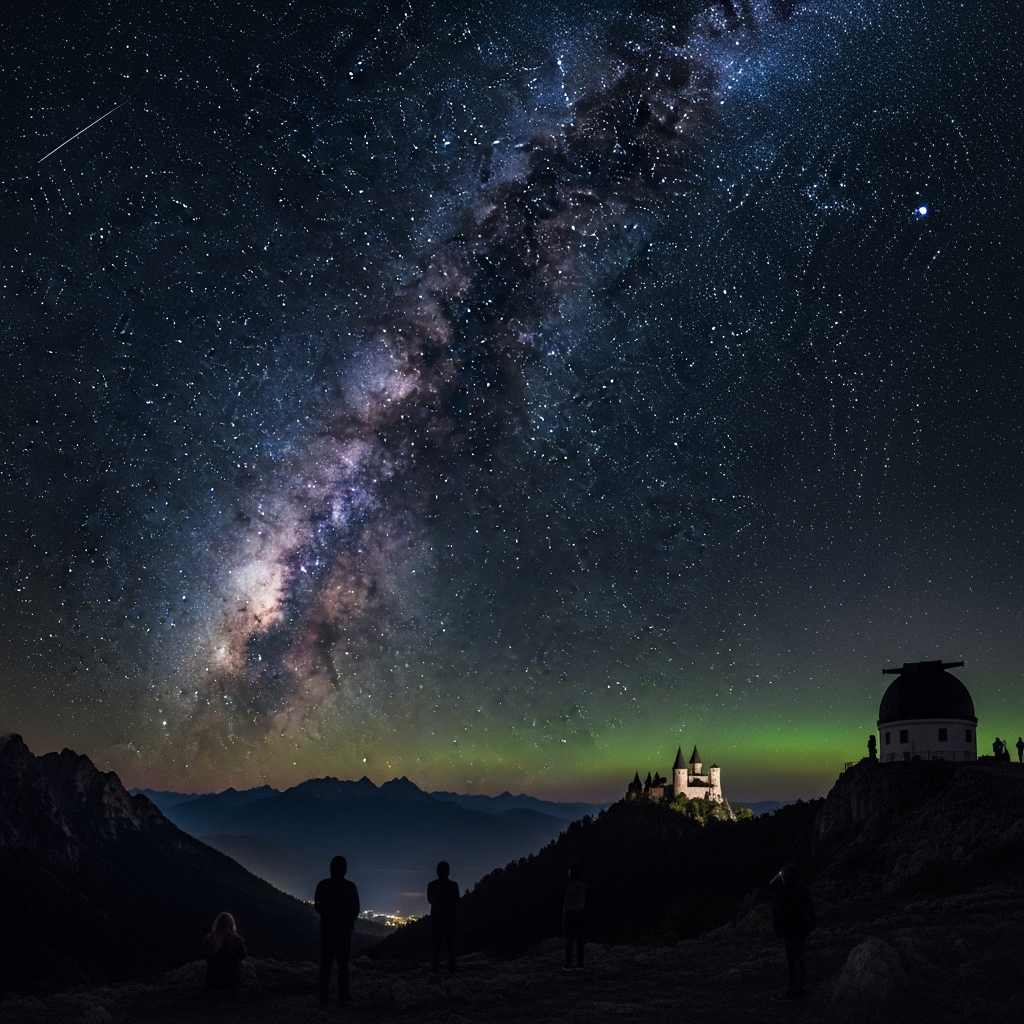

Europe, a continent celebrated for its rich heritage and diverse landscapes, is rapidly emerging as a premier destination for stargazing in Europe and unforgettable celestial experiences. As urban glow steadily expands worldwide, a profound longing to reconnect with genuine natural darkness has surged. This has fueled the rise of “noctourism,” a captivating trend focused on exploring the night. Travelers are increasingly seeking out International Dark Sky Places to marvel at cosmic wonders, from the majestic Milky Way to the calming practice of “starbathing.” Despite a reported 24% rise in UK light pollution between 1993 and 2000, reducing truly dark skies from 15% to 11%, Europe still offers numerous pristine havens for exceptional night sky viewing. With 2026 promising a remarkable array of astronomical events, including a total solar eclipse and spectacular meteor showers, there’s never been a better time to discover Europe’s dark sky sanctuaries.
Safeguarding Europe’s Natural Night Skies
The preservation of natural night skies is essential for both environmental health and human well-being. Organizations like DarkSky International lead global efforts to protect these precious resources. They champion the fight against light pollution, which harms nocturnal wildlife and disrupts human sleep cycles. Protecting dark skies ensures future generations can also experience the profound beauty of the cosmos.
What Defines an International Dark Sky Place?
DarkSky International, a leading non-governmental organization, certifies locations globally for their commitment to conserving the natural darkness of the night sky. As of March 2026, over 200 sites across 22 countries have earned this prestigious designation. These protected areas encompass more than 160,000 square kilometers of land. In Europe alone, over 31 International Dark Sky Parks actively work to reduce artificial light. This conservation benefits stargazers and safeguards nocturnal wildlife, which depends on natural darkness for survival, migration, and hunting.
The Growing Appeal of Noctourism and Stargazing
The increasing popularity of “noctourism” reflects a deeper desire among travelers for authentic, nature-focused experiences. Night-time activities now extend beyond traditional stargazing. They include mindful “starbathing,” silent night hikes, and observing unique celestial events. This trend is especially popular among younger generations seeking cooler temperatures and a break from daytime crowds. They yearn to reconnect with the natural world. This shift has made dark sky parks incredibly popular. Significant celestial events, like the upcoming total solar eclipse in 2026, are further boosting demand for specialized tours and cruises.
Premier Stargazing Destinations Across Europe
Europe offers an incredible array of certified dark sky locations. Each provides unique celestial viewing opportunities. Travel booking site Omio’s research, analyzing 1,400 global locations, identified Ireland and Spain as joint top European destinations for stargazing holidays.
United Kingdom & Ireland: A Celestial Powerhouse
Together, the UK and Ireland boast more than 20 certified dark sky places, making them premier destinations for stargazing in Europe. Ireland’s leading sites achieved perfect scores for darkness, transparency, and light pollution according to Omio. The Geographical article ranks several UK sites among Europe’s best.
Ireland:
Kerry International Dark Sky Reserve: Located on the Iveragh Peninsula, it holds prestigious Gold Tier status. Its remote Atlantic location ensures unspoiled, panoramic views of the Milky Way. Here, the sheer number of visible stars can make constellations challenging to distinguish with the naked eye. Specific viewing areas are accessible on Valentia Island. This reserve ranks as Europe’s 10th best stargazing spot.
Ballycroy National Park and Wild Nephin Wilderness: Found in the Owenduff and Nephin Mountains, these areas provide a perfect escape for deep sky viewing. Omio also highlights Ballinskelligs Beach, White Cliffs of Ashleam, and Clare Island – Tormore for exceptional darkness.
United Kingdom:
Kielder Observatory (Northumberland): Ranked Europe’s #1 stargazing site by Geographical, it boasts exceptionally dark, light pollution-free skies. Kielder hosts year-round events for viewing various celestial bodies. The optimal viewing season is September to March, avoiding full moon periods for best visibility.
Yorkshire Dales International Dark Sky Reserve: Awarded its status in 2020, this reserve offers stunning daytime scenery complementing incredible starry nights. It supports stargazer-friendly accommodation and a vibrant calendar of public events. You can see planets, the Milky Way, and even the Northern Lights. The dramatic Ribblehead Viaduct serves as a stunning backdrop for astrophotography. This reserve ranks #2 in Europe.
Pic du Midi Observatory (French Pyrenees): Although in France, it’s worth noting as Europe’s highest planetarium (2,877m) and ranks #3 for unparalleled viewing. We’ll explore it further in the France section.
Brecon Beacons Dark Sky Reserve (Wales): An International Dark Sky Reserve since 2021, it is renowned for its Milky Way visibility on moonless nights. It promotes ‘stay-and-gaze’ options and offers excellent astrophotography opportunities. This ranks #4 in Europe.
OM Dark Sky Park & Observatory (Northern Ireland): As the region’s only official ‘dark sky’ park (#5 in Europe), it combines advanced technology, like holographic installations and VR headsets, with telescopes for an immersive exploration of the solar system, set near ancient Beaghmore Stone Circles.
Moffat Dark Sky Town (Scotland): Europe’s first Dark Sky Town (#6 in Europe) achieved its status by adopting special street lighting to minimize pollution. The Moffat Community Observatory opened in 2021 for public stargazing sessions.
Exmoor International Dark Sky Reserve (England): As Europe’s first International Dark-Sky Reserve (2011), it boasts minimal light pollution, enabling naked-eye views of the Milky Way. It hosts an annual Dark Skies Festival each October. This ranks #7 in Europe.
Spain: A Leader in Night Sky Quality
Spain also ranks highly in noctourism, with Omio’s research identifying nine Spanish locations among Europe’s top 25 stargazing spots. The ICAstronomy observatory secured a notable 9th position overall in Omio’s study, featuring excellent dark sky conditions (Bortle Scale rating of 2). Other notable Spanish locations include Mirador Astronómico del Llano del Jable and Mirador Roque de Los Muchachos, emphasizing Spain’s commitment to dark sky preservation.
France & Portugal: Premier Observatories and Reserves
These two nations host some of Europe’s most advanced and recognized dark sky sites, offering exceptional stargazing in Europe.
France:
The Pic du Midi Observatory, located in the French Pyrenees, is an International Dark Sky Reserve. Situated at over 9,400 feet, its high altitude and “sea of clouds” reduce atmospheric interference, providing exceptionally dark and pure skies. With over 300 clear days annually, it’s perfect for viewing the Milky Way and up to 60 shooting stars per hour in summer. Omio’s research also identified four French locations in Europe’s top 25, including Cime de la Bonette and Observatoire du Bonheur.
Portugal:
The Alqueva Dark Sky Park holds the distinction of being the world’s first “Starlight Tourism Destination,” recognized by both UNWTO and UNESCO. It boasts approximately 286 clear nights per year across 10,000 square kilometers of protected territory. This park ranks as Europe’s 8th best stargazing spot and offers tailored visitor facilities, including astronomy guides, telescopes for observing planets and moon craters, and specialized lodging. Outdoor experiences like moonlit horseback excursions and astrophotography workshops are also popular.
Other European Dark Sky Gems
Beyond the top-ranked nations, other European countries offer vital dark sky experiences:
Hungary: Boasts three Dark Sky Places: Bükk National Park, Hortobágy National Park, and Zselic National Landscape Protection Area. Zselic is deemed by DarkSky International as having close to unaltered dark night skies.
Netherlands: Despite being one of Europe’s most light-polluted countries, De Boschplaat on Terschelling Island and Lauwersmeer National Park provide crucial dark sky experiences.
Denmark: The islands of Møn and Nyord, along with Dark Sky Park Bulbjerg, offer distinct stargazing opportunities. Bulbjerg ranks as Europe’s 9th best stargazing site, offering views of up to 3,000 stars and the Milky Way on clear winter nights, with occasional spectacular Aurora Borealis sightings.
Germany: Winklmoosalm in southeastern Bavaria provides exceptionally dark skies in the Alps. Here, visitors can see around 5,000 stars compared to only 500 in Munich. In 2025, the Bavarian Forest National Park achieved International Dark Sky Reserve status.
Croatia: Offers two significant dark sky gems: Petrova gora-Biljeg with its preserved mountain forests and Vrani Kamen near Zagreb, spanning 8,000 hectares of the magnificent Papuk mountains.
“Starbathing”: A Mindful Connection with the Cosmos
“Starbathing,” or mindful stargazing, is an emerging wellness experience within noctourism. This practice involves observing the night sky without technology, simply basking in starlight. It boosts mindfulness, relaxation, and offers a fresh perspective. As one expert notes, “The ‘starbathing’ trend reflects a wider shift toward quieter, nature-focused travel experiences… It gives people an opportunity to take in some beautiful dark skies… and most importantly, switch off from screens.” Many of Europe’s dark sky parks are ideal for this serene practice, including the Pic du Midi, Alqueva, Bulbjerg, Kerry International, and Yorkshire Dales reserves.
Enhancing Your Dark Sky Journey: Specialized Accommodations
For those seeking an immersive celestial experience, special accommodations cater specifically to stargazers and starbathing enthusiasts:
Hotel Rangá in south Iceland: Offers an advanced on-site observatory and geothermal hot tubs. This setup is perfect for relaxing while viewing the Northern Lights and Milky Way.
Kulmhotel Gornergrat in the Swiss Alps: Europe’s highest hotel and observatory, situated at over 10,170 feet. It provides unmatched views. Its clear, dry air and minimal light pollution, combined with two observatories, offer intimate views of the Milky Way and 29 surrounding peaks.
2026: A Stellar Year for Skywatching in Europe
The Royal Observatory Greenwich and Star Walk both highlight 2026 as an exceptionally remarkable year for astronomical observation. It features a diverse range of celestial events and significant space mission milestones, offering ample stargazing in Europe opportunities for enthusiasts.
Key Celestial Events in 2026:
January: The Quadrantid meteor shower (Jan 1-12, peaking Jan 4) is known for its bright “fireballs.” Jupiter reaches opposition on January 10, appearing at its brightest and largest all year, easily identifiable even in light-polluted areas.
February: Marks the start of “galaxy season” for the Northern Hemisphere. The new Moon on February 17 provides excellent conditions to observe distant galaxies like Andromeda. Late February also presents a rare “parade of planets” with Mercury, Venus, Saturn, Jupiter, Uranus, and Neptune aligning in the sky.
March: A total lunar eclipse, a “Blood Moon,” will occur on March 3. The Moon will pass entirely through Earth’s shadow, turning a deep reddish color. This coincides with the traditional “Worm Moon.” The vernal equinox on March 20 signifies the start of astronomical spring.
April: The Lyrid meteor shower (Apr 16-25, peaking Apr 22) offers bright meteors with persistent dust trails. This month could also feature two potentially naked-eye comets: C/2026 A1 (MAPS) and C/2025 R3 (PANSTARRS).
May: A rare “Blue Micromoon” will grace the sky on May 31. This is the second full Moon within the month and the year’s smallest, appearing slightly dimmer due to its farthest orbital point from Earth.
June: A spectacular Venus and Jupiter conjunction happens on June 8. The two brightest planets will appear just a finger-width apart in the evening sky, easily visible to the naked eye. The summer solstice on June 21 marks the longest day of the year.
July: A delicate crescent Moon will join Mars and the Pleiades star cluster in the pre-dawn sky around July 11, offering a beautiful alignment.
August 12: A Triple Treat! This date is a highlight for skywatchers. It features a total solar eclipse, with the path of totality sweeping across Greenland, Iceland, Portugal, and Spain. The UK will experience its best partial solar eclipse since 1999 (up to 90% coverage in London). Crucially, the Perseid meteor shower also peaks (Jul 17 – Aug 24) on this day, promising over 90 bright meteors per hour under dark skies due to a new Moon. Additionally, a pre-sunrise planetary parade will be visible.
September: The JUICE (Jupiter Icy Moons Explorer) spacecraft will perform its first gravity-assisted Earth flyby. The autumnal equinox occurs on September 23.
October: Saturn reaches opposition on October 4, presenting its brightest and best views for observation and photography. The Orionid meteor shower (Oct 2 – Nov 7, peaking Oct 21) also occurs.
November: This month is an excellent time to observe the Pleiades star cluster, or “Seven Sisters,” easily identifiable in the constellation Taurus.
December: The Europa Clipper spacecraft will perform an Earth flyby on December 3. The Geminid meteor shower (Dec 4-20, peaking Dec 14) is anticipated to be one of the year’s best, with up to 120 meteors per hour and minimal lunar interference. The year concludes with a “supermoon” on December 24, appearing larger and brighter than average.
Frequently Asked Questions
What is “Noctourism” and why is it gaining popularity in Europe?
“Noctourism” refers to the exploration of destinations at night, encompassing activities like stargazing, night hikes, and “starbathing.” It’s gaining immense popularity in Europe, especially among younger travelers, due to a desire for authentic, nature-focused experiences. People seek to escape increasing light pollution, enjoy cooler temperatures, avoid daytime crowds, and reconnect mindfully with the natural world, fostering relaxation and a sense of wonder. The increasing number of International Dark Sky Places across Europe directly supports this growing trend.
Which European countries are recognized as top destinations for stargazing, and what makes them stand out?
Based on extensive research by Omio, Ireland and Spain are jointly considered Europe’s top destinations for stargazing, each boasting nine locations in the top 25. Irish sites, like the Kerry International Dark Sky Reserve, achieved perfect scores on the Bortle Scale, transparency, and light pollution, indicating the darkest possible skies. Spain’s ICAstronomy observatory also ranks highly with excellent conditions. The UK (featuring Kielder Observatory, ranked #1 by Geographical), France (with its high-altitude Pic du Midi Observatory), and Portugal (home to the Alqueva Dark Sky Park, the world’s first “Starlight Tourism Destination”) also stand out for their pristine night skies and dedicated viewing facilities.
How can I best prepare for observing the major celestial events happening in Europe in 2026?
To make the most of Europe’s exceptional celestial events in 2026, planning is key. First, identify specific events of interest, such as the August 12 total solar eclipse (requiring certified eclipse glasses for safety during partial phases) or the Geminid meteor shower. Choose a certified International Dark Sky Place in Europe, as these locations offer minimal light pollution. Consider booking accommodations with observatories or dark sky access, like Hotel Rangá in Iceland or Kulmhotel Gornergrat in the Swiss Alps. Utilize astronomy apps such as Sky Tonight or Star Walk 2 Plus to track events, moon phases, and optimal viewing times. Always check local weather forecasts for clear skies, dress warmly, and bring binoculars or a telescope if you wish to enhance your viewing beyond the naked eye.
Conclusion
Europe’s dedication to preserving its night skies offers unparalleled opportunities for stargazing in Europe and experiencing the transformative power of natural darkness. From the rugged coastlines of the UK and Ireland to the high altitudes of the French Pyrenees and Swiss Alps, certified International Dark Sky Places invite you to embark on a journey of celestial discovery. Embrace the growing trend of noctourism, whether through active stargazing or tranquil starbathing, and reconnect with the awe-inspiring beauty of the cosmos. With 2026 promising a truly stellar year of celestial events, plan your European dark sky adventure today, and become part of the movement to protect these invaluable natural wonders for generations to come.